
SpaceX capped the speed of some Starlink military terminals at 100mph (160km/h) overnight into Wednesday, October 14, without warning Ukraine, and the cap has already forced Ukrainian units to cancel drone missions, according to Serhiy Beskrestnov, an adviser to President Volodymyr Zelensky. The restriction arrived on the same night Russia fired 39 missiles and 128 drones at Ukraine, leaving at least 600,000 people without electricity and killing three in Kyiv.
What Ukraine says SpaceX changed
Beskrestnov posted on Telegram on Wednesday that SpaceX had “implemented overnight a speed limit on Starlink terminals,” and that the change had already caused “the disruption of a number of missions.” Ukraine’s defence forces, he said, received no notice. He added that the timing “cannot be a coincidence and is related to the current political situation.” He did not say what he meant by that, and SpaceX has not commented.
The terminals affected are military-grade Starshield units mounted on moving platforms such as drones and vehicles, according to Euromaidan Press and Tom’s Hardware. A terminal that goes above 160km/h loses its connection, Ukrainian defence ministry sources told the BBC. The ministry is investigating the “root cause.”
The practical result is that a drone has to stay slow to stay connected. Ukraine’s 7th Rapid Reaction Corps told Reuters that connections on its Huliaipole front dropped for 10 to 20 seconds at 110 to 120km/h. One unmanned systems unit cancelled missions that day. The corps said that “slower targets become more vulnerable to being hit by the enemy,” and that mid-range strike drones, which need to reach high speed fast, cannot be launched or used as intended on an unstable link.
Ukrainian defence ministry sources told the BBC the limit also degrades front-line logistics, reconnaissance and signal relaying. Serhii Sternenko, a former adviser to Ukraine’s defence minister, wrote that military reports showed the limit tightening later in the day, with connections dropping at 60 to 70km/h. That figure comes from a single account and has not been confirmed by Ukraine’s military or by SpaceX.
Interceptors are the weak point

Beskrestnov wrote a second post stressing that Starlink is the most effective tool Ukraine has for guiding interceptor drones against Russia’s newly developed jet-propelled drones. Euromaidan Press describes them as jet-powered Shahed variants, so the interceptors chasing them need to fly fast. A terminal that drops its link at 160km/h cannot do that job.
Starlink also carries the video and telemetry that let a pilot steer a drone to its target in real time. Ukrainian units use it for strikes on Russian logistics in occupied areas of the south and east, and for air defence at home.
Not the first restriction, but the first without notice

SpaceX has limited Starlink in Ukraine before. In late January 2026, it began restricting service at Kyiv’s request, after Russian forces started mounting terminals on their own strike drones. On January 27, a Russian drone hit a passenger train in Kharkiv region, and Beskrestnov, then an adviser to the defence minister, suggested it might have been controlled through Starlink. In early February, Ukraine introduced a whitelist that lets only registered terminals operate.
Beskrestnov described those measures as temporary and an emergency response. The difference this time is who decided. The earlier limits were Ukraine’s request. This one, Ukrainian officials say, was not.
Musk has also acted on his own before. In February, his decision to deny Russian forces access to Starlink blunted Moscow’s advance in Ukraine and caused confusion among Russian commanders. On X on Saturday, Musk wrote that “Zelensky has gone too far,” according to Tom’s Hardware.
Sternenko suggested SpaceX acted at the request of the Trump administration, though he gave no evidence, and nothing in the reporting confirms it. Poland’s foreign minister, Radosław Sikorski, asked Musk on X whether he was “playing politics with your products again,” and added: “As your European customers, we are watching you.”
Strikes on the same night
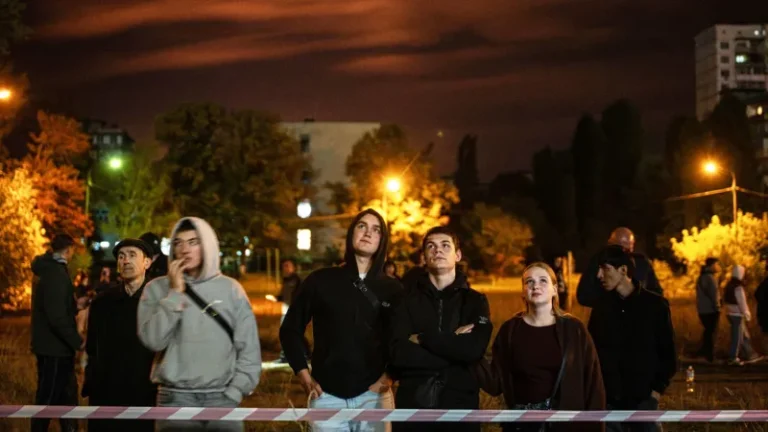
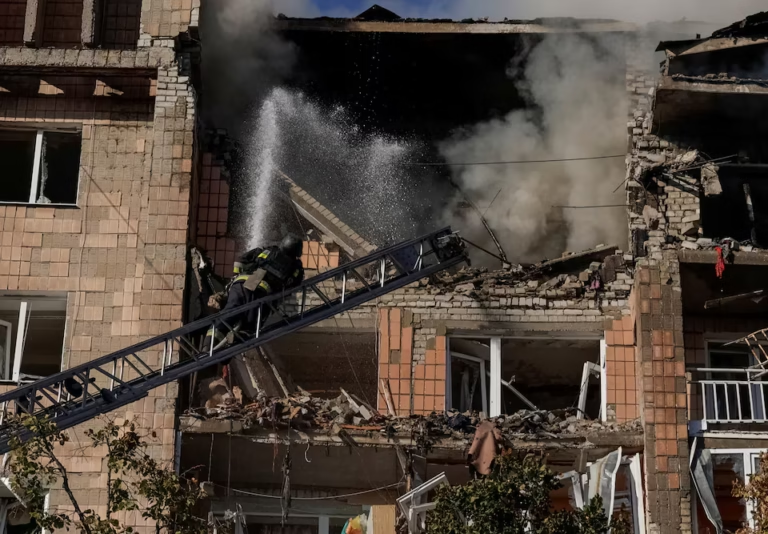
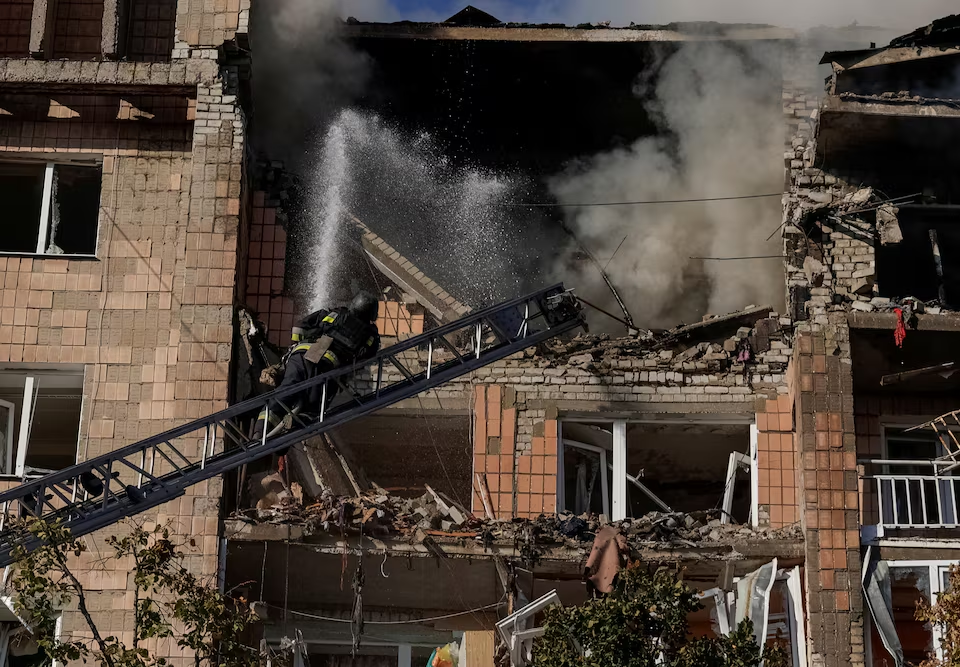
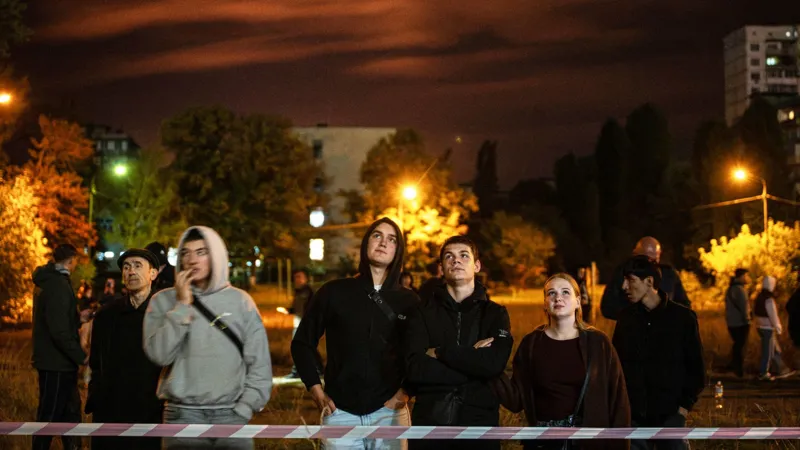
The speed cap landed in the middle of one of the heaviest attacks of the week. Ukraine’s air force said Russia launched 39 ballistic and cruise missiles and 128 drones overnight. It shot down four of the missiles and 115 of the drones. Zelensky said “critical” energy infrastructure was hit in Kyiv and its surrounding region, and in Kharkiv in the north-east. Local officials reported three people killed in Kyiv. Russia said its strikes hit communications and energy facilities used by Ukraine’s military.
Later on Wednesday, at least six people died in a Russian drone strike on a warehouse in Lutsk, in the north-west, local officials said.
It was the second night in a row Kyiv was hit. Over those two nights, missiles struck the capital before air raid sirens sounded. Ukraine relies on US satellite systems to track Russian missiles and issue alerts, and the missing warnings point to a gap in that data. The source reporting does not say what caused the gap. Zelensky has said the US threatened to restrict intelligence sharing if he did not accept Trump’s energy ceasefire. Trump denied on Tuesday that Washington was withholding intelligence.
Russia’s defence ministry said it shot down 902 Ukrainian drones overnight over several Russian regions, including Moscow and Crimea. Starlink does not work inside Russia, Reuters noted, and Ukrainian drones that hit Russia’s oil industry use other communication methods, so the speed cap affects the front line more than long-range strikes.
A residential block with no warning
Tetiana Storozhyk, 54, was in her kitchen on Tuesday night when a missile hit her apartment block. The blast threw her into the hallway. The sirens sounded at the moment of impact, so she had no time to leave.
“It all happened in a fraction of a second. In that moment I lost everything,” she told the BBC. She said Ukraine needs weapons to protect its people, “but from the other side we need peace.”
Her building is one example of what happens when air defence works without good data. Interceptors cannot fire at a target nobody has told them about, and residents cannot reach shelter if the siren comes late.
The energy ceasefire that was not observed
On Sunday, October 11, Trump wrote on Truth Social: “Effective immediately, there is an ENERGY CEASEFIRE in the War between Russia and Ukraine. Both parties have agreed. Do not break it!” Zelensky said he learned about the truce from media reports. He has since repeated that Ukraine is ready to stop striking Russian oil refineries and other energy sites if Moscow does the same, and that Kyiv would sign guarantees if Washington needs them. “If Russia doesn’t agree to energy ceasefire, we will respond,” he said.
Russia has not signalled agreement. Foreign Minister Sergey Lavrov said Ukraine does not deserve the “respite” a ceasefire would bring, and argued that Europe would use any truce to “pump [Ukraine] with new weapons.” French President Emmanuel Macron said on Monday he had seen no sign of Russia honouring the truce in the previous 48 hours. Zelensky had earlier proposed a 60-day ceasefire to allow presidential elections, and Russia rejected it. Kremlin spokesman Dmitry Peskov said Moscow wants a long-term peace deal.
Canada’s prime minister, Mark Carney, has also objected to a separate US “diesel deal” with Russia that would release 300,000 tonnes of fuel, his office said, because it works against the efforts of Ukraine and its allies.
What comes next
Zelensky was due to meet UK Prime Minister Andy Burnham at Downing Street on Wednesday to discuss speeding up air defence deliveries. Those talks now cover two problems: the interceptors Ukraine needs more of, and the satellite link that lets them fly.
Three things are open. SpaceX has not said whether the cap is permanent or a technical change, and Ukraine’s defence ministry has not finished its investigation. Washington has not said whether it had any part in the decision. And the energy truce exists only in a social media post, while the strikes continue on both sides.
Ukrainian developers are working on a fallback. The defence technology company Stetman is building a domestic satellite communications system called UASAT-NANO, to reduce reliance on SpaceX, Tom’s Hardware reported. No date has been given for when it could replace Starshield on the front line.
Russia launched its full-scale invasion in 2022 and controls about 20% of Ukrainian territory. For units on the Huliaipole front, the immediate question is smaller: whether a drone can fly at the speed the mission requires and still hear from its pilot.
Sources
- Euromaidan Press: New Starlink restrictions disrupt Ukrainian drone missions
- Tom’s Hardware: SpaceX limits Starlink service for Ukraine’s high-speed military drones
- The National: Zelenskyy urges US to act to ensure Russia abides by energy ceasefire
- Serhiy Beskrestnov’s Telegram posts, Ukrainian defence ministry sources, Ukraine’s air force, Zelensky and Tetiana Storozhyk statements, as cited in the source reporting