
Clicxpost

Africa

Sánchez Says Moroccan Warships Entered Spanish Waters Off Ceuta

Ceuta Moroccan navy

Spanish Prime Minister Pedro Sánchez said on Monday, October 12, that Moroccan naval vessels entered Spanish waters off Ceuta without permission after the mass migrant crossing into the enclave in late July. State broadcaster TVE reported his remarks. Sánchez called the incidents isolated and said relations with Morocco are “very important.”

He spoke a day before King Felipe and Queen Letizia travel to Ceuta for a two-day visit on Tuesday and Wednesday. Morocco claims sovereignty over Ceuta and Spain’s other North African enclave, Melilla, so the trip could raise tension between Madrid and Rabat.

What El País reported

The Spanish newspaper El País reported on Monday, citing unnamed sources, that at least one frigate and several patrol boats of the Royal Moroccan Navy sailed through Spanish sovereign waters after the border rush. They did not ask for authorisation. A Spanish frigate had to intercept the Moroccan warships and push them out of Spanish waters, the paper said.

TVE did not quote Sánchez on the specifics of the El País story. He addressed it in general terms instead. “We must acknowledge that, between two neighbouring countries, such isolated incidents do occur,” TVE quoted him as saying.

He added: “We are neighbours. Those were intense days, but cooperation between the navies remains smooth, regardless of that incident.”

The Spanish government did not reply to a Reuters request for comment. The Moroccan foreign ministry could not be reached.

The July crossing

More than 72,000 migrants crossed the border from Morocco into Ceuta at the end of July. The crossing set off a humanitarian and diplomatic crisis that remains partly unresolved. Ceuta is a Spanish city on the northern tip of Africa, and its land border with Morocco is one of only two between the European Union and the African continent. The other is at Melilla.

Most of those who crossed went back in the weeks that followed. Thousands stayed. Spanish police cleared a migrant camp on a Ceuta beach ahead of the royal visit, according to Reuters reporting from October 4.

For scale, the 72,000 figure is more than seven times the roughly 10,000 people who entered Ceuta in a single rush in May 2021, a figure reported at the time.

Rabat’s complaint about Spanish courts

On Friday, October 9, King Mohammed VI of Morocco said the cooperation model with Spain on migration had reached its limits. He criticised Spanish court decisions that block the repatriation of minors and asylum seekers, calling them “obsolete.”

That statement came three days before Sánchez’s comments on the naval incident. It also came five days after the beach camp was cleared and four days before the royal visit. Taken together, the dates show Morocco’s public criticism and the naval episode landing in the same fortnight, with Spain still holding a population of people who crossed in July.

Spain’s courts are the specific target of the king’s remark. Judges decide whether minors and asylum seekers can be sent back, and Rabat says those rulings slow returns. Madrid has not answered the complaint publicly in the material reported so far.

Election pressure

The timing adds a domestic problem for Sánchez. Spain holds an early election on November 29, and the Ceuta crisis is feeding political tension at home. A government that is campaigning has two reasons to play down a naval incident. It wants calm with a neighbour that controls the border, and it does not want a story about foreign warships in Spanish waters to dominate the final weeks before voting.

Sánchez chose the word “isolated” and put the episode inside a longer record of cooperation between the two navies. El País, by contrast, described a Spanish frigate having to physically intercept Moroccan ships. The two accounts do not contradict each other, but they differ in tone. The paper’s version rests on unnamed sources, and neither government has confirmed the number of vessels or where exactly they crossed.

What to watch this week

Three events will show whether the two governments keep the dispute quiet. The first is the royal visit to Ceuta on Tuesday and Wednesday, and whether Morocco responds to it publicly. The second is whether the Moroccan foreign ministry comments on the naval report, since it had not by Monday. The third is whether Spain’s government answers Reuters and addresses the El País details, which Sánchez did not do directly.

The migration question remains open as well. Thousands of people who crossed in July are still in Ceuta, and the Moroccan king has said the current arrangement for returning them has run its course.

Sources

  • Pedro Sánchez, remarks reported by TVE, October 12, 2026
  • El País, report on Moroccan naval vessels, October 12, 2026
  • King Mohammed VI of Morocco, statement of October 9, 2026, as reported by Reuters
  • Reuters reporting on the July crossing in Ceuta, the November 29 election and the October 4 camp clearance

RECOMMENDED
Africa

Djibouti Boat Capsizing Kills at Least 139 Migrants Heading for Yemen, UN agency says

By George Mensah 5 min read

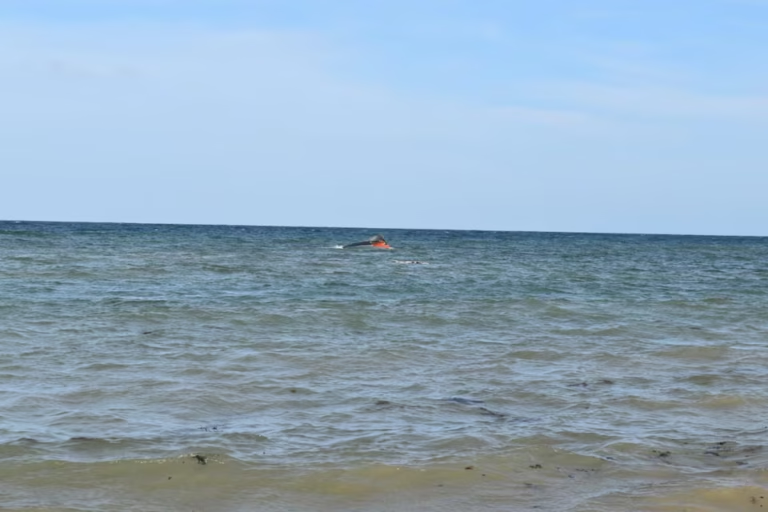
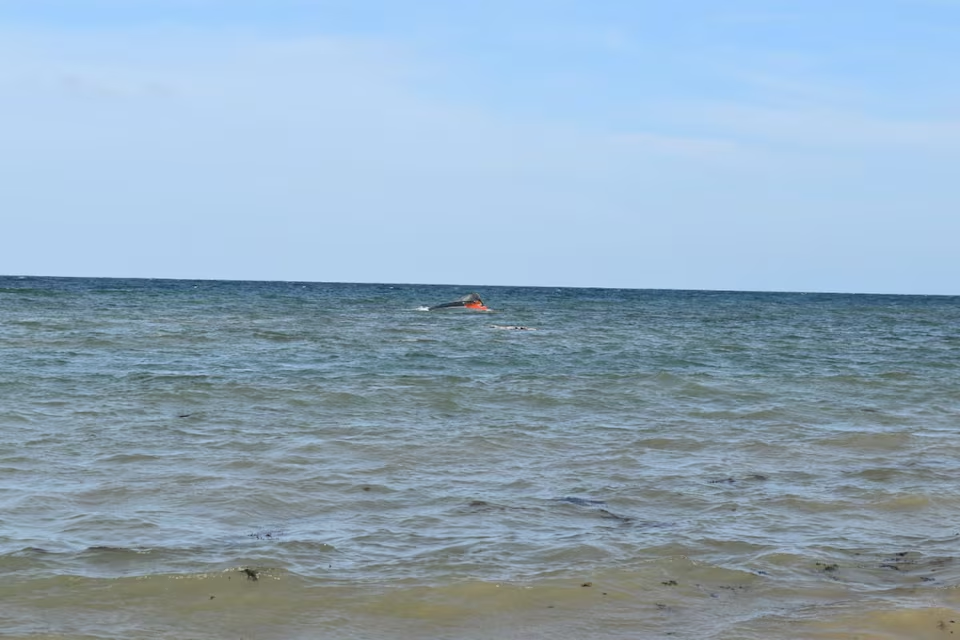
At least 139 migrants, including at least 15 children, have died and about 84 are missing after a boat carrying 305 people capsized off Djibouti while sailing to Yemen, the International Organization for Migration (IOM) said on Sunday, October 11. The vessel went down during the night of October 8-9 near Guhere, north of the port town of Obock. Around 82 people survived, according to the UN agency, which based its account on what survivors told its teams.

The three figures add up to the full passenger list: 139 dead, 84 missing and 82 rescued make 305. Roughly 46 percent of the people on board are confirmed dead. Counting the missing, 223 of the 305 passengers, or 73 percent, have not been accounted for among the living. Only about one in four made it back to shore.

Shoes on the shore

A boat carrying migrants capsized while sailing from Djibouti to Yemen

Photographs released by the IOM show worn sandals and sneakers washed up on the beach. The count of children is given as “at least” 15, so it could rise as the dead are identified.

Alexandre Coissac, the IOM’s Chief of Mission in Djibouti, said the agency’s staff are working beside local authorities. “Our teams are on the ground alongside local authorities to provide emergency assistance,” Coissac said.

He also described the wider danger of the crossing. “This tragedy is a stark reminder of the dangers faced by migrants along this migration corridor as they seek economic opportunities,” he said.

Search and burials

Djiboutian authorities are still running search and rescue operations, the IOM said. Local officials are giving medical care to survivors and arranging burials for those who died. With 84 people still missing more than two days after the sinking, the count of confirmed dead is likely to change.

Reuters asked a spokesperson for the Ethiopian government for comment and did not receive an immediate reply. The Djibouti government could not be reached either.

A route that runs toward a war zone

A boat carrying migrants capsized while sailing from Djibouti to Yemen

The passengers were heading to Yemen, hoping to reach wealthier Gulf states later. They were sailing toward a country that is itself emptying out. Yemen is going through its worst escalation of fighting between Saudi Arabia-backed government forces and the Iran-backed Houthis since a UN-brokered truce in 2022.

The IOM put numbers on that displacement last week. The count of displaced people in Yemen has risen to 200,000 from 76,000 in mid-September, which is a jump of more than two and a half times in a few weeks. The agency calls the situation alarming. More than 3,700 people have fled Yemen by sea to Djibouti as of last week, so boats are crossing the same water in both directions.

“Despite the violence in Yemen, migrants are still making the perilous journeys hoping to make it to the Gulf countries,” the IOM said in its statement.

Pressure from Ethiopia

Fighting has also broken out in Ethiopia since last month, in the worst violence since the 2020-2022 Tigray war. An IOM official told Reuters the agency has recorded heavy migrant traffic on the so-called Eastern Route through Djibouti for several years.

“People continue to use the route amid changing conditions in Ethiopia and Yemen, although the volume and direction of movement can shift over time,” the official said.

The IOM’s most recent situation report on Djibouti, covering September 20 to 30, includes interviews with Ethiopian migrants. They said they left home because of hard living conditions, drought among them. “Some migrants also reported that they were fleeing conflict and forced recruitment by armed forces,” the report said.

Reuters has spoken with several residents of Tigray, where fighting began on September 23. They said they saw Tigrayan rebels forcibly recruit young men into the defence forces. The rebels deny forced recruitment.

The fighting has revived fears of a return to all-out war. Ethiopia and Eritrea have cut relations over claims that Eritrea backs the rebel alliance trying to overthrow Ethiopia’s government. Eritrea denies supporting the alliance.

Dangers on the Eastern Route

The Eastern Route carries several risks besides the sea itself: trafficking, and arbitrary arrest once migrants reach land. The IOM’s Missing Migrants Project recorded more than 900 migrants dead or missing along the route in 2025. The number of people making the journey rose 18 percent that year.

This is not the first mass-casualty sinking on these waters. In April 2021, the IOM reported 34 migrants dead after a boat capsized off Djibouti. In August 2025, the agency reported at least 68 dead after a boat sank off Yemen, and later reports put that toll at 76. The October 8-9 sinking is larger than both of those, measured by confirmed deaths.

The pattern in the IOM’s own numbers is consistent. Traffic on the route grew by 18 percent in 2025, and the conditions pushing people onto it, drought in Ethiopia, conflict in Tigray and economic pressure, have not eased in 2026. The fighting in Yemen has not stopped boats from leaving Djibouti either, according to the agency.

What to watch

Three things will settle the final toll. The first is whether the search finds more bodies or survivors among the 84 missing. The second is the IOM’s identification work, which will show how many children were on board and where the passengers came from. The third is whether the Ethiopian and Djiboutian governments respond to requests for comment, since neither had done so by Sunday.

The IOM said its teams remain on the coast near Obock. Search operations were continuing as of its statement on October 11.

Sources

  • International Organization for Migration statement, October 11, 2026, and comments from Alexandre Coissac, IOM Chief of Mission in Djibouti
  • IOM official speaking to Reuters; IOM situation report on Djibouti, September 20 to 30, 2026
  • IOM Missing Migrants Project, 2025 data
  • Reuters reporting on Tigray, Ethiopia-Eritrea relations and Yemen displacement
Africa

Heavy rains lead to Senegal floods, government reports several deaths

By George Mensah 3 min read

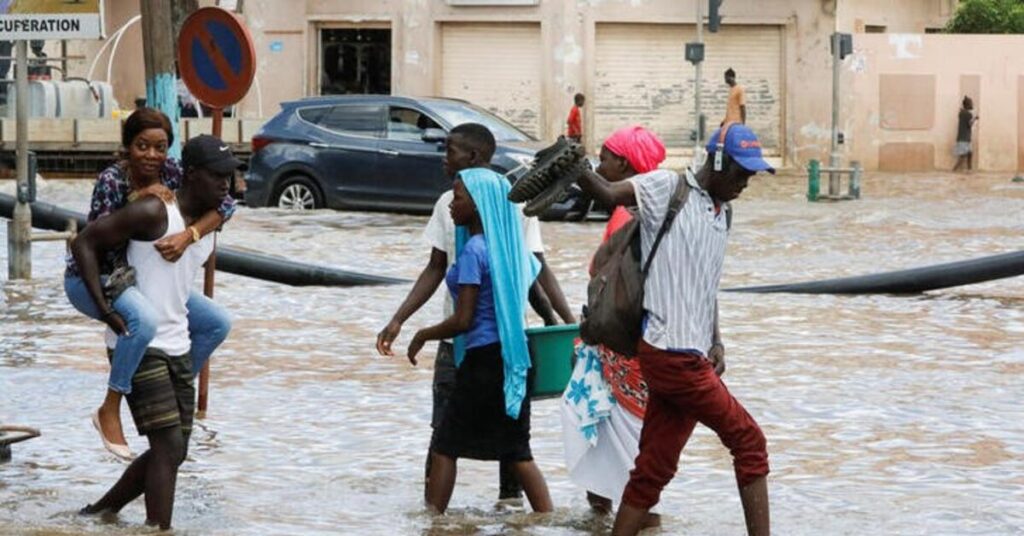
Heavy rain flooded roads and destroyed buildings across Senegal over the weekend, and the government said several people were killed and that more rain is coming. Flash floods in the capital, Dakar, and other areas disrupted traffic, and Prime Minister Ahmadou Al Aminou Lo warned that the school year, due to start this week, could be postponed if the water does not recede.

The floods come less than four weeks before Dakar hosts the 2026 Summer Youth Olympics, which start on October 31.

Deaths reported in Dakar and Matam

Senegal’s Interior Ministry reported deaths and injuries in Dakar and in Matam, a town in the northeast. It said a building collapsed in Kaolack, a town in the south. The reports did not give a death toll.

Local media reported that a mother and her child died in the Parcelles Assainies area of Dakar after their home flooded.

More rain forecast for Monday to Wednesday

Lo said there is a high probability of more rain on Monday, Tuesday and Wednesday. The forecast covers the same days on which many families would be preparing children for the start of term.

He said the school year could be postponed if floodwaters have not receded. The government has not yet announced a new date.

How much rain fell

Senegal’s meteorological agency, ANACIM, published rainfall totals for 24 hours. Rufisque, a town just outside Dakar, and Ranerou, in the Matam region, each recorded 142 mm. Dakar’s Yoff district recorded 138 mm.

The two places with the highest totals are about as far apart as two parts of the country can be, which suggests the rain covered a wide area and was not limited to the capital.

For comparison, after floods in Dakar in 2020, then-Water Minister Serigne Mbaye Thiam said 124 mm of rain had fallen, about what the city normally gets over the whole rainy season from July to September. The measuring stations and years differ, so the figures are not an exact match. Even so, both totals reported this weekend are above that 2020 number, and they were recorded within one day.

The Youth Olympics clock

Senegal is preparing to host the first Youth Olympic Games ever held in Africa. The event runs from October 31 to November 13, 2026.

The government expected flooding to be a risk for the event. On July 3, Lo chaired an interministerial meeting on flood preparedness and management, and the government approved measures to protect the venues and infrastructure. A dedicated task force was set up to handle flooding and waste at competition and accommodation sites, according to Ecofin Agency

That work followed Law No. 2026-381 of May 19, 2026, which strengthens the role of local authorities in flood prevention and management. The law is not specific to the Games. The task force works with the organising committee and the International Olympic Committee’s coordination commission.

This weekend’s rain is the first major test of those plans. The reports so far do not say whether any Olympic venues were affected, so that question remains open.

A problem that comes back each year

Floods in Dakar are not new. In 2020, the government faced criticism over a slow response to flooding that killed at least six people. A local resident told FRANCE 24 at the time that every flood brings food rations, but that what residents need is drainage and sanitation.

Dakar has a record of flooding after heavy local downpours, according to a European Space Agency hazard map, which classes the risk using flood events over the past 10 years. This weekend adds another event to that record.

What happens next

Three things will show how serious the situation is. The first is the rainfall on Monday, Tuesday and Wednesday, and whether floodwater drains from the streets of Dakar and Matam. The second is the government’s decision on the start of the school year. The third is whether the Interior Ministry publishes a full death toll and the number of damaged buildings.

With the Youth Olympics less than four weeks away, how quickly Dakar’s roads reopen will also be watched by organisers, athletes and visitors planning to travel.

ADVERTISEMENT
Scroll to Top