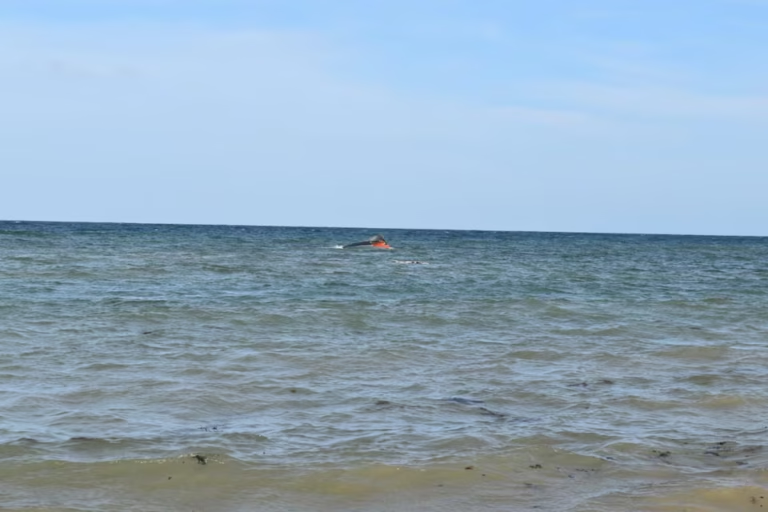

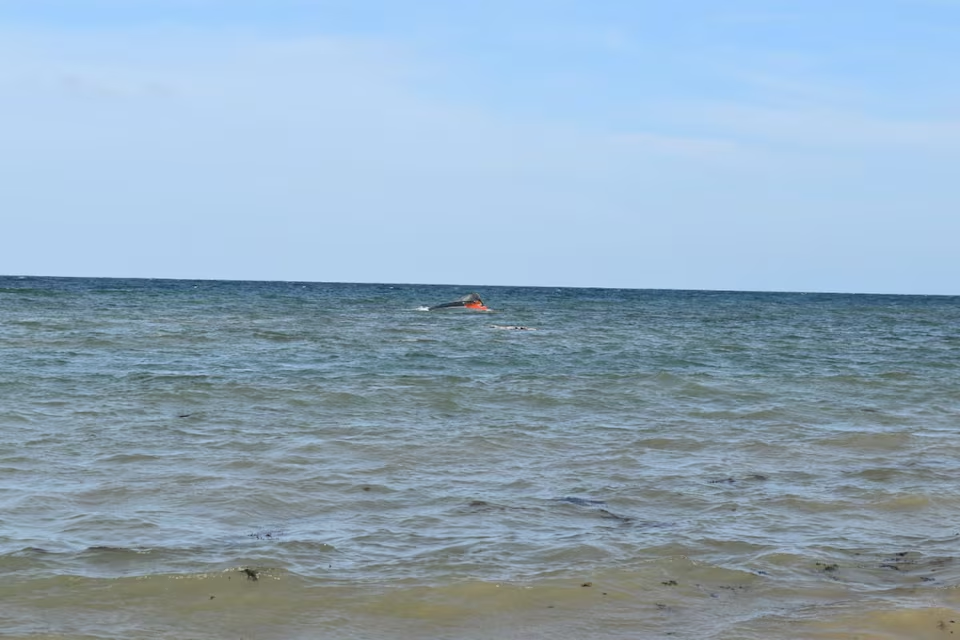
At least 139 migrants, including at least 15 children, have died and about 84 are missing after a boat carrying 305 people capsized off Djibouti while sailing to Yemen, the International Organization for Migration (IOM) said on Sunday, October 11. The vessel went down during the night of October 8-9 near Guhere, north of the port town of Obock. Around 82 people survived, according to the UN agency, which based its account on what survivors told its teams.
The three figures add up to the full passenger list: 139 dead, 84 missing and 82 rescued make 305. Roughly 46 percent of the people on board are confirmed dead. Counting the missing, 223 of the 305 passengers, or 73 percent, have not been accounted for among the living. Only about one in four made it back to shore.
Shoes on the shore

Photographs released by the IOM show worn sandals and sneakers washed up on the beach. The count of children is given as “at least” 15, so it could rise as the dead are identified.
Alexandre Coissac, the IOM’s Chief of Mission in Djibouti, said the agency’s staff are working beside local authorities. “Our teams are on the ground alongside local authorities to provide emergency assistance,” Coissac said.
He also described the wider danger of the crossing. “This tragedy is a stark reminder of the dangers faced by migrants along this migration corridor as they seek economic opportunities,” he said.
Search and burials
Djiboutian authorities are still running search and rescue operations, the IOM said. Local officials are giving medical care to survivors and arranging burials for those who died. With 84 people still missing more than two days after the sinking, the count of confirmed dead is likely to change.
Reuters asked a spokesperson for the Ethiopian government for comment and did not receive an immediate reply. The Djibouti government could not be reached either.
A route that runs toward a war zone

The passengers were heading to Yemen, hoping to reach wealthier Gulf states later. They were sailing toward a country that is itself emptying out. Yemen is going through its worst escalation of fighting between Saudi Arabia-backed government forces and the Iran-backed Houthis since a UN-brokered truce in 2022.
The IOM put numbers on that displacement last week. The count of displaced people in Yemen has risen to 200,000 from 76,000 in mid-September, which is a jump of more than two and a half times in a few weeks. The agency calls the situation alarming. More than 3,700 people have fled Yemen by sea to Djibouti as of last week, so boats are crossing the same water in both directions.
“Despite the violence in Yemen, migrants are still making the perilous journeys hoping to make it to the Gulf countries,” the IOM said in its statement.
Pressure from Ethiopia
Fighting has also broken out in Ethiopia since last month, in the worst violence since the 2020-2022 Tigray war. An IOM official told Reuters the agency has recorded heavy migrant traffic on the so-called Eastern Route through Djibouti for several years.
“People continue to use the route amid changing conditions in Ethiopia and Yemen, although the volume and direction of movement can shift over time,” the official said.
The IOM’s most recent situation report on Djibouti, covering September 20 to 30, includes interviews with Ethiopian migrants. They said they left home because of hard living conditions, drought among them. “Some migrants also reported that they were fleeing conflict and forced recruitment by armed forces,” the report said.
Reuters has spoken with several residents of Tigray, where fighting began on September 23. They said they saw Tigrayan rebels forcibly recruit young men into the defence forces. The rebels deny forced recruitment.
The fighting has revived fears of a return to all-out war. Ethiopia and Eritrea have cut relations over claims that Eritrea backs the rebel alliance trying to overthrow Ethiopia’s government. Eritrea denies supporting the alliance.
Dangers on the Eastern Route
The Eastern Route carries several risks besides the sea itself: trafficking, and arbitrary arrest once migrants reach land. The IOM’s Missing Migrants Project recorded more than 900 migrants dead or missing along the route in 2025. The number of people making the journey rose 18 percent that year.
This is not the first mass-casualty sinking on these waters. In April 2021, the IOM reported 34 migrants dead after a boat capsized off Djibouti. In August 2025, the agency reported at least 68 dead after a boat sank off Yemen, and later reports put that toll at 76. The October 8-9 sinking is larger than both of those, measured by confirmed deaths.
The pattern in the IOM’s own numbers is consistent. Traffic on the route grew by 18 percent in 2025, and the conditions pushing people onto it, drought in Ethiopia, conflict in Tigray and economic pressure, have not eased in 2026. The fighting in Yemen has not stopped boats from leaving Djibouti either, according to the agency.
What to watch
Three things will settle the final toll. The first is whether the search finds more bodies or survivors among the 84 missing. The second is the IOM’s identification work, which will show how many children were on board and where the passengers came from. The third is whether the Ethiopian and Djiboutian governments respond to requests for comment, since neither had done so by Sunday.
The IOM said its teams remain on the coast near Obock. Search operations were continuing as of its statement on October 11.
Sources
- International Organization for Migration statement, October 11, 2026, and comments from Alexandre Coissac, IOM Chief of Mission in Djibouti
- IOM official speaking to Reuters; IOM situation report on Djibouti, September 20 to 30, 2026
- IOM Missing Migrants Project, 2025 data
- Reuters reporting on Tigray, Ethiopia-Eritrea relations and Yemen displacement