
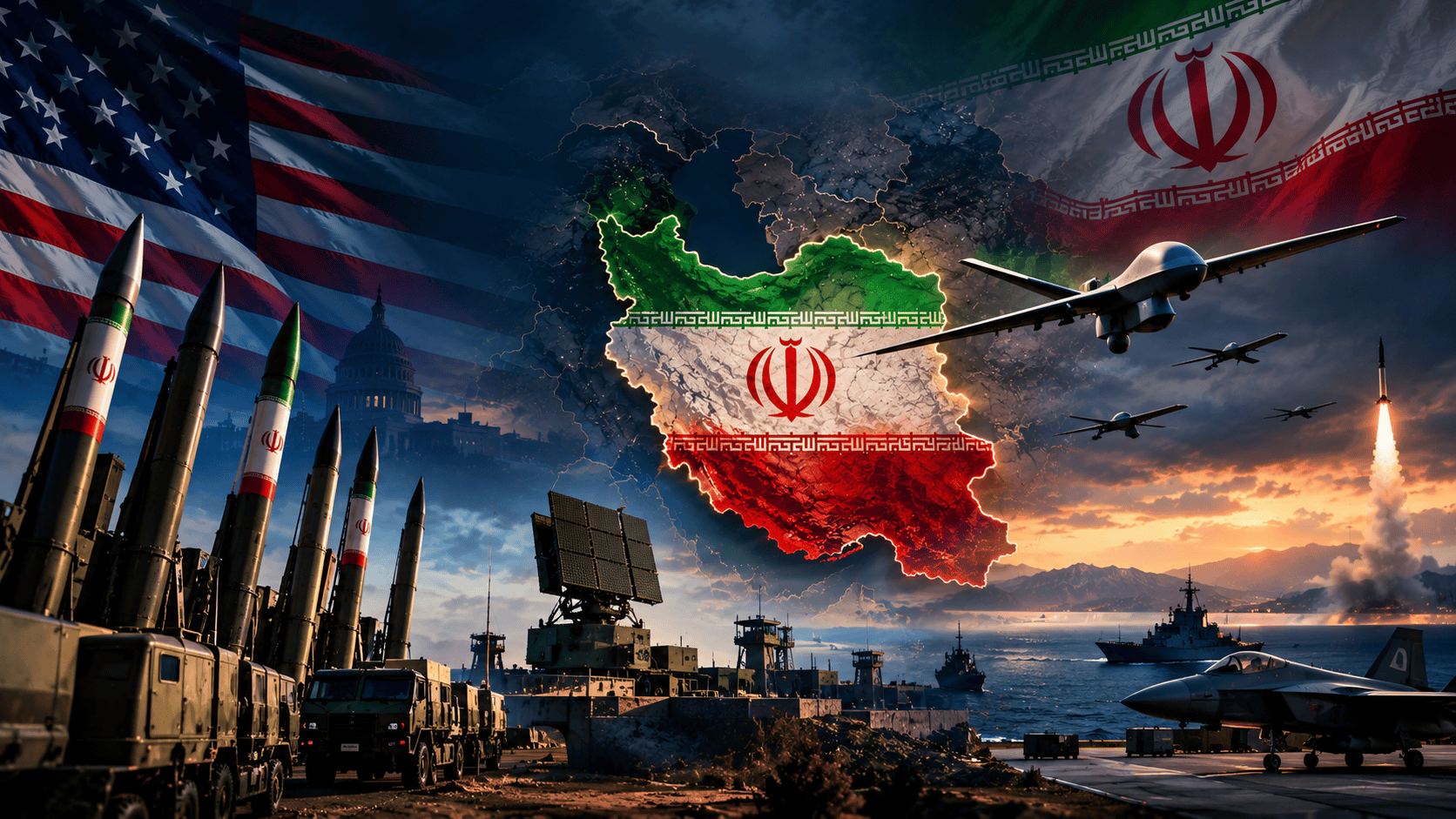
Iran military developments are central to understanding the Middle East’s security environment today. Since 28 February 2026, the United States and Israel have been at war with Iran and its regional allies, following strikes that killed Supreme Leader Ali Khamenei and other senior officials. Iran’s missiles, drones and naval forces have shaped how the conflict unfolded, how Gulf states responded, and why talks have repeatedly stalled.
This article explains Iran’s main capabilities, what is publicly documented about its missile and drone programs, and what the latest verified developments mean for Iran-US relations. Where a claim comes from one government or party, we say so.
What Are Iran’s Major Military Capabilities?
Iran’s military has two parallel structures: the regular armed forces (Artesh) and the Islamic Revolutionary Guard Corps (IRGC), which runs the missile and drone programs and a separate navy. The main capability areas are:
- Missiles: Iran’s ballistic missile inventory is widely described as the largest in the Middle East.
- Drones: Cheap one-way attack drones that can be launched in large numbers.
- Air defense: A mix of imported and domestically built systems, heavily contested in recent fighting.
- Naval forces: Small fast-attack craft, mines and anti-ship missiles, built for the confined waters of the Gulf rather than open-ocean combat.
- Ground forces: The Army, IRGC ground units and the Basij volunteer force. Analysts found little evidence of significant defections during the early weeks of the war.
- Cyber: Open information is limited, but see the cyber section below.
Iran has long relied on asymmetric tools because sanctions limited its access to modern fighter aircraft and heavy conventional equipment.
Iran’s Missile Developments
Iran’s missile program has its roots in the Iran-Iraq War of the 1980s. Iran started a ballistic missile program to deter Iraqi missile attacks on its cities and to compensate for its lack of a modern air force under sanctions.
What is publicly documented
Iran’s arsenal covers several categories:
- Short-range ballistic missiles such as the Fateh-110 family, with ranges under 1,000 km.
- Medium-range ballistic missiles such as the Shahab-3 and the Khorramshahr. The Shahab-3 is Iran’s most mature liquid-fueled medium-range missile, with a range of roughly 1,300 km. Published figures for variants differ by source.
- Cruise missiles, including the Quds (Paveh) type, which some analysts credit with a range of about 1,650 km.
- Hypersonic claims: In 2023 Iran unveiled what it described as its first domestically produced hypersonic ballistic missile, the Fattah series. That description comes from Iran, and independent verification of its performance is limited.
Range and numbers
Reuters has reported that Iran maintains a self-imposed ballistic missile range limit of about 1,240 miles (roughly 2,000 km), and found no evidence supporting claims that Iran’s missiles could soon reach the United States. A 2025 US Defense Intelligence Agency assessment said Iran’s space launch vehicles could eventually support an intercontinental ballistic missile, potentially by 2035, if the government chose that path.
Stockpile estimates vary. An Israeli-linked think tank citing IDF assessments put the arsenal at about 2,500 missiles by February 2026, while a former US commander has said Iran had more than 3,000. These are estimates, not confirmed inventories.
Strategic role
For Tehran, missiles are a deterrent and a way to hit targets that its air force cannot reach. Iranian officials describe the range limit as sufficient because it places Israel and US-linked bases in the Gulf within reach. Western governments, by contrast, see the program as a security threat. Iran says its program is defensive.
Iran’s Drone Developments
Drones are the other pillar of Iran’s military strategy. Iran has built a large fleet of unmanned aerial vehicles, including Shahed-series one-way attack drones that loiter before striking. They are slower and cheaper than ballistic missiles and can be launched in waves alongside them.
Major categories
- One-way attack (loitering) drones: the Shahed-136 and related types.
- Combat and surveillance drones: the Shahed-129 class and others.
- Newer jet-powered variants, reported by analysts.
Use and international concern
Iran used hundreds of drones in its April 2024 and June 2025 strikes on Israel. The Shahed-136 also became a global concern after Russia used it in Ukraine. Iran Watch notes that Tehran supplied the Shahed-136 to Moscow early in the Ukraine war, and that Russia is now reportedly supplying Iran with drone-warfare advice, components and a pending shipment of Geran-2 drones, an improved version of the Shahed. Those transfers are reported, not officially confirmed.
Confirmed versus claimed in 2026
- Reported: Long-range Shahed-136 drones have been a damaging part of Iran’s strikes on Gulf infrastructure and on commercial ships near the Strait of Hormuz.
- Disputed: In June, a US official said a Shahed drone downed a US helicopter near the strait. Iran said it did not deliberately target the helicopter.
- Iranian claims: Iran has stated it shot down several US drones (MQ-9 and MQ-1 types) over the Gulf in August and September. These claims come from Iranian officials and military sources.
Iran’s Military Developments and Regional Security
Iran’s capabilities directly affect Gulf security. After the strikes began, Iran launched missile and drone attacks on Israel, US bases and US allies in the region, and blocked the Strait of Hormuz. Gulf states including the UAE, Saudi Arabia, Kuwait and Bahrain have also been drawn into the fighting.
Key security concerns now include:
- Air defense strain: Cheap drones force defenders to use expensive interceptors.
- Energy infrastructure: Attacks on or near oil and gas facilities affect global markets.
- Maritime risk: Commercial shipping has been targeted or delayed.
- Spread to other fronts: Fighting resumed between Hezbollah and Israel, and the Houthis in Yemen joined the conflict in late March.
Iran has also been accused of reaching beyond the region. UK Prime Minister Andy Burnham said on 30 September there were “strong indications that Iran played a part” in a 27 September incident near RAF Fairford, in which five men were arrested. Iran’s foreign minister Abbas Araghchi rejected the claim. The police investigation was still ongoing at the time of writing.
Iran’s Naval and Strait of Hormuz Capabilities
The Strait of Hormuz is a narrow passage at the mouth of the Persian Gulf, through which a large share of the world’s seaborne oil and gas passes. That makes Iran’s ability to threaten shipping a major source of leverage.
Iranian naval forces
The IRGC Navy and the regular Navy operate different roles. The IRGC emphasizes fast boats, mines, coastal missiles and drones. The regular Navy operates frigates and submarines. US officials say they severely damaged Iran’s naval capabilities, mainly in the Gulf of Oman, and the US Navy reportedly sank the frigate IRIS Dena in the Indian Ocean in March. Iran’s own damage assessments differ.
Shipping and the 2026 crisis
Iran has restricted transit through the waterway since early March, and its top security official said in August that it would not fully reopen until the US met Tehran’s conditions. Iran’s parliament speaker repeated in September that the strait would stay closed until the US meets its conditions. The US position differs: President Trump has insisted the strait is open and operating. And on 4 October, Al Jazeera reported that Iran said Hormuz would remain closed until the US meets its conditions.
International bodies have weighed in. The International Maritime Organization’s administrative council agreed that member states should reject Iran’s efforts to impose sovereignty over the strait. For the day-to-day picture, see our Strait of Hormuz updates.
Iran Military Developments and US-Iran Tensions
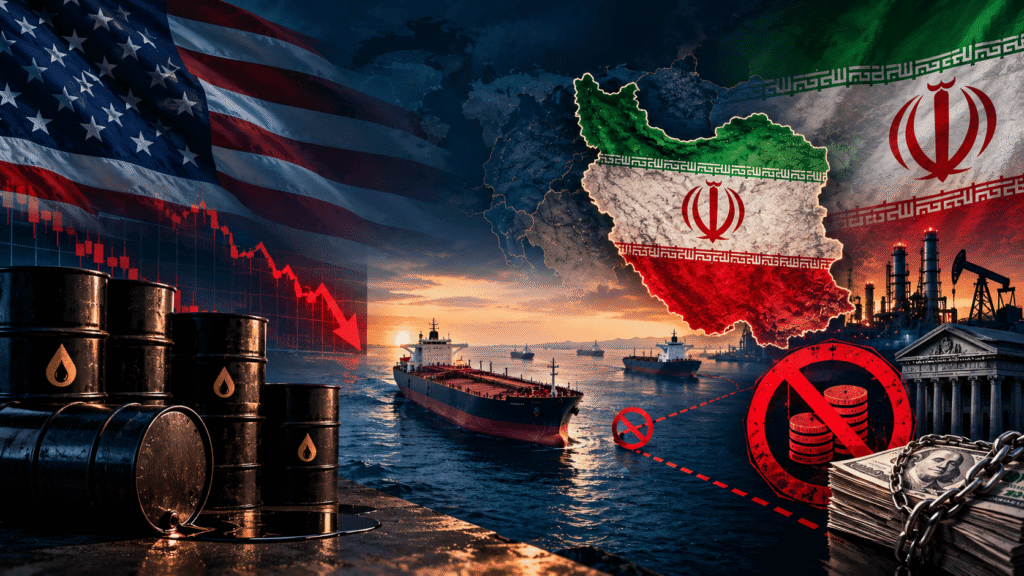
Military events have driven the diplomacy rather than the other way around. The February strikes took place during US-Iran negotiations over Iran’s nuclear program. Since then, the US has built up forces in the region, enforced a naval blockade on Iranian ports at different points, and struck Iranian military targets.
Both sides cite deterrence. The US says it must keep Iran from threatening shipping and US forces. Iran says its missiles, drones and control of the strait are what stop further attacks. In early September, the Defense Secretary extended the deployment of about 50,000 US troops in the region into 2027.
For the history behind this pattern, see Iran-US relations history and our coverage of US strikes on Iran.
Recent Iran Military Developments
These are the most recent developments we could verify as of 5 October 2026:
- 27-30 September: Incident at RAF Fairford and the UK allegation of Iranian involvement (see above). US Secretary of State Marco Rubio said the “hands of a foreign actor” were involved; Iran denied any involvement.
- 1 October: Reports said Rubio ordered the Iranian delegation, including Araghchi, to leave the US, citing Axios. That report has not been independently confirmed here. The Hill reported that Trump rejected an Iranian seven-day proposal.
- 1 October: An IRGC official claimed Iran achieved a first long-range ballistic hit on moving targets. The claim was not verified.
- 1 October: A senior Iranian delegation visited southern Lebanon.
- 2 October: CGTN reported Trump said renewed strikes after the 3 November midterms were “possible” as ceasefire talks stalled.
- 3-4 October: Reports said the US was deploying a third aircraft carrier to the Middle East. Iran told the US there is “no military solution” to the war, and the Houthis claimed a strike on an Aramco site as Yemen fighting intensified.
One daily tracker noted that no US or coalition strike on Iranian territory ashore was reported between 2 and 3 October.
Iran’s Military Strategy and Regional Partnerships
Iran’s strategy combines deterrence, distributed command and regional partners. Analysts have described a decentralized “mosaic defence” approach, with units responding semi-independently. Iran also works with groups often called the “Axis of Resistance,” including Hezbollah, the Houthis and Iraqi armed factions.
It helps to separate three types of information:
- Documented relationships: Iran openly supports Hezbollah and has long been tied to the Houthis and Iraqi groups. The October 1 delegation to southern Lebanon is one recent public sign.
- Government allegations: The US and UK link Iran to plots and attacks abroad. Iran denies them.
- Independent reporting: One analyst at the Washington Institute said Russia and China provided satellite imagery to help Iran target US forces. That is an analyst’s assessment, not a confirmed government statement. Russia’s Security Council chairman said on 3 October that Russia would “never sacrifice” its relationship with Iran.
International Response
Reactions have been divided:
- UN: The UN Secretary-General and several countries condemned the US-Israeli strikes, while the Security Council passed a resolution condemning Iran’s retaliatory strikes on Gulf states.
- Europe and NATO: In March, China and European NATO members rejected a US call for military support to reopen the strait. The UK later allowed use of its bases for certain defensive operations.
- Gulf states: Several have been both targets of Iranian strikes and, in some cases, participants in the conflict.
- Russia and China: Both have opposed US actions and kept ties with Tehran.
Impact on Iran-US Relations
Military developments affect almost every track of diplomacy:
- Negotiations: Talks in Islamabad in April ended without agreement, and a June memorandum to end the war collapsed in early July. Iran says the deal is “suspended”; Trump called it “over.”
- Sanctions: On 24 August, Treasury Secretary Scott Bessent announced a sanctions campaign, “Operation Economic Outcast,” warning other countries to halt economic activity with Iran.
- Nuclear issues: Inspectors’ access remains limited. Iran told the IAEA in February that normal safeguards were “legally untenable and materially impracticable.” See Iran nuclear inspections and Iran-US nuclear talks.
- Ceasefire efforts: See Iran-US ceasefire updates. In September, Vice President JD Vance said Washington had cut contact with Iran while it fires on ships without permission.
The central dispute is sequencing: Iran wants sanctions relief, frozen assets and an end to military operations before reopening Hormuz, while the US wants shipping restored first.
Iran Military Developments Timeline
- April and October 2024: Iran strikes Israel after earlier escalation.
- June 2025: The Twelve-Day War between Israel and Iran, with US strikes on nuclear sites, ends in a ceasefire.
- September 2025: The UN reimposes sanctions on Iran through the “snapback” mechanism.
- 28 February 2026: US-Israeli strikes begin; Ali Khamenei is killed. Iran retaliates against Israel, US bases and Gulf states.
- Early March 2026: Iran restricts Hormuz shipping. Mojtaba Khamenei is named Supreme Leader on 8 March.
- 7-8 April 2026: Pakistan-mediated two-week ceasefire announced.
- 11-13 April 2026: Islamabad talks fail; a US naval blockade of Iranian ports begins.
- Mid-June 2026: US and Iran sign a memorandum to end the war and lift blockades.
- Early July 2026: The memorandum collapses amid new Hormuz attacks and US strikes.
- 24 August 2026: US announces a new sanctions campaign.
- Late August-early September 2026: Clashes at sea and across the region over Hormuz.
- 27 September 2026: RAF Fairford incident.
- 1-4 October 2026: Talks stall; US reinforcements reported; Iran repeats that Hormuz stays closed.
Frequently Asked Questions
What are the latest Iran military developments?
As of 5 October 2026, talks have stalled, Iran says Hormuz stays closed until its conditions are met, and Trump has said renewed strikes after the midterms are “possible.” A third US carrier is reportedly heading to the region.
What missiles does Iran have?
Short-range (Fateh-110 family), medium-range (Shahab-3, Khorramshahr) and cruise missiles, plus systems Iran calls hypersonic. Exact numbers and performance are estimates.
What are Iran’s drone capabilities?
A large fleet of one-way attack drones such as the Shahed-136, plus combat and surveillance types. They have been used against Israel, Gulf targets and shipping.
Why are Iran’s military developments important?
They influence Gulf security, global energy flows and the prospects for talks with Washington.
How do Iran’s military capabilities affect the Strait of Hormuz?
Iran’s missiles, drones, mines and fast boats let it threaten or restrict shipping, and it has restricted transit since March. The US disputes Iran’s claim of control.
How do Iran military developments affect Iran-US relations?
Strikes, blockades and attacks on shipping have repeatedly interrupted or ended diplomacy. See our Iran-US relations pillar for the wider picture.
What role do missiles and drones play in Iran’s strategy?
They are its main tools for deterrence and retaliation, designed to reach targets its air force cannot and to strain expensive air defenses.
How has Iran’s military capability developed over time?
From improvised missiles during the 1980s Iran-Iraq War to a large domestic missile and drone industry, shaped by sanctions and repeated conflict.
Sources / References
- Critical Threats (CTP-ISW), Iran Update, 1 October 2026
- Al Jazeera, Iran coverage, 3-5 October 2026
- Reuters, “Rubio says UK airbase incident involved a foreign state,” 29 September 2026
- BBC and Global News, reports on UK Prime Minister Burnham’s 30 September remarks
- IANS, Araghchi response on RAF Fairford, 1 October 2026
- CGTN, 2 October 2026; The Hill and CBS News, 1-3 October 2026, via GlobalSecurity.org
- Jerusalem Post live updates, 1 October 2026
- Reuters via Oman Observer; Bernama-Anadolu (12 August, 20 September 2026), on Hormuz positions
- Iran Watch, “Iran War: Weapon Programs One-Month Update,” 31 March 2026
- Gulf News, “Inside Iran’s missile playbook,” March 2026
- Wikipedia, “2026 Iran war” (background timeline; cross-checked where possible)