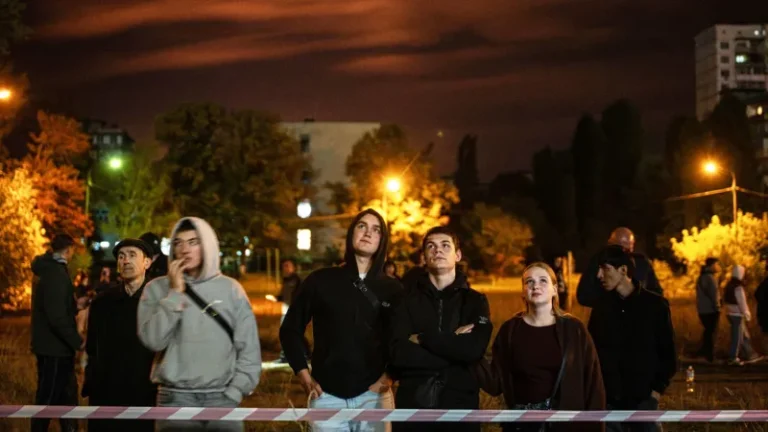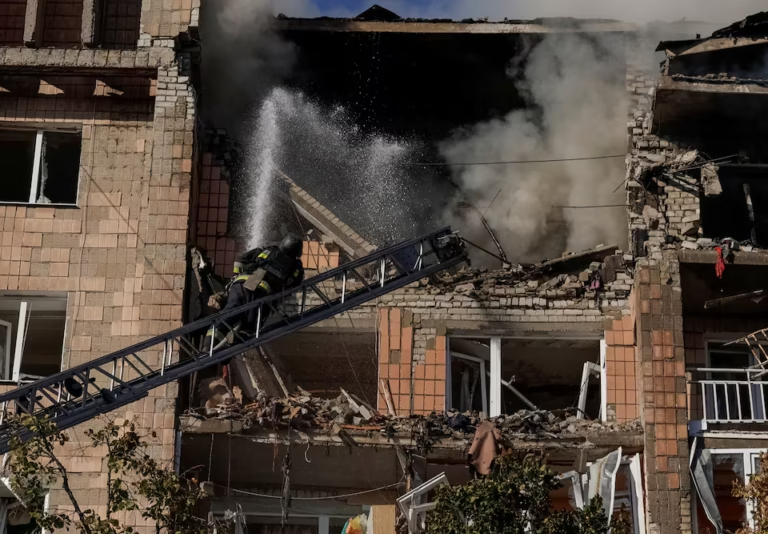

A Russian drone strike hit a weapons depot storing munitions for Ukraine’s military near a residential area on the outskirts of Kyiv late Friday, killing 37 people and forcing the evacuation of nearly 400 residents. The blast set off shells, mines and drones stored at the site, damaging nearby homes and a care facility for elderly and disabled residents. President Volodymyr Zelensky has ordered an investigation into what he called negligence by officials who allowed explosives to be stored beside a residential neighborhood.
A Blast That Should Never Have Happened, Zelensky Says
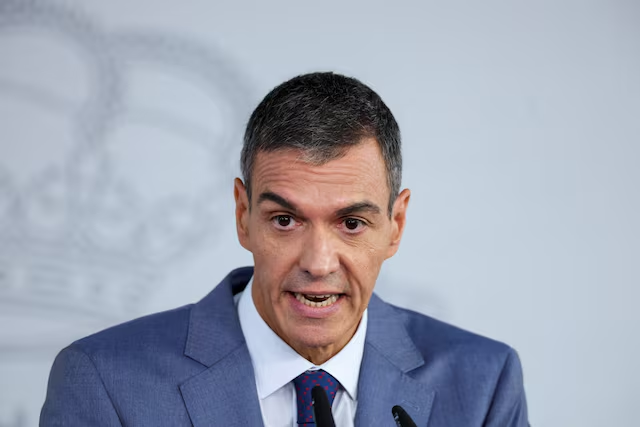
Zelensky said the depot’s location was the core failure behind Friday night’s deaths. “Definitely shouldn’t have been there,” he said of the storage site, adding that an investigation had been opened into “terrible negligence on the part of those who stored explosive right next to people.”
Four children are among the 42 people injured in the explosion, regional head Tymur Tkachenko said. A rescue operation continued into Saturday at the site in Bucha district, where crews worked through damaged buildings searching for survivors and clearing debris from the blast.
Zelensky called the decision to store explosives there “absolutely unacceptable” and confirmed that criminal proceedings had been opened on charges of official negligence. “There are regulations in place. Ammunition cannot be stored near homes or other residential areas,” he said. “Appropriate conclusions will certainly be drawn.”
Russia Confirms the Target, Names the Cargo
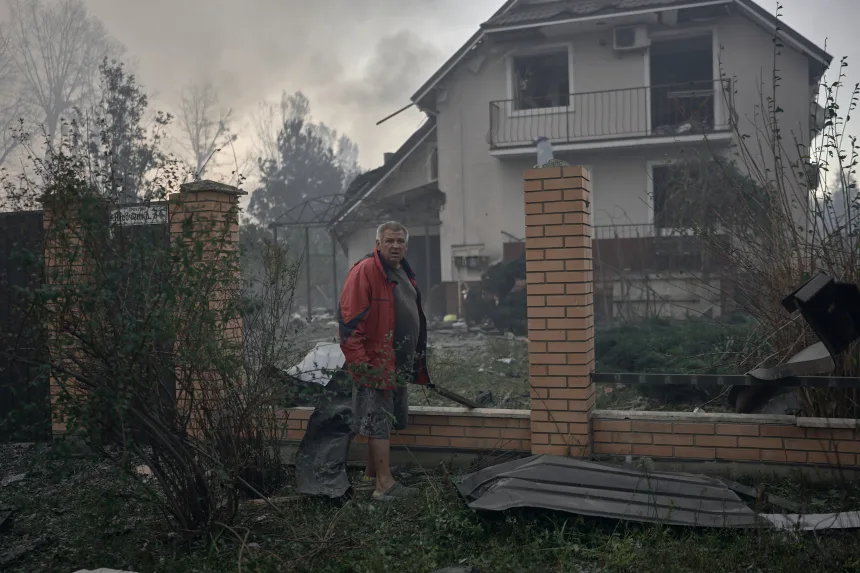
Russia’s Ministry of Defence said in a statement that its forces had targeted an ammunition depot in Myla, a village west of Kyiv, describing the site as holding components and launch boosters for FP-1 and FP-2 long-range unmanned aerial vehicles. The statement did not address the residential damage or the death toll on the ground.
Ukraine’s prosecutor general’s office said it was reviewing the legality of storing explosive materials near residential buildings in Myla, and that the actions of officials who made the underlying decisions would also face investigation. The dual inquiries, one from Zelensky’s office and one from prosecutors, point to a government response focused as much on accountability at home as on the strike itself.
A Second Depot Hit in Recent Months
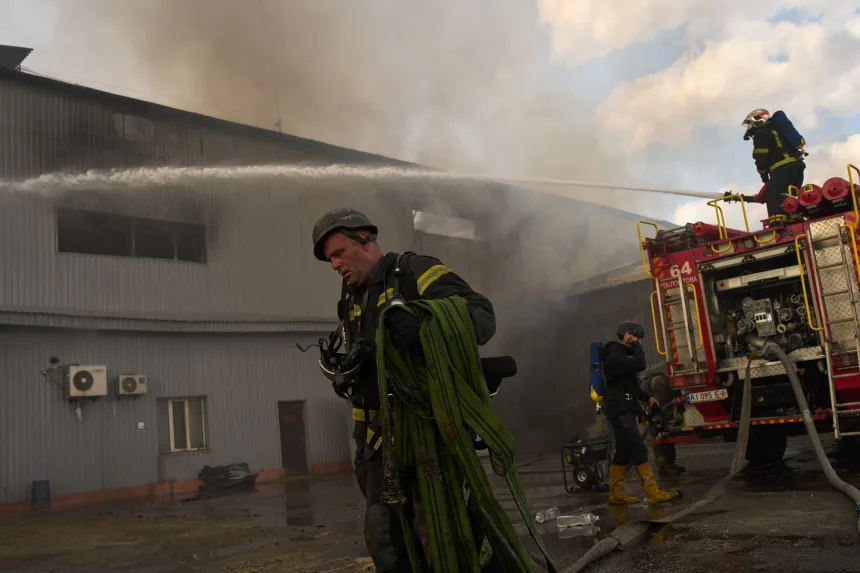
Friday’s attack marks the second time in recent months that a munitions depot near Kyiv has been struck, and the repeat incident has fueled fresh anger among officials and residents. Zelensky referenced the earlier strike on an ammunition warehouse in Vyshneve in July, which triggered a secondary detonation that killed nine people, injured dozens more and damaged more than 280 homes.
The pattern of secondary detonations, where a drone strike ignites stored munitions and multiplies the damage far beyond the initial impact, has become a recurring danger for Ukrainian civilians living near military storage sites. Both incidents raise the same question Zelensky’s investigation is now meant to answer: why explosives were positioned close to homes in the first place.
Additional Deaths Across Kyiv and the Country
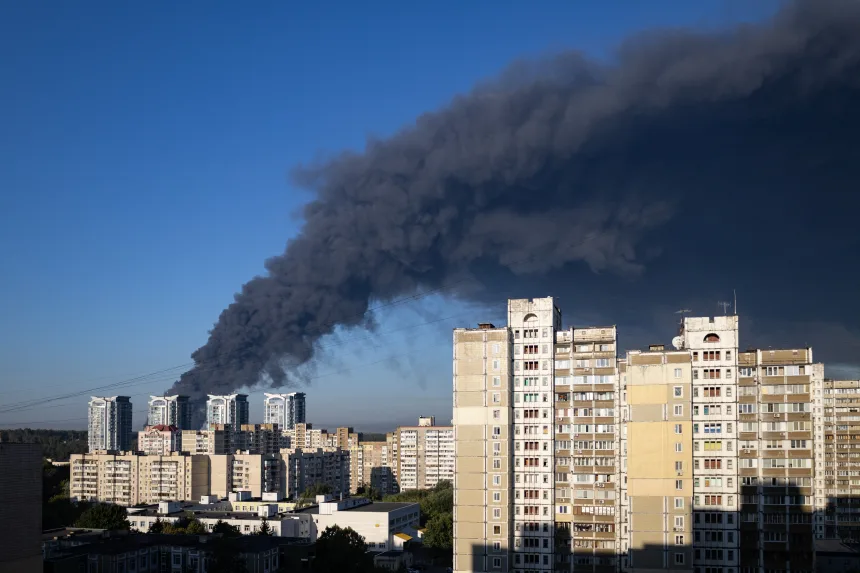
The depot strike was not the only fatal attack to hit the Kyiv area over the past day. Tkachenko said a 14-year-old was killed in a separate attack in the Boryspil district. Kyiv Mayor Vitaliy Klitschko said a two-year-old died after a Russian drone crashed in the Obolonskyi district of the capital. Klitschko added that five people, including an 18-year-old girl, were injured in fresh strikes on Kyiv on Saturday morning.
Five people have been killed across Ukraine over the past day, according to local officials. Zelensky reported further overnight strikes in Odesa, Dnipropetrovsk, Sumy and Zaporizhzhia. The Ukrainian army said it shot down 233 Russian drones during the same period, a figure that gives some sense of the scale of the aerial assault Ukrainian air defenses are absorbing on a nightly basis.
Cross-Border Strikes Continue in Russia
The exchange of strikes has not been one-sided. Local officials in Russia said two people were killed and 25 injured in strikes on the Belgorod and Rostov regions over the past 24 hours. In the Moscow-annexed Ukrainian region of Zaporizhzhia, the Russia-appointed governor said four people were injured after a Ukrainian strike hit a shopping center.
Russian online retailer Ozon said one of its logistics centers was hit in an overnight Ukrainian drone strike. The company said it had also suspended operations at a second logistics center and evacuated staff because of the danger in the surrounding area. Ozon’s facilities in Krasnodar, Dagestan, Stavropol and Adygea were targeted in strikes earlier in the week, causing several injuries and widespread damage to the company’s infrastructure.
Ukraine’s Shift Toward Economic Targets
The Ozon strikes reflect a broader shift in Ukraine’s targeting strategy. Russia and Ukraine have been intensifying their aerial campaigns against each other in recent months, with Kyiv increasingly directing its operations at Russian economic targets rather than purely military sites.
Ukraine has for weeks struck facilities belonging to Wildberries, Russia’s largest online retailer, describing the company as a legitimate military target because it supplies components used by Russian forces, a claim Moscow denies. The strikes on Ozon appear to extend that same logic to a second major Russian retailer, suggesting Ukraine views commercial logistics networks as intertwined with Russia’s war supply chains.
What the Investigation Will Determine
The immediate focus in Kyiv now shifts to the investigation Zelensky has ordered into how the Bucha depot came to be located near a residential neighborhood and a care home. Ukrainian regulations explicitly prohibit storing ammunition near homes, according to Zelensky’s own account, which raises the question of how the rule was bypassed or ignored at this specific site.
Criminal proceedings on charges of official negligence are already underway, and the prosecutor general’s review of the site’s legality runs in parallel. Whether the investigation identifies specific individuals responsible for the storage decision, and what consequences follow, will likely shape how Ukraine handles ammunition storage near populated areas going forward, particularly given that this is the second such incident in as many months.
For residents of Bucha district, the immediate priority remains the rescue operation still underway at the blast site as of Saturday, with crews continuing to search damaged structures for anyone still unaccounted for following Friday night’s explosion.