

As American families continue to grapple with rising prices at grocery stores, gas stations, and across household budgets, President Donald Trump is urging patience.
Speaking to reporters on Wednesday, Trump downplayed concerns about a fresh surge in inflation, arguing that the recent increase is closely tied to the ongoing conflict with Iran and will eventually reverse once the war ends.
The comments came after new government data showed consumer prices rose by more than 4% in May compared with a year earlier—the fastest pace of inflation seen in three years.
While economists and political strategists are increasingly concerned about the impact on consumers and the broader economy, Trump appeared unfazed, expressing confidence that energy prices will eventually fall and bring inflation down with them.
His remarks arrive at a critical moment, with Republicans heading into November’s midterm elections amid growing voter frustration over the rising cost of living.
Inflation Returns to the Center of Political Debate
Inflation has once again become one of the biggest issues facing the White House.
For many Americans, the effects are visible every day. Fuel costs remain elevated, grocery bills continue to rise, and businesses are facing higher transportation and operating expenses.
According to the latest economic data, inflation accelerated sharply in May, reversing months of gradual improvement and raising fresh concerns about the direction of the economy.
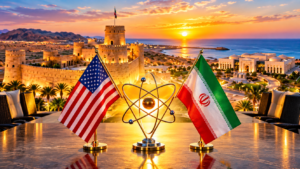
The increase has largely been linked to disruptions in global energy markets triggered by the conflict involving Iran and the ongoing instability around the Strait of Hormuz.
Because oil remains a critical component of the global economy, any disruption in supply routes tends to affect a wide range of goods and services.
Higher energy costs often translate into higher prices for food, manufacturing, transportation, and consumer products.
Trump Defends His Decisions
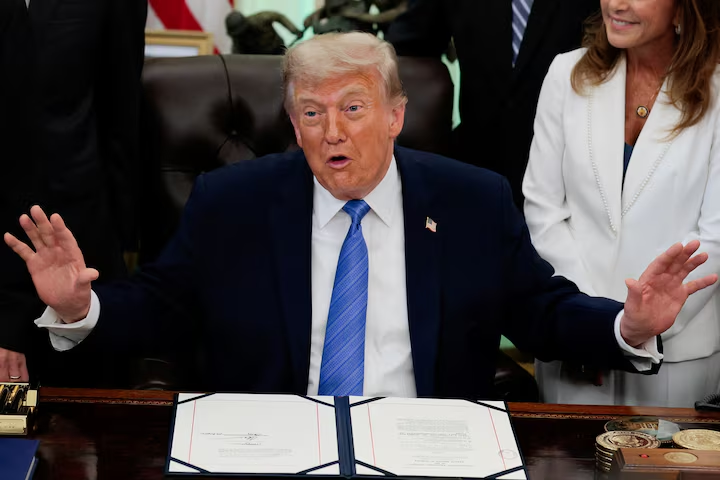
Despite mounting concerns, Trump maintained that the economic consequences are temporary and justified by broader national security objectives.
The president revealed that his administration approved a plan to quietly move oil tankers through the Strait of Hormuz in an effort to keep energy supplies flowing and limit further price increases.
According to Trump, the operation was necessary despite the risks involved.
He argued that protecting energy supplies and maintaining pressure on Iran were priorities worth pursuing, even if they carried short-term economic costs.
More importantly, Trump insisted that current inflation will not last.
“When the war is over, oil prices will fall,” the president said, predicting that energy costs would drop dramatically once tensions in the Gulf ease.
His confidence reflects the administration’s belief that today’s inflation is largely geopolitical rather than structural.
The Strait of Hormuz Remains the Key Factor
Much of the current economic uncertainty can be traced back to one narrow stretch of water.
The Strait of Hormuz serves as one of the world’s most important shipping routes, carrying a significant share of global oil and liquefied natural gas exports.
Since tensions escalated between Washington and Tehran, disruptions to shipping activity have created uncertainty throughout energy markets.
Even rumors of interruptions in the waterway can send oil prices higher, affecting economies around the world.
Although efforts have been made to restore normal maritime traffic, progress has been slow.
Shipping companies, insurers, and energy traders remain cautious as long as military risks persist in the region.
As a result, energy markets continue to operate under a cloud of uncertainty.
Republicans Face Growing Political Pressure
The timing of the inflation surge presents a challenge for Republicans.
With congressional elections only months away, the party is seeking to defend its majorities in both the House of Representatives and the Senate.
Historically, rising prices have been politically damaging for incumbent governments because voters tend to judge leaders based on their personal financial experiences.
Even if inflation is driven by international events, many consumers focus primarily on what they are paying at the pump or in supermarkets.
That reality has some Republican strategists worried that prolonged economic pressure could weaken support in competitive districts.
Democrats have already begun highlighting inflation as a major campaign issue, arguing that many families continue to struggle despite White House assurances that conditions will improve.
A Challenge for the Federal Reserve
The inflation report is also creating complications for policymakers at the Federal Reserve.
For months, investors and businesses have hoped the central bank would begin lowering interest rates, which would reduce borrowing costs across the economy.
Lower rates typically make mortgages, car loans, and business financing more affordable.
Trump has repeatedly called on the Federal Reserve to cut rates and stimulate economic activity.
However, stronger inflation makes that decision more difficult.
Central bankers are generally reluctant to lower rates when prices are rising quickly because doing so could increase demand and push inflation even higher.
As a result, hopes for near-term rate cuts may now face additional delays.
Economic Impact Could Last Beyond the Conflict
Even if Washington and Tehran eventually reach a diplomatic agreement, economists warn that the economic effects may not disappear overnight.
Energy markets often take time to recover after major disruptions.
Shipping routes must be restored, supply chains need to stabilize, and businesses require confidence that conditions are safe enough to resume normal operations.
Some analysts believe parts of the energy sector could continue feeling the impact well into 2026.
That means consumers may face elevated costs for longer than policymakers would like.
While the United States is less vulnerable to foreign energy shocks than it was decades ago, sustained increases in fuel prices can still slow economic growth and reduce consumer spending.
Security Goals Continue to Drive White House Policy
Throughout the conflict, Trump has consistently argued that national security considerations outweigh short-term economic concerns.
The administration maintains that preventing Iran from acquiring nuclear weapons remains its overriding objective, even if that approach contributes to higher energy prices and inflation in the near term.
That position has sparked debate among economists, lawmakers, and voters.
Supporters argue that strategic security interests must take priority.
Critics counter that Americans are already feeling the financial consequences and deserve greater attention to economic hardships at home.
A Delicate Balancing Act Ahead
For now, the White House is trying to manage two difficult challenges simultaneously: an overseas conflict with major geopolitical consequences and an economy facing renewed inflationary pressure.
Trump remains confident that both issues will eventually improve.
But with prices rising, interest rate cuts potentially delayed, and voters increasingly focused on household finances, the coming months may test that optimism.
Whether inflation begins to ease—or becomes a defining issue in the midterm elections—could depend as much on developments in the Gulf as on economic decisions made in Washington.
For millions of Americans watching their expenses climb, the hope is that relief arrives sooner rather than later.