Clicxpost

Iran war spreads to Saudi oil fields and Caspian Sea as US pauses strikes

Iran war widens

The war centered on Iran widened on multiple fronts over the weekend even as the United States paused a two-week run of airstrikes, with Yemen’s Houthi rebels hitting Saudi Arabia’s oil infrastructure and Iran accusing Ukraine of a deadly attack on one of its ships in the Caspian Sea.

The U.S. military said Saturday that its naval blockade against Iran “remains in full effect,” but it gave no explanation for why it stopped a streak of 13 consecutive nights of escalating strikes. Iran also reported no new attacks on its neighbors over the weekend, a break from the near-daily retaliatory strikes it had launched against U.S. positions since the American campaign began.

Trump steps back from expanding the Iran campaign
President Donald Trump has decided, for now, to hold off on plans to intensify attacks on Iran, the New York Times reported Saturday, citing two people briefed on internal discussions. A senior administration official said Trump “has always been clear that his preference is diplomacy, but he has shown Iran what will happen if they fail to come to the table in a serious way.”

The president and his advisers are weighing several risks tied to a wider war, according to the Times: the possibility of the conflict expanding further, the strain on U.S. defense stockpiles, friction with Gulf allies, and the effect on global energy supplies and the broader economy.

Vice President JD Vance and Gen. Dan Caine, chairman of the Joint Chiefs of Staff, both raised concerns about the U.S. munitions stockpile during a White House meeting with Trump on Friday, a U.S. official told CNN. A Department of Defense source told the network that operations against Iran are “on a hold” for now, though the source did not say for how long.

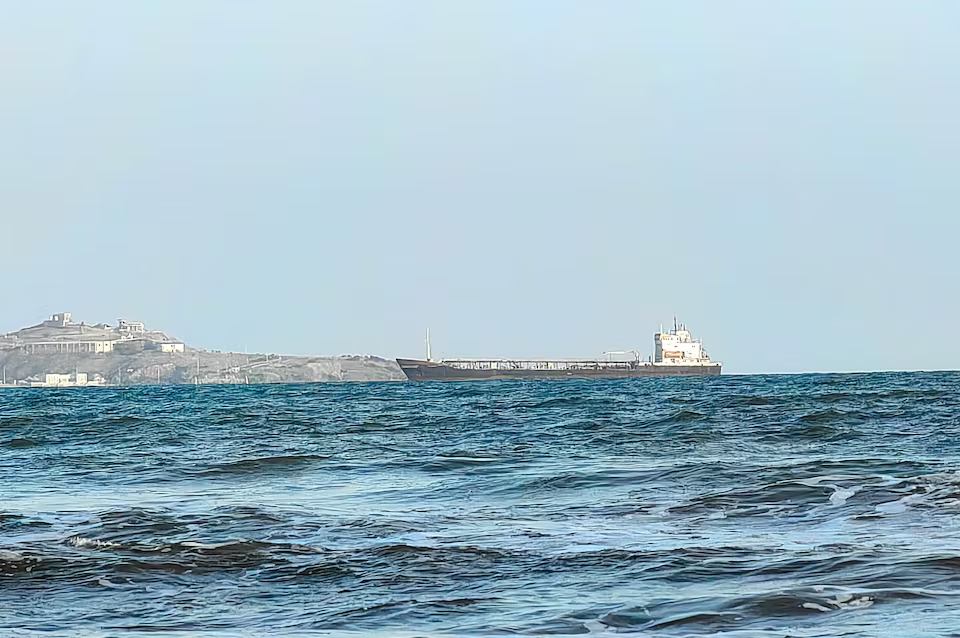
The pause has not stopped the war from spreading elsewhere. Saturday’s fighting between Iran’s Houthi allies in Yemen and Saudi Arabia showed how a conflict that has already disrupted shipping through the Strait of Hormuz could now threaten a second major energy corridor and drag Yemen back into full civil war.

Houthis strike Saudi oil facilities for the first time since 2022

Houthi military spokesperson Yahya Saree said the group fired ballistic missiles and drones at Aramco facilities in the Red Sea cities of Jizan and Yanbu on Saturday, marking the group’s first direct attack on Saudi oil infrastructure in four years. The Houthi-run Yemeni Armed Forces said in a statement that the Jizan operation involved “dozens of ballistic missiles and drones,” while a separate strike targeted Yanbu with ballistic and cruise missiles.

A fire broke out at the Jizan refinery around 1:17 a.m. UTC Saturday. NASA’s FIRMS satellite monitoring system later detected an abnormal temperature spike at the site, and satellite imagery reviewed by open-source researchers showed the fire spreading, giving independent confirmation of damage beyond the Houthis’ own claims. Saudi Arabia’s Civil Defense had issued warnings for residents of Jazan and Yanbu shortly before the strikes, later lifting them once officials said the danger had passed. Regional media reported at least five explosions in Jazan, and commercial flights to the area diverted or entered holding patterns.

Neither Aramco nor the Saudi government had issued an official damage assessment by Saturday. Two Asia-based trading sources told Reuters they had received reports of damage at the Jizan site, but Aramco did not respond to requests for comment. The Jizan refinery processes roughly 400,000 barrels of crude per day, about 4% of Aramco’s total daily oil and liquids output, and includes what the company describes as the world’s largest integrated gasification combined-cycle plant.

Yanbu carries even more weight in the current crisis. Since Iran effectively closed the Strait of Hormuz, Saudi Arabia has pushed its East-West Pipeline, known as the Petroline, to a record 7 million barrels per day, converting parallel natural gas liquids pipelines to crude service to hit that volume. Roughly 2 million barrels of that total supply Saudi domestic refineries, while the rest loads onto tankers at Yanbu’s terminals. Shipping data cited by AFP showed that Yanbu accounted for 92% of Saudi Arabia’s seaborne crude exports in June and 78% so far in July, making it the kingdom’s near-total substitute for Hormuz-routed exports.

The Houthis said the strikes on Aramco were retaliation for Saudi airstrikes on the port city of Hodeidah and Kamaran Island earlier in the week. Saree said the attacks reflected Saudi Arabia’s “determination to continue its siege of our people and its violation of our country’s sovereignty.” Brent crude climbed back above $100 a barrel following the strikes.

Iran accuses Ukraine of Caspian Sea attack as Yemen’s truce collapses

Iran’s Foreign Ministry separately accused Ukraine of attacking an Iranian commercial vessel in the Caspian Sea on Saturday, saying the resulting explosion killed one sailor and injured another. The ministry summoned Ukraine’s chargé d’affaires in Tehran to protest what it called a “hostile and criminal” act, according to state news agency IRNA, and said the attack could further inflame the Russia-Ukraine war.

Ukrainian President Volodymyr Zelensky said on social media that Ukrainian forces had achieved “very strong results” from long-range strikes in the Caspian Sea, targeting a Russian warship along with vessels used to transport military cargo linked to Iran. Iran’s foreign ministry maintained that Tehran “has never intervened in the conflict between Russia and Ukraine.” Iranian Foreign Minister Abbas Araghchi raised the incident in a call with EU foreign policy chief Kaja Kallas, calling for a response from the UN Security Council and the broader international community.

Inside Yemen, the Saudi-backed government forces battling the Houthis for more than a decade struck Houthi sites in the Marib and al-Jawf provinces, officials said, while both sides moved additional forces to the front lines. Saudi Arabia has led an Arab coalition against the Houthis since the group seized the capital, Sanaa, in a civil war that killed hundreds of thousands of people before a ceasefire took hold in 2022.

That truce broke down this month. The Houthis have effectively joined the wider Middle East war their Iranian backers have waged since being attacked by the United States and Israel five months ago, declaring a naval blockade of Saudi Arabia over the past week. Houthi leader Abdul Malik al-Houthi said all Saudi oil facilities are now potential targets, a threat that Saturday’s strikes on Jizan and Yanbu suggest the group intends to carry out.

With Hormuz still effectively closed by Iran and Yanbu now under direct attack, Saudi Arabia’s two main routes for exporting crude oil are both facing active military threats for the first time in the current conflict. How long the U.S. pause on strikes against Iran holds may determine whether that pressure keeps building or starts to ease.


RECOMMENDED

UP NEXT

Uganda UN nomination

Uganda’s Otunnu becomes seventh candidate in race to lead the United Nations

Ugandan diplomat Olara Otunnu has joined the contest to become the next secretary-general of the United Nations, the seventh contender to succeed Antonio Guterres when he steps down at the end of this year. Otunnu, a former U.N. under-secretary-general who served as special representative for children and armed conflict, was nominated by Uganda in a letter dated July 24 to the presidents of the General Assembly and Security Council. General Assembly President Annalena Baerbock and Security Council President Zenon Ngay Mukongo forwarded the nomination and supporting documents to all 193 member states the following day, formally placing Otunnu in the race. At 75, he is the oldest of the current candidates for a role Guterres has held for two five-year terms, and his entry comes unusually late in the campaign. Candidates already in the race took part in a public town hall hosted by the General Assembly on July 23, where they laid out their platforms and fielded questions from member states and civil society groups. Otunnu did not take part because his candidacy had not yet been announced. A career that spans the UN system and Ugandan opposition politics Otunnu served as U.N. Under-Secretary-General and Special Representative for Children and Armed Conflict from 1997 to 2005 under then-Secretary-General Kofi Annan, placing the protection of children in war zones on the Security Council’s agenda for the first time. Before that appointment, he served as Uganda’s permanent representative to the U.N. and briefly as the country’s foreign minister, from 1985 to 1986. He later led the International Peace Academy, now known as the International Peace Institute, as its president from 1990 to 1998. Uganda’s foreign ministry credits Otunnu with introducing the straw-balloting system used to narrow the field of secretary-general candidates, a procedure diplomats have called the “Otunnu Formula” that has guided the selection process since 1981. His nomination will now be tested by the same mechanism he helped design decades ago. Otunnu’s path to global diplomacy runs through Uganda’s opposition politics as much as its foreign ministry. He led the opposition Uganda People’s Congress and ran against President Yoweri Museveni in the 2011 presidential election, losing to the leader who has held power since 1986. His nomination by the same government he once challenged marks an unusual turn, since Uganda has not explained publicly how it arrived at the decision to back him. Otunnu holds a bachelor’s degree in jurisprudence from Oxford University and a master of laws from Harvard Law School. He received the Sydney Peace Prize in 2005 and the German Africa Prize in 2002. Seven candidates, no clear frontrunner The other candidates are Rafael Grossi of Argentina, director-general of the U.N.’s International Atomic Energy Agency; former Chilean President Michelle Bachelet; Rebeca Grynspan, a former vice president of Costa Rica; Maria Fernanda Espinosa, a former foreign affairs and defense minister of Ecuador; Carolyn Rodrigues-Birkett, a former foreign minister of Guyana; and Macky Sall, a former president of Senegal. Otunnu is only the second African candidate in the race, joining Sall, and his entry has revived debate over the U.N.’s informal practice of regional rotation. Many diplomats had expected the next secretary-general to come from Latin America or the Caribbean, the only regional group that has not yet produced a U.N. chief under the current rotation pattern. There has also been support in some quarters for choosing the first woman to hold the position. In his vision statement, Otunnu said he would prioritize institutional reforms already underway and would move immediately to support efforts to end major international conflicts, naming Ukraine, Gaza, Sudan, the Democratic Republic of Congo and Iran as areas requiring renewed diplomatic attention. He also proposed creating a dedicated U.N. body to oversee global rules on artificial intelligence and said climate action must move forward without undermining economic development in poorer nations. He described his goal as serving as “a bridge builder” able to “propose creative solutions in difficult situations.” Guterres’ successor inherits an organization diplomats describe as being in crisis, facing pressure to reform a bureaucracy widely seen as bloated and to cut duplication across its many overlapping agencies. Should Otunnu win the post, Uganda would become the first East African country to produce a U.N. secretary-general since the organization’s founding in 1945, a milestone that would raise the country’s diplomatic profile even though the office itself answers to all member states rather than any single government. The selection process moves into a more concrete phase this week with straw polls in the 15-member Security Council, intended to narrow the field of candidates. Other contenders can still enter the race before that process concludes. Diplomats say no candidate currently holds a clear advantage, and the outcome will likely hinge on avoiding a veto from any of the Security Council’s five permanent members, particularly China, Russia or the United States.

Read More »
Canada wildfires 2026

Canada battles one of its most intense wildfire seasons on record

New wildfires broke out across Western Canada and forests continued to burn in Ontario as the country confronts what Prime Minister Mark Carney called one of the most intense wildfire seasons on record. Nearly 34,000 lightning strikes over the past week sparked a wave of new fires and evacuation orders in southern British Columbia. As of Friday morning, the province had 25 evacuation orders and 90 active wildfires, and officials warned that warming, drying conditions could push existing fires to grow further. “The weather forecast is far from favorable. There is no significant help from Mother Nature whatsoever in the foreseeable future,” said Incident Commander Hugh Murdoch, who oversees a cluster of fires near Kimberley, B.C., about 520 kilometers (323 miles) east of Vancouver. Kimberley braces as fires close in from the west Kimberley, a community of roughly 9,000 people in the province’s East Kootenay region, has spent the past week under an evacuation alert as the Matthew Creek wildfire and two separate Tower Creek fires burn to the west of the city. The Matthew Creek fire had grown to about 567 hectares as of Monday, while the Tower Creek fires measured 250 hectares and 30 hectares. A separate evacuation alert covers 66 properties along St. Mary Lake Road, southwest of the city, tied to two additional fires believed to have started from lightning. Kimberley Fire Chief Will Booth urged residents to rely only on official sources for updates, and acting mayor Sandra Roberts said the city would give residents as much advance notice as possible before any alert becomes an order, though she cautioned that fast-moving conditions could shorten that window. Crews have been unable to attack the fire directly because of steep terrain west of the city, so they are instead using heavy equipment to cut containment lines that would block the flames from reaching Kimberley’s edge. The fires near Kimberley form part of what officials call the Bootleg Complex, a group of seven blazes that Murdoch and his team are tracking closely. Murdoch said fire behavior in the complex has mostly been held in check so far, but with no rain in the forecast and temperatures running above seasonal norms, that could change quickly. Smoke from the Kimberley-area fires has mixed with smoke drifting in from blazes in Washington state, Oregon and western British Columbia, making air quality difficult to predict day to day. Elsewhere in the province’s Interior, the Fiftynine Creek wildfire northwest of Clinton has grown to more than 102 square kilometers and remains out of control, triggering its own evacuation order and alerts. The Thompson-Nicola Regional District expanded an overnight evacuation order south of Clinton because of the separate, out-of-control Pear Lake fire. Kevin Skrepnek, the district’s manager of community and emergency services, said about 20 properties in the region have been damaged by the fires, with effects ranging from melted siding to structures burned to the ground. Ontario and Alberta face their own fronts In Ontario, the Northwest region had 139 active wildfires as of Friday, with 32 classified as not under control. The scale of fire activity in the region has strained provincial resources even as attention has focused on British Columbia’s fast-moving blazes. In Alberta, Environment Canada issued an air quality warning Friday for Banff and the surrounding area, though the agency said conditions were expected to improve across most of the province over the weekend. Carney said the federal government will mobilize more than 5,300 firefighters along with roughly 300 water bombers, helicopters and evacuation aircraft to support provincial crews as extreme heat and record-dry conditions combine to produce what he described as one of Canada’s most intense wildfire seasons. Mexico has also committed up to 200 of its own firefighters to help battle the blazes in the coming weeks, Carney said. Thousands of people have been evacuated across Canada this summer, including residents of several First Nations communities. About 2.95 million hectares (7.29 million acres) have burned nationwide so far this year, ahead of the 10-year average of roughly 2.55 million hectares. Canada currently has more active wildfires burning than it did at the same point in either of the past two fire seasons. The country’s forests make up 28% of the world’s boreal forest cover, a factor that has drawn international attention to the scale of this year’s losses. Quebec sees relief as weather shifts east Not every region is under the same pressure. Improving weather across eastern Canada has helped Quebec bring several of its fires under control, with support from firefighting crews sent from neighboring provinces, France and the United States. “The situation in Quebec is under control. We have good weather to help us,” said Stéphane Caron of Quebec’s forest fire prevention agency, SOPFEU. Caron cautioned that the calmer conditions do not mean the danger has passed. “We have to make sure that there’s no hotspot on the ground anymore,” he said, “because if there’s hot weather and no rain, the fire can be back.” That warning applies broadly to a country where fire crews are stretched across three provinces at once. British Columbia’s wildfire season has moved in the span of a few weeks from scattered flare-ups to a province-wide pattern, with active evacuation orders stretching from the Fraser Canyon near Boston Bar through the Cariboo and Thompson-Nicola regions to the East Kootenays around Kimberley. With dry conditions expected to persist and little rain in the forecast for the hardest-hit areas, officials in British Columbia and Ontario say the coming weeks will determine whether this season matches, or exceeds, the historic losses already on the books.

Read More »
Wael El-Ledawi killed

Israeli strike kills senior Hamas security officer in central Gaza

An Israeli airstrike killed a senior officer of Hamas’s internal security service and an associate on Sunday as the two men drove through Deir al-Balah in central Gaza, according to medics and police officials. The strike killed Colonel Wael El-Ledawi, who headed the security service in central Gaza, and Major Ramez Abu Zraiq, medics and the Hamas-run interior ministry said. The Israeli military confirmed it had struck a Hamas militant but gave no further details about the target or the intelligence behind the strike. A pattern of targeted killings El-Ledawi’s death is not an isolated case. Israel has killed dozens of members of the Hamas-led police force in recent months, including several senior officials. The military says many of those killed belonged to Hamas’s armed wing and posed direct threats to Israeli forces operating inside Gaza. The killing came a day after Israeli forces struck and killed Brigadier General Abdel-Nasser Al-Maqadma, who led the Hamas-run police force in northern Gaza and was also known as the area’s governor. He died in the Sheikh Radwan neighborhood north of Gaza City. The Israeli military said he, too, was tied to Hamas’s military wing. Hamas rejects that framing entirely. The group says Israeli strikes on police officers and their headquarters are designed to spread chaos through the enclave and break the U.S.-brokered ceasefire that took hold in October. Hamas maintains that its police and internal security personnel handle civilian law enforcement, not combat operations, even as Israel classifies many of them as militants. Death toll climbs past 1,200 Gaza health officials say the strikes have pushed the death toll since the ceasefire into the thousands. More than 1,190 Palestinians, most of them civilians, have died in Israeli attacks since the truce took effect, according to Gaza health officials. Separate figures reported by Israeli media place the total at 1,200 killed and 3,888 wounded in the same period, with 803 bodies recovered from rubble. Hamas rarely releases its own casualty figures, making it difficult to determine how many of the dead were fighters versus police or civilians. The ceasefire ended large-scale combat between Israel and Hamas but did not stop Israeli strikes, which continue on a near-daily basis across Gaza. Four Israeli soldiers have been killed by militants in Gaza during the same stretch, according to Israeli officials. The violence has not been limited to targeted strikes on individual officers. Days before El-Ledawi’s death, Israeli airstrikes killed at least a dozen people over a 48-hour period, including six police officers and a woman killed in a strike on a police station in the Jabaliya refugee camp in northern Gaza. Israeli forces said four of the officers killed in that strike were Hamas militants but did not provide evidence connecting them to specific attacks. Life under a fractured ceasefire Israel now controls an estimated 64% of Gaza, a territory of roughly 140 square miles left largely in ruins after nearly two years of Israeli military operations that followed Hamas’s October 7, 2023, attack on southern Israel, in which 1,195 Israelis and foreign nationals were killed and 251 taken hostage. Almost all of Gaza’s 2 million residents now live on a narrow strip of coastal land, most in tents or damaged buildings, under conditions aid groups describe as dire. Hamas still administers day-to-day governance in the areas it controls, even as it has reportedly moved to dissolve parts of its formal government structure and hand civilian authority to a UN-backed committee, part of the broader postwar arrangement tied to the ceasefire. The killings of El-Ledawi and Al-Maqadma within 48 hours of each other point to a continued Israeli campaign against Hamas’s policing apparatus even as the broader ceasefire holds on paper. Neither side has signaled it plans to change course. Israel continues to treat police and security officials as legitimate military targets when it links them to Hamas’s armed wing, while Hamas continues to describe the same strikes as ceasefire violations aimed at destabilizing what remains of civilian order in Gaza. For residents of Deir al-Balah and other central Gaza communities, the practical effect is the same regardless of how each side characterizes the killings: strikes that were supposed to have stopped with the October truce have instead become a near-daily fixture of life in the territory.

Read More »
congo ebola outbreak cases

Confirmed Ebola cases in Congo near 3,000 after data reconciliation in worst-hit provinces

The number of confirmed Ebola cases in the Democratic Republic of Congo climbed toward 3,000 on Friday after health officials reviewed data from two of the hardest-hit provinces and added more than 300 new cases to the national count. Congo’s public health institute reported 2,905 confirmed cases and 1,269 deaths in its daily update. The institute said the jump was driven largely by reconciling case data from Ituri and North Kivu provinces with the national tally, rather than a sudden surge in new infections detected that day. The death toll had already passed 1,000 in figures announced late Wednesday. The World Health Organization has cautioned that the real scale of the outbreak could run two to four times higher than the official numbers show, a gap that reflects how difficult it has been to track cases in the affected region. A slow start that let the virus spread unnoticed Congo declared the outbreak in mid-May, making it the country’s 17th recorded Ebola outbreak. But experts believe the virus had been circulating for weeks before that declaration, spreading undetected because of flawed testing and funeral practices that allowed transmission to continue in affected communities. That early gap between infection and detection helps explain why the case count has kept climbing even as authorities respond. Once an outbreak goes unrecognized for weeks, it tends to seed clusters in multiple locations before health teams can trace and contain them, and Friday’s reconciled figures from Ituri and North Kivu suggest that pattern has played out here. No approved vaccine against this strain The outbreak is caused by the Bundibugyo strain of Ebola, a rarer variant of the virus with a fatality rate of about 40%. Unlike some other Ebola strains, Bundibugyo currently has no approved vaccine, which leaves health workers without one of the primary tools used to slow past outbreaks in Congo and elsewhere in the region. The absence of a vaccine puts more weight on containment measures such as contact tracing, safe burial practices and treatment centers, the same interventions that came too late in the outbreak’s earliest weeks. With confirmed cases nearing 3,000 and the WHO’s estimate suggesting the true number could be far higher, the coming weeks will likely test whether those measures can catch up with a virus that already had a head start.

Read More »
pakistan iran u.s. talks

Pakistan explores path to revive stalled U.S.-Iran talks, pushed by China

Pakistan is exploring a path toward resuming stalled U.S.-Iran talks aimed at ending their nearly five-month-old war, three Pakistani sources said, following a push initiated by China. The effort comes as Islamabad finds itself squeezed between competing patrons, Saudi Arabia and China, at the exact moment the conflict has widened to threaten a second major oil chokepoint in the Red Sea. Exploratory discussions took place this week during a visit to Islamabad by Iran’s Interior Minister Eskandar Momeni, his second trip to Pakistan in the last 10 days, the sources said. Momeni, who is considered close to Iran’s Revolutionary Guard Corps, met with Pakistani government leaders and army chief Asim Munir this week, according to Pakistani government statements. All three sources cautioned that the obstacles to any talks with the United States remain high, and they spoke on condition of anonymity because they were not authorized to discuss the matter publicly. A mediator caught between Riyadh and Beijing Pakistan’s position as a potential mediator has grown more complicated by the day. Earlier this week, Yemen’s Iran-backed Houthi movement declared a naval blockade against Saudi Arabia, a close ally of Islamabad that signed a mutual defense treaty with Pakistan last year. Pakistan relies on Saudi financial support, and Islamabad has firmly condemned the Houthi attacks on Saudi tankers. Appearing too receptive to Iranian arguments risks frustrating Riyadh at a time when Pakistan needs that relationship intact. At the same time, Islamabad depends just as heavily on Beijing, which has also served as a major financial backer of Pakistan and has its own economic interests in reopening Middle Eastern trade routes. Pakistan’s Foreign Minister, Ishaq Dar, discussed the new Middle East mediation effort with Chinese officials during a visit to China last week, all three Pakistani sources said. “The Chinese are unhappy because Iran’s attacks on other Gulf states and the closure of the Strait of Hormuz are hitting their interests,” a Pakistani government official said. Disruptions in the Red Sea would hit another trade route Beijing relies on, compounding the damage already done by the near-closure of the Strait of Hormuz. Dar and the Pakistani military’s public relations wing did not respond to requests for comment. China’s foreign ministry addressed the effort directly in a statement, saying “China supports the mediation efforts made by Pakistan and other parties.” The ministry added that Beijing will continue to “play an active role in restoring peace and tranquillity in the Middle East Gulf region as soon as possible.” Why Beijing wants this war over China’s stake in ending the conflict runs deeper than diplomatic language suggests. Beijing is Iran’s largest trading partner and the primary buyer of Iranian crude oil despite international sanctions on Tehran, purchases that come with a steep discount on the price of that oil. Over the past several years, China has also expanded its support for Iran’s security through dual-use components, chip equipment and satellite navigation systems, even though it has not overtly provided military aid to Iran since the war began. That relationship gives China leverage that Washington and Riyadh do not have, and Beijing has used it before. China has consistently backed Pakistan’s mediation efforts, and in March it dispatched its special envoy on a shuttle-diplomacy trip around the Middle East aimed at calming tensions before this latest round of fighting broke out. Pakistan’s current role builds on an earlier, unsuccessful attempt to end the war. The United States and Iran signed a memorandum of understanding in June to move toward ending the conflict, after mediation by both Pakistan and Qatar. That agreement was meant to open a 60-day window for negotiating a permanent settlement. Indirect talks during that window yielded no progress. Both sides accused the other of violating the terms, and fighting resumed. Houthi attacks raise the price of any new talks The renewed diplomacy now has to contend with a war that has grown in scope since the June memorandum collapsed. The Houthis said Thursday that they struck two Saudi oil tankers as part of their declared naval blockade, a move that threatens to open a second chokepoint for global oil supplies alongside the already near-closed Strait of Hormuz. For Pakistan, that escalation raises both the stakes of successful mediation and the difficulty of achieving it. A halt in attacks on Saudi Arabia and other Gulf nations would now be a “pre-requisite for any talks to resume,” a Pakistani official said. Pakistan has already conveyed that message to Iran directly, the official added, an indication that Islamabad sees the Houthi blockade as the immediate barrier standing between Momeni’s visits and any actual negotiation. That condition puts Pakistan in a difficult spot with Tehran. Iran has shown no public sign of reining in the Houthis, whom it backs, and Momeni’s back-to-back trips to Islamabad suggest Iran wants to keep a diplomatic channel open even as the fighting it’s connected to intensifies elsewhere in the region. Whether Tehran is willing or able to press the Houthis to stand down is a separate question from whether it wants talks with Washington to resume, and Pakistani officials have not said which answer they’re getting from Momeni. A narrow window, if one exists at all For now, Pakistan’s effort remains at the exploratory stage. Momeni’s meetings with Pakistani government leaders and army chief Asim Munir signal that Iran is willing to use Islamabad as a conduit, and China’s public endorsement gives Pakistan cover to keep pursuing the role. But the sources involved were consistent on one point: the obstacles to getting Washington and Tehran back to the table remain high, and nothing so far has bridged them. The failure of the June memorandum offers a preview of how hard that will be. A 60-day negotiating window produced accusations instead of an agreement, and the war resumed within weeks of the truce collapsing. Pakistan is now trying to open a second window under worse conditions, with a new front in the Red Sea, a Saudi ally demanding a halt to Houthi attacks before any talks begin, and a Chinese patron pushing for a resolution that protects its own oil and trade interests. Whether Momeni’s visits translate into anything beyond exploratory contact will likely depend on whether Iran is willing, or able, to meet the precondition Pakistan has already delivered: attacks on Saudi Arabia and other Gulf states have to stop first.

Read More »
u.s. missiles strike iran

U.S. missiles hit targets across Iran after Trump vows “major military punishment” over Red Sea attacks

U.S. missiles struck targets across Iran on Friday, hours after President Donald Trump vowed “major military punishment” against Tehran and its Houthi allies in Yemen for extending the Middle East war to a second major shipping chokepoint at the mouth of the Red Sea. The strikes hit a Revolutionary Guards Navy headquarters in the Caspian Sea province of Gilan and the port city of Bandar Anzali, while a separate attack on the city of Ahvaz killed four people and wounded five, according to Iran’s state broadcaster IRIB. The strikes came two weeks after the collapse of an interim truce meant to end the war. Iran’s armed forces responded by firing at U.S. bases in neighboring Arab countries and warning residents there that Iranian forces may target non-military buildings used by U.S. personnel. The exchange marks a sharp escalation in a conflict that has already killed thousands of people over nearly five months, driven up global inflation and stoked fears of a broader economic downturn. Houthis widen the war to a second chokepoint The immediate trigger for Friday’s strikes traces back to the Houthis, the Yemeni armed group that controls northern and western Yemen. The Houthis announced a naval blockade on Saudi Arabia, a country that has been diverting millions of barrels of oil each day by pipeline to the Red Sea specifically to avoid Iran’s near-total blockade of the Strait of Hormuz. That workaround no longer holds if the Red Sea route itself comes under attack. On Thursday, Houthi fighters struck two Saudi tankers in the Bab el-Mandeb strait at the southern entrance to the Red Sea. Oil prices jumped 7% in response, pushing crude above $100 a barrel for the first time since May. By around 1600 GMT on Friday, Brent futures had pulled back, falling more than $4 to just above $96, as markets absorbed the news of the U.S. strikes on Iran. The Bab el-Mandeb attacks forced several other tankers to reverse course and head north through the Suez Canal instead, a detour that can mean sailing around Africa to reach markets in Asia. Shipping insurance costs through the southern Red Sea doubled for some companies on Thursday, according to sources familiar with the pricing. Despite the disruption, half of the 18 ships that exited Bab el-Mandeb on Thursday were still carrying crude oil, including two Chinese supertankers willing to take the risk. Traffic through the Strait of Hormuz told a different story: only one tanker crossed the strait on Thursday, the lowest daily count since May 7, underscoring how effectively Iran’s blockade there has already throttled that route. Amid the escalation, Iran’s Foreign Minister Abbas Araqchi spoke by phone with his Omani counterpart about security developments and maritime navigation in the Strait of Hormuz, which runs between the two countries, according to a statement posted to Araqchi’s Telegram channel. Oman has periodically served as a back-channel between Washington and Tehran, and the timing of the call suggests Muscat may be trying to keep some line of communication open even as fighting spreads. A possible opening for talks, via Pakistan Even as the military situation deteriorates, there are signs of diplomatic movement on the margins. Sources said Pakistan is exploring a path toward resuming stalled talks between the United States and Iran over ending the war, an effort that follows a push initiated by China. Exploratory discussions took place this week during a visit to Islamabad by Iran’s Interior Minister Eskandar Momeni, his second trip to Pakistan in the last 10 days, according to three Pakistani sources. All three sources cautioned that the obstacles to any actual talks with the United States remain high. Momeni’s back-to-back visits suggest Tehran is at least testing the waters, but nothing in the reporting points to a breakthrough, and the pace of strikes on both sides on Friday indicates the fighting is, for now, outrunning the diplomacy. Trump threatens harder strikes as casualties mount Trump laid out his position on social media, saying he would hold Iran accountable for any further attacks by Yemeni fighters and that “major military punishment will be inflicted upon Iran and, of course, the Houthis, themselves.” In an interview with Axios, he went further, saying he was considering relaunching major combat operations against Iran. “They haven’t received enough pain yet,” Axios quoted him as saying. The human cost on the Iranian side has been steep. Iran’s health ministry said in a statement on X that 59 people had been killed and 666 wounded since clashes with U.S. forces resumed in late June. Iranian media separately cited the head of Iran’s top joint military command as saying Iran would kill a member of the U.S. forces for every Iranian killed, a statement that signals Tehran intends to match casualties rather than de-escalate. American losses have also mounted. The war has killed 18 U.S. service members. The Pentagon said Monday that 100 service members had been injured since July 7, though it noted 96% of them have already returned to duty, a detail the Pentagon appears to be using to frame the injuries as largely non-catastrophic. Strikes hit bases from Kuwait to Iraq’s Kurdish region Iran’s response to Trump’s threat played out across multiple countries hosting U.S. forces. The Iranian army said it had attacked U.S. military equipment depots at Al-Adiri, officially known as Camp Buehring, in northern Kuwait, along with U.S. troop positions at Camp Arifjan and Camp Doha near Kuwait City. Kuwait’s government said in the early evening that its air defenses were intercepting “hostile” targets launched from Iran, confirming that incoming fire had reached Kuwaiti airspace. Iran’s Revolutionary Guards said separately that they had significantly damaged a surveillance tower used by the U.S. Fifth Fleet in Bahrain, a strike aimed at the naval command that oversees American operations throughout the Gulf. According to the semi-official Tasnim news agency, the Revolutionary Guards also claimed to have hit a U.S. barracks and fighter jets in Jordan, and separately struck a U.S. barracks, a spy balloon and Patriot air defense batteries in Erbil, in Iraq’s Kurdish region. Jordan’s military disputed the scale of that claim. Jordan’s army said it had shot down seven Iranian missiles and six drones, and state television reported that the attack caused no material damage or casualties, a direct contradiction of the more damaging picture Iranian state media presented. The U.S. embassy in Baghdad issued a warning to American citizens in the Middle East to exercise caution and remain on heightened alert, a standard precaution that nonetheless signals Washington expects the fighting to continue spreading rather than wind down. Where the war stands Five months in, the conflict has settled into a pattern of tit-for-tat escalation that keeps finding new fronts. What began as a fight centered on the Strait of Hormuz has now pulled in the Red Sea, Kuwait, Bahrain, Jordan and Iraq’s Kurdish region, with Saudi Arabia’s oil exports and global shipping insurance costs caught in the middle. Iran’s declared policy of matching U.S. casualties one-for-one, combined with Trump’s public threat of “major military punishment,” leaves little room for either side to step back without appearing to concede ground. The Pakistan-brokered feelers toward renewed U.S.-Iran talks, and the Iran-Oman phone call on Strait of Hormuz security, are the only signs of diplomatic activity in the mix. Whether they amount to anything will likely depend on what happens in the days immediately following Friday’s strikes, and on whether Iran follows through on its threat to target buildings used by U.S. personnel in Gulf cities.

Read More »
trump speech friday

Trump set for “unifying yet vicious” Dinner Speech Friday as press event returns

President Donald Trump will speak Friday night at the White House Correspondents’ Association dinner, an event pushed back more than three months after a gunman fired shots outside the original venue. The dinner now moves to the Waldorf Astoria hotel under expanded security, White House press secretary Karoline Leavitt said Wednesday, describing a speech that will mix pointed attacks with laughs. “The president’s speech will be a combination of unifying yet vicious, and serious yet hilarious, all at the same time, if you can imagine that. One thing I can assure you, it will be entertaining,” Leavitt told reporters. Trump will stand before many of the same news organizations his administration has sued, restricted or shut out of briefings over the past year. The dinner, traditionally a night of jokes at the president’s expense delivered by the president himself, arrives this year against a backdrop of legal fights and access battles that have strained the relationship between the White House and the press corps gathered to hear him. What forced the delay The original dinner, a black-tie gathering of journalists, politicians and administration officials, was called off on April 25 when a man tried to force his way through a security checkpoint and fired a shotgun outside the ballroom as Trump and his cabinet were taking their seats. Cole Allen, the suspect, pleaded not guilty in May to charges that include attempting to assassinate the president. Secret Service officer Victor Gonzales was shot at the checkpoint and is credited with stopping the attacker. A protective vest kept him from serious injury, and he was the only person wounded that night. Friday’s rescheduled dinner will honor Gonzales along with Washington Hilton staff who helped guests during the incident, the WHCA said. Secret Service Director Sean Curran briefed reporters Wednesday on preparations at the new venue. “We do expect bad people to show up,” Curran said. “It’s just a reality of where we are, but we’re treating it no differently than any other site that the president goes to.” Trump has cited the April shooting as one reason for a $400 million ballroom now under construction at the White House, arguing that hosting the dinner there in the future would give the Secret Service tighter control over the president’s security. Friday marks Trump’s second time attending the correspondents’ dinner as president and his first time back since the shooting. He boycotted the event throughout his first term. The gala itself has run for more than a century, funding journalism scholarships and marking the First Amendment’s protections for speech and the press. This year’s program pairs Trump’s remarks with a performance from mentalist Oz Pearlman. A year of confrontation over access Trump has sued multiple news outlets since returning to office, dismissed critical coverage as “fake news” and named individual reporters in public criticism. His administration removed the Associated Press from the regular White House press pool and cut back many journalists’ access to the Pentagon. Last week he threatened to pull the broadcast licenses of television networks that skipped his prime-time address on election security, a speech built partly around claims of foreign election interference that ran counter to a U.S. intelligence assessment. White House officials have defended each of these moves as necessary steps to guard sensitive information, tighten security and hold what they call biased outlets accountable. Trump has rejected the idea that any of it amounts to suppressing the press, arguing instead that he’s forcing overdue accountability on an industry he says treats him unfairly. The picture isn’t one-sided. Trump has also given reporters more direct access than several of his recent predecessors, fielding questions during open-ended events and phoning into interviews on his own initiative. That mix, aggressive legal action paired with frequent, informal availability, has become a defining feature of how his administration handles the press. Journalists push the WHCA to speak out Several hundred veteran journalists and eight professional journalism organizations signed a letter asking the WHCA to use Friday’s dinner as an occasion to condemn what they called Trump’s attacks on the First Amendment. The letter reflects broader frustration among press freedom groups over the administration’s lawsuits, access restrictions and threats against broadcasters, criticism Trump has consistently rejected. WHCA President Weijia Jiang said the dinner carries its own message independent of anything Trump says at the podium. The gathering “will be a statement that violence has no place in American life and a free press will not be intimidated into silence,” she said. Friday night will test how those competing messages land in the same room: a president promising a speech that’s “unifying yet vicious,” a press corps pushing back on what it sees as sustained pressure, and a Secret Service detail bracing for the kind of threat that upended the dinner the first time around. The honor paid to Gonzales, the officer shot defending the event in April, will sit alongside all of it, a reminder of how close the tradition came to not returning at all.

Read More »
SARB interest rate hike Thursday

South Africa inflation hits 5% two-year high, rate hike expected thursday

President Cyril Ramaphosa’s central bank looks all but certain to raise interest rates again on Thursday, after fresh data showed inflation running hotter than economists expected. The rand traded at 16.4275 against the dollar at 1431 GMT, little changed from earlier levels, as markets digested the inflation print and positioned for the South African Reserve Bank’s rate decision. Annual headline consumer inflation accelerated to 5.0% in June, a two-year high, from 4.5% in May, Statistics South Africa said Wednesday. That came in above the 4.7% economists polled by Reuters had forecast and above the SARB’s 3% target. On a monthly basis, prices rose 0.7% in June, adding to signs of renewed price pressure on households. Transport costs drove much of the increase, rising 12.7% year-on-year and contributing 1.7 percentage points to the headline figure. Housing, utilities, and insurance and financial services also posted notable annual gains. Goods inflation climbed to 4.8% from 4.4%, while services inflation rose to 5.2% from 4.7%. “Given upside risks to the inflation outlook, concerns about elevated inflation expectations, and the risk of second-round effects, we expect the South African Reserve Bank to raise the repo rate by 25 basis points,” Nedbank economists said in a note. That would mark the SARB’s second consecutive hike. The bank lifted its benchmark repo rate by 25 basis points in May, its first increase in three years, citing the drag from the Middle East conflict on fuel costs. Governor Lesetja Kganyago’s monetary policy committee has flagged that further tightening could follow if the Iran war continues to feed inflation through energy prices. Standard Chartered economist Razia Khan said the unexpected jump in the June inflation figure, combined with worsening household inflation expectations, effectively sealed the case for a July hike. A Bloomberg survey of economists conducted before Wednesday’s release found most expect the SARB to lift its rate to 7.25%. Not everyone agrees a hike is warranted. Johann Els, chief economist at PSG Financial Services, has argued the data show little evidence that energy-driven price increases are spilling over into the broader economy, suggesting the central bank could hold off this week and act later in the year if needed. Some relief may already be in the pipeline. Fuel price cuts that took effect July 1 arrived too late to be captured in the June inflation reading, and economists say they could ease price pressure in coming months if they hold. Separate data released Wednesday showed retail sales rose 2.3% year-on-year in May, building on a revised 1.2% increase in April. The pickup suggests South African consumers are still spending despite the squeeze from higher borrowing costs and rising prices, though a further rate increase this week would add to the pressure on household budgets. Equity markets shrugged off the inflation surprise. The Johannesburg Stock Exchange’s Top-40 index was last up 0.9% on the day. Bonds sold off sharply. South Africa’s benchmark 2035 government bond weakened, pushing its yield up 12 basis points to 8.665%, as investors priced in a tighter monetary policy path and the prospect of borrowing costs staying elevated for longer. The inflation reading lands as South Africa’s central bank weighs how much of the current price pressure stems from global energy markets rather than domestic demand. The SARB has pointed to persistently high oil prices and Middle East tensions as key upside risks to its outlook, alongside a rand that has weakened at times this year against a backdrop of global uncertainty. Should the strait disruptions tied to the conflict ease and oil tanker flows normalize, some economists expect global crude prices to soften, which would take pressure off South Africa’s import-heavy inflation basket and could give the SARB room to pause its tightening cycle later in the year. For now, the bank’s quarterly projection model has already been revised higher, with its 2026 and 2027 inflation forecasts lifted in May. Thursday’s decision will show whether policymakers believe June’s spike is a one-off tied to global oil markets or the start of a more persistent trend requiring sustained tightening.

Read More »
US troops killed Iran war Jordan

Trump Honors 4 fallen troops at dover as Iran War frustration grows in congress

Now I have solid corroboration and additional context. Writing the article.President Donald Trump attended a dignified transfer at Dover Air Force Base on Wednesday for four U.S. service members who returned home in flag-draped caskets after being killed in Iranian attacks in the Middle East. The ceremony marks the third such transfer Trump has attended since the war with Iran began in February, and it comes as frustration with the conflict grows in both parties on Capitol Hill. “So we’re going to honor them. And one of the hardest things to do for me is too much, but has to be done,” Trump said before leaving for the ceremony. The war has cost U.S. taxpayers at least $37.5 billion so far, according to Defense Secretary Pete Hegseth, and has killed 18 U.S. service members and injured more than 450 troops. It has killed thousands of Iranians. Analysts have told reporters the true price tag likely runs higher than the Pentagon’s public figure, since it excludes some equipment losses and long-term veteran care. Presidents, vice presidents and other dignitaries routinely attend dignified transfers at Dover, home to the largest U.S. military mortuary, during wartime deaths. Three of the four troops honored Wednesday were killed Friday when an Iranian missile struck their sleeping quarters at Muwaffaq Salti Air Base in Jordan: First Lieutenant Tyler James Feehan, 25, Sergeant Angel S. Rampersad, 28, and Private Isabella Gonzales, 19, all assigned to U.S. Army air defense brigades. The fourth, Sergeant Michael Emmanuel Swinton, 30, died Sunday in Erbil, Iraq, during a controlled detonation of an Iranian attack drone. The Pentagon said Monday that 100 service members have been wounded since July 7, and 96% of them have returned to duty. The strikes on the Jordan base came during an intense stretch of fighting; U.S. forces have carried out 11 consecutive nights of strikes on Iran, targeting military command centers, maritime capabilities, aircraft hangars and drone storage sites that the Pentagon says threaten commercial shipping through the Strait of Hormuz. Both Republican and Democratic lawmakers have raised questions about the war’s direction and cost. At a Senate hearing this week, Hegseth defended his request for tens of billions of dollars in additional funding after facing sharp questioning from senators on both sides of the aisle about what the campaign has achieved. The war has caused global oil prices to rise and shows no signs of ending. Trump has offered shifting justifications for the conflict’s objectives since it began in February. Public opinion has soured as the fighting has dragged on. Four in five Americans expect the war with Iran to continue for an extended period, according to a Reuters/Ipsos poll conducted earlier this month, and 37% of respondents said they approved of U.S. military strikes against Iran. Separate polling has found even fewer Americans, roughly one in four, believe the war has been worth its costs. Trump’s approval rating has hovered near the lowest levels of his political career since the war began. Republican strategists have warned that rising living costs, driven in part by higher gas prices tied to the conflict, have offset whatever political benefit Trump hoped to gain from his tax cuts. That economic pressure carries added weight heading into November’s midterm elections. Higher gas prices and broader cost-of-living concerns pose a political risk to Republicans, who could lose their House majority and possibly their Senate control if the trend continues. Trump has not attended every dignified transfer since the war began. In March, he skipped the ceremony for a soldier who died of wounds sustained in an attack on a Saudi air base, sending Vice President JD Vance and Hegseth in his place while he made a public appearance in Florida. That absence drew criticism given the administration’s heavy promotion of Trump’s presence at earlier ceremonies, including one in March for six soldiers killed in a drone strike on Port Shuaiba, Kuwait. Wednesday’s ceremony unfolded against the backdrop of a broader regional escalation. Iran has expanded its retaliatory strikes beyond U.S. forces directly, hitting American-allied nations that host U.S. bases. Iranian missiles and drones have struck targets in Jordan, Kuwait and Bahrain in recent days, including a Kuwaiti water desalination plant that supplies a significant share of the country’s drinking water. The ceasefire reached between Washington and Tehran last month has effectively collapsed, with both sides now trading strikes on a near-nightly basis and no clear off-ramp in sight.

Read More »
Strait of Hormuz attack

Trump vows to bomb Iranian Bridge or Power Plant for every Hormuz ship attack

U.S. President Donald Trump repeated his threat to strike Iranian infrastructure on Wednesday, saying American forces would destroy one bridge or power plant in Iran every time Tehran fires on a ship in the Strait of Hormuz. “Any time the Islamic Republic of Iran shoots at a ship in the Strait of Hormuz, whether it be by Missile, Rocket, Drone, or any other device or weapon, the United States will bomb and destroy ONE BRIDGE OR POWER PLANT, including those located next to, or in, the Capital City of Tehran,” Trump wrote in a post on Truth Social. The warning follows a week of intensifying strikes between the two countries. U.S. forces bombed southern Iran overnight after Trump vowed retaliation for the deaths of American soldiers. Iran answered by hitting American-linked sites across the region. The Iranian military fired six missiles at Jordan, and Jordan’s air defenses intercepted and shot down four drones while two remaining missiles landed in remote, uninhabited areas without causing casualties or damage. Iran has stepped up strikes on Jordan, Kuwait and Bahrain in recent days, all three of which host U.S. military bases. The infrastructure threat is not new. Trump first raised it in early April, when he gave Iran a deadline to reopen the Strait of Hormuz or face what he called “Power Plant Day, and Bridge Day, all wrapped up in one.” He has repeated variations of that warning through the spring and into the summer as the standoff over the strait has dragged on without resolution. The strait matters because it carries a large share of the world’s seaborne oil trade, and it has been effectively shut since fighting between the U.S., Israel and Iran broke out in late February. Iran considers control of the waterway its strongest point of leverage in the conflict and has repeatedly fired on vessels it says failed to coordinate transit with Iranian authorities. U.S. Secretary of State Marco Rubio, speaking Wednesday at an ASEAN gathering in Manila, framed the standoff over the strait in economic terms. He said the “fundamental principle of freedom of navigation” is at stake, adding that if that principle is threatened, the global economy is threatened along with the rules that have underpinned international trade for a century and a half. Trump’s threats have already translated into action. The United States expanded its campaign against Iran by hitting more bridges and energy sites and collapsing a tower at a major Iranian port, following through on Trump’s pledge to target infrastructure and pressure Tehran over the strait. Iran retaliated by striking U.S.-allied nations in the region. Iranian missiles hit Qatar, which has served as a mediator in the war, and Kuwait, where one of the country’s water desalination plants sustained damage. Kuwait relies on desalination for roughly 90% of its drinking water. International law experts and world leaders have criticized the threats as illegal. International humanitarian law bars attacks on infrastructure considered indispensable to a civilian population’s survival, and it requires that any collateral harm to civilians not be excessive relative to the military advantage a strike would produce. Human rights advocates have warned that hitting Iran’s power grid would risk widespread blackouts, with knock-on effects for hospitals, water treatment systems and food supply chains. Tehran has accused Trump of planning to commit war crimes and has threatened to answer any infrastructure strikes with attacks of its own on facilities in Israel and other Gulf states. Iran’s judiciary-linked outlet Mizan has previously described Trump’s rhetoric toward Iran as insulting, and some Iranian officials argue the language reflects desperation rather than strength. The threats have also drawn pushback in Washington. When Trump first floated mass strikes on Iran’s power grid in April, some lawmakers, including members of his own party, voiced discomfort with the scale of the plan, and Democratic leaders in the Senate criticized the approach publicly. Trump’s ultimatums have not always led to the strikes he promised. In the spring, he set and then extended multiple deadlines for Iran to reopen the strait, citing progress in indirect talks mediated by Pakistan, Egypt and Turkey. Those negotiations produced no lasting breakthrough, and the interim ceasefire reached last month has since broken down entirely, with both sides resuming direct strikes on each other’s territory and allies. The current round of fighting marks one of the most intense periods of the conflict since it began in February, with Iran now striking three separate U.S.-aligned states in a matter of days and the United States expanding its target list inside Iran to include transportation and energy infrastructure well beyond military sites. Neither side has signaled willingness to de-escalate, and the strait remains closed to commercial traffic, driving continued volatility in global oil markets.

Read More »
Scroll to Top