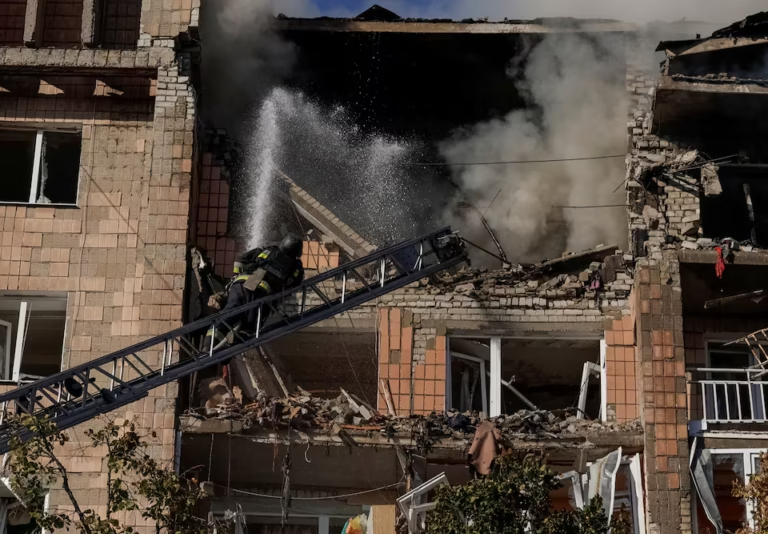

Yemen’s Houthi movement fired missiles at Saudi Arabia on Monday, breaking a truce that had held for four years in the conflict between the kingdom and the Iran-aligned group. The attack followed accusations from the Houthis that Saudi Arabia had bombed an airport under their control.
Saudi Arabia intercepted missiles “launched by the terrorist Houthi militia toward the southern region,” a spokesperson for the Saudi-led military coalition in Yemen said on X.
Houthi military spokesperson Yahya Saree said the group targeted the international airport in Abha, capital of a mountainous southern region bordering Yemen where many Saudis go to escape summer heat.
Monday’s strikes mark the first attack the Houthis have claimed against Saudi Arabia since an informal truce took hold in March 2022, following a period of Houthi attacks on Saudi energy infrastructure.
The violence raises the possibility of renewed conflict on Saudi Arabia’s southern border. That border had stayed relatively quiet since Iranian drone and missile attacks on the kingdom’s eastern regions and Riyadh eased after an April truce in the broader Iran conflict.
Saudi Arabia’s size compared with smaller Gulf states helped it weather that earlier war. The kingdom kept exporting oil through a pipeline running from its eastern fields to a Red Sea terminal on the west coast, a route that bypasses the Strait of Hormuz entirely. A full-scale conflict with the Houthis, who have attacked Red Sea shipping in the past, could put that route at risk.
Saudi Arabia’s government communication office did not respond to a request for comment.
Iranian Plane at the Center of the Dispute
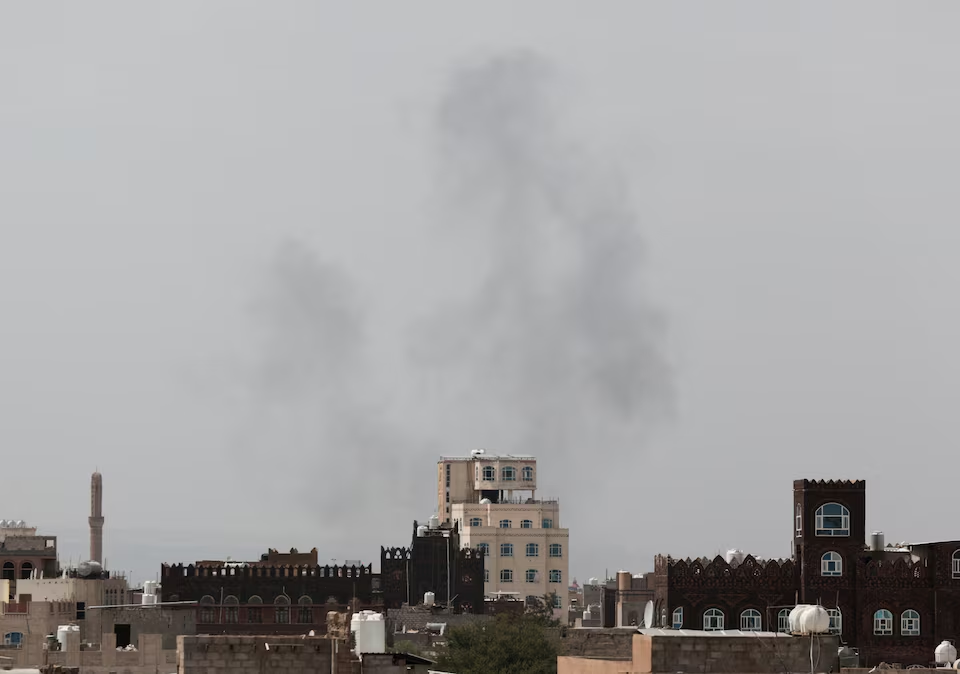
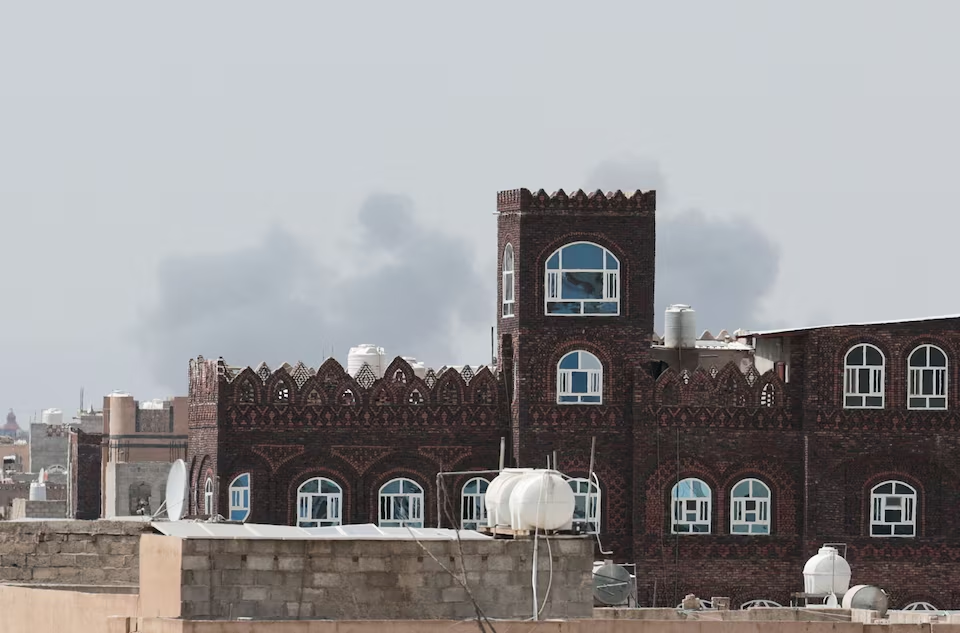
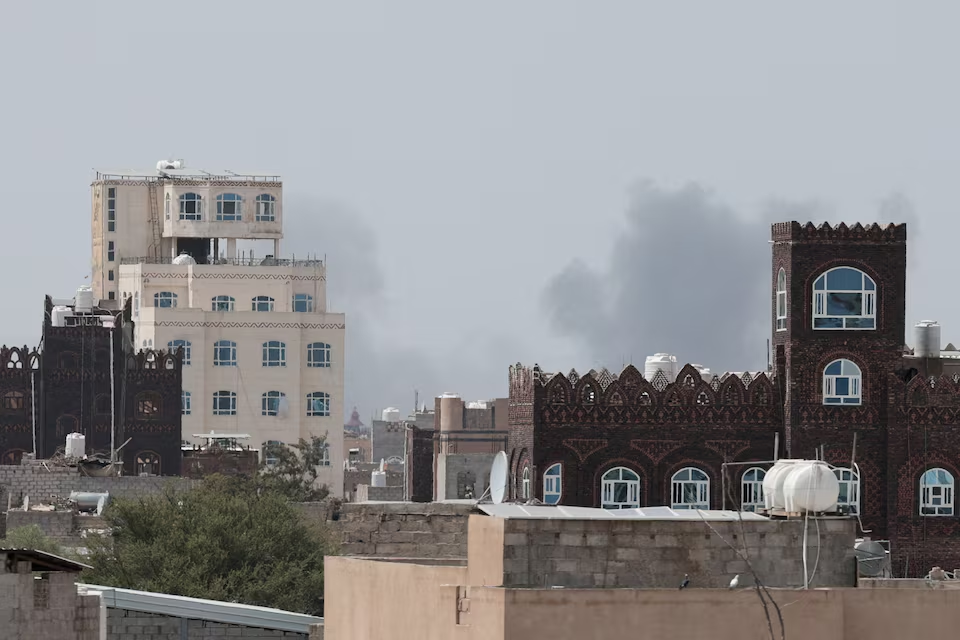
Earlier Monday, the Houthi movement, which controls northern Yemen including the capital Sanaa, accused Saudi Arabia of launching airstrikes on Sanaa’s international airport. The group vowed to retaliate and later described the day’s attacks as “blatant aggression,” saying they marked the end of a period of de-escalation.
The Houthis also warned airlines against flying through Saudi airspace until what they called the “siege” on Sanaa airport is lifted.
Yemen’s internationally recognized government, which is backed heavily by Saudi Arabia and hosts many of its officials in Riyadh, claimed responsibility for the strikes on Sanaa airport. The government’s defense ministry said its forces targeted the runway to stop an Iranian plane from landing there in violation of Yemeni sovereignty.
The ministry said government forces would respond to any hostile aircraft entering Yemeni airspace “by all available means,” and it held Iran responsible for the incident.
An armed forces spokesman said later that the aircraft in question had landed instead at Hodeidah airport, which is under Houthi control. It remains unclear whether any attempt was made to stop the plane from landing there. Hodeidah sits about 150 kilometers, or 93 miles, southwest of Sanaa on Yemen’s Red Sea coast.
Red Cross Plane Also Detained
A Yemeni government minister said separately that the Houthis were holding a plane belonging to the International Committee of the Red Cross at Sanaa airport. Hachem Osseiran, the ICRC’s spokesperson for the Middle East, told Reuters that all ICRC staff and the plane’s crew were safe and accounted for. He declined to comment further.
The detention comes days after a prisoner exchange deal mediated by the ICRC between the Houthis and Yemen’s internationally recognized government collapsed, with each side blaming the other. That failed deal was already a sign of rising tension between the two before Monday’s strikes.
A War That Never Fully Ended
Yemen has endured civil war and proxy conflict involving outside powers for more than a decade. The fighting began after the Houthis seized Sanaa and forced the internationally recognized government to relocate to the south of the country.
Saudi Arabia led a military coalition that intervened against the Houthis in 2015. The intervention triggered what became one of the world’s worst humanitarian crises, with millions of Yemenis facing hunger and displacement in the years that followed.
Fighting flared again late last year after a separatist movement backed by the United Arab Emirates swept through territory in southern Yemen, splintering the Saudi-led coalition that had been built to fight the Houthis.
Despite that fracture, the 2022 truce between Saudi Arabia and the Houthis had largely held until Monday. It survived the regional escalation tied to the Israel-Gaza war, during which the Houthis fired on numerous ships in the Red Sea. It also survived the separate Iran war, which brought Iranian strikes closer to Saudi territory without drawing the Houthis back into direct conflict with Riyadh.
Monday’s exchange breaks that pattern. It puts Saudi Arabia in the position of facing renewed threats on two fronts within the same year: first from Iran directly, and now from a Yemeni faction Tehran has armed and trained for years.
The immediate trigger, disputed by both sides, centers on a single aircraft. Yemen’s government says it struck the Sanaa runway to block an Iranian plane from landing in Houthi territory. The Houthis say the strike itself was the provocation, an attack on an airport that serves millions of Yemenis living under their control. The plane ultimately landed at Hodeidah, leaving open the question of what the Sanaa strike accomplished militarily.
That ambiguity extends to the broader trajectory of the conflict. Neither side has signaled whether Monday’s strikes represent a one-time retaliation or the start of a sustained campaign. The Houthis’ warning to international airlines suggests they expect the standoff to continue, at least around Sanaa airport, in the near term.
For Saudi Arabia, the stakes go beyond its southern border. The kingdom’s Red Sea oil export route, which let it avoid dependence on the Strait of Hormuz during the Iran war, runs through waters the Houthis have targeted before. Any Houthi decision to resume attacks on shipping, rather than limiting strikes to Saudi territory, would reopen a front that had been quiet since before the 2022 truce.