
New wildfires broke out across Western Canada and forests continued to burn in Ontario as the country confronts what Prime Minister Mark Carney called one of the most intense wildfire seasons on record.
Nearly 34,000 lightning strikes over the past week sparked a wave of new fires and evacuation orders in southern British Columbia. As of Friday morning, the province had 25 evacuation orders and 90 active wildfires, and officials warned that warming, drying conditions could push existing fires to grow further.
“The weather forecast is far from favorable. There is no significant help from Mother Nature whatsoever in the foreseeable future,” said Incident Commander Hugh Murdoch, who oversees a cluster of fires near Kimberley, B.C., about 520 kilometers (323 miles) east of Vancouver.
Kimberley braces as fires close in from the west
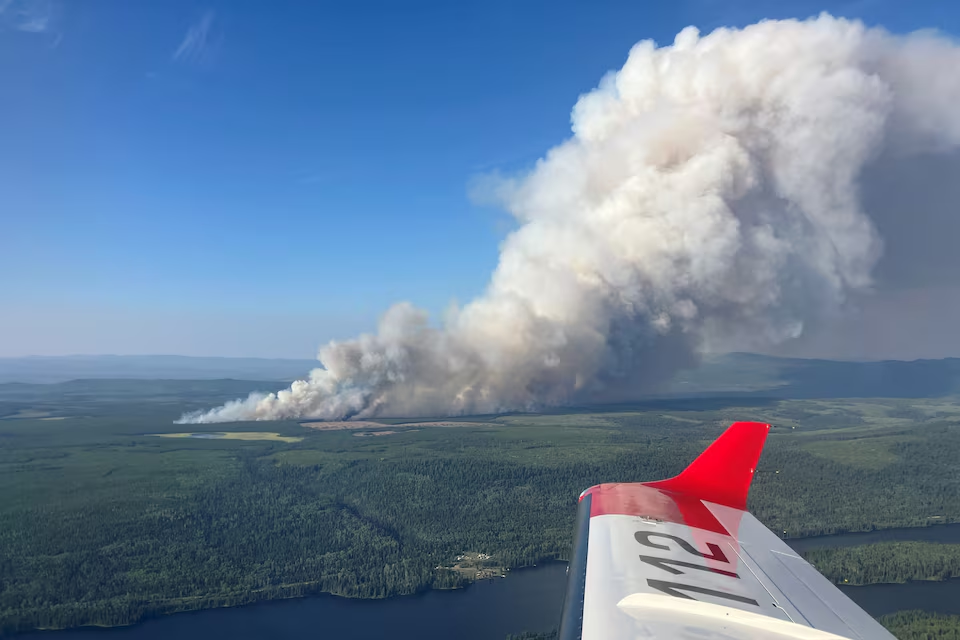
Kimberley, a community of roughly 9,000 people in the province’s East Kootenay region, has spent the past week under an evacuation alert as the Matthew Creek wildfire and two separate Tower Creek fires burn to the west of the city. The Matthew Creek fire had grown to about 567 hectares as of Monday, while the Tower Creek fires measured 250 hectares and 30 hectares. A separate evacuation alert covers 66 properties along St. Mary Lake Road, southwest of the city, tied to two additional fires believed to have started from lightning.
Kimberley Fire Chief Will Booth urged residents to rely only on official sources for updates, and acting mayor Sandra Roberts said the city would give residents as much advance notice as possible before any alert becomes an order, though she cautioned that fast-moving conditions could shorten that window. Crews have been unable to attack the fire directly because of steep terrain west of the city, so they are instead using heavy equipment to cut containment lines that would block the flames from reaching Kimberley’s edge.
The fires near Kimberley form part of what officials call the Bootleg Complex, a group of seven blazes that Murdoch and his team are tracking closely. Murdoch said fire behavior in the complex has mostly been held in check so far, but with no rain in the forecast and temperatures running above seasonal norms, that could change quickly. Smoke from the Kimberley-area fires has mixed with smoke drifting in from blazes in Washington state, Oregon and western British Columbia, making air quality difficult to predict day to day.
Elsewhere in the province’s Interior, the Fiftynine Creek wildfire northwest of Clinton has grown to more than 102 square kilometers and remains out of control, triggering its own evacuation order and alerts. The Thompson-Nicola Regional District expanded an overnight evacuation order south of Clinton because of the separate, out-of-control Pear Lake fire. Kevin Skrepnek, the district’s manager of community and emergency services, said about 20 properties in the region have been damaged by the fires, with effects ranging from melted siding to structures burned to the ground.
Ontario and Alberta face their own fronts
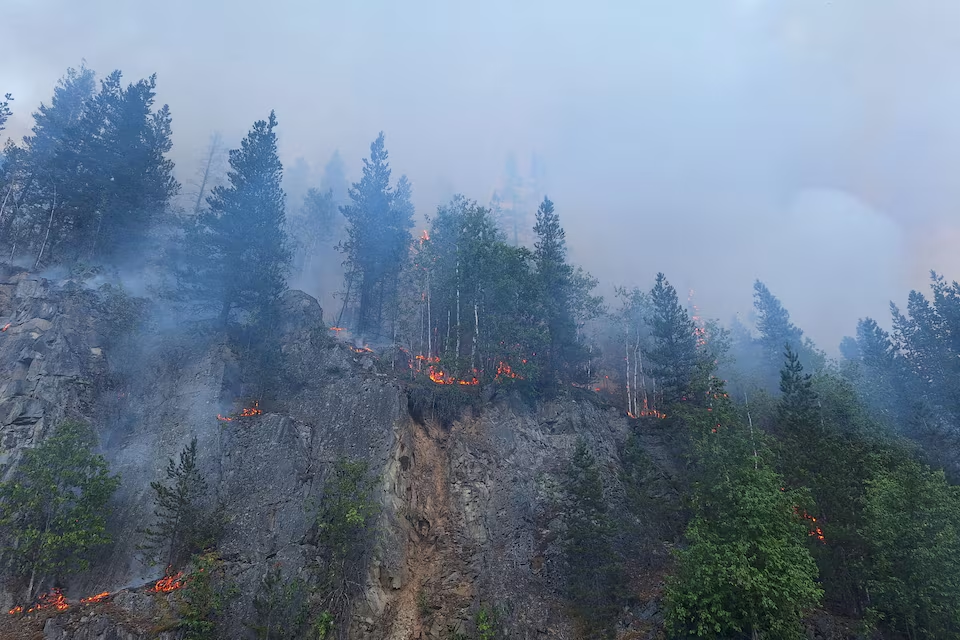
In Ontario, the Northwest region had 139 active wildfires as of Friday, with 32 classified as not under control. The scale of fire activity in the region has strained provincial resources even as attention has focused on British Columbia’s fast-moving blazes.
In Alberta, Environment Canada issued an air quality warning Friday for Banff and the surrounding area, though the agency said conditions were expected to improve across most of the province over the weekend.
Carney said the federal government will mobilize more than 5,300 firefighters along with roughly 300 water bombers, helicopters and evacuation aircraft to support provincial crews as extreme heat and record-dry conditions combine to produce what he described as one of Canada’s most intense wildfire seasons. Mexico has also committed up to 200 of its own firefighters to help battle the blazes in the coming weeks, Carney said.
Thousands of people have been evacuated across Canada this summer, including residents of several First Nations communities. About 2.95 million hectares (7.29 million acres) have burned nationwide so far this year, ahead of the 10-year average of roughly 2.55 million hectares. Canada currently has more active wildfires burning than it did at the same point in either of the past two fire seasons. The country’s forests make up 28% of the world’s boreal forest cover, a factor that has drawn international attention to the scale of this year’s losses.
Quebec sees relief as weather shifts east
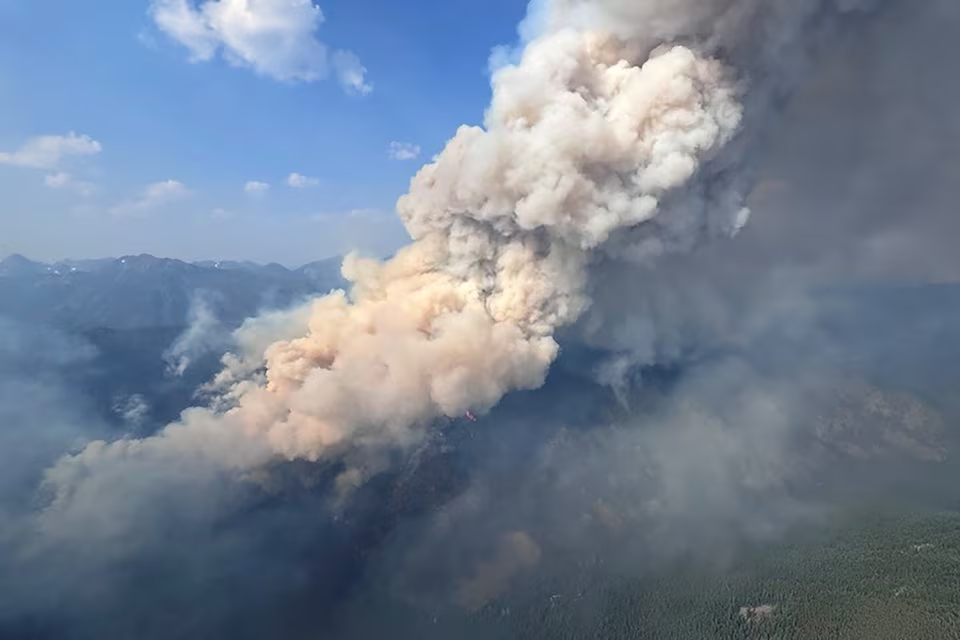
Not every region is under the same pressure. Improving weather across eastern Canada has helped Quebec bring several of its fires under control, with support from firefighting crews sent from neighboring provinces, France and the United States.
“The situation in Quebec is under control. We have good weather to help us,” said Stéphane Caron of Quebec’s forest fire prevention agency, SOPFEU. Caron cautioned that the calmer conditions do not mean the danger has passed. “We have to make sure that there’s no hotspot on the ground anymore,” he said, “because if there’s hot weather and no rain, the fire can be back.”
That warning applies broadly to a country where fire crews are stretched across three provinces at once. British Columbia’s wildfire season has moved in the span of a few weeks from scattered flare-ups to a province-wide pattern, with active evacuation orders stretching from the Fraser Canyon near Boston Bar through the Cariboo and Thompson-Nicola regions to the East Kootenays around Kimberley. With dry conditions expected to persist and little rain in the forecast for the hardest-hit areas, officials in British Columbia and Ontario say the coming weeks will determine whether this season matches, or exceeds, the historic losses already on the books.