
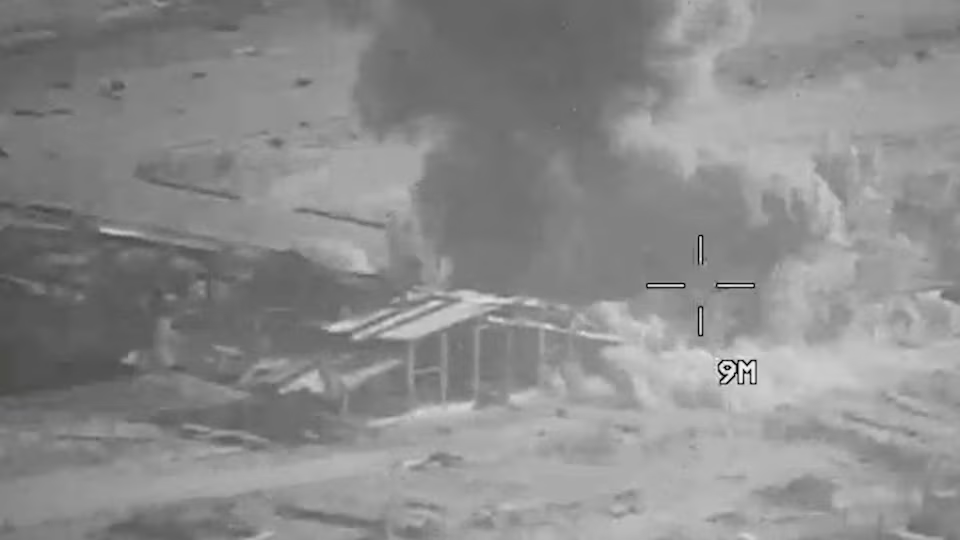
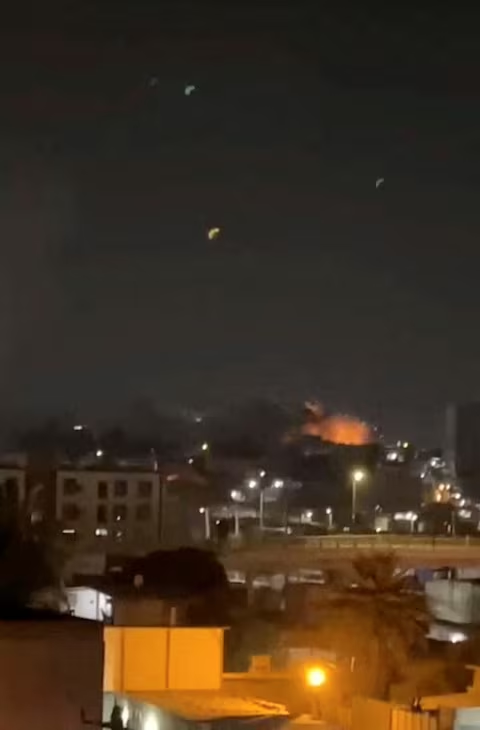
U.S. missiles struck targets across Iran on Friday, hours after President Donald Trump vowed “major military punishment” against Tehran and its Houthi allies in Yemen for extending the Middle East war to a second major shipping chokepoint at the mouth of the Red Sea. The strikes hit a Revolutionary Guards Navy headquarters in the Caspian Sea province of Gilan and the port city of Bandar Anzali, while a separate attack on the city of Ahvaz killed four people and wounded five, according to Iran’s state broadcaster IRIB.
The strikes came two weeks after the collapse of an interim truce meant to end the war. Iran’s armed forces responded by firing at U.S. bases in neighboring Arab countries and warning residents there that Iranian forces may target non-military buildings used by U.S. personnel. The exchange marks a sharp escalation in a conflict that has already killed thousands of people over nearly five months, driven up global inflation and stoked fears of a broader economic downturn.
Houthis widen the war to a second chokepoint
The immediate trigger for Friday’s strikes traces back to the Houthis, the Yemeni armed group that controls northern and western Yemen. The Houthis announced a naval blockade on Saudi Arabia, a country that has been diverting millions of barrels of oil each day by pipeline to the Red Sea specifically to avoid Iran’s near-total blockade of the Strait of Hormuz. That workaround no longer holds if the Red Sea route itself comes under attack.
On Thursday, Houthi fighters struck two Saudi tankers in the Bab el-Mandeb strait at the southern entrance to the Red Sea. Oil prices jumped 7% in response, pushing crude above $100 a barrel for the first time since May. By around 1600 GMT on Friday, Brent futures had pulled back, falling more than $4 to just above $96, as markets absorbed the news of the U.S. strikes on Iran.
The Bab el-Mandeb attacks forced several other tankers to reverse course and head north through the Suez Canal instead, a detour that can mean sailing around Africa to reach markets in Asia. Shipping insurance costs through the southern Red Sea doubled for some companies on Thursday, according to sources familiar with the pricing. Despite the disruption, half of the 18 ships that exited Bab el-Mandeb on Thursday were still carrying crude oil, including two Chinese supertankers willing to take the risk. Traffic through the Strait of Hormuz told a different story: only one tanker crossed the strait on Thursday, the lowest daily count since May 7, underscoring how effectively Iran’s blockade there has already throttled that route.
Amid the escalation, Iran’s Foreign Minister Abbas Araqchi spoke by phone with his Omani counterpart about security developments and maritime navigation in the Strait of Hormuz, which runs between the two countries, according to a statement posted to Araqchi’s Telegram channel. Oman has periodically served as a back-channel between Washington and Tehran, and the timing of the call suggests Muscat may be trying to keep some line of communication open even as fighting spreads.
A possible opening for talks, via Pakistan
Even as the military situation deteriorates, there are signs of diplomatic movement on the margins. Sources said Pakistan is exploring a path toward resuming stalled talks between the United States and Iran over ending the war, an effort that follows a push initiated by China. Exploratory discussions took place this week during a visit to Islamabad by Iran’s Interior Minister Eskandar Momeni, his second trip to Pakistan in the last 10 days, according to three Pakistani sources.
All three sources cautioned that the obstacles to any actual talks with the United States remain high. Momeni’s back-to-back visits suggest Tehran is at least testing the waters, but nothing in the reporting points to a breakthrough, and the pace of strikes on both sides on Friday indicates the fighting is, for now, outrunning the diplomacy.
Trump threatens harder strikes as casualties mount
Trump laid out his position on social media, saying he would hold Iran accountable for any further attacks by Yemeni fighters and that “major military punishment will be inflicted upon Iran and, of course, the Houthis, themselves.” In an interview with Axios, he went further, saying he was considering relaunching major combat operations against Iran. “They haven’t received enough pain yet,” Axios quoted him as saying.
The human cost on the Iranian side has been steep. Iran’s health ministry said in a statement on X that 59 people had been killed and 666 wounded since clashes with U.S. forces resumed in late June. Iranian media separately cited the head of Iran’s top joint military command as saying Iran would kill a member of the U.S. forces for every Iranian killed, a statement that signals Tehran intends to match casualties rather than de-escalate.
American losses have also mounted. The war has killed 18 U.S. service members. The Pentagon said Monday that 100 service members had been injured since July 7, though it noted 96% of them have already returned to duty, a detail the Pentagon appears to be using to frame the injuries as largely non-catastrophic.
Strikes hit bases from Kuwait to Iraq’s Kurdish region
Iran’s response to Trump’s threat played out across multiple countries hosting U.S. forces. The Iranian army said it had attacked U.S. military equipment depots at Al-Adiri, officially known as Camp Buehring, in northern Kuwait, along with U.S. troop positions at Camp Arifjan and Camp Doha near Kuwait City. Kuwait’s government said in the early evening that its air defenses were intercepting “hostile” targets launched from Iran, confirming that incoming fire had reached Kuwaiti airspace.
Iran’s Revolutionary Guards said separately that they had significantly damaged a surveillance tower used by the U.S. Fifth Fleet in Bahrain, a strike aimed at the naval command that oversees American operations throughout the Gulf. According to the semi-official Tasnim news agency, the Revolutionary Guards also claimed to have hit a U.S. barracks and fighter jets in Jordan, and separately struck a U.S. barracks, a spy balloon and Patriot air defense batteries in Erbil, in Iraq’s Kurdish region.
Jordan’s military disputed the scale of that claim. Jordan’s army said it had shot down seven Iranian missiles and six drones, and state television reported that the attack caused no material damage or casualties, a direct contradiction of the more damaging picture Iranian state media presented.
The U.S. embassy in Baghdad issued a warning to American citizens in the Middle East to exercise caution and remain on heightened alert, a standard precaution that nonetheless signals Washington expects the fighting to continue spreading rather than wind down.
Where the war stands
Five months in, the conflict has settled into a pattern of tit-for-tat escalation that keeps finding new fronts. What began as a fight centered on the Strait of Hormuz has now pulled in the Red Sea, Kuwait, Bahrain, Jordan and Iraq’s Kurdish region, with Saudi Arabia’s oil exports and global shipping insurance costs caught in the middle. Iran’s declared policy of matching U.S. casualties one-for-one, combined with Trump’s public threat of “major military punishment,” leaves little room for either side to step back without appearing to concede ground.
The Pakistan-brokered feelers toward renewed U.S.-Iran talks, and the Iran-Oman phone call on Strait of Hormuz security, are the only signs of diplomatic activity in the mix. Whether they amount to anything will likely depend on what happens in the days immediately following Friday’s strikes, and on whether Iran follows through on its threat to target buildings used by U.S. personnel in Gulf cities.