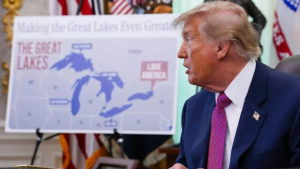


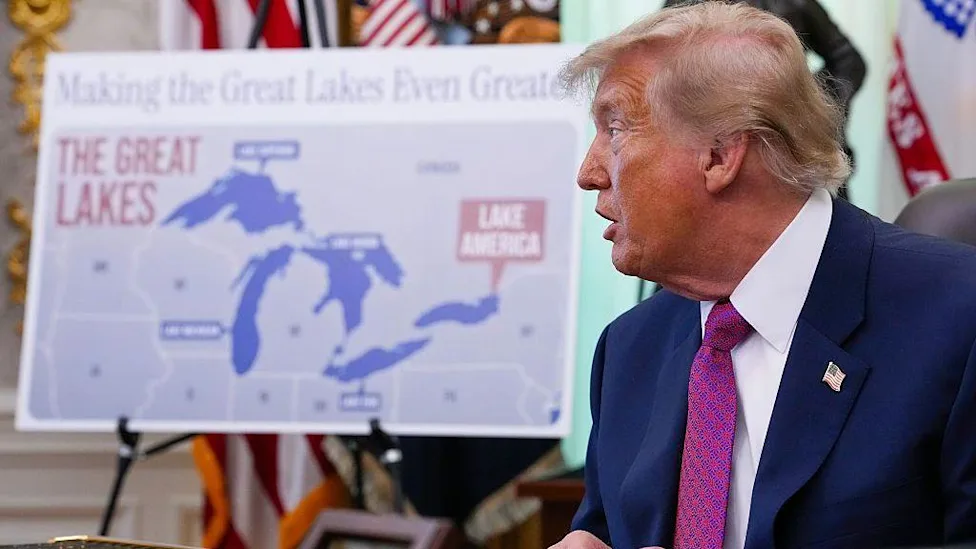
U.S. President Donald Trump has personally asked Apple to rename Lake Ontario as “Lake America” on its Maps platform, according to Interior Secretary Doug Burgum, extending a renaming fight that has already strained relations with Canada.
Burgum told Fox News on Monday that “the president has reached out to Apple directly,” adding, “I’m sure we may be seeing that change coming up soon.”
Google already made the change for its U.S.-based users over the weekend. Canadian users still see the lake, which sits on the border between the province of Ontario and the state of New York, labeled as Lake Ontario. The BBC has contacted Apple for comment.
An Executive Order Sparked the Dispute
Trump signed the order on Thursday, directing that Lake Ontario be renamed Lake America. The move came after trade negotiations between the United States and Canada broke down.
The order instructs Burgum to “take all appropriate actions” to carry out the change, including updating the Geographic Names Information System, the federal government’s official map database.
Google confirmed in a statement Saturday that its maps will show the Lake America name to U.S. users to comply with that federal database. Canadian users will continue seeing Lake Ontario. Everywhere else in the world, the platform will display both names together: Lake Ontario (Lake America).
Canadian Utilities Caught in the Crossfire
The switch has triggered pushback across Ontario, where several public agencies briefly displayed the new name without intending to.
Hydro One, a Toronto-based utility, apologized on Sunday after its map began showing “Lake America.” The company said in a post on X that the label appeared because of a third-party mapping service it relies on.
“We are working with our vendor to correct the issue as quickly as possible and restore the proper geographic reference,” Hydro One said. “We regret the error and apologise for any confusion it has caused.”
Maps used by Hydro Ottawa and the Liquor Board of Ontario also briefly showed the Lake America label.
Not Every Map Provider Is Following Along
MapQuest, the American web mapping service that launched in 1996, announced it has no plans to change the name. “We’re not changing it,” the company said in a short Facebook post on Friday.
MapQuest went further, rolling out a tool that lets users rename the lake to anything they like and share their creations online. The stance appears to have resonated in Canada: by Monday morning, MapQuest had climbed to the top of the free-app charts on the Canadian Apple App Store.
Ontario Pushes Back With a Lakeside Sign
Ontario Premier Doug Ford installed a large sign along the lakeshore on Saturday reading “Lake Ontario Now and Always,” written in both English and French, Canada’s two official languages.
Ford dismissed the renaming effort during an interview with American TV host George Stephanopoulos on Sunday. “No one’s going to call it Lake of America,” Ford said. “It’s been Lake Ontario for hundreds of years. It’s going to continue being Lake Ontario.”
A Name Rooted in Indigenous History
The renaming push touches a naming history that predates both countries in their current form. Four of the five Great Lakes, Ontario, Huron, Michigan and Erie, trace their names to Indigenous words.
That history has added weight to Canadian objections, with critics framing the proposed change as an erasure of longstanding regional identity rather than a simple branding update.
Part of a Wider Trade Standoff
The lake-naming dispute has unfolded against the backdrop of a broader trade war between the two countries. Trade talks between Washington and Ottawa collapsed last week, and the renaming order followed shortly after.
Canadian officials have treated the mapping changes as symbolic of a rockier relationship between the two governments, one that has already produced friction over tariffs and cross-border commerce.
What Happens Next
Whether Apple follows Google’s lead remains unclear. Burgum’s comments suggest the White House expects the company to fall in line soon, but Apple has not publicly responded to Trump’s outreach or confirmed any changes to its Maps platform.
The split among map providers, Google complying, MapQuest refusing, leaves U.S. and Canadian users seeing different names depending on which app they open. That inconsistency is likely to persist until either more companies adopt the federal naming change or the underlying trade dispute between Washington and Ottawa is resolved.
For now, Ford’s lakeside sign and MapQuest’s rebellion suggest the renaming effort faces real resistance north of the border, even as it moves ahead unchallenged within official U.S. government systems.