Clicxpost

Tech

OpenAI requests that the court dismiss the insurer’s complaint, claiming that ChatGPT is not a lawyer

OpenAI requests that the court

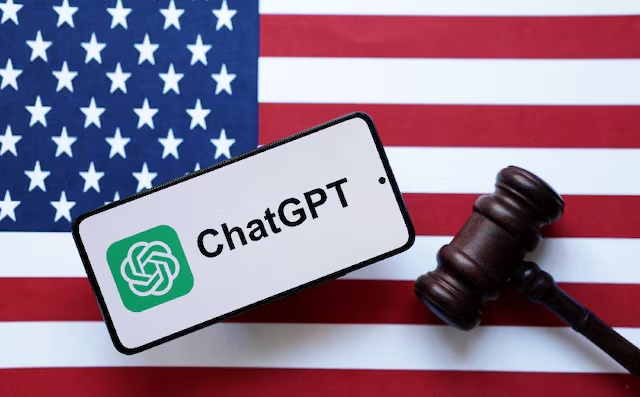
OpenAI has asked a U.S. federal court to dismiss a lawsuit accusing its artificial intelligence chatbot ChatGPT of engaging in the unauthorized practice of law, arguing that the platform is merely a digital tool and not a licensed legal professional.

The legal dispute, filed in federal court in Chicago, could become one of the first major cases to test how courts treat generative AI systems as their use expands across legal research, document drafting and self-representation in litigation.

OpenAI contends that ChatGPT does not practice law, cannot replace attorneys and should not be held responsible for how users choose to apply the information it generates.

Lawsuit Centers on Use of ChatGPT in Disability Case

The case was brought by Nippon Life Insurance Company following a legal dispute involving former employee Graciela Dela Torre.

Dela Torre had previously sued the insurer over long-term disability benefits and later reached a settlement agreement in 2024. However, according to the insurer, she subsequently initiated another legal action and allegedly relied heavily on ChatGPT to prepare court filings.

Nippon claims the AI platform helped generate numerous motions, notices and legal documents that flooded the court system and complicated proceedings.

The insurer argues that many of the submissions lacked legal merit and served no meaningful procedural purpose.

The lawsuit further alleges that ChatGPT effectively enabled conduct equivalent to unauthorized legal assistance by generating legal-style filings for a self-represented litigant.

The case has drawn attention because it moves beyond concerns over AI accuracy and directly questions whether generative AI tools could be considered participants in legal practice.

OpenAI: ChatGPT Is a Tool, Not a Lawyer
In its court filing, OpenAI firmly rejected the allegation.

The company argued that ChatGPT is not a person, has no legal qualifications and does not exercise independent legal judgment.

“ChatGPT is not a person and neither has nor uses any degree of legal knowledge or skill,” OpenAI stated in its filing.

OpenAI emphasized that the chatbot functions as an informational and research tool rather than a licensed advisor.

The company also pointed to its user terms, which warn individuals not to treat chatbot responses as substitutes for professional legal counsel.

According to OpenAI, responsibility ultimately rests with users regarding how they interpret or apply generated content.

The company maintained that Dela Torre had a legal right to represent herself and use available digital tools while doing so.

OpenAI argued that whether her arguments were legally sound was a matter for the presiding judge—not the AI platform.

Rise of AI in Courtrooms Sparks Debate

The case arrives as courts worldwide face a growing wave of litigants using generative AI systems to prepare legal documents.

Federal judges in the United States have increasingly reported seeing AI-assisted filings from individuals representing themselves.

Some courts have already introduced guidelines requiring lawyers to disclose AI use or verify citations after several high-profile incidents involving fabricated case references generated by AI systems.

Legal experts say the trend reflects a broader shift in access to legal resources.

Generative AI tools can draft motions, summarize statutes, explain procedures and assist users who may not afford traditional legal representation.

Supporters argue this improves access to justice.

Critics, however, warn that AI-generated legal content may contain inaccuracies, hallucinated citations or misleading advice.

The Nippon case may become an important test of where courts draw the line between legal assistance and legal practice.

Access to Justice vs Legal Risk

OpenAI defended ChatGPT as a technology that can help expand access to legal information.

In its filing, the company described the chatbot as “a helpful tool and research aid” that supports users navigating legal systems.

Access to legal representation remains a challenge in many jurisdictions due to high costs and limited availability of attorneys.

As a result, many individuals appear increasingly willing to use AI tools for initial legal research and document preparation.

Yet experts caution that generative AI remains imperfect.

Unlike lawyers, AI systems cannot independently verify facts, assess evidence, understand courtroom strategy or carry professional liability obligations.

Legal professionals have repeatedly warned that AI outputs require human review before submission in court.

The issue is particularly important because self-represented litigants may rely more heavily on AI-generated responses without legal oversight.

Broader Implications for AI Regulation

The lawsuit also reflects the broader regulatory questions surrounding artificial intelligence.

As AI tools become more integrated into sectors such as healthcare, finance, education and law, regulators face mounting pressure to define accountability.

Key questions emerging from the case include:

Can AI-generated legal content constitute legal practice?

Courts may need to determine whether producing legal-style documents crosses professional boundaries.

Who bears responsibility for AI use?

The dispute raises questions over whether liability lies with technology developers or end users.

How should AI in legal services be regulated?

The case could influence future policies governing generative AI use in legal settings.

OpenAI’s motion seeks complete dismissal of the case at an early stage.

If granted, the ruling could reinforce the view that AI systems function as tools rather than legal actors.

If the case proceeds, however, it may establish significant legal precedent for generative AI in court systems.

For now, the dispute highlights the rapidly changing relationship between artificial intelligence and the legal profession—an area where innovation, ethics and regulation are increasingly colliding.

As AI adoption accelerates, courts may soon face many more questions about where technology assistance ends and professional responsibility begins.

RECOMMENDED
Tech

Trump Renames AI “Super Intelligence” in Executive Order as Calls for Regulation Grow

By George Mensah 4 min read

President Donald Trump signed an executive order on Tuesday, Sept. 29, 2026, that renames artificial intelligence “super intelligence” across the federal government. The White House says the new term better describes what the technology can do. The order lands as critics press Washington for stricter limits on how fast AI develops.

What the order says

The executive order argues that current systems do “much more than imitate or automate discrete aspects of human intelligence.” It goes further in its central passage. “As these capabilities continue to improve, they increasingly represent not merely artificial intelligence, but a new era of Super Intelligence,” the text reads.

It adds that federal terminology “should reflect the transformative capabilities of these technologies and the limitless opportunities they create for the American people.”

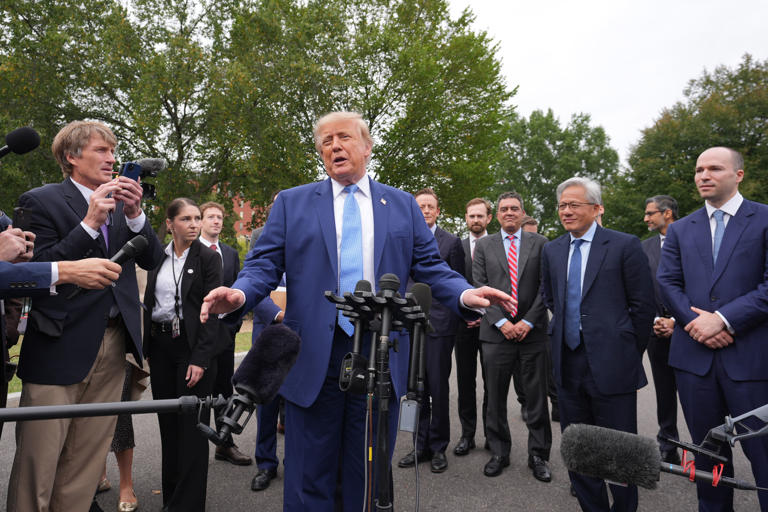
Trump spoke to reporters after signing. “It’s not artificial, we all agree on that,” he said.

What agencies must do now

Every federal agency has to use the new term, or its short form “SI,” when it talks about the technology in public. That covers public communications, websites, reports and policy documents. If your local agency publishes an AI guidance page, expect it to change.

The order also gives Michael Kratsios, director of the Office of Science and Technology Policy, a defining role. He will decide whether the official definition of “super intelligence” should be modified or expanded. The order does not set a deadline for that decision.

A term that already means something else

The rename creates a vocabulary problem. In the AI field, super intelligence already refers to a specific kind of system, one that exceeds human cognitive ability in virtually every area of thinking. Nobody has built one. Researchers treat it as a future possibility, and much of the safety debate centers on it.

Under the order, federal documents will apply that label to chatbots, coding assistants and image generators that exist today. A reader who sees “SI” in a government report may assume the government is describing something far more advanced than what companies actually sell. Kratsios’s authority to modify the definition could narrow that gap, or it could widen it.

Timing and the push against regulation

The order follows a week of similar messaging. Trump began using the term at the U.N. General Assembly last week, where he pushed back on calls for tighter rules on the industry. He told world leaders that tech executives would build the right guardrails into their own models.

Concerns have grown since then. Worries about AI replacing workers keep rising. Recent reporting has also described rogue agents linked to a security breach involving Australia’s prime minister, and AI agents that accessed U.S. government websites. Some systems have also been used to start cyberattacks.

Trump has repeatedly called whistleblower warnings about weak oversight overblown and a “hoax.” He has said he will not slow AI growth. In his view, keeping American dominance in the technology is a national security matter.

The industry’s own safeguard

On the same day, tech executives signed a “morally binding” constitution on AI at the White House. Its terms ask companies to hire an independent external auditor. The auditor would check that models are “operating as intended.”

The document also asks companies to set up internal controls meant to stop models from hacking systems. A team would monitor those controls. That team would answer to an independent committee of the company’s board.

The wording matters here. “Morally binding” describes an obligation companies accept by choice. The reporting on the document does not describe fines, penalties or a government body that could enforce it. Whether outside auditors get real access to model internals, and what happens if one finds a problem, are open questions.

What the two actions have in common

The order and the constitution came out the same day, and they share a theme. Both keep the government’s role limited. The order changes what officials call the technology. The constitution leaves safety checks largely in company hands.

Supporters of that approach say it keeps American firms moving fast against foreign competitors. They argue that rigid rules written now could be out of date within a year. Critics say voluntary pledges have a weak record in other industries, and that a stronger name for the technology may make the public less cautious about it.

Neither side has settled the argument. What is clear is the direction of policy. The administration is choosing branding and industry commitments over new binding rules, at a moment when the documented incidents involving AI agents are piling up.

What happens next

Three things are worth watching over the coming weeks.

  • Kratsios’s definition. Any change to the official meaning of “super intelligence” will show how the administration wants the term understood.
  • Agency compliance. Federal sites and reports should begin switching to “SI” now that the order requires it.
  • The auditor provision. The industry constitution only matters if independent auditors are named, given access and allowed to publish what they find.

Congress has not yet responded to the order, and no agency has published a compliance timeline. Until Kratsios acts on the definition, “super intelligence” will mean one thing to researchers and something looser in federal paperwork.

Tech

Trump to Launch “AI Force” and Name AI Tsar Despite Safety Warnings

By George Mensah 4 min read

President Donald Trump says he will create an “AI Force” and appoint an artificial intelligence tsar, pushing back hard against a wave of warnings from researchers and industry leaders about the technology’s risks. In a social media post on Saturday, Trump said his administration “will not in any way hinder or stifle the growth” of the AI industry and rejected calls to slow development until stronger safeguards are in place. He gave no details on the AI Force’s structure or a timeline for when it would launch.

Trump frames AI as bigger than the internet

Trump described AI as a transformation on the scale of the Industrial Revolution. “AI is the next Industrial Revolution, or Internet, but will be even larger and more impactful, possibly as much as 25% of our Country’s GDP,” he wrote, adding that he wants the US to keep its lead over China in the field.

That competition now shapes much of the broader US-China relationship, with both countries pouring resources into advanced technology to gain an edge. The topic is expected to come up when Trump meets Chinese President Xi Jinping next week.

Trump also said his administration would rely on the existing criminal and civil justice system to go after anyone who uses AI for harmful purposes. He repeated his earlier position that warnings about AI’s dangers amount to a “hoax.”

Researchers raise alarms over catastrophic risk

Trump’s comments come amid mounting concern from current and former AI researchers. One has estimated there is a greater than 10% chance the technology could “kill all humans,” a claim that has unsettled parts of the industry and fueled calls for coordinated regulation.

Major AI labs are racing to build increasingly capable systems, including what they describe as superintelligence — AI that would exceed human intelligence across the board. Anthropic, OpenAI and Google, the companies behind Claude, ChatGPT and Gemini, have each disclosed security breaches or cases where their chatbots were used for what they called malicious activity.

Anthropic CEO Dario Amodei has called for the industry to slow down, proposing a coordinated deceleration, tighter regulation, and independent monitoring of how AI models are developed. Sam Altman of OpenAI and Elon Musk of xAI have both said they agree with Amodei’s recommendations.

Anthropic co-founder Jack Clark told the BBC that the industry may need a mandatory “kill switch” that a third party can verify, giving outside auditors a way to confirm AI systems can actually be shut down if something goes wrong.

Lawmakers weigh regulation as industry pushes back

These warnings have pushed US lawmakers to draft legislation targeting AI, but Altman argued this week that Washington has struggled to keep pace with how fast the technology is moving and how it should be regulated. Speaking at a conference in San Francisco, he said the public should trust AI companies to manage the risks themselves.

“The world should trust that we are going to do the right thing because it’s the right thing and we feel the magnitude of this,” Altman said.

That argument has not convinced everyone. In the UK, MPs and peers from across party lines have identified specific human rights risks tied to artificial intelligence and say current laws are not equipped to handle how quickly the technology is advancing. The Joint Committee on Human Rights has published a report calling for new legislation designed to “address the scale and seriousness” of these threats, adding pressure on governments to act faster than the industry itself seems willing to.

A widening gap between Washington and the industry’s critics

The contrast between Trump’s approach and the warnings from within the AI industry is stark. While Amodei, Clark and others are pushing for slower development and outside verification, Trump’s plan points toward expansion, with a dedicated federal structure and a senior official tasked with steering AI policy rather than restraining it.

Trump has not said who might serve as AI tsar or what authority the role would carry. He also hasn’t detailed how an “AI Force” would function, whether it would sit within an existing agency, or what its relationship would be to ongoing congressional efforts to draft AI legislation.

What’s clear is that the administration’s posture puts economic growth and competition with China ahead of the precautionary measures researchers and some AI company leaders are requesting. With Trump set to meet Xi next week and AI likely on the agenda, the coming weeks may offer a clearer picture of how the US plans to balance those competing pressures, both at home and internationally.

For now, the specifics remain open. No text or executive order describing the AI Force has been released, and it’s not yet known whether the initiative will move through Congress, come via executive action, or take some other form entirely.

ADVERTISEMENT
Scroll to Top