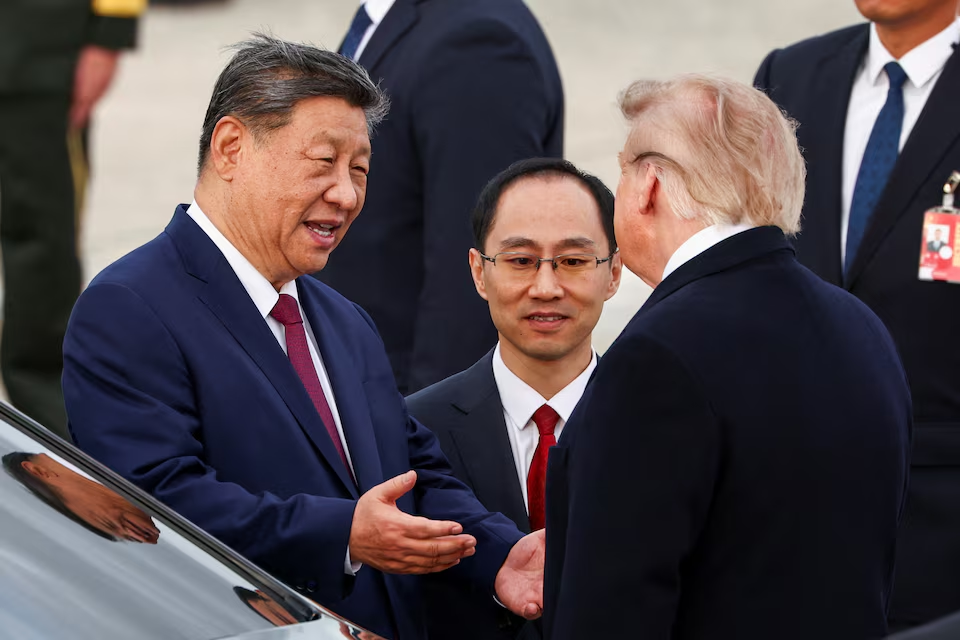

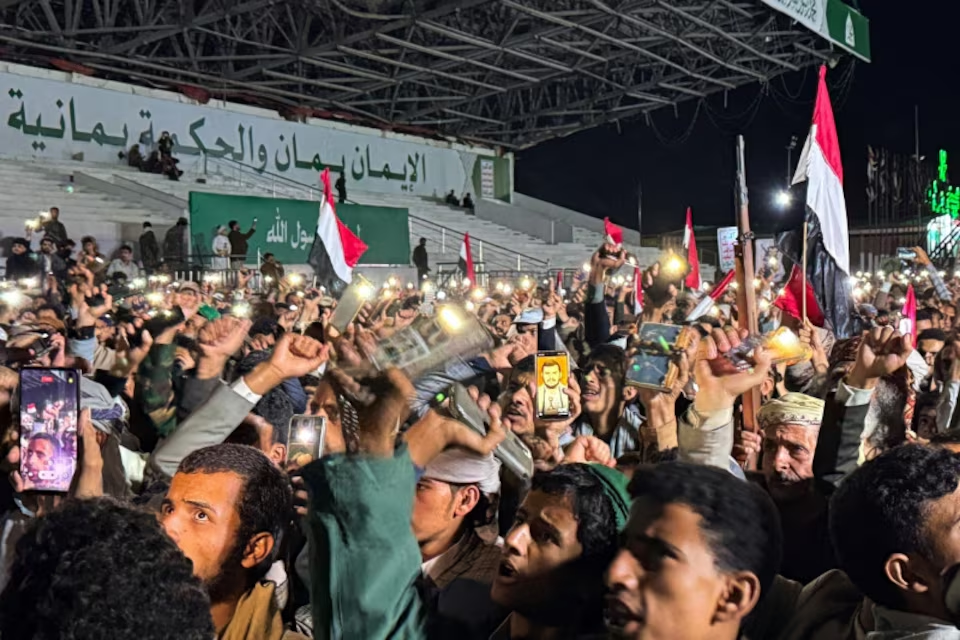
A fast-moving Houthi offensive in Yemen has put the Iran-aligned militants within reach of controlling one of the world’s most critical oil shipping routes, adding a new layer of difficulty to President Donald Trump’s ongoing war with Iran, now in its seventh month.
Houthi fighters have pushed south along Yemen’s coastline in recent days, expanding their reach toward the Bab el-Mandeb Strait, sometimes called the “Gate of Tears,” at the southern entrance to the Red Sea. Control of that passage would give Tehran leverage over both of the region’s major oil corridors at once.
On Friday, Houthi forces reached the island of Perim, positioned in the middle of the strait between Yemen and the African coast. The advance is particularly troubling for Saudi Arabia, which has relied heavily on Red Sea ports to ship its oil since the war closed off much of the Strait of Hormuz on the other side of the Arabian Peninsula.
A Setback for Trump’s Pressure Strategy
The timing complicates matters further for Trump, who is already dealing with record-low approval ratings and looking for an exit from the broader conflict. He recently unveiled an economic pressure campaign meant to squeeze concessions out of Iran’s government.
Rising U.S. gasoline prices tied to the war have put his Republican Party’s hold on Congress at risk ahead of the November midterm elections. Iran, despite sustaining serious military and economic damage, has shown no sign of backing down.
“Just weeks ago, Trump adopted a strategy of squeezing Iran’s economy while keeping military conflict at levels too low to squeeze the American economy,” said Stephen Wertheim, a senior fellow at the Carnegie Endowment for International Peace. “The Houthis have shattered Trump’s plan.”
Washington Weighs the Cost of Getting Involved
The U.S. cannot easily accept a scenario where the Houthis shut down the strait, spiking energy prices and disrupting global trade. But taking direct military action against a group that has already outlasted attacks from both Saudi Arabia and the United States would pull American forces into a new and risky mission at a moment when the military is already committed to the fight with Iran.
Saudi Crown Prince Mohammed bin Salman called Trump on Thursday to request U.S. military assistance against the Houthis, according to three sources who spoke with Reuters. The sources said Washington told him it would not intervene directly for now, offering intelligence support instead.
Trump confirmed the call on Saturday. He said the Houthis had also reached out to his administration, asking that Washington stay out of the conflict directly.
A senior Trump administration official would not answer specific questions about the situation but said the U.S. remains focused on protecting freedom of navigation in the Red Sea “while empowering our regional partners to take the lead in managing and resolving regional security challenges.”
Saudi Arabia, Iran and the Houthis did not respond to requests for comment. Iran’s foreign ministry said Thursday that the conflict in Yemen cannot be resolved through blockades or military strikes against the Houthis and called instead for dialogue, without addressing Iran’s own involvement in the group’s operations.
Two Choke Points Under Pressure

Iran already retaliated against U.S. and Israeli strikes earlier this year by disrupting traffic through the Strait of Hormuz, a passage that once carried roughly a fifth of the world’s oil supply. If the Houthis succeed in closing the Bab el-Mandeb as well, that would threaten another 7 percent of global petroleum supplies and about 12 percent of global trade.
“This was always the worst-case scenario, that the Iranians exert control not only of Strait of Hormuz but Bab el-Mandeb, two of the leading energy choke points in the world,” said David Schenker, who served as Assistant Secretary of State for Near East Affairs during Trump’s first term and now works at the Washington Institute for Near East Policy.
“It’s an enormous amount of leverage that [the Iranians] have in hand,” Schenker said.
Analysts and former officials say Trump faces a difficult decision: commit U.S. forces and limited air-defense munitions to repelling the Houthis, or leave the fight to Saudi Arabia and its allies, including a Yemeni government based in the south of the country.
The Houthis have held Yemen’s capital for 12 years, surviving a Saudi-led military campaign that has failed to remove them from power.
Ending an Existing Truce Would Carry Risks

A U.S. move against the Houthis would also unravel an arrangement Trump reached last year, under which Washington agreed to stop bombing the group in exchange for an end to Houthi strikes on Red Sea shipping. Breaking that deal would likely expose American forces to missile fire from Yemen.
It would also place additional strain on a U.S. military already stretched thin. Officials say confronting the Houthis would demand substantial naval and air resources, along with intelligence assets needed to track Houthi positions that have shifted considerably since last year’s ceasefire.
A sustained campaign against Houthi drones and missiles could also draw down already limited U.S. stockpiles of munitions and air-defense interceptors.
The senior administration official rejected the idea that resource constraints were a concern. “The United States Military has more than enough munitions, ammo, and stockpiles to serve all of the Commander-in-Chief’s strategic goals and beyond,” the official said.
Tim Lenderking, who served as U.S. special envoy for Yemen under former President Joe Biden and now works as a principal at the law firm Squire Patton Boggs, said Trump’s reluctance to intervene militarily means Washington needs to increase intelligence sharing with Saudi Arabia’s air campaign and boost diplomatic and material support for Yemen’s internationally recognized government.
“This administration came in asking the question, ‘What can Yemen do for us?'” Lenderking said during a webcast hosted by the Middle East Institute in Washington. “Well, Yemen can spoil our day.”