Clicxpost

Africa

Ghana applauds the Pope’s apology on the Catholic Church’s involvement in slavery

Ghana welcomes Pope's apology

The government of Ghana has welcomed the landmark apology issued by Pope Leo XIV over the Catholic Church’s historical involvement in slavery, describing the statement as an act of “moral courage” and an important contribution to global efforts toward truth, justice, and historical accountability.

The apology, published on Monday as part of the Pope’s first major teaching document since assuming the papacy, marks the strongest acknowledgment yet by a pontiff regarding the Church’s role in legitimising slavery and delaying its condemnation for centuries.

For Ghana — one of the principal departure points during the transatlantic slave trade — the statement carries profound historical and emotional significance.

Officials in Accra said the recognition of the painful legacy of slavery represented an important step in ongoing international conversations surrounding reconciliation, reparations, and the enduring consequences of colonial exploitation.

Pope Leo Issues Strongest Vatican Apology on Slavery
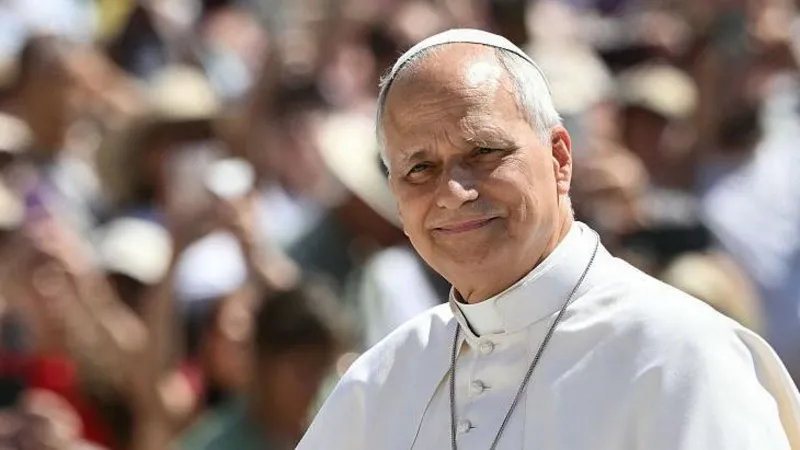
In the encyclical titled Magnifica Humanitas (“Magnificent Humanity”), Pope Leo offered a formal apology on behalf of the Catholic Church, openly acknowledging its historical failures and moral complicity.

The pontiff wrote that it was impossible to reflect on slavery without feeling “deep sorrow” for the suffering, humiliation, and injustice endured by millions of people over generations.

He further acknowledged that Church authorities at various moments in history had not only failed to oppose slavery but had also legitimised systems of subjugation, including the enslavement of non-Christians.

The Pope admitted that ecclesiastical institutions themselves owned slaves during parts of the Middle Ages — a reality he described as “a wound in Christian memory.”

The statement represents one of the clearest admissions yet from the Vatican regarding the Church’s historical involvement in slavery and comes amid growing global calls for institutions to confront their colonial pasts.

Ghana’s Central Role in the Transatlantic Slave Trade

Ghana occupies a unique place in the history of slavery.

Between the 16th and 19th centuries, the territory then known as the Gold Coast became one of the major hubs of the transatlantic slave trade, where millions of Africans were captured, detained, and transported to the Americas and the Caribbean.

Historians estimate that between 12 and 15 million Africans were forcibly shipped across the Atlantic during the slave trade era, with nearly two million people dying during the brutal journey known as the Middle Passage.

Several coastal forts and castles in Ghana — including sites such as Cape Coast Castle and Elmina Castle — remain powerful symbols of that history.

These sites once served as detention centres where enslaved Africans were held in harsh conditions before being transported overseas.

Today, they stand as memorials and educational landmarks visited by descendants of enslaved people and global leaders seeking to understand the human cost of slavery.

Ghana Leads International Push for Reparations

Ghana has increasingly positioned itself at the forefront of international calls for reparations and formal recognition of the legacy of slavery.

Earlier this year, the country played a leading role in securing a landmark resolution at the United Nations recognising the enslavement of Africans as the “gravest crime against humanity.”

The initiative, backed by the African Union and championed by John Mahama, aims to establish pathways for healing, reparative justice, and acknowledgement of the lasting social and economic impacts of slavery.

The resolution also highlights the enduring effects of slavery and colonialism, including systemic inequality, racial discrimination, and economic disparities that continue to affect African and diaspora communities.

Government officials in Ghana said Pope Leo’s apology aligns with these broader efforts and adds momentum to the international conversation.

According to Ghanaian authorities, genuine reconciliation requires institutions to openly acknowledge historical injustices before meaningful progress can occur.

Pope’s Africa Visit Added Weight to Message

The apology comes only months after Pope Leo completed his first visit to Africa as pontiff.

In April, he toured four African nations — Algeria, Cameroon, Angola, and Equatorial Guinea.

During the trip, the Pope made several strong remarks on exploitation and inequality, criticising foreign interests that profit from Africa’s resources while local populations continue to face poverty and underdevelopment.

Observers say those comments, combined with his slavery apology, indicate a papacy prepared to engage directly with historical injustices and contemporary global inequalities.

The Catholic Church has millions of followers across Africa, making the continent increasingly influential within global Catholicism.

Human Rights Groups Call for Further Action
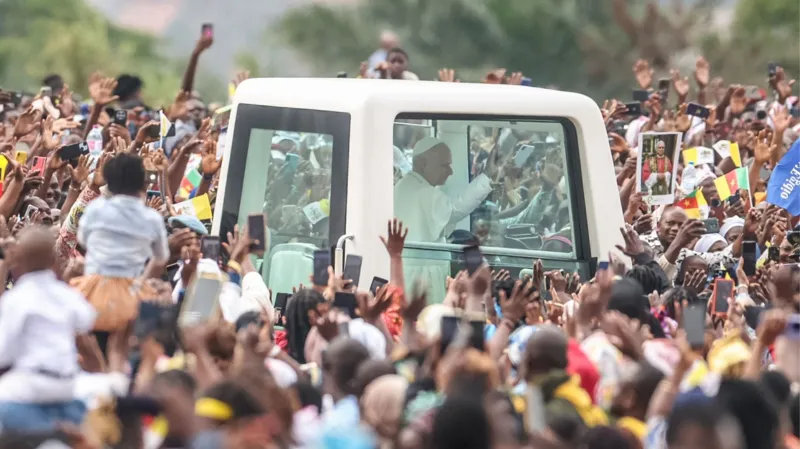
While the apology has been broadly welcomed, rights organisations say symbolic recognition alone is insufficient.

Human Rights Watch praised the Pope’s statement as an important milestone but argued that apologies must be followed by practical measures aimed at reparative justice.

The organisation urged religious institutions, governments, and corporations that benefited from slavery to engage more seriously with their historical responsibilities.

Advocates argue that reparations should include educational investments, cultural preservation initiatives, historical research, and economic support for affected communities.

The debate over reparations has gained momentum globally, particularly as former colonial powers face increasing scrutiny over their historical roles in slavery and empire-building.

Ghana to Host Major Conference on Reparations

Ghana is expected to continue pushing the issue onto the global agenda.

The country is preparing to host an international conference next month aimed at discussing the implementation of the recent UN resolution and outlining practical next steps for reparative justice efforts.

The gathering is expected to bring together policymakers, historians, civil society groups, and representatives from Africa and the diaspora.

For many in Ghana, Pope Leo’s apology represents more than a symbolic gesture.

It is being viewed as part of a broader global reckoning with history — one that seeks not only to acknowledge past suffering but also to address its continuing consequences.

As conversations around slavery, colonialism, and reparations intensify worldwide, Ghana’s response signals its determination to remain at the centre of efforts to transform historical recognition into meaningful action.

RECOMMENDED
Africa

Heavy rains lead to Senegal floods, government reports several deaths

By George Mensah 3 min read

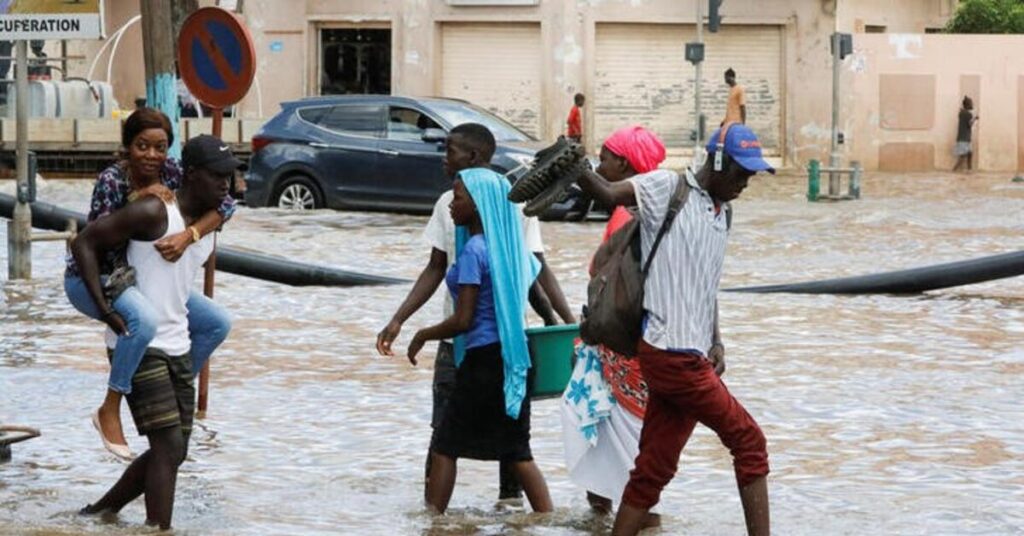
Heavy rain flooded roads and destroyed buildings across Senegal over the weekend, and the government said several people were killed and that more rain is coming. Flash floods in the capital, Dakar, and other areas disrupted traffic, and Prime Minister Ahmadou Al Aminou Lo warned that the school year, due to start this week, could be postponed if the water does not recede.

The floods come less than four weeks before Dakar hosts the 2026 Summer Youth Olympics, which start on October 31.

Deaths reported in Dakar and Matam

Senegal’s Interior Ministry reported deaths and injuries in Dakar and in Matam, a town in the northeast. It said a building collapsed in Kaolack, a town in the south. The reports did not give a death toll.

Local media reported that a mother and her child died in the Parcelles Assainies area of Dakar after their home flooded.

More rain forecast for Monday to Wednesday

Lo said there is a high probability of more rain on Monday, Tuesday and Wednesday. The forecast covers the same days on which many families would be preparing children for the start of term.

He said the school year could be postponed if floodwaters have not receded. The government has not yet announced a new date.

How much rain fell

Senegal’s meteorological agency, ANACIM, published rainfall totals for 24 hours. Rufisque, a town just outside Dakar, and Ranerou, in the Matam region, each recorded 142 mm. Dakar’s Yoff district recorded 138 mm.

The two places with the highest totals are about as far apart as two parts of the country can be, which suggests the rain covered a wide area and was not limited to the capital.

For comparison, after floods in Dakar in 2020, then-Water Minister Serigne Mbaye Thiam said 124 mm of rain had fallen, about what the city normally gets over the whole rainy season from July to September. The measuring stations and years differ, so the figures are not an exact match. Even so, both totals reported this weekend are above that 2020 number, and they were recorded within one day.

The Youth Olympics clock

Senegal is preparing to host the first Youth Olympic Games ever held in Africa. The event runs from October 31 to November 13, 2026.

The government expected flooding to be a risk for the event. On July 3, Lo chaired an interministerial meeting on flood preparedness and management, and the government approved measures to protect the venues and infrastructure. A dedicated task force was set up to handle flooding and waste at competition and accommodation sites, according to Ecofin Agency

That work followed Law No. 2026-381 of May 19, 2026, which strengthens the role of local authorities in flood prevention and management. The law is not specific to the Games. The task force works with the organising committee and the International Olympic Committee’s coordination commission.

This weekend’s rain is the first major test of those plans. The reports so far do not say whether any Olympic venues were affected, so that question remains open.

A problem that comes back each year

Floods in Dakar are not new. In 2020, the government faced criticism over a slow response to flooding that killed at least six people. A local resident told FRANCE 24 at the time that every flood brings food rations, but that what residents need is drainage and sanitation.

Dakar has a record of flooding after heavy local downpours, according to a European Space Agency hazard map, which classes the risk using flood events over the past 10 years. This weekend adds another event to that record.

What happens next

Three things will show how serious the situation is. The first is the rainfall on Monday, Tuesday and Wednesday, and whether floodwater drains from the streets of Dakar and Matam. The second is the government’s decision on the start of the school year. The third is whether the Interior Ministry publishes a full death toll and the number of damaged buildings.

With the Youth Olympics less than four weeks away, how quickly Dakar’s roads reopen will also be watched by organisers, athletes and visitors planning to travel.

Africa

Ethiopia Retakes Mekelle Airport as Tigray Fears War’s Return

By George Mensah 4 min read

Ethiopia’s federal military has recaptured the main airport in Mekelle, the capital of the northern Tigray region, three sources told Reuters on Saturday, October 3. If confirmed, the move is a major setback for an opposition alliance in its stronghold. Reuters could not verify the claim, and the region’s ruling party, the Tigray People’s Liberation Front (TPLF), could not be reached for comment.

The airport is Alula Aba Nega Airport, about 10 km (6 miles) from the centre of Mekelle. It was one of three airports in Tigray that opposition forces seized when fighting began on September 23. That fighting is the most serious escalation of violence in northern Ethiopia since the 2020-2022 civil war.

What the three sources said

One source with knowledge of events in the city and a humanitarian source told Reuters that troops from the Ethiopian National Defence Forces had regained control of the airport. A third source, a Mekelle resident who asked not to be named for security reasons, confirmed that government forces took it. This resident said gunfire could be heard outside the city centre.

The resident also described scenes inside the city. Some Tigrayan Defence Force fighters were leaving their posts and heading home, the resident said, and government facilities were being looted.

A source close to the TPLF told Reuters that government troops and allied militias had encircled the city.

AFP, citing a local journalist and residents, reported that TPLF fighters and leaders were seen leaving Mekelle. The journalist told AFP that federal forces had not yet been seen inside the city. Al Jazeera reported that media access in Ethiopia is heavily restricted and that communications blackouts have limited reporting. Those limits are the context for why the accounts so far rest on anonymous sources.

How the fighting reached Mekelle

Last month, rebels announced a seven-party coalition led by the TPLF, the same group that fought federal forces in the 2020-2022 war, according to Al Jazeera. The coalition began an offensive that seized three airports in Tigray. It also engaged in fighting on the borders with the Amhara and Afar regions.

The government is now mounting a counteroffensive, Al Jazeera reported, citing the Critical Threats Project at the American Enterprise Institute. That project says federal forces are pushing into Tigrayan territory along three routes toward Mekelle. Al Jazeera’s bureau chief in Ethiopia, Mohammed Taha Tawakel, reported on Friday that forces loyal to the federal government had taken several towns and were closing in on the city.

Al Jazeera reported that fighting is also raging in the Amhara and Afar regions, so the conflict is not confined to Tigray. AFP photographed TPLF members walking along a main road in Mekelle on September 23, the first day of the fighting.

A wider regional dispute

The fighting has raised fears of a wider conflict that could draw in neighbouring countries in the Horn of Africa and the Gulf, Reuters reported. The federal government in Addis Ababa cut diplomatic ties with Eritrea this week. It accused Eritrea of backing the rebel alliance, along with Sudan and Egypt. All three countries deny the accusation. Reuters published an analysis this week on why renewed fighting in Tigray risks a regional war.

The accusation matters because of what the 2022 Pretoria peace agreement required. That deal, which ended the earlier war, obliged the TPLF to disarm. It also called for the withdrawal of Eritrean and other non-federal forces from Tigray and for humanitarian access to the region, according to Newsy Today. The accusation against Eritrea therefore touches the terms of the agreement that ended the last war.

What history suggests

Analysts told Reuters that taking Mekelle would be unlikely to end the conflict on its own. The 2020 war shows why. Federal forces captured Mekelle within the first month of that war, and the TPLF took it back seven months later.

Taking the airport is also a different step from holding the city. AFP’s local journalist reported that federal forces had not yet entered Mekelle, and the resident who spoke to Reuters heard gunfire at its edges. The resident also said looting of government facilities was already under way, which points to a security gap in the city.

What to watch next

Three things will show how far the airport’s recapture changes the fighting. The first is whether federal troops enter Mekelle itself or stay at its edge. The second is whether the TPLF confirms or denies the loss, since it had not commented when Reuters reported. The third is how Eritrea, Sudan and Egypt respond to the accusations after Ethiopia’s break with Eritrea.

Reuters said it could not verify the reports, and it and AFP are the main sources for updates. Until the government or the TPLF speaks publicly, the picture in Mekelle rests on anonymous sources.

ADVERTISEMENT
Scroll to Top