Clicxpost

Federal Shutdown Puts Nutrition Program for Mothers and Children at Risk

Federal Shutdown Puts Nutrition Program for Mothers and Children at Risk

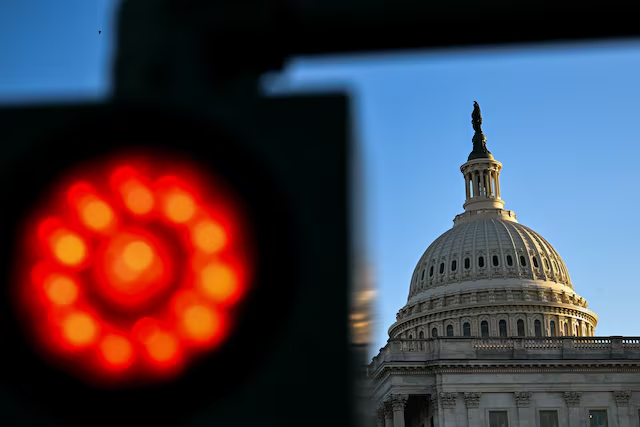
The ongoing federal government shutdown has placed crucial food assistance for nearly 6.7 million poor Americans in jeopardy, with the immediate solution being beyond reach as Congress is still deeply divided.

At the heart of concern is the Special Supplemental Nutrition Program for Women, Infants, and Children (WIC), which delivers crucial food, nutrition education, and assistance to pregnant women, new mothers, and young children under five years of age. Unlike Social Security or Medicare, WIC must be approved by Congress annually, making it particularly vulnerable when there is a political standoff.

Although the U.S. Department of Agriculture’s Food and Nutrition Service has pledged to keep operating the $7.6 billion program as long as money holds out, analysts warn that funds are critically low. Georgia Machell, president and CEO of the National WIC Association, cautioned that the shutdown at the close of the fiscal year has left minimal financial cushion in the program.

“A prolonged federal shutdown of more than a week is going to start placing babies and young children at risk,” Machell stated.

States Fill in the Gap to Reassure Families

With no votes scheduled in Congress, the shutdown will continue into at least one more day, and ripple effects are unfolding. Governors in states across the country, who have the responsibility for dispensing WIC funds, are working to calm fears by providing temporary aid.

In Montana, the Republican Governor’s administration stated that WIC services would remain in place for “at least another month.” Connecticut Democrat Governor Ned Lamont also pledged to maintain the program temporarily.

Lawmakers are divided on how to avert the crisis. Senator John Fetterman (D-PA) said that his support of a short-term funding measure was influenced by concerns about WIC.

That’s part of the reason I voted against closing the government,” he said. “I know there are some families that depend on these programs every day.”

Despite that, other Democrats stick firm to holding out for greater commitments on healthcare and federal services before the government reopens. Senator Richard Blumenthal (D-CT) admitted the threat to WIC but insisted pressure must be applied in order to gain permanent protections.

Political Blame Game Ratchets Up

As the impasse drags on, both sides are trading blame for responsibility. The Trump administration has faulted the effects of the shutdown on Democrats, warning that programs like WIC will run out of money.

“The Democrat shutdown is hurting rural America HARD,” posted Agriculture Secretary Brooke Rollins on X, deciding that food programs are “at risk of running out of money.”

Democrats responded that the administration had indeed proposed a $300 million cut for WIC in its budget request for 2026, questioning expressions of concern. While the Senate passed legislation providing full funding for WIC earlier this year, the bill remains unsigned into law.

Senator Jeanne Shaheen (D-NH), Democratic chair of WIC, reacted with alarm to short- and long-term consequences.

“We have many women and children who count on that,” she stated. “If they don’t receive funding, they won’t be able to eat.”

Uncertain Future

WIC funds could begin dwindling as soon as mid-October, USDA officials reported. The agency could attempt to extend the program by shifting unspent funds from last year, diverting funds, or reimbursing states that fund costs themselves.

But the outcome is far from certain. Katie Bergh, a policy analyst at the Center on Budget and Policy Priorities who specializes in WIC, warned that the program is in uncharted territory.

“We are in uncharted territory at this point,” she noted, adding that the length of continuous services will be up to each state’s resources.

For half-a-million at-risk families, the longer the shutdown continues, the more likely that mothers and children will be deprived of access to the food and benefits to which they are entitled on a daily basis.

RECOMMENDED

UP NEXT

Trump Iran talks

Trump Says US-Iran Talks Underway as Tehran Denies Negotiations

Confusion over the state of talks between the United States and Iran deepened on Tuesday, as conflicting statements from Washington and Tehran left the trajectory of their five-month war unclear, even as a fresh attack on shipping in the Strait of Hormuz underscored how much is still at stake for global energy markets. President Donald Trump told reporters Monday that negotiations with Iran were actively under way, framing the moment as a final opportunity for Tehran to reach an agreement. Iranian officials, however, flatly denied that any such talks were happening, let alone planned. Two governments, two very different accounts “They are going on right now,” Trump said during an Oval Office event when asked about the status of negotiations. He said the discussions were taking place at the request of several regional powers, including Iran itself, along with Saudi Arabia, the United Arab Emirates and Qatar. “This is a last chance for them to sign a good document,” he added. The remarks followed Trump’s decision over the weekend to call off what he described as “massive attacks” he had authorized against Iran, citing the prospect of talks as the reason for standing down. It was not the first time he has taken that approach. Over the course of the conflict, Trump has repeatedly threatened major military action only to pull back at the last moment, often pointing to diplomatic openings as justification. Iran’s account of events told a different story entirely. Foreign Ministry spokesman Esmail Baghaei said earlier Monday that no negotiations with the United States were taking place and that none were scheduled. He said Iran had no intention of hosting foreign delegations or dispatching negotiators abroad in the near term. According to Baghaei, every Iranian negotiator remained inside the country, with the exception of Foreign Minister Abbas Araqchi, who was on a religious pilgrimage in Iraq at the time. The only active discussions Iran acknowledged, he said, involved Oman, and concerned management of the Strait of Hormuz rather than any broader settlement with Washington. A dangerous strait grows more dangerous While the two sides disputed whether talks existed, activity in the Gulf offered its own signal. A cargo vessel reported being struck by an unidentified projectile near the strait off Oman’s coast, according to the United Kingdom Maritime Trade Operations agency. The incident added to an already tense standoff in the waterway, which handles roughly a fifth of the world’s crude oil and natural gas shipments and has seen transit slow to a crawl since Iran effectively blockaded the route earlier in the conflict. Shipping data from Kpler showed just six vessels, three tankers and three bulk carriers, passed through the strait on Monday, down from seven the day before. The steady decline in traffic reflects how thoroughly the conflict has disrupted one of the world’s most important energy corridors, even as diplomatic signals suggest the two sides may be inching toward some kind of resolution. Markets respond to hope, not certainty Despite the mixed messages out of Washington and Tehran, financial markets moved as though de-escalation were within reach. Brent crude futures dropped roughly 7 percent Monday, settling around $83.77 a barrel, while the Dow Jones Industrial Average closed at a record high. Asian stocks and oil prices ticked higher again on Tuesday, suggesting investors were, for the moment, betting on easing tensions rather than further conflict. That optimism sits somewhat uneasily alongside the assessment offered by regional analysts, who argue Iran is playing a longer game. Gulf officials and outside experts say Tehran appears to be counting on its ability to outlast Washington by using the region’s trade routes, shipping lanes and energy infrastructure as leverage, steadily raising the cost of continued confrontation until the United States and its allies conclude that accommodation is cheaper than containment. “Their big advantage is that they can hurt the regional states and the global economy,” said Michael Knights of the Washington Institute, describing the strategic logic behind Iran’s approach to the standoff. Trump’s Truth Social broadside Later Monday, Trump escalated his rhetoric toward Tehran in a post on Truth Social, describing Iran’s leadership as “unbelievably duplicitous.” He claimed Iranian officials had requested a meeting and that additional talks were scheduled for the “immediate future,” a claim that stood in direct contradiction to Baghaei’s statement earlier the same day. Trump also reiterated his assertion that the U.S. Navy maintains full control over the Strait of Hormuz, writing: “‘The United States Wall of Steel!’ Nothing gets through to Iran, unless we want it to, and nothing will get through, unless a Deal, or Total Surrender, is accomplished.” The statement reflects the maximalist framing Trump has used throughout the conflict, even as the practical reality in the strait, marked by attacks on shipping and sharply reduced vessel traffic, suggests a more contested and volatile picture than “total control” would imply. A pattern that keeps repeating Monday’s contradictory signals fit a broader pattern that has defined the war since Trump launched “Operation Epic Fury” alongside Israel more than five months ago. Trump has threatened significant military escalation on multiple occasions, only to step back and cite diplomatic contacts as the reason. Iran, for its part, has publicly refused to negotiate with Washington since a memorandum of understanding the two countries signed in June collapsed in early July. That collapse remains a central point of dispute between the two governments. Washington has argued the memorandum required Iran to reopen the Strait of Hormuz to normal shipping traffic. Tehran counters that the agreement’s text explicitly preserved Iran’s authority over traffic through the waterway, leaving the two sides with fundamentally incompatible readings of the same document. Five months into the conflict, Trump has yet to achieve any of the objectives he laid out at its outset: dismantling Iran’s nuclear program, curbing Tehran’s capacity to strike regional rivals, and creating the conditions for Iranians to overthrow their clerical leadership. Each round of U.S. pressure has instead been met by escalating Iranian responses targeting American forces in the region, Washington’s Gulf Arab allies, and commercial shipping, responses that have, so far, each ended with Trump stepping back from further escalation rather than following through. What comes next remains uncertain The disagreement over whether talks are even taking place captures the broader difficulty of assessing where the conflict stands. Trump’s public statements point toward imminent diplomacy and a possible resolution. Iran’s public statements point toward continued stalemate, with only narrow, technical discussions occurring through Oman regarding the strait itself. Markets, for now, appear to be pricing in the more optimistic version of events. But the attack on shipping near Hormuz, combined with the sharp drop in vessel traffic through the strait, suggests that whatever diplomatic movement may or may not be occurring, the practical risks to global energy flows have not meaningfully eased. Until Washington and Tehran can agree on the basic facts of their own negotiations, let alone the substance of any deal, the strait, and the wider region, are likely to remain a flashpoint capable of unsettling markets on short notice.

Read More »
Bangladesh Hasina India

Bangladesh Presses India Over Hasina’s Planned Address From New Delhi

Bangladesh has pressed India for clarity over former Prime Minister Sheikh Hasina’s planned virtual address to a New Delhi audience, warning that continued political activity by the ousted leader risks damaging relations between the two countries just as they attempt to rebuild ties. The appeal, delivered publicly for the first time, comes ahead of an August 5 event organized by the Foreign Correspondents’ Club of South Asia in the Indian capital. The gathering marks the second anniversary of the student-led uprising that forced Hasina from power, and organizers say she is expected to address attendees by video link alongside her son, Sajeeb Wazed Joy, and other speakers. Dhaka draws a line Bangladesh’s State Minister for Foreign Affairs, Shama Obaed Islam, told reporters late Monday that her government wants India to state its position clearly. “We are moving forward with India with a forward-looking approach. We don’t want that progress to be affected,” she said. “India has to be clear about its stance.” Islam said Dhaka has repeatedly raised concerns with New Delhi over political statements made by Hasina and other Awami League figures while residing on Indian soil. “We do not want India-Bangladesh relations to be harmed by statements from fugitive accused individuals,” she said, adding that Indian officials had previously signaled they did not expect exiled figures to engage in political activity from within India’s borders. She was careful to note that the New Delhi event itself was not organized by the Indian government, but said Dhaka would pursue the matter through diplomatic channels if the appearance goes forward as planned. The Foreign Correspondents’ Club of South Asia did not immediately respond to questions about Bangladesh’s objections, and India’s foreign ministry had not issued a response as of Monday night. A fugitive who says she’ll return Hasina, 78, has lived in India since fleeing Bangladesh in August 2024 as mass protests brought down her government after more than a decade in power. Despite the extradition request Dhaka has pursued since her departure, and despite a 2025 death sentence handed down over her role in the deadly crackdown on demonstrators, Hasina told Reuters in a recent interview that she intends to return to Bangladesh in December. That crackdown, according to United Nations estimates, killed as many as 1,400 people during weeks of unrest that ultimately toppled her administration. Hasina has rejected the death sentence as legally void, maintaining her innocence even as Bangladeshi authorities continue building a case for her return. Her continued presence in India, and her willingness to speak publicly on political matters from there, has become a recurring irritant in the relationship between the two countries. The upcoming address is expected to touch on the same uprising that ended her rule, adding a symbolic edge to Dhaka’s objections. A relationship in repair The dispute surfaces at a delicate moment for India-Bangladesh relations. Ties frayed significantly following Hasina’s ouster, but both governments have moved more recently toward renewed engagement since Tarique Rahman’s administration took office after February’s election. That shift has included efforts on both sides to expand cooperation and stabilize a relationship that had grown tense during the transition period. Bangladesh’s latest comments suggest officials in Dhaka view Hasina’s planned appearance as a test of how far that rapprochement extends. By publicly calling on India to clarify its position, rather than raising the issue solely through private diplomatic channels, Bangladesh appears to be signaling that it expects New Delhi to actively discourage political activity by exiled Awami League figures, not merely tolerate it as a private matter beyond its control. Whether India responds directly to that expectation, or continues treating events like the FCCSA gathering as outside its jurisdiction, may shape how quickly the two countries can move past the friction that has defined the relationship since Hasina’s departure. What comes next For now, the event is still scheduled to proceed on August 5, and there is no indication that Indian authorities intend to intervene. Islam’s comments leave open the possibility that Dhaka will escalate its concerns diplomatically if the appearance goes ahead as planned, though she did not specify what form that escalation might take. The broader extradition effort remains unresolved as well. Bangladesh has pursued Hasina’s return since 2024, a process complicated by her continued residence in India and the lack of any public indication that New Delhi plans to act on the request. Her own stated intention to return in December, delivered independently of any formal extradition process, adds another layer of uncertainty to how and when she might actually face the charges pending against her at home. As the second anniversary of the uprising approaches, the dispute over her planned address underscores how unresolved questions about Hasina’s status, both legal and political, continue to shape the terms on which Bangladesh and India are trying to rebuild their relationship. The coming days are likely to clarify whether India intends to address Dhaka’s concerns directly or leave the matter to play out through the correspondents’ club event as scheduled.

Read More »
Japan defence white paper

Japan Frames Military Buildup as Path to Prosperity Amid China Tensions

Japan’s Defence Ministry has begun making an argument that would have seemed unusual just a few years ago: that building more weapons is not simply about safety, but about making the country richer. The claim appears throughout the ministry’s newly released annual white paper, which frames the country’s expanding military buildup as a driver of economic growth rather than a drain on public resources. The document arrives as Japan continues to shed decades of postwar restraint on military activity, restrictions that once capped defence spending and limited the scope of what Japanese forces could do. This year’s assessment calls for the country to lean harder into defence-related technology, funnel support toward startups working in the sector, and rely more heavily on commercial components when building weapons systems, an approach that mirrors how militaries elsewhere have tried to speed up production while cutting costs. A pitch aimed at the public purse According to a Defence Ministry presentation accompanying the report, the white paper “stresses that investment in defence benefits the wider economy and people’s lives.” That framing is not incidental. It tracks closely with Prime Minister Sanae Takaichi’s broader economic approach, which has leaned on large-scale state spending as a tool to stimulate growth across multiple sectors, defence now among them. The messaging shift is visible even on the cover of the document itself. Rather than the soldiers, weapons hardware and military insignia that have marked previous editions, this year’s white paper features an anime-style illustration of a smiling family set against a gleaming, futuristic city skyline. A Defence Ministry official said the artwork was chosen deliberately to project a “futuristic image,” a marked departure from the more traditional, hardware-focused visuals Japan’s defence establishment has used in the past. The redesign signals an attempt to soften how the buildup is presented to ordinary citizens, positioning it less as preparation for conflict and more as an investment in national advancement. China named as the central concern Beneath the rebranding, the substance of the white paper remains focused on regional threats, particularly from China. The report states plainly that “China’s military activities and other actions are a matter of serious concern to Japan and the international community, and represent Japan’s greatest strategic challenge.” That language lands amid an already tense diplomatic backdrop. In November, Chinese officials reacted angrily after Takaichi suggested that Japan’s Self-Defense Forces could be deployed if a Chinese attack on Taiwan also threatened Japan’s own survival. Beijing labeled the comment “egregious” and demanded she withdraw it, a sign of how sensitive the Taiwan question has become for Tokyo’s relationship with its largest regional rival. Military analysts expect Takaichi’s government to build on that concern in a forthcoming national security strategy, which is widely anticipated to call for further increases in defence spending. The core rationale, according to those familiar with the government’s thinking, is deterrence: convincing Beijing that any move against Taiwan would carry costs steep enough to avoid, given the risk that such a conflict could draw Japan into a prolonged and direct confrontation. The financing question remains open Japan’s military expansion is already the largest since the Second World War, and financing it has required a mix of tax increases, spending reforms, and one-off revenue measures. That combination has helped push defence-related spending to roughly 2 percent of gross domestic product, a threshold that would have been politically difficult to reach even a decade ago. What remains unresolved is how Takaichi’s government plans to fund any additional expansion beyond that level. Japan’s public finances are already under considerable strain, and the prime minister has not laid out a clear plan for covering further increases without adding to that pressure. The scale of competing budgetary demands is evident in the government’s recent fiscal decisions. Takaichi’s administration secured a record 122.3 trillion yen budget for the fiscal year running through March 2027, then followed it with a supplementary package worth 3.1 trillion yen intended to help households and businesses absorb higher energy costs. Balancing that kind of household relief spending against a growing defence budget will likely become a defining fiscal challenge for her government in the years ahead. Where the money is going The bulk of Japan’s new defence spending to date has been directed toward long-range missile systems, particularly those capable of striking targets more than 1,000 kilometers, or about 621 miles, away. That capability marks a significant shift for a country that long avoided developing strike capacity beyond its own borders, reflecting how far Tokyo’s security posture has moved from its postwar defensive-only stance. Looking ahead, officials expect a growing share of any additional spending to shift toward drones and other unmanned systems, a category of weaponry that has taken on outsized importance since Russia’s invasion of Ukraine. Ukrainian forces have relied extensively on unmanned systems throughout that conflict, both for reconnaissance and direct strikes, and Japanese planners appear to be drawing lessons from that experience as they consider how future conflicts, including any potential crisis over Taiwan, might unfold. A buildup with economic ambitions Taken together, the white paper reflects a Japan trying to do two things simultaneously: respond to a security environment its own government describes as increasingly dangerous, and convince a public wary of past militarism that the resulting spending will pay economic dividends rather than simply draining the treasury. Whether that argument holds up will depend largely on how Takaichi’s administration answers the financing question it has so far left open, and on how the security picture in East Asia continues to evolve in the months ahead.

Read More »
Trump Exxon Chevron

Trump Blasts Exxon and Chevron for “Too Much Money” as Gas Prices Surge

President Donald Trump turned his sights on two of America’s largest oil companies this week, accusing ExxonMobil and Chevron of pocketing excessive profits while ordinary drivers pay more at the pump. The rebuke marks an unusual rift between the president and an industry he has otherwise championed since returning to the White House. Speaking to reporters on Monday, Trump singled out both companies by name just days after they posted strong second-quarter results. “I don’t like it,” he said. “Chevron, too much money. ExxonMobil, too much. Too much money.” The comments came as the war in Iran continues to push oil prices upward, squeezing consumers even as producers report some of their best quarters in years. Neither Exxon nor Chevron responded immediately to requests for comment following Trump’s remarks. A familiar tactic, an unfamiliar target Public pressure on corporate America is nothing new for Trump. During his first term, he leaned on automakers to keep factories running domestically, criticized defense contractors over pricing, and pushed pharmaceutical firms to bring down drug costs. He has revived that playbook since taking office again, frequently using his platform, whether at press briefings or on social media, to shape corporate behavior without resorting to formal regulatory action. What sets this episode apart is the target. Oil and gas producers have largely benefited from Trump’s energy agenda, which has favored expanded drilling and looser permitting. Now the same administration pushing companies to pump more is also demanding they charge less, a contradiction that has started to show. Earlier in the day, Trump took aim at Chevron chief executive Mike Wirth directly, criticizing his Sunday appearance on Fox News for failing to credit the administration’s role in supporting the oil sector. In a post on Truth Social, Trump wrote that Wirth had “conveniently forgot to mention” the administration’s contribution, adding: “without the genius, foresight, strength, and stability, of the TRUMP Administration, the Oil Industry, and our Country itself, would be DEAD!” He also referenced Chevron’s return to Venezuela, writing that the company was “thrown out” of the country before coming back “far bigger and stronger than ever before, expecting to make a fortune!” Chevron’s long history in Venezuela Trump’s Venezuela comments touch on a relationship stretching back more than a hundred years. Chevron kept its operations running in the country even after former President Hugo Chavez nationalized oil assets in 2007, a period when rivals including ExxonMobil and ConocoPhillips chose to withdraw entirely. That decision to stay has shaped Chevron’s position in Venezuela’s oil sector for nearly two decades, one that has alternated between sanctions, waivers, and renewed access depending on shifts in Washington’s foreign policy. Industry representatives, meanwhile, have pushed back on the idea that individual companies are to blame for rising prices. A spokesperson for the American Petroleum Institute said current price pressures stem from broader market forces rather than corporate decision-making. “Today’s higher prices are driven by global supply, demand and continued uncertainty around the Strait of Hormuz and other critical shipping lanes, not by any one company,” the spokesperson said. Pressure builds ahead of the midterms Trump’s frustration comes at a politically sensitive moment. Retail gasoline prices are now averaging around $4.10 a gallon nationwide, up more than 30 percent since the United States and Israel struck Iran earlier this year. That increase has landed just months before the November midterm elections, when Republicans are fighting to hold their congressional majority. Rising costs at the pump, layered on top of broader concerns about the cost of living, could become a liability for the party heading into the vote. Trump told reporters he expects relief once tensions with Iran ease. “They better cut the retail price, the consumer price,” he said, predicting that oil prices would “drop through the floor” once the conflict winds down. Global crude prices did fall after Trump called off what he had described as a planned “massive attack” on Iran over the weekend. But retail gas prices typically lag behind shifts in crude markets, meaning drivers may not see relief as quickly as the president suggests. Record earnings tell a different story The numbers behind Trump’s frustration are hard to ignore. Last week’s earnings reports from ExxonMobil, Chevron, Valero Energy, and Marathon Petroleum all pointed to the same trend: higher crude prices and wider refining margins have translated into stronger profits since the war began in February. Valero posted its best quarterly profit since the 2022 energy crisis that followed Russia’s invasion of Ukraine. Chevron, for its part, reported its highest quarterly earnings in at least six years. That earnings strength puts oil executives in an awkward position. The same market conditions driving up costs for consumers, a tightening Strait of Hormuz, sustained conflict in the Middle East, and constrained supply, are the ones fattening company balance sheets. For an administration that has staked much of its economic messaging on lowering costs for everyday Americans, the optics of record oil profits arriving alongside a 30 percent jump in gas prices are difficult to reconcile. Whether Trump’s public criticism translates into any policy action remains unclear. His administration has not signaled plans for windfall taxes, price controls, or other formal measures against the industry. For now, the pressure remains rhetorical, a continuation of the same public-shaming strategy Trump has used against other sectors in the past. But with gas prices weighing on voters and an election on the horizon, the gap between his energy expansion policy and his profit complaints may only grow harder to paper over.

Read More »
Capital One Trump Organization lawsuit

Capital One says money laundering review, not politics, drove Trump account closures

Capital One Financial hit back Friday against a lawsuit challenging its decision to close the Trump Organization’s bank accounts years ago, saying the closures followed a review by the bank’s anti-money laundering team. The court filing marks the first time a bank has formally connected money laundering concerns to President Donald Trump’s family business. Capital One is asking a federal court to dismiss the case, arguing the Trump Organization cannot support its claim that the bank illegally debanked the company by cutting off services for religious or political reasons. The Trump Organization and Capital One did not immediately respond to requests for comment. Capital One has not accused the Trump Organization of illegal money laundering. But Friday’s filing states that “documents and Plaintiffs’ own allegations make clear that Capital One closed Plaintiffs’ accounts for anti-money laundering (“AML”) reasons.” The bank said the closures came after “months of analysis and a careful review by Capital One’s AML team in accordance with bank policies and regulatory guidance.” Capital One notified the Trump Organization in March 2021 that it planned to close more than 300 Trump-affiliated bank accounts. Four years later, in March 2025, the Trump Organization and Eric Trump, the president’s son, sued the bank in federal court in Florida. Their complaint alleged Capital One closed the accounts because of the bank’s “woke” beliefs and a desire to capitalize on the political climate following the January 6, 2021 riot at the U.S. Capitol. Capital One calls allegations ‘misguided’ The Miami federal court has already dismissed two versions of the complaint, allowing the plaintiffs to file amended versions each time. Capital One said the latest complaint, filed in July, “suffers from the same fundamental flaws as their prior two pleadings.” In Friday’s filing, Capital One called the Trump Organization’s claims of political motive “misguided” and said they rest on “cherry-picked quotations unsupported by the full context” of the documents submitted to the court. “The transaction patterns identified by Capital One are among the types of activity flagged by federal banking guidance,” the filing said. The case unfolds against a backdrop of mounting pressure on major banks since Trump began his second term. His administration has amplified conservative complaints that financial institutions deliberately target customers based on political affiliation. Trump signed an executive order in August 2025 that bars discriminatory debanking practices. In January, he filed a separate suit against JPMorgan Chase over similar allegations, adding to the uncertain regulatory environment banks are navigating under his administration. The dispute with Capital One has roots in Trump’s first term. In 2019, he sued both Capital One and Deutsche Bank in an attempt to block them from turning over his financial records to Congress, which Democratic lawmakers were probing at the time. Anti-money laundering staff at Deutsche Bank had reportedly flagged a set of transactions connected to Trump, though bank executives allegedly did not act on the warnings. Deutsche Bank disputed that account when the report surfaced. The current lawsuit centers on whether Capital One’s 2021 decision was a legitimate compliance action or a political one. Banks are required under federal law to monitor accounts for suspicious activity and file reports when transactions raise red flags, regardless of the account holder’s identity or political standing. Capital One’s filing leans on that framework, arguing its AML team followed standard procedure rather than singling out the Trump Organization for its political ties. The Trump Organization’s suit, by contrast, points to the timing of the closures, which came roughly two months after the Capitol riot, as evidence the bank acted out of political calculation rather than compliance concerns. The company has argued that Capital One’s public statements and internal communications from that period show an intent to distance itself from Trump amid public backlash following January 6. Capital One’s response Friday pushes back directly on that narrative, saying the documents the plaintiffs cite do not support the conclusion they draw from them. The bank maintains that its review process took months and followed established regulatory guidance rather than reacting to a single news cycle or public pressure campaign. The outcome could carry weight beyond this single case. Trump’s fight with JPMorgan Chase raises similar questions about where banks draw the line between legitimate compliance decisions and alleged political targeting. Both cases arrive as Trump’s administration pushes banks to explain past account closures involving conservative figures and organizations, part of a broader effort that predates his return to office but has gained new momentum since January. Wall Street executives have said privately that the debanking fights complicate an already difficult compliance landscape, where banks face regulatory penalties for failing to flag suspicious transactions but now also face lawsuits and political scrutiny when they do act on those obligations. For now, the Miami federal court will decide whether the Trump Organization’s amended complaint clears the bar Capital One says it has twice failed to meet. If the court dismisses the case again, the plaintiffs would need to file yet another amended version or drop the suit. Capital One’s filing asks the court to end the matter at this stage, arguing no further amendments would fix what it calls fundamental flaws in the plaintiffs’ legal theory. Neither the Trump Organization nor Capital One has indicated whether they expect the dispute to reach trial or settle before then. Court records show no hearing date has been set for the motion to dismiss.

Read More »
Trump Iran attack cancel deal

Trump says U.S. will hold off new Iran strike if deal comes quickly

President Donald Trump said the United States will pause plans for a fresh attack on Iran, provided a deal comes together fast enough to stop Tehran’s nuclear program and fully reopen the Strait of Hormuz. Trump made the announcement late Saturday on Truth Social, writing that Iran and other Middle Eastern countries had asked for time to finish a deal that would produce “the Immediate, Complete and Total” reopening of the strait and “an end to Iran’s nuclear threat.” He did not identify which countries made the request. The post came after a phone call with Saudi Crown Prince Mohammed bin Salman. “Based on this request, I have agreed, for the future benefit of the WORLD and, likewise, the survival of a successful and prosperous Iran, to cancel the attack, subject to being able to rapidly make a DEAL,” Trump wrote. He added that Israel “joins me in this commitment.” Iran’s state news agency IRNA reported Sunday that talks between Tehran and Oman over the strait had entered their final stages. The agency cited Iranian Foreign Minister Abbas Araqchi. Foreign Ministry spokesperson Esmaeil Baghaei said the negotiations center on establishing a new route through the strait and have no connection to whether the strait itself stays open or closed, calling that “a separate discussion.” Iran publicly rejected an earlier proposal last month. That plan, floated by Oman and backed by Gulf states, would have put the strait under shared management. People familiar with the matter told Reuters the proposal called for collecting voluntary fees from vessels using the waterway. Iran says it is boosting deterrence Trump’s apparent pullback follows days of threats from both sides and marks the latest shift in a war the U.S. and Israel launched five months ago. Fighting has since spread beyond the Gulf, reaching the Red Sea and a facility in Egypt along the Mediterranean. Iran has largely shut the Strait of Hormuz, a passage that carried 20% of the world’s oil and liquefied natural gas before the conflict began. The closure has pushed energy prices higher and added to broader inflation pressures. Eli Cohen, Israel’s energy minister and a member of Prime Minister Benjamin Netanyahu’s security cabinet, said Israel and the U.S. are coordinating closely on intelligence and security across the region. He added a warning of his own. “With or without an agreement, and regardless of any external commitments, if Iran attempts to renew its nuclear programme or advance its ballistic missile industries, we will be there. We will take action, and we will strike,” Cohen said. Trump and Netanyahu met Tuesday in Washington. An Israeli official said the two discussed every option for stopping Iran’s nuclear program, from diplomacy to economic pressure to military force. Iran denies it is pursuing a nuclear weapon. Iran’s acting defense minister, Brigadier General Majid Ebn Al-Reza, described the recent U.S. threats as “psychological and cognitive warfare,” according to Press TV, but said Tehran is treating them seriously. He said Iran will increase its preparedness and deterrence rather than wait passively or get caught off guard. During his call with Trump, the Saudi crown prince pressed for dialogue to ease tensions in the region, Saudi Arabia’s state news agency reported. A White House official confirmed to Reuters that the call took place but gave no further details. Oil prices surged last month Trump told his cabinet Friday that he believes his negotiating team, which includes son-in-law Jared Kushner, special envoy Steve Witkoff and Secretary of State Marco Rubio, can still reach a deal with Iran. The war’s April ceasefire broke down last month, and benchmark Brent crude jumped 24% in response. Analysts surveyed by Reuters expect prices to climb further this year. Trump has said his goal of blocking Iran from obtaining nuclear weapons is worth the near-term cost at the pump, though rising fuel prices have added political pressure on him to bring the conflict to a close. The threat to global shipping has widened elsewhere too. Iran’s Houthi allies in Yemen have begun threatening the Bab el-Mandeb strait in recent days. That waterway sits at the opposite end of the Red Sea from the Suez Canal and serves as another export route for Saudi crude. The United Kingdom Maritime Trade Operations said Saturday it received reports of two separate incidents off the coast of Oman. In the first, an unidentified projectile struck a tanker and damaged its engine room. In the second, a tanker’s master reported seeing a large splash and an explosion near the vessel, though the ship sustained no reported damage.

Read More »
Mallory Geis Broad Peak

Body of US climber Mallory Geis found on Pakistan’s Broad Peak

The remains of American climber Mallory Geis have been recovered by rescuers following Thursday’s avalanche on Pakistan’s Broad Peak, according to a local government body overseeing the search. Geis, 39 and from San Antonio, Texas, according to US media reports, was one of 10 climbers caught in the avalanche on the mountain, which sits on the border between Pakistan and China. Her remains were confirmed found later on Friday. Three climbers identified so far Alongside Geis, two other bodies have now been identified: Nadhira Ahmed Abdullah Al Harthy of Oman and Pur Bahadur Gurung of Nepal, also known within the climbing community as Yukta. All three have been transported by helicopter to a hospital for what the Information Department of Gilgit Baltistan described as “legal formalities regarding identification.” The Alpine Club of Pakistan initially said four bodies had been located on the mountain, before clarifying that rescuers had in fact recovered two full bodies and a body part. Several additional climbers were spotted by aerial drones, though their condition could not be confirmed until ground teams reached the area, a process expected to take several hours once search efforts resumed Saturday. Persistent bad weather has slowed the operation throughout. The Alpine Club said the location of one climber remains entirely unknown. Search began after Thursday’s avalanche Rescue teams launched their search after reports emerged of an avalanche striking the 8,047-meter (26,400-foot) peak in the Karakoram mountain range on Thursday. The multinational expedition group was being led by Nirmal Purja, the Nepal-born climber renowned for summiting all 14 of the world’s mountains above 8,000 meters in just over six months in 2019. The Alpine Club of Pakistan told the BBC that GPS trackers belonging to three members of the expedition, including Purja, had shown movement after the avalanche, but that a helicopter searching the area was unable to locate anyone at those coordinates. Rescuers later found one of the trackers smashed, leading the club to believe the earlier movement readings may have been a technical glitch rather than a genuine sign of life. Naila Kiani, communications lead for the Alpine Club of Pakistan, said the odds of survival after more than 24 hours in such harsh conditions were “very slim,” though she added that “miracles do happen.” Army helicopters join the rescue effort Earlier Friday, the Alpine Club confirmed that Pakistan’s army had dispatched two rescue helicopters carrying personnel and specialized equipment to support the search. “The club prays for the safety and successful rescue of all the climbers and stands in solidarity with their families and the international mountaineering community during this difficult time,” the organization said in a statement. Purja’s path from British special forces to elite mountaineering Purja joined the British Army in 2003 and later joined the Special Boat Service, the Royal Navy’s special forces unit, in 2009. He first visited Everest Base Camp in 2012 and, rather than returning directly to Kathmandu, went on to summit the 6,119-meter Lobuche East, his first mountain peak. Geis was on her first major Pakistan expedition Geis was climbing alongside Purja as part of the group. In mid-June, she posted on social media that she had new boots ready for what she described as her first big climbing expedition in Pakistan. She was tagged in a post from travel company Moving Mountains, which said she would be climbing with Pakistani national Sohail Sakhi and that the trip marked her first attempt at Broad Peak. Sakhi’s tracker is the one rescuers found smashed, and he remains the sole member of the expedition whose location has not been spotted at all. Other prominent climbers among the missing Beyond Purja, Sakhi and Geis, several other well-known names remain among the missing, including Pur Bahadur Gurung, also known as Yukta, and Kili Pemba Sherpa. Yukta holds certification from the International Federation of Mountain Guides Associations and had been closing in on completing the 14-peaks challenge, the pursuit of summiting all of the world’s mountains rising above 8,000 meters. Kili Pemba has summited Everest 15 times and took part in a historic winter expedition to K2 in 2021 alongside several Nepali climbers, including Purja. Pemba also served as the guide who led Chinese double amputee Xia Boyu to the summit of Everest in 2018. Xia had lost both legs decades earlier during an earlier attempt to reach the mountain’s peak. A mountain with a deadly history Broad Peak ranks as the world’s 12th highest mountain and is widely regarded as one of the more technically demanding peaks for expeditions. The mountain was first successfully climbed in 1957 by a four-member Austrian expedition. In the decades since, many climbers have reached its summit, but dozens have also died attempting the ascent. One of the mountain’s deadliest years came in 2013, when at least six fatalities were recorded. What happens next Search efforts were set to resume Saturday, weather permitting, as rescue teams attempt to reach the drone-spotted locations and determine the fate of the remaining missing climbers, including Purja and Sakhi. The Alpine Club of Pakistan has not indicated when the search might conclude or when a full accounting of the expedition’s fate will be available.

Read More »
Hamas disarmament Gaza

Israel demands “genuine disarmament” of Hamas before troop withdrawal from Gaza

A senior Israeli official has said that Israeli forces will not pull back from their current positions in Gaza until Hamas undergoes what the official called “genuine disarmament.” Hamas, in turn, said it would only hand over its heavy weapons once Israel ends “all forms of aggression” and withdraws its forces from the territory entirely, leaving the two sides at odds over which step must come first. The dispute follows an announcement from President Donald Trump that the Board of Peace had reached an agreement calling for the “complete disarmament” of Hamas and other armed groups operating in Gaza. Trump calls the deal a “big step,” Israeli minister rejects it Speaking Friday, Trump insisted that Israel was “very happy” with the proposed agreement, describing it as a “big step for the Middle East.” His characterization was quickly contradicted, however, by far-right Israeli National Security Minister Itamar Ben Gvir, who dismissed the draft proposal as “not acceptable.” The disarmament question forms part of the second phase of a US-brokered ceasefire plan aimed at ending the war in Gaza. The broader 20-point plan, first unveiled last September, called for the creation of the Board of Peace to oversee implementation, along with the disarmament of Hamas, a phased withdrawal of Israeli troops, and reconstruction efforts across the territory. Trump says he has an “understanding” with Israel Speaking at a cabinet meeting at Camp David on Friday, Trump said he had reached an “understanding” with Israel regarding the latest disarmament proposal negotiated with Hamas, reiterating that “Israel’s very happy about it.” Asked directly whether Hamas would disarm before Israeli forces withdraw, or whether the withdrawal would come first, Trump declined to give a clear answer, instead describing the overall situation in Gaza as “very complex.” He said Hamas’s weapons would ultimately be handed over to the Board of Peace as part of the arrangement. Israeli Prime Minister Benjamin Netanyahu has not yet publicly commented on the latest proposal. Israel insists on disarmament before any pullback A senior Israeli official told reporters that the country’s position remains unchanged: there will be no Israel Defense Forces withdrawal from the current Yellow Line without what the official again described as the “genuine disarmament” of Hamas. The Yellow Line refers to the demarcation point within Gaza that Israel agreed to pull its forces back to under last year’s US-brokered ceasefire. Under that arrangement, Israel was meant to retain temporary control over the area behind the line, amounting to roughly 53% of Gaza’s total territory. Netanyahu, however, has recently said Israeli forces actually control more than 60% of Gaza, a figure well above what the original ceasefire terms outlined. In May, he went further, stating publicly that his directive was to move Israeli control up to 70% of the territory, raising questions about how closely the current situation on the ground still matches the original agreement. Hamas ties disarmament to Israeli withdrawal and statehood In its own statement, Hamas said that Israel ending its military campaign in Gaza remains a “fundamental prerequisite” for any further progress on the deal. The group also said any agreement must guarantee the Palestinian right to “self-determination, establishing an independent Palestinian state.” Hamas said it had negotiated “responsibly and positively” and that its position reflected “national consensus among the Palestinian factions” involved in the talks. Palestinian officials involved in the negotiations said the decision by Hamas’s new leadership, which they described as the most consequential in the group’s history, was shaped largely by the severe humanitarian conditions facing more than two million Palestinians currently living in Gaza. Board of Peace publishes a roadmap Earlier Friday, the Board of Peace released what it described as a roadmap for Gaza, reaffirming its proposal for a phased disarmament of Hamas alongside a gradual Israeli withdrawal and the deployment of an international stabilization force to oversee the transition. Voices from Gaza and Israel Tala, an 18-year-old university student who has been living in a tent in Gaza since her home was destroyed in an airstrike, said the repeated cycle of ceasefire hopes and setbacks has taken an emotional toll. “Every time people hear about a possible ceasefire, we hope that it will finally end,” she told BBC Newsbeat. “But when these promises are broken, it creates more fear.” She described daily life in Gaza as “very challenging,” saying: “Every day comes with a new difficulty, and we are constantly thinking about safety and basic needs.” She added that stopping the fighting, protecting civilians and beginning reconstruction matter most right now. In Israel, a man named Jonny told the BBC he “prays” the ceasefire can hold, though he expressed doubt about whether the broader cycle of conflict will ever truly end. “I don’t see an ending to this cycle, but I pray it’s the case,” he said. International reaction remains cautious Israel’s ambassador to the United Nations, Danny Danon, told CNN that Israel is “looking forward to implementing” the deal, but stressed the need for verification. “We have to verify what they [Hamas] are doing, not what they are saying,” he said. UN Secretary-General António Guterres described the proposed agreement as “the only good news in recent days,” a notably positive assessment given the broader tone of the conflict. UK Foreign Secretary Ed Miliband said the priority now must be full implementation of the original 20-point peace plan, including “withdrawal of the IDF from Gaza and respect for the ceasefire by all parties.” He said conditions in Gaza “remain appalling” and called on Israel to “immediately end the unacceptable restrictions on aid,” an accusation Israel denies. The war’s toll The war in Gaza began after the Hamas-led attack on southern Israel on October 7, 2023, in which approximately 1,200 people were killed and 251 others taken hostage. Israel’s subsequent military campaign in Gaza has killed more than 73,290 people, according to figures from the territory’s health ministry, which the UN considers reliable. What happens next With Israel insisting on Hamas disarmament before any withdrawal and Hamas demanding the reverse, the sequencing dispute remains the central obstacle to moving the ceasefire’s second phase forward. Neither Netanyahu nor Hamas’s leadership has signaled a willingness to shift its position, leaving the Board of Peace’s newly published roadmap facing an uncertain path toward implementation.

Read More »
Nancy Guthrie kidnapping

Police release ransom notes in Savannah Guthrie’s mother’s kidnapping case

Police in Arizona have released two ransom notes tied to the abduction of Nancy Guthrie, the mother of NBC news presenter Savannah Guthrie, hoping the public can help identify whoever took her from her home near Tucson six months ago. The Pima County Sheriff’s Office released the notes Friday, asking anyone who might recognize the writer’s language patterns to come forward. Officials said the first note, which demanded millions of dollars in Bitcoin, is treated as apparently credible. A second note claimed Nancy Guthrie died shortly after her abduction, though investigators say they cannot verify her death and continue to treat the case as an active investigation. “We are desperate,” Savannah Guthrie said Saturday, pleading publicly for information that could help locate her mother or determine what happened to her. Distinct language patterns could identify the writer The sheriff’s office said it hopes members of the public will recognize specific phrasing or writing habits in the notes. “A friend, family member, coworker, classmate, or acquaintance may recognise these patterns of expression and possess information that could help identify the individual responsible,” the office said in a statement. Investigators believe Nancy Guthrie, who was 84 when she was last seen on January 31, was taken against her will from her home. Officials have not disclosed a possible motive and no suspect has been arrested. Both notes were addressed to Savannah Guthrie and her family and were sent to a local television station in Tucson in the days following Nancy Guthrie’s disappearance, according to the sheriff’s office. The first note demanded $4 million in Bitcoin The first note, received on February 2, opened by telling Savannah Guthrie that her mother was “safe but scared” and would be held for ransom. It demanded $4 million in Bitcoin be paid before 5 p.m. on Thursday the 5th, warning that the amount would rise to $6 million if the deadline passed, with a final deadline set for the following Monday at 5 p.m. The note stated that failure to pay by the final deadline would result in Nancy Guthrie’s death, and warned the family against contacting law enforcement or attempting to negotiate. “You will not be able to contact me from here on out, there will be no negotiation. Do not play games, law enforcement will not be able to help you,” the note read. Following what investigators believe was a redacted portion of the message, the note ended with specific details about the inside of Nancy Guthrie’s home, including a white smart watch left on the floor near her bed and a destroyed floodlight in the backyard. Guthrie vanished after being dropped off at home Nancy Guthrie, who took daily medication, disappeared after relatives dropped her off at her home on the evening of Saturday, January 31. Police became involved after she failed to show up the following morning at a friend’s house, where she had planned to watch a virtual Sunday church service. Second note claimed she died of a heart-related issue Four days after the first message, a second note arrived. It claimed the kidnappers had not fully understood the seriousness of Nancy Guthrie’s physical condition and stated they never intended to harm her. “She perished shortly after she was taken. We believe it was heart related. She is buried in nature now,” the note read, according to the sheriff’s office. It went on to say the family could not have changed the outcome and expressed what it described as remorse. “We are truly sorry.” Investigators have not confirmed whether the claims in the second note are accurate, and Nancy Guthrie’s body has not been recovered. Guthrie has repeatedly pleaded for her mother’s return After receiving the second note, Savannah Guthrie, one of the most recognizable television anchors in the United States, addressed the kidnappers directly in an Instagram post on February 7. “We received your message and we understand,” she said at the time. “We beg you now to return our mother to us… This is very valuable to us, and we will pay.” Earlier this week, Guthrie released another video urging the kidnappers to “do the right thing” and disclose her mother’s location. She returned to social media Saturday, sharing a photo of her mother alongside a message describing her family as “desperate” and “begging for help.” Guthrie said her family remains determined to learn what happened to her mother so they can give her “the dignity of a proper goodbye, a celebration of her remarkable life that she so deserves.” She asked anyone with information, even a suspicion, to come forward, noting that tips can be submitted anonymously and that a reward remains available for information leading to her mother’s recovery. A tactic with historical precedent This is not the first time authorities have released a suspect’s writing in hopes of identifying them through language alone. Ted Kaczynski, known as the “Unabomber,” was ultimately identified by his own brother after U.S. newspapers published his manifesto in the 1990s, leading to his arrest. In this case, investigators had already released images earlier this year showing a masked, armed individual who covered the front door camera at Nancy Guthrie’s home in the period before her disappearance. That image, combined with the newly released notes, represents the most significant public appeal for information since the case began. What happens next The Pima County Sheriff’s Office said the investigation remains active and is urging anyone with relevant information to contact authorities. With no suspect identified and Nancy Guthrie’s fate still unconfirmed, investigators are relying heavily on the public’s ability to recognize the writing style captured in the two notes, a strategy that has, in past cases, led directly to an arrest.

Read More »
Russia Kyiv attack

Russian strikes on Kyiv kill nine, injure dozens as attacks intensify overnight

Nine people were killed in a Russian armed forces attack on Kyiv, according to Ukraine’s State Emergency Service, as cited by APA. A large number of people were also injured in the overnight assault, and officials said Friday into Saturday that both the death toll and the number of wounded continued to climb as rescue operations proceeded. Kyiv Mayor Vitali Klitschko initially reported a much smaller toll shortly after the attack began, saying at least one person had been killed and several others injured, including a 17-year-old. That early figure has since risen sharply as emergency crews worked through the night to assess the damage across the city. Fires break out across multiple districts The strikes sparked fires in both residential and non-residential buildings across three districts of Kyiv: Solomianskyi, Darnytskyi, and Shevchenkivskyi. Missile debris fell onto buildings and vehicles in the affected areas, adding to the damage caused by direct hits. Emergency crews responded to multiple fire sites simultaneously as the scale of the overnight bombardment became clear. The State Emergency Service has not yet released a full breakdown of the number of buildings damaged or destroyed across the three districts. Attack extends beyond the capital The assault was not confined to Kyiv itself. In the Bucha district of the wider Kyiv region, fires also broke out at a warehouse and in nearby residential areas, according to the report. Bucha, located northwest of the capital, has previously been the site of intense fighting and Russian occupation earlier in the war. Residents across the affected areas described hearing dozens of powerful explosions throughout the night, a pattern consistent with a large-scale missile and drone assault rather than an isolated strike. Death toll expected to rise further Ukrainian officials cautioned that the current casualty figures remain provisional as search and rescue operations continue at strike sites across the capital and surrounding region. Emergency crews were still working to clear debris and check damaged structures for additional casualties as of the latest update. The scale of the August 1 attack marks one of the deadlier assaults on Kyiv in recent months, adding to a war that has repeatedly targeted Ukraine’s capital with large-scale missile and drone barrages since Russia’s full-scale invasion began. What happens next Ukrainian authorities are expected to release updated casualty figures as rescue and recovery operations continue at the affected sites. Officials have not yet detailed what weapons were used in the attack or issued a formal response regarding Ukraine’s air defense performance during the overnight assault.

Read More »
Scroll to Top