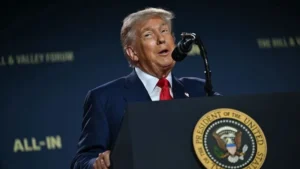

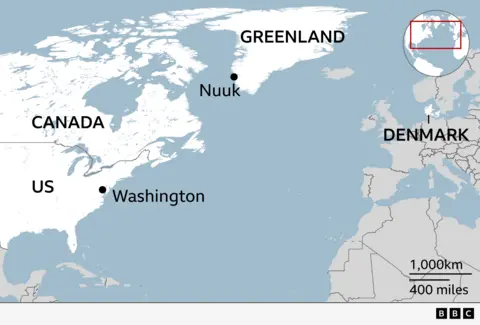
The United States and Denmark have signed off on a security deal for Greenland, ending a months-long standoff that began when President Donald Trump threatened to seize the Arctic territory by force. Trump announced on Truth Social that Denmark would grant the US “permanent control over security, and all other needs” in the semi-autonomous Danish territory, with the agreement expected to be formally signed next week at the UN General Assembly.
NATO welcomed the arrangement, saying it would help stabilize the region. Denmark’s Prime Minister Mette Frederiksen and Greenland’s Prime Minister Jens-Frederik Nielsen issued a joint statement calling the deal a step toward “strengthened security,” though neither leader released details of what it actually contains.
What the deal reportedly includes

No official text has been published. The BBC has contacted the Danish Embassy in the US and the White House for comment. In the meantime, an unnamed US State Department official described the broad strokes of the agreement without providing a copy.
According to that official, the deal would not expire even if Greenland becomes an independent country at some point in the future. It gives the US unilateral authority to build additional military structures on the island, with no approval required from either Greenland or Denmark. The official said this includes “permanent access, basing and overflights rights.”
The agreement also bars non-NATO countries from building bases in Greenland and blocks what the official called “adversaries” — specifically naming Russia and China — from making investments in sectors considered sensitive to US security. Under the current setup, the official said, those countries have been able to invest in sensitive parts of Greenland’s economy without any investment screening.
It remains unclear exactly how this arrangement differs from a 1951 agreement between the US and Denmark, which already allows the US to station an unlimited number of troops in Greenland. The US currently keeps more than 100 military personnel at Pituffik Space Base, on the territory’s northwestern tip.
Trump claims a win, but no territory changes hands
Trump wrote that the deal came at “no cost to the United States” and would let Washington “do what is necessary” to “secure and defend the security of Greenland.” He said it also bars any US adversary from maintaining a military presence in Greenland or making “sensitive investments in Greenland, without our express written approval.”
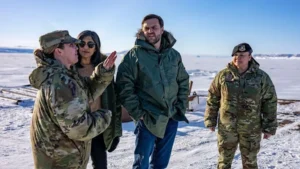
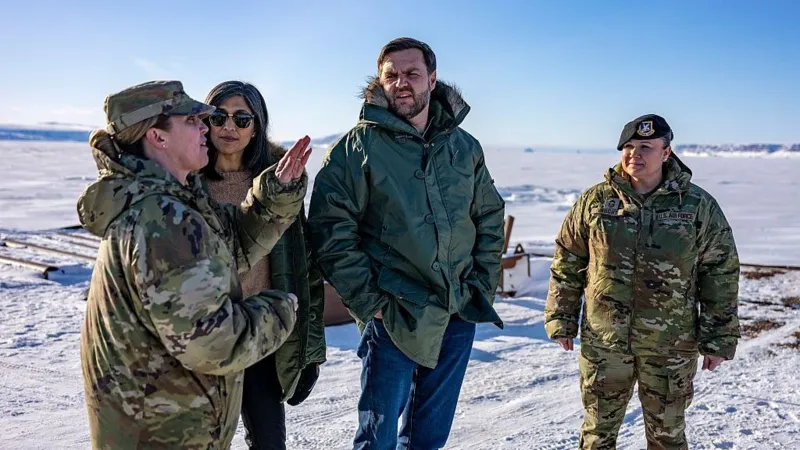
For months, Trump pushed to buy or annex Greenland outright, arguing the island was vulnerable to Russia and China and pointing to its strategic location and mineral deposits. Those demands triggered backlash from Greenlanders, Danes, and other NATO allies, and US Vice-President JD Vance’s visit to Pituffik Space Base earlier this year was widely seen in Copenhagen and Nuuk as a provocation.
Despite the rhetoric, no territory has changed hands, and Frederiksen’s statement specifically noted the deal recognizes “the sovereignty and territorial integrity of the Kingdom and the right of the Greenlandic people to self-determination.” Danish media have framed this as a win for Copenhagen’s diplomacy. The newspaper Berlingske ran the headline “Don’t tell Trump that it’s the Kingdom of Denmark that has won,” while a Politiken correspondent in the US wrote that “Trump didn’t get Greenland, but he was allowed to take a victory lap on social media.”
Reactions from Nuuk, Paris, and beyond
Nielsen, Greenland’s prime minister, called it “gratifying that we are about to enter into an agreement that ensures and strengthens the security of Greenland, the Kingdom of Denmark, the United States and the Western alliance.” He added: “The agreement recognises Greenland’s interests and our place in international co-operation. It is for the benefit of us all.”
French President Emmanuel Macron offered a more cautious take, telling the AFP news agency the deal helped “reaffirm Danish sovereignty” over the island. “I simply note that Danish sovereignty is respected, that international law is respected, and that this is what we were asking for. So it’s a good thing,” he said.
Not everyone in Greenland is convinced yet. MP Naaja Nathanielsen called it “news we have all been hoping for” in a social media post, but added: “It is absolutely crucial that any agreement preserves our right to self-determination.” Former Greenlandic politician Aaja Chemnitz was more guarded, saying she looked forward to the deal being finalized but “until then, I’m sceptical.” She added: “I don’t have much confidence in Trump.”
The agreement still needs to clear what Frederiksen and Nielsen’s joint statement described as “the necessary parliamentary procedures to enter into force” once it’s signed.
Why Greenland matters to Washington
Greenland sits between North America and the Arctic, making it valuable for early-warning missile detection systems and for tracking vessel movement in the region. Trump has said the island is essential to his planned Golden Dome missile defense system, which is meant to protect the US from attacks by Russia and China, and has suggested European allies could take part in building it.
The territory also holds large, largely untapped reserves of rare earth minerals used in mobile phones, electric vehicles, and other technology. That resource wealth, combined with its geographic position, has kept Greenland on Washington’s radar well before Trump’s latest push.
With the text of the agreement still unreleased, much of what happens next depends on details that haven’t been made public. Whether the deal genuinely settles the dispute or simply postpones the next round of pressure from Washington will likely become clearer once Denmark, Greenland, and the US put pen to paper next week.