
Nigerien authorities said Saturday they had restored order after a group of soldiers rebelled against their commanding officers at a key military base and opened fire on sensitive sites across the capital, Niamey. The mutiny triggered hours of gunfire and explosions overnight, rattling a government already navigating a fragile security situation nearly two years after a military takeover.
Trouble Starts at Base 101
Defense Minister Gen. Salifou Mody said the unrest began with what he described as a “break with discipline and military regulations” at Base 101, a military airbase located at Diori Hamani International Airport. He said a group of soldiers attempted to rebel against their officers at the base and fired on sensitive locations in the capital before security forces managed to bring the situation under control.
Mody did not detail what triggered the rebellion or specify how many soldiers took part. His public statement focused primarily on confirming that the immediate threat had passed, without addressing the underlying grievances that may have driven the mutiny.
A Night of Gunfire Near the Presidential Palace
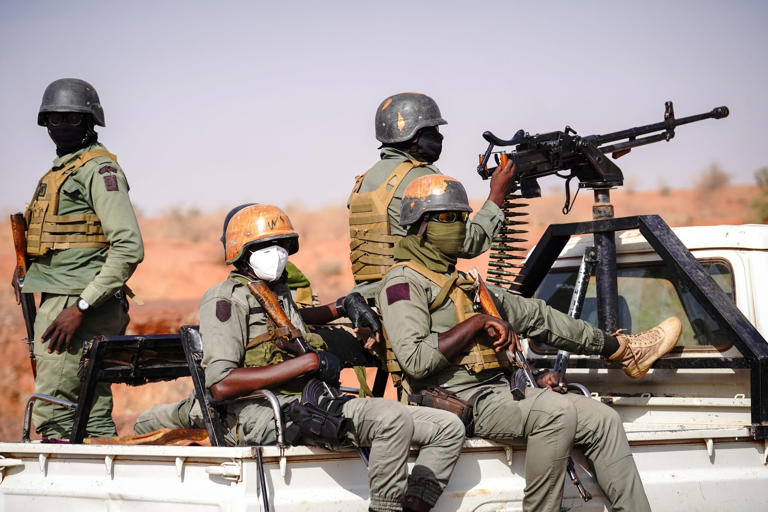
Sustained gunfire and explosions rang out from shortly after midnight into Saturday morning, concentrated around the airport and in the Plateau administrative district, home to the presidential palace and other key government institutions. The overlap between the mutiny’s targets and the seat of government underscored how directly the unrest threatened Niger’s ruling authorities.
Security forces moved quickly to secure both areas. A major road leading into Niamey was closed as part of the response, cutting off a key route into the capital while the situation remained unresolved. State broadcaster RTN halted its live transmission for several hours Saturday morning before resuming broadcasts later in the day, a pause that limited public access to information during the most active hours of the unrest.
Ruling Council Calls for Unity
Niger’s ruling military council, the National Council for the Safeguard of the Homeland, urged the public to remain united and vigilant in a statement issued as the situation unfolded. The council said defense and security forces had been mobilized to respond to the mutiny, though it offered few additional details about the scale of the rebellion or the response operation itself.
The council has governed Niger since a 2023 coup that removed the country’s elected government, and Saturday’s mutiny represents a rare instance of internal military unrest reaching the capital’s most sensitive districts since that takeover. A rebellion originating within the armed forces poses a different kind of challenge for the ruling council than the external threats it has spent much of the past two years confronting.
Third Security Incident at the Airport This Year
Saturday’s unrest marked the third security incident this year involving Diori Hamani International Airport, a strategic site that hosts a Nigerien air force base along with the headquarters of the joint Niger-Burkina Faso-Mali military force. That regional force was formed as the three military-led governments deepened security cooperation following their respective breaks from Western allies and traditional regional bodies.
Jihadi militants had attacked the airport on two previous occasions earlier this year, part of a broader pattern of extremist violence that has plagued Niger and its neighbors across the Sahel. Authorities, however, were explicit in describing Saturday’s incident as a rebellion involving soldiers rather than attributing it to militant groups, distinguishing it from the airport’s two earlier attacks.
That distinction matters. An external militant attack and an internal mutiny point to very different vulnerabilities. The airport’s role as home to both the national air force and a multinational military headquarters makes it one of the most strategically significant sites in the country, and repeated security breaches there, regardless of the source, raise questions about how well the site is defended.
A Sahel Region Under Strain
Niger sits at the center of a Sahel region where military governments have increasingly taken power through coups over the past several years, citing failures by elected governments to contain jihadist violence. Niger’s own military council seized power in July 2023, deposing elected President Mohamed Bazoum in a move that drew international condemnation and sanctions.
Since then, Niger has joined Mali and Burkina Faso, both also under military rule, in forming closer security and political ties, including the joint military force headquartered at the Niamey airport. All three countries have distanced themselves from former colonial power France and other Western partners, turning instead toward alternative security arrangements as they continue battling jihadist insurgencies within their borders.
An internal mutiny within Niger’s own armed forces, even one authorities say has now been contained, adds a new layer of uncertainty to that regional picture. Militaries that seize power through coups often face heightened risk of internal fractures themselves, as competing factions within the armed forces vie for influence or grow dissatisfied with the ruling leadership’s direction.
What Remains Unclear
As of Saturday, Nigerien authorities had not released casualty figures from the overnight violence, nor had they named specific individuals involved in the rebellion or detailed what consequences those soldiers might face. The closure of the road into Niamey and the broadcaster’s temporary blackout suggest authorities moved to control both the physical security situation and the flow of information as events unfolded.
Whether Saturday’s mutiny reflects an isolated incident or a deeper strain within Niger’s military ranks is a question that is likely to shape how the ruling council manages security in the capital going forward. With the airport already the site of three separate incidents this year, and with the presidential palace itself coming under threat overnight, Nigerien authorities now face pressure to explain how the rebellion started and what steps they intend to take to prevent a repeat.