
Icelanders headed to the polls Saturday to decide whether their government should resume European Union accession negotiations, 13 years after Reykjavik broke off the process. The referendum, which runs from 09:00 to 22:00 GMT, comes down to a question that sounds procedural but carries deep stakes for a nation of under 400,000 people: control over its fishing grounds, its currency, and its long-guarded independence.
A Race Too Close to Call
The latest opinion poll put the No campaign ahead with 51.6% support, a reversal from an earlier poll that had shown the Yes side leading. That volatility signals a genuinely undecided electorate heading into voting day. More than one in five voters had already cast ballots in early voting before Saturday, according to Iceland’s public broadcaster RUV, and the final result is expected in the early hours of Sunday.
Prime Minister Kristrún Frostadóttir’s centre-left government had already planned to hold the referendum, but she moved the timeline up in response to turbulent international affairs. Despite that geopolitical trigger, the campaign itself has centered on domestic concerns rather than security questions.
What Icelanders Are Actually Voting On
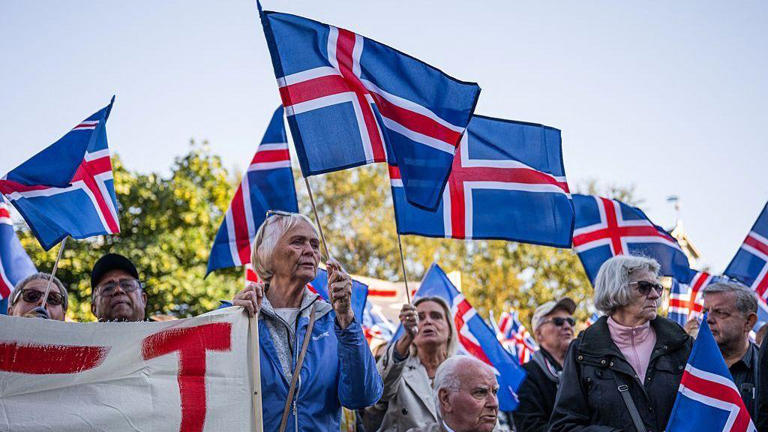
The ballot asks a single question: “Should Iceland resume accession negotiations with the European Union?” A Yes vote would not commit Iceland to joining the bloc. It would restart formal talks toward an accession agreement, which would then require approval in a second referendum, a vote in parliament, a constitutional amendment, and sign-off from all 27 EU member states. A No vote, meanwhile, would not permanently close the door. Iceland could still choose to resume talks at a later date.
Iceland is already deeply tied to the EU through the European Economic Area, which gives it access to the single market and the Schengen border-free zone. Full membership would go further, bringing Iceland into the customs union and, eventually, the euro.
The country’s accession bid was well advanced when talks were suspended in 2013. European Commission officials have indicated a deal could be finalized within one or two years if negotiations resumed. Of the 35 negotiating chapters covering areas from fisheries and economic policy to freedom of speech and the free movement of goods, 27 had already begun and 11 were provisionally complete before talks stopped.
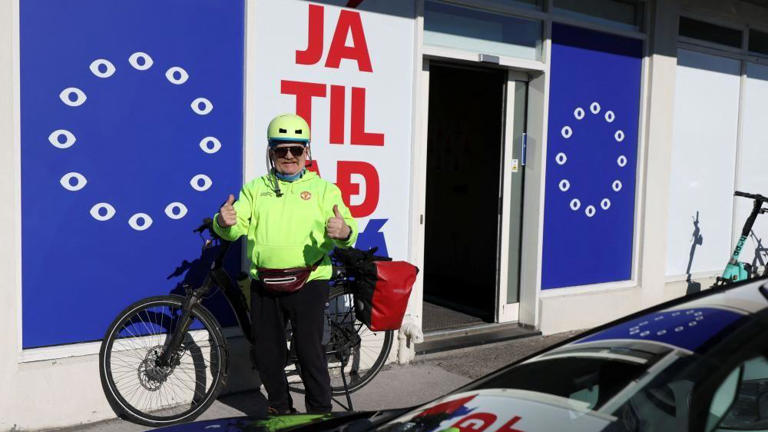
One pro-EU group, Yes to See, argues Icelanders should at least find out what terms they could negotiate before making a final call, so voters have complete information ahead of any binding decision.
Fishing Grounds and National Sovereignty Take Center Stage
The dominant issue in the campaign has not been security or geopolitics but sovereignty, and specifically, control over Iceland’s fishing industry. Fishing and marine exports make up almost 40% of the country’s total exports, and No campaigners have warned that EU membership could strip Iceland of authority over its own waters under the bloc’s Common Fisheries Policy. They have vowed never to share those waters with outside nations.
Brussels has signaled that Iceland could receive some form of exemption from the common policy, but the fisheries question remains widely viewed as the single biggest obstacle to any eventual agreement. Many Icelanders still remember the Cod Wars with the United Kingdom, a series of fishing disputes Iceland won in the 1970s, and fisheries has historically been the sticking point that derailed EU membership talks before.
Iceland’s relationship with Europe shifted after the 2008 financial crisis, when the collapse of the country’s banking system pushed Reykjavik to open accession talks in 2009. Those talks were shelved in 2013. Since then, Iceland has become one of Europe’s wealthiest nations, a turnaround Eirikur Bergmann, professor of politics at Bifröst University, said many Icelanders credit to the country’s independence.
A Wealthy but Expensive Country Weighing the Numbers
Iceland ranks fifth in the world for GDP per capita, but that wealth comes with a steep cost of living. One Icelandic trade union survey found this year that Iceland was more expensive than the next 10 most expensive countries in the world combined. Interest rates remain stubbornly high at 8%, and inflation has climbed to 5.6%.
Yes campaigners argue EU membership, and eventually euro adoption, would help bring those rates down by anchoring Iceland’s economy to the eurozone. No campaigners have not focused their opposition on economics, instead framing the debate around control and decision-making power.
Security Concerns Simmer Below the Surface
Iceland is a founding member of Nato but maintains no military of its own, relying instead on allied nations for defense. A bilateral defense agreement with the United States has been in place since 1951, and No campaigners argue that Iceland’s security already rests on Nato and its US partnership, meaning EU membership would not substitute for those existing arrangements.
Iceland has been among Ukraine’s strongest supporters since Russia’s full-scale invasion, and officials have watched Russia’s increased maritime activity near the island with growing concern. At the same time, unease has grown over US President Donald Trump’s expressed interest in acquiring Greenland, compounded by instances in which he has confused Greenland with Iceland.
Earlier this year, the EU and Iceland signed a security and defence partnership. EU officials described the agreement as offering Iceland “an anchor in a community of values, prosperity and security.” Despite that framing, Hallgrimur Oddsson, director of the EU-Iceland think-tank European Currents, said geopolitics has played a smaller role in the campaign than many expected. “It’s lower on the agenda than many would think,” he said.
Frostadóttir and Hafsteinsdóttir Face Off
The referendum’s two leading voices faced each other directly in a televised debate ahead of the vote. Prime Minister Kristrún Frostadóttir led the Yes campaign, while Guðrún Hafsteinsdóttir, chair of the opposition Independence Party, headed the No side.
Kristrún told viewers that Iceland is already closely integrated with the EU and that membership would represent “one of the biggest risk-reducing steps we can take.” She also emphasized that a Yes vote would not automatically mean Iceland joins the bloc, and pledged that a No result would be respected by her government.
Guðrún pushed back on the premise that the vote was about Iceland’s relationship with Europe at all. “We already do, and we want that to continue,” she said, referring to Iceland’s existing cooperation with the continent. Instead, she cast the referendum as a question of whether Icelanders were willing to hand decision-making power over fisheries, agriculture and natural resources to Brussels.
What Happens After the Polls Close
Voting continues until 22:00 GMT Saturday, with results expected in the early hours of Sunday. Given how narrowly the polls have shifted between the two campaigns in recent weeks, the outcome remains genuinely uncertain heading into election night. Whichever way the vote falls, it marks only the first of several steps required before Iceland could formally rejoin the path toward EU membership, a path that would still need to clear a second referendum, parliamentary approval, and unanimous backing from all 27 current EU member states.