
The United Arab Emirates said Saturday that Iran attacked a vessel belonging to the Abu Dhabi National Oil Company while it was transiting the Strait of Hormuz a day earlier, according to the Emirati state news agency WAM. The strike marks the third such incident involving ADNOC vessels in less than a week, deepening a pattern of maritime attacks that has rattled shipping through one of the world’s most critical oil corridors.
ADNOC said no injuries were reported in connection with the attack and that the situation was under control, WAM reported. The company has not released further details about the extent of damage to the vessel or the nature of the attack itself.
The UAE foreign ministry responded by calling on Tehran to halt what it described as unprovoked attacks, end hostilities, and fully reopen the waterway. Iran had not issued any immediate comment on the accusation as of Saturday.
Anwar Gargash, diplomatic adviser to the UAE president, addressed the incident directly in a post on X. “We will safeguard our rights to freedom of navigation… while continuing the path of dialogue and prioritising diplomatic options,” Gargash wrote, signaling that Abu Dhabi intends to respond to the pattern of attacks without abandoning efforts toward a diplomatic resolution.
A pattern of repeated strikes
Saturday’s reported attack follows two earlier incidents in the same week, both of which the UAE also attributed to Iran. Those prior strikes, like Saturday’s, targeted ADNOC vessels transiting the strait, according to Reuters reporting on the earlier attacks. The repetition has hardened the UAE’s public stance, with officials framing the incidents as a sustained campaign rather than isolated events.
Iran’s Revolutionary Guards have previously issued threats against vessels passing through the Strait of Hormuz, warning of action against ships linked to Tehran’s adversaries or those that fail to comply with Iranian directives. Those past warnings provide context for the UAE’s accusations, though Iran has not directly claimed responsibility for the recent string of attacks on ADNOC vessels.
Separately, the United Kingdom Maritime Trade Operations agency said it had received a report of a bulk carrier being struck by an unknown projectile in the strait on Friday. It remains unclear whether that incident involved the same ADNOC vessel referenced in Saturday’s WAM report or a separate ship altogether. The UKMTO did not immediately specify the carrier’s identity or flag.
Why the strait matters
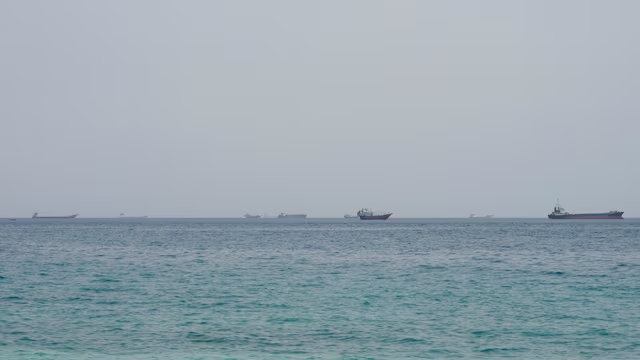
The Strait of Hormuz sits between Oman and Iran and functions as one of the busiest chokepoints for global energy trade. Before the current conflict, roughly a fifth of the world’s oil and liquefied natural gas passed through the narrow waterway on its way to markets in Asia, Europe, and beyond. Its geography, a narrow channel bordered by Iranian territory on one side, gives Tehran significant leverage over global shipping traffic whenever tensions in the region escalate.
That leverage has become increasingly relevant since the U.S.-Israeli war with Iran broke out on February 28. Shipping through the strait has faced repeated disruptions since the conflict began, pushing freight rates higher and forcing shipping companies to reassess security protocols for vessels transiting the area. Insurance costs for tankers and cargo ships passing through the strait have climbed as underwriters price in the elevated risk of attack.
ADNOC, Abu Dhabi’s state oil company, ranks among the largest energy producers in the world. The company exports crude oil, natural gas, and refined petroleum products to markets globally, making it a central player in the UAE’s economy and a frequent target of scrutiny whenever regional tensions threaten shipping lanes. The repeated targeting of ADNOC vessels specifically, rather than a broader mix of international shipping, has drawn attention to whether Iran is deliberately singling out Emirati state assets as part of the broader conflict.
Diplomatic and security implications
The UAE’s response so far has combined public condemnation with an emphasis on continued dialogue. Gargash’s statement reflects that dual approach, asserting the UAE’s right to defend its vessels and interests while explicitly stating a preference for diplomatic channels over escalation. Whether that balance holds will likely depend on whether the attacks continue.
Regional shipping operators are watching the situation closely, given the strait’s outsized role in global energy supply chains. Any sustained disruption to traffic through Hormuz carries the potential to affect oil and gas prices well beyond the Gulf region, a dynamic that has played out repeatedly since the war between the U.S., Israel, and Iran began earlier this year.
Iran’s silence on the specific accusation from ADNOC and the UAE leaves open questions about how Tehran will respond to the latest round of claims. Past incidents in the strait have sometimes drawn direct denials from Iranian officials and, at other times, no response at all, making it difficult to predict whether a formal reply will follow this latest incident.
For now, ADNOC has indicated the situation involving Saturday’s vessel is under control, suggesting no immediate operational disruption to the company’s shipping activities. But the accumulation of three attacks in under a week signals that maritime security in the strait remains volatile, with each new incident adding pressure on the UAE to determine how far it is willing to go to protect its fleet without triggering further escalation.
The UK Maritime Trade Operations agency’s separate report of a bulk carrier strike on Friday adds another layer of uncertainty to the broader picture, raising the possibility that Iran’s actions, or those of other actors operating in the strait, extend beyond ADNOC-specific targets to a wider range of commercial shipping traffic.
As the conflict between the U.S., Israel, and Iran continues, the Strait of Hormuz is likely to remain a flashpoint, with any additional attacks carrying the potential to further disrupt one of the world’s most important energy trade routes and add new pressure on international efforts to de-escalate the broader regional conflict.