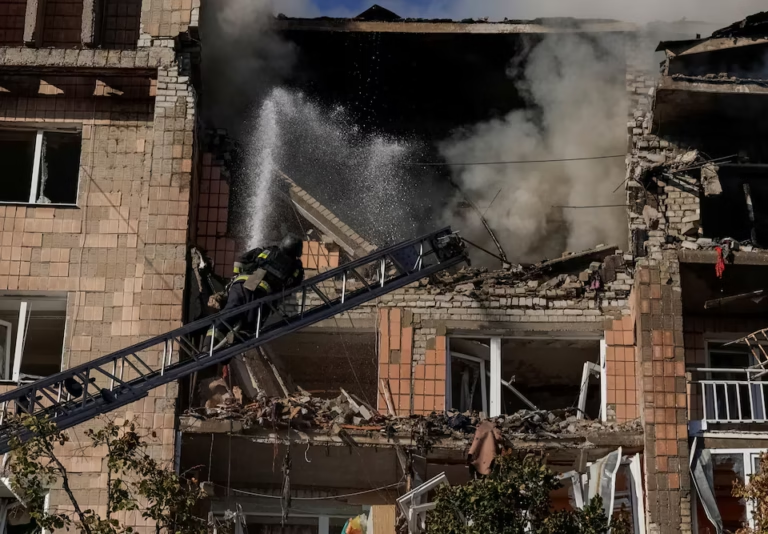

Israeli Prime Minister Benjamin Netanyahu on Sunday dismissed US President Donald Trump’s 15-point plan for Gaza, telling his cabinet that Israeli forces would remain in the enclave until Hamas surrendered its weapons. Netanyahu’s declaration puts him at odds with a framework that the White House has treated as its signature achievement on the war, and it comes at a period when the Israeli prime minister has little political room to maneuver.“Israel rejects the 15-point document. Netanyahu said at the cabinet meeting: “We will not make any withdrawal until Hamas is truly disarmed and we will continue to prevent threats against our forces and our citizens,” he continued.
A row over sequence, not substance
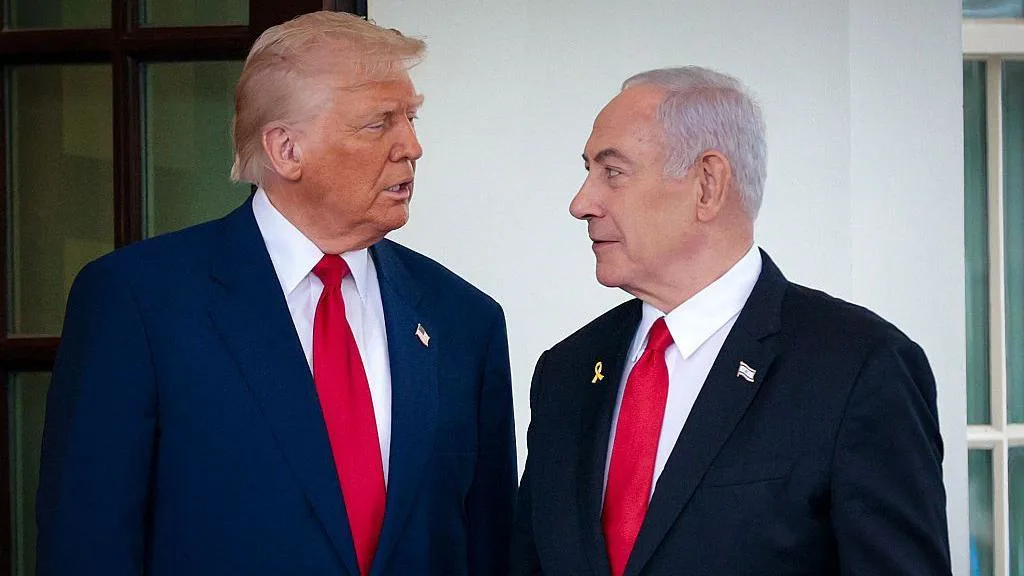
Both parties say they want to disarm Hamas. They’re different in the order of operations, and that difference has held up the plan for months now. The Board of Peace, the supervisory body established under Trump’s framework, said last month it had secured a commitment for the “complete disarmament” of Hamas and other armed factions in Gaza. Hamas said it would only turn up heavy weaponry if Israel stopped “all forms of aggression” and pulled its forces out of the land.
Netanyahu’s cabinet remarks closed that door from the other end. Disarmament comes first,” he said, “and Israeli disengagement only once it is done, not before. Neither side has progressed since the disarmament agreement was announced last month, meaning the plan has been basically sitting in the same place for weeks despite the Board of Peace’s claim a deal had been struck.
Israel has continued to target Gaza since the first ceasefire took effect last October, undercutting Hamas’s narrative that the current time is one in which Israeli aggression has ended. The paradox is why the two sides can’t agree on who goes first, more so than any single quote from either side. Hamas will be able to point to ongoing bombing to argue that Israel’s violence has not ceased. But Israel may point to Hamas’s complete arsenal as evidence that disarmament has not begun. Both statements are technically true in a narrow sense . And that is precisely why the framework has not moved forward .
Trump’s proposal, and what’s left of it
The Board of Peace would oversee the implementation of the 15-point plan released by Trump in September last year calling for Hamas’s disarmament, an Israeli troop withdrawal and rehabilitation of Gaza. The proposal was offered as a complete way out of the war, addressing not just the immediate question of weaponry and army locations but also the longer-term reconstruction of the area. When Hamas claimed last month it had agreed to a disarmament plan, Trump termed it “a monumental step toward lasting peace and security.”
Netanyahu’s refusal on Sunday makes that story a lot more complicated. A plan Washington presented as acceptable is, according to Israel’s own prime minister, not something Israel currently plans to honor on the terms proposed. “It could not be some fictitious disarmament,” Netanyahu stated, without indicating what kind of verification he would consider real. He did not describe what, if any, process would persuade Israel that Hamas had in fact disarmed, rather than merely declared so.
\”Discussions are in progress with U.S. officials,\” he said. “They have ideas, some of them are acceptable to us and some are not, and we know how to stand our ground on these issues,” he said, a comment that reads as much as a warning to his own coalition as to Washington. Netanyahu drew a public line between acceptable and unacceptable U.S. proposals, suggesting he’s open to negotiating details but not the current paper. That distinction leaves room for a modified framework without forcing Netanyahu to outright retract Sunday’s statement.
Coalition arithmetic before an election
Netanyahu’s comments are not unrelated to that coalition strain. National Security Minister Itamar Ben Gvir, whose faction is part of Netanyahu’s governing majority, said the proposal is “not acceptable” and wants a cabinet vote to withdraw Israel’s involvement in the framework entirely. Netanyahu has limited room for maneuver with concessions his far right partners could exploit to bring down the government, a threat Ben Gvir and allies have made before, with elections looming soon.
In that light, Sunday’s denial looks less like a negotiation position aimed at Hamas, and more like a warning intended at Jerusalem. Netanyahu has not relented, it says, as coalition braces for vote Ben Gvir may still force For a Prime Minister heading into an election, the electoral cost of looking like he is making concessions to Hamas is likely to outweigh the diplomatic cost of publicly rejecting a US-brokered plan, at least in the short term. That assessment helps explain Netanyahu’s decision to lay out Israel’s stance so bluntly during a cabinet meeting rather than via quieter channels with US officials.
Next steps
Netanyahu did not specify how long Israel would wait or what would happen if Hamas does not disarm on Israel’s terms. He also did not say whether continuous Israeli strikes in Gaza, already at variance with Hamas’s demand that “all forms of aggression” halt first, will continue while the two parties remain apart on sequencing.
The cabinet meeting ended with no vote on what to do next. Ben Gvir is still waiting for a vote to cancel the Gaza plan and Netanyahu will have to answer that one way or another, either maintaining the framework he just partially rejected or moving further toward the coalition partners pushing him to abandon it all together.
But nearly a year after Trump unveiled the idea, the core question of who disarms first and who withdraws first remains exactly where it was: unsolved. Israel and Hamas have not agreed to a roadmap proposed by the Board of Peace. Israeli military are still in Gaza. Hamas has not given up its weapons. And with Israeli elections looming, the political incentives for Netanyahu are to stand firm, rather than reach a deal that could be used against him by his own coalition members.
What comes next probably has less to do with the talks Netanyahu detailed with US officials than with the internal politics of his own government. If Ben Gvir manages to force a vote in the cabinet, Netanyahu might end up legally putting a stop to Israel’s involvement in a plan he has already rejected in content. If that vote is not held the current stand-off between Israel and Hamas – disarmament first by Israel, withdrawal first by Hamas – is likely to continue with neither side being forced to budge.