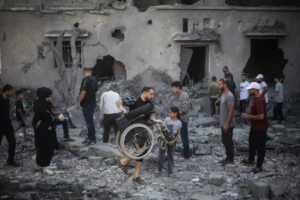


At least four people were killed and dozens more wounded in Israeli attacks in Gaza during the previous day, Gaza’s Ministry of Health said, the latest breach of a ceasefire deal that has regularly failed to hold since it came into effect over ten months ago.
In the 24 hours leading up to Thursday, hospitals across the Gaza Strip received six bodies and 34 injured patients, the ministry said. That number includes four new deaths, one person who died of earlier injuries and one body pulled from the rubble.
An Israeli air attack in the southern city of Khan Younis killed a father and an eight-year-old kid, health officials told Reuters. The strike hit a tent encampment housing people displaced by Israel’s siege that has damaged the homes of more than 1.2 million Palestinians, or about 60% of Gaza’s population.
An airstrike on a residence in the Bureij refugee camp in central Gaza killed an 18-month-old baby and wounded eight others. A attack in Gaza City killed a Palestinian guy on a bicycle and wounded 10 more.
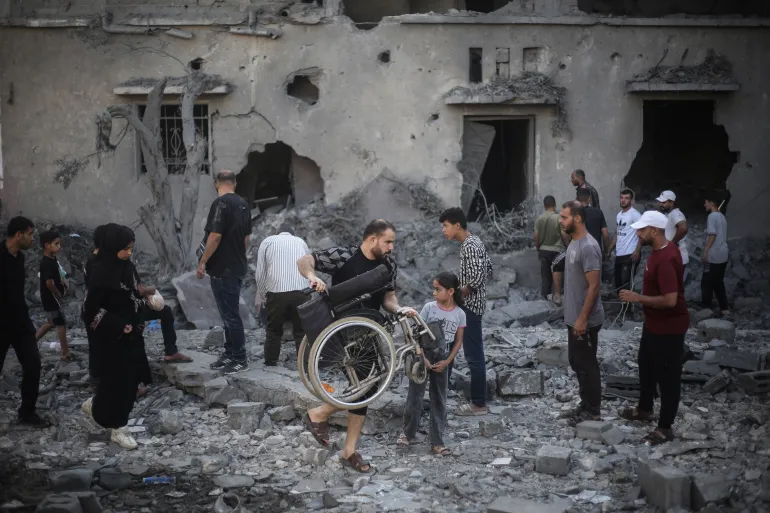
“Chaos after a separate strike on the Shati refugee camp Wednesday evening,” Al Jazeera’s Hind Khoudary reported from Gaza City. The targeted building was located between two makeshift tent camps, and both were damaged in the blast, leaving families that had been sheltering there homeless, she said. When the explosives went off there were 35 households in the area, said Khoudary.
Cairo negotiations stall on withdrawal, disarmament
The current wave of strikes comes as Hamas officials are meeting with mediators from Egypt, Qatar and Turkiye in Cairo, ironing out specifics of the second phase of the ceasefire agreement with Israel. Two concerns have stalled the talks: Israel has not withdrawn its troops from Gaza or halted its military operations there, and Hamas has refused to disarm on the parameters that Israel has set.
A Hamas official told Reuters on Thursday that the group would deliver what he called a positive and good response, but he did not elaborate on what it would contain.
Hamas reportedly wants to change some parts of the current deal, such as protections for the rights of Palestinian government employees under existing Palestinian law. The group has also proposed handing over its weapons to a Palestinian body rather than surrendering them directly to Israel, the reports say.
Israel, meanwhile, has not fulfilled several of its own obligations under the ceasefire it signed in October of 2025. The deal provides for 600 trucks of humanitarian aid to enter Gaza daily, but Israeli authorities have continued to limit the flow of supplies below that number.
Khoudary said Al Jazeera has been following the violations since the ceasefire was signed. “Air strikes are increasing, and attacks continue all over the Gaza Strip, despite the fact that there is a ceasefire,” she said, adding that Israeli forces have carried out strikes that have killed more than 1,000 Palestinians and injured more than 3,000 since October.
Death toll exceeds 73,000 since war started
The strikes follow a rising death toll since October 7, 2023, when Israel launched its military campaign in Gaza. Israeli attacks have killed at least 73,341 Palestinians and wounded 174,086 others since the war began, according to Gaza’s Ministry of Health. Human rights organizations and United Nations officials have used the term genocide to describe the campaign, a characterization Israel denies.
The ceasefire that took effect in October 2025 was supposed to interrupt that pattern of bloodshed and offer a route for ending the conflict. Instead, strikes have continued in the months following, targeting tent camps, refugee shelters, and residential buildings across the territory.
For families in Khan Younis, Bureij, and Gaza City, the previous 24 hours delivered a familiar cycle: a strike, casualties recorded by local hospitals, and a statement from Gaza’s health ministry registering the dead and wounded. The eight-year-old died in Khan Younis and the 18-month-old murdered in Bureij were among the youngest victims in Thursday’s total, though health officials did not specify how many of the 34 injured were youngsters.
Displacement has aggravated the toll of the strikes itself. With more than a million Palestinians previously moved out of demolished houses, many now dwell in the same tent encampments that have come under recurrent bombardment, including the site bombed in Khan Younis on Wednesday. Khoudary’s reportage from Shati camp revealed a similar pattern, with tent shelters grouped near a structure that was targeted, leaving those families relocated twice over in the span of a single attack.
The Cairo negotiations are likely to continue as mediators seek to bridge the gap between Israel’s demands for Hamas to disarm and Hamas’s insistence on Israeli departure and a halt to the strikes. Until an agreement solves both issues, Palestinians in Gaza are likely to continuing confronting the kind of violence detailed in the ministry’s latest tally, even as the truce remains legally in effect.