
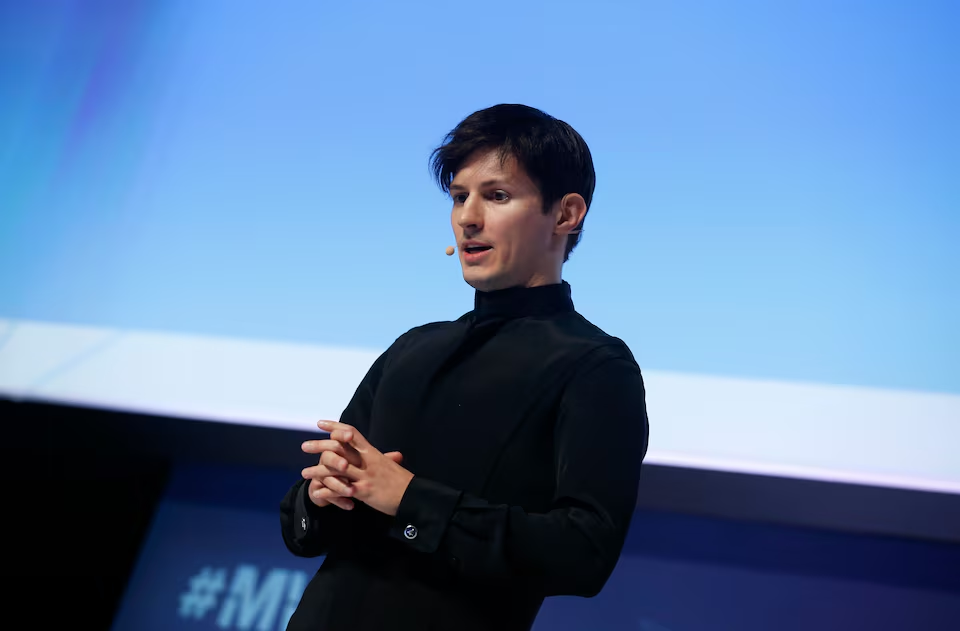
Russia on Wednesday accused Telegram founder Pavel Durov of assisting terrorism, saying Ukrainian intelligence used his messaging app to plot attacks inside Russia. Within hours, the official Telegram account on X replied with a picture of the Russian-born billionaire giving the obscene middle finger gesture.
The charges, which Russia’s Federal Security Service announced, stem from a long-running investigation into Dubai-based Durov and the platform he created. Moscow has already throttled access to Telegram in Russia in a wider crackdown on foreign tech platforms, forcing Russian users to rely on VPNs to access the app while state institutions including the Kremlin and the defence ministry continue to post to it on a daily basis.
A dating chatbot was implicated in the case
The FSB and Russia’s Investigative Committee said in statements that a Telegram chatbot called “Daivinchik/Leo” had been used by Ukrainian special services to recruit young Russians into sabotage and terrorist operations. The chatbot is a popular dating tool in Russia after Tinder was banned.
The statement said Ukrainian operatives posed as young women on the chatbot to contact Russians, building relationships before coercing them into committing crimes. Over the past year, 46 Russians aged 12 to 22 have been detained after being recruited in this way, who, according to the FSB, allegedly carried out attacks on law enforcement officers or set fire to transport, energy, communications and financial infrastructure.
Ukraine did not immediately respond to the accusations.
telegram as a weapon of war by either one
Telegram has been dubbed a “virtual battlefield” in the war between Russia and Ukraine, with government officials, soldiers and influential military bloggers on both sides using the platform to share information, coordinate and shape public narratives around the conflict. The dual use by both governments, even as Russia moves against its founder, underscores the platform’s unusual position as a tool Moscow relies on for its own messaging, while also accusing it of being a platform for attacks against the state.
an international wanted list, but not a clear process
The FSB said Durov was being placed on an international wanted list, but did not say how Russia intends to pursue that designation. The global police organization Interpol did not immediately respond to a request for comment. A source familiar with the situation said it is unlikely that process will move quickly if Moscow seeks a Red Notice through Interpol.
Durov lives in Dubai, an emirate with friendly relations with Moscow and growing links in energy, business and finance. But handing Durov to Russian authorities could hurt Dubai’s reputation as a center for global enterprise and technology, an image the emirate has carefully constructed by luring entrepreneurs and tech executives from across the globe.
Durov said last week he was in Georgia, but his current whereabouts is unknown.
a founder with a history of friction with the russian government
Born in Russia, Durov founded VKontakte, often called Russia’s answer to Facebook, before selling his remaining stake in the company in 2014 under pressure from Russian authorities. He currently holds citizenships of the United Arab Emirates and France.
His problems with law enforcement are not limited to Russia. In 2024, Durov was arrested by French authorities on charges that Telegram did not do enough to police criminal activity on its platform and failed to cooperate with law enforcement requests. He was soon allowed to leave France as the investigation continues. The case is still open.
Durov has denied any wrongdoing, saying Telegram has gone above and beyond its legal obligations in moderating content and cooperating with authorities to fight crime on the platform.
months of red flags from Moscow
The charges on Wednesday were not unexpected. In February, a Russian government newspaper reported that Durov was under investigation in a terrorism-related case. In April, Durov wrote on Telegram that a summons addressed to “Suspect P.V. Durov” had been delivered to an apartment in Russia where he lived two decades ago.
He met that summons with defiance rather than concern. “They must be suspecting me of defending articles 29 and 23 of the Russian Constitution, guaranteeing freedom of speech and the right to private correspondence. “Guilty and proud of it!” At the time, Durov wrote that the investigation was not a legitimate criminal matter but “retaliation for my refusal to give in on user privacy protections.”
Durov, for now, remains outside of Russian jurisdiction, and the path to arresting him is murky, given his current location and the diplomatic headache any extradition request would cause with Dubai or Georgia. The designation as an international wanted person gives Russian authorities a formal basis to seek him, but without cooperation from the country where he is, the charges may serve more as a political statement than an immediate legal threat.
Durov is now being investigated in another jurisdiction for how Telegram is used and moderated, adding to a growing list of countries where he is under scrutiny following his unresolved legal exposure in France. Durov’s exposure to actual practical risk, apart from the reputational and diplomatic pressure the charges have already generated, will likely depend on whether Russia’s terrorism charges find traction internationally, or whether Interpol refuses to act on a Red Notice request due to the political nature of the case.
Telegram itself has not shown any intention to change its ways in response to the allegations. The platform’s blunt public response on X – a photo of Durov’s obscene gesture rather than any sort of official statement – suggests the company will dismiss Moscow’s accusations as illegitimate rather than address them on their merits.