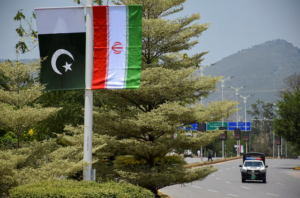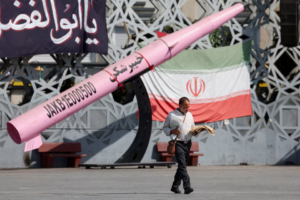


Pakistan is exploring a path toward resuming stalled U.S.-Iran talks aimed at ending their nearly five-month-old war, three Pakistani sources said, following a push initiated by China. The effort comes as Islamabad finds itself squeezed between competing patrons, Saudi Arabia and China, at the exact moment the conflict has widened to threaten a second major oil chokepoint in the Red Sea.
Exploratory discussions took place this week during a visit to Islamabad by Iran’s Interior Minister Eskandar Momeni, his second trip to Pakistan in the last 10 days, the sources said. Momeni, who is considered close to Iran’s Revolutionary Guard Corps, met with Pakistani government leaders and army chief Asim Munir this week, according to Pakistani government statements. All three sources cautioned that the obstacles to any talks with the United States remain high, and they spoke on condition of anonymity because they were not authorized to discuss the matter publicly.
A mediator caught between Riyadh and Beijing
Pakistan’s position as a potential mediator has grown more complicated by the day. Earlier this week, Yemen’s Iran-backed Houthi movement declared a naval blockade against Saudi Arabia, a close ally of Islamabad that signed a mutual defense treaty with Pakistan last year. Pakistan relies on Saudi financial support, and Islamabad has firmly condemned the Houthi attacks on Saudi tankers. Appearing too receptive to Iranian arguments risks frustrating Riyadh at a time when Pakistan needs that relationship intact.
At the same time, Islamabad depends just as heavily on Beijing, which has also served as a major financial backer of Pakistan and has its own economic interests in reopening Middle Eastern trade routes. Pakistan’s Foreign Minister, Ishaq Dar, discussed the new Middle East mediation effort with Chinese officials during a visit to China last week, all three Pakistani sources said.
“The Chinese are unhappy because Iran’s attacks on other Gulf states and the closure of the Strait of Hormuz are hitting their interests,” a Pakistani government official said. Disruptions in the Red Sea would hit another trade route Beijing relies on, compounding the damage already done by the near-closure of the Strait of Hormuz. Dar and the Pakistani military’s public relations wing did not respond to requests for comment.
China’s foreign ministry addressed the effort directly in a statement, saying “China supports the mediation efforts made by Pakistan and other parties.” The ministry added that Beijing will continue to “play an active role in restoring peace and tranquillity in the Middle East Gulf region as soon as possible.”
Why Beijing wants this war over
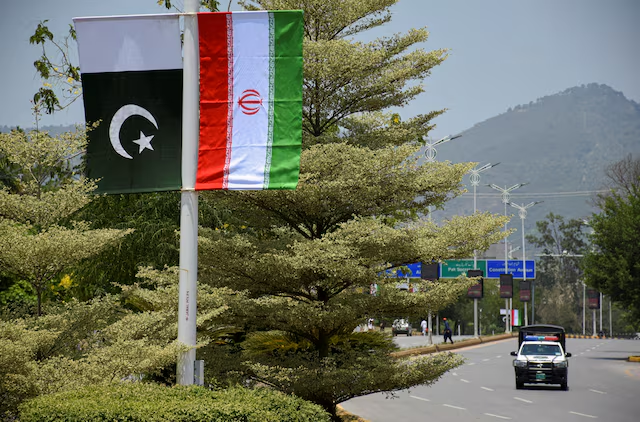
China’s stake in ending the conflict runs deeper than diplomatic language suggests. Beijing is Iran’s largest trading partner and the primary buyer of Iranian crude oil despite international sanctions on Tehran, purchases that come with a steep discount on the price of that oil. Over the past several years, China has also expanded its support for Iran’s security through dual-use components, chip equipment and satellite navigation systems, even though it has not overtly provided military aid to Iran since the war began.
That relationship gives China leverage that Washington and Riyadh do not have, and Beijing has used it before. China has consistently backed Pakistan’s mediation efforts, and in March it dispatched its special envoy on a shuttle-diplomacy trip around the Middle East aimed at calming tensions before this latest round of fighting broke out.
Pakistan’s current role builds on an earlier, unsuccessful attempt to end the war. The United States and Iran signed a memorandum of understanding in June to move toward ending the conflict, after mediation by both Pakistan and Qatar. That agreement was meant to open a 60-day window for negotiating a permanent settlement. Indirect talks during that window yielded no progress. Both sides accused the other of violating the terms, and fighting resumed.
Houthi attacks raise the price of any new talks
The renewed diplomacy now has to contend with a war that has grown in scope since the June memorandum collapsed. The Houthis said Thursday that they struck two Saudi oil tankers as part of their declared naval blockade, a move that threatens to open a second chokepoint for global oil supplies alongside the already near-closed Strait of Hormuz. For Pakistan, that escalation raises both the stakes of successful mediation and the difficulty of achieving it.
A halt in attacks on Saudi Arabia and other Gulf nations would now be a “pre-requisite for any talks to resume,” a Pakistani official said. Pakistan has already conveyed that message to Iran directly, the official added, an indication that Islamabad sees the Houthi blockade as the immediate barrier standing between Momeni’s visits and any actual negotiation.
That condition puts Pakistan in a difficult spot with Tehran. Iran has shown no public sign of reining in the Houthis, whom it backs, and Momeni’s back-to-back trips to Islamabad suggest Iran wants to keep a diplomatic channel open even as the fighting it’s connected to intensifies elsewhere in the region. Whether Tehran is willing or able to press the Houthis to stand down is a separate question from whether it wants talks with Washington to resume, and Pakistani officials have not said which answer they’re getting from Momeni.
A narrow window, if one exists at all
For now, Pakistan’s effort remains at the exploratory stage. Momeni’s meetings with Pakistani government leaders and army chief Asim Munir signal that Iran is willing to use Islamabad as a conduit, and China’s public endorsement gives Pakistan cover to keep pursuing the role. But the sources involved were consistent on one point: the obstacles to getting Washington and Tehran back to the table remain high, and nothing so far has bridged them.
The failure of the June memorandum offers a preview of how hard that will be. A 60-day negotiating window produced accusations instead of an agreement, and the war resumed within weeks of the truce collapsing. Pakistan is now trying to open a second window under worse conditions, with a new front in the Red Sea, a Saudi ally demanding a halt to Houthi attacks before any talks begin, and a Chinese patron pushing for a resolution that protects its own oil and trade interests. Whether Momeni’s visits translate into anything beyond exploratory contact will likely depend on whether Iran is willing, or able, to meet the precondition Pakistan has already delivered: attacks on Saudi Arabia and other Gulf states have to stop first.