
Houthi rebels announced a naval blockade against Saudi Arabia on Monday, opening a new front in a war that already stretches from the Gulf to the Red Sea and threatens a large share of the world’s oil supply.
The Yemen-based, Iran-aligned group said its armed forces were imposing “a maritime embargo against the criminal Saudi enemy, based on the equation of ‘an eye for an eye’, effective immediately.” The Houthis framed the move as retaliation for what they called “an unjust and oppressive siege” on Yemen by Saudi Arabia. Saudi authorities had not responded publicly to the announcement as of Monday evening.
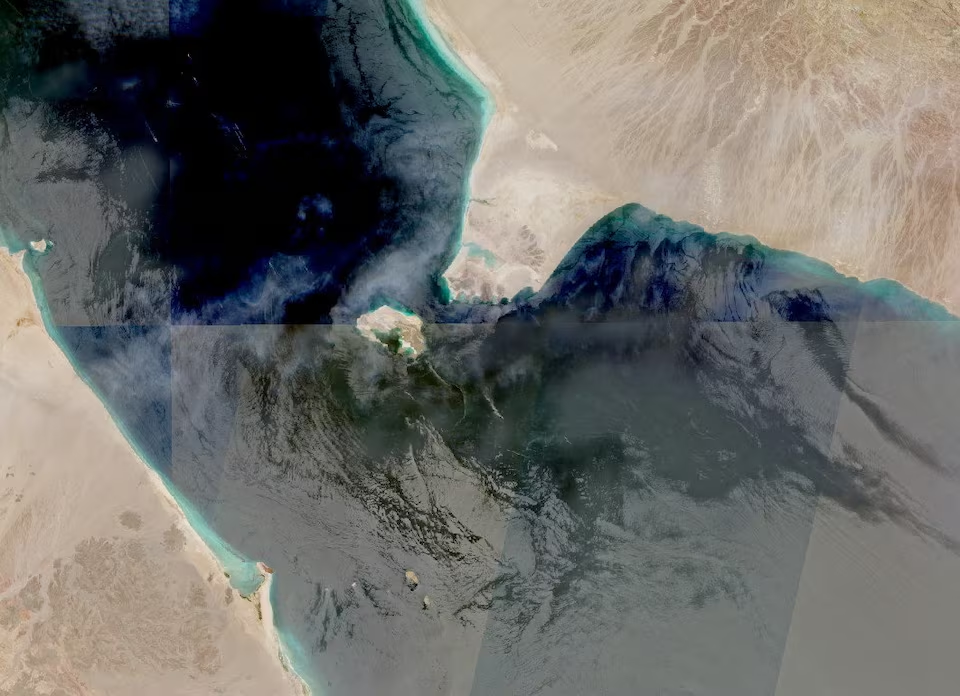
The blockade threat lands at a delicate moment. Iran had been pushing the Houthis to shut down the Bab el-Mandeb strait, the narrow passage connecting the Red Sea to the Gulf of Aden, if the United States kept striking Iranian power infrastructure. A full closure of Bab el-Mandeb would cut global oil supply by 7%, according to figures cited in reporting on the conflict, since most Saudi oil exports have no other route out of the region. That would stack on top of a 10% reduction in global oil flows already caused by fighting in the Gulf.
Oil prices spiked briefly after the Houthi statement circulated, then eased as traders weighed the possibility of a diplomatic opening. That opening may already be taking shape. Iran’s Foreign Ministry said mediators had presented “proposals” to Tehran, though officials gave no specifics. A senior Iranian official told Reuters separately that Tehran had received a proposal for a 10-day ceasefire aimed at rescuing an interim agreement signed last month, one meant to eventually produce a lasting end to a war that started on February 28 with combined U.S.-Israeli strikes on Iran. Neither the ministry nor the official identified who was brokering the talks or what terms were on the table.
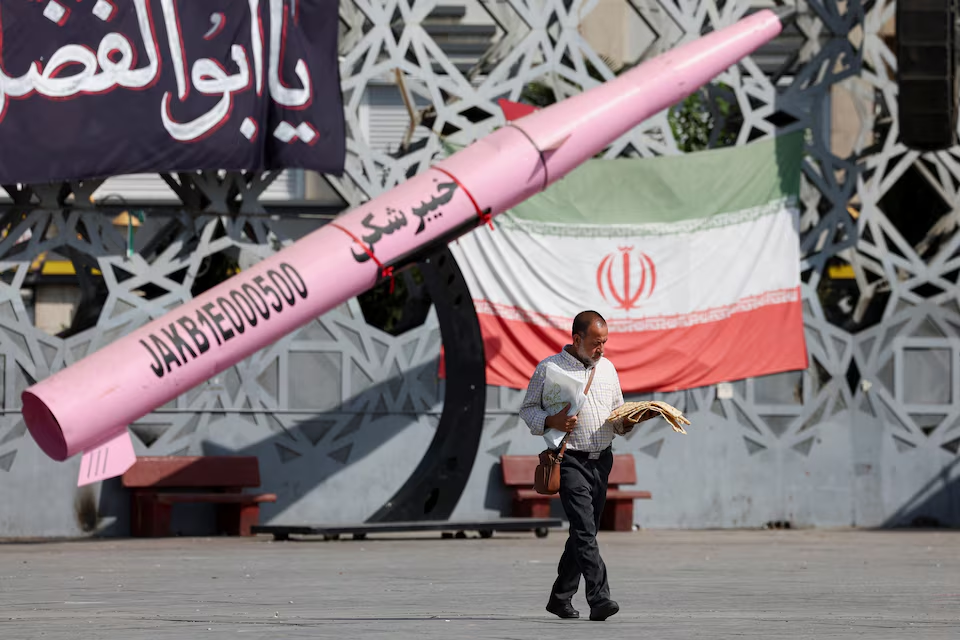
Pakistan may be reentering the picture. Two Pakistani government sources told Reuters that Iranian Interior Minister Eskandar Momeni had asked Islamabad to resume a mediation role it had stepped back from earlier in the conflict.
Whatever diplomatic momentum exists is competing with a war that shows no sign of slowing on the ground. U.S. forces carried out another night of strikes on Iranian cities, and Iran’s Revolutionary Guards answered with attacks on American military assets scattered across the region. President Donald Trump defended the latest round of strikes as a response to the deaths of up to three American service members in recent Iranian attacks, doing so while facing rising political pressure at home over gasoline prices that have climbed since the war began and since Iran effectively closed the Strait of Hormuz.
The United States has answered with its own blockade, this one aimed at Iran. The U.S. military said Monday it had redirected seven commercial vessels and disabled an eighth as part of a naval blockade on Iranian ports. Two economies now sit under competing sieges: Saudi Arabia facing a Houthi embargo, Iran facing an American one, with the world’s shipping lanes caught between them.
The death toll from the broader war has reached thousands, most of them in Iran and Lebanon. Israeli forces occupy part of Lebanon following attacks on Israel by Hezbollah, which has said its strikes are acts of solidarity with Tehran. Lebanese President Joseph Aoun plans to meet Trump at the White House on Tuesday to lay out a plan for disarming Hezbollah and securing an Israeli troop withdrawal.
Israel also maintains forces in Gaza, two years after Hamas’ October 7, 2023 attack on southern Israeli communities triggered that war. Hamas named Khalil Al-Hayya, its top negotiator, as the group’s overall leader on Monday. One analyst who follows the group said the appointment could point toward a tougher Hamas position on disarmament, though the group offered no public statement explaining the timing of the choice.
In the Strait of Hormuz, the picture on the water grew murkier over the weekend. Iran’s Revolutionary Guard Corps said two oil tankers exploded while attempting to transit the strait via what it called an “unsafe” route. That statement followed a separate claim a day earlier, when the Guard described two ships as involved in an “accident” in the same stretch of water. Iranian officials have not said whether the two incidents were connected, and Reuters said it could not independently verify either account.
A separate vessel was hit by an unidentified projectile off the coast of Oman, near the mouth of the strait, according to the United Kingdom Maritime Trade Operations agency. The agency said the ship was left adrift but that its crew survived unharmed.
U.S. Central Command said Monday marked its ninth consecutive night of strikes against Iran, describing the campaign as an effort to reduce Iran’s ability to threaten commercial vessels moving through the strait. Inside Iran, explosions were reported in five cities and towns: Tabriz, Chabahar, Konarak, Bandar Mahshahr and Bandar Imam Khomeini. Iran’s state news agency IRNA said one person was killed and several others wounded southwest of Tabriz.
Iran’s own strikes reached beyond its borders. The Revolutionary Guard said it fired ballistic missiles at U.S. aircraft stationed at Jordan’s Aqaba airport, and also targeted military assets at Kuwait’s Al-Adiri camp and Ali Al Salem Air Base, along with positions inside Syria. Air raid sirens sounded across Bahrain throughout the day Monday, and Kuwait’s army said it intercepted Iranian drones for a second time in the conflict.
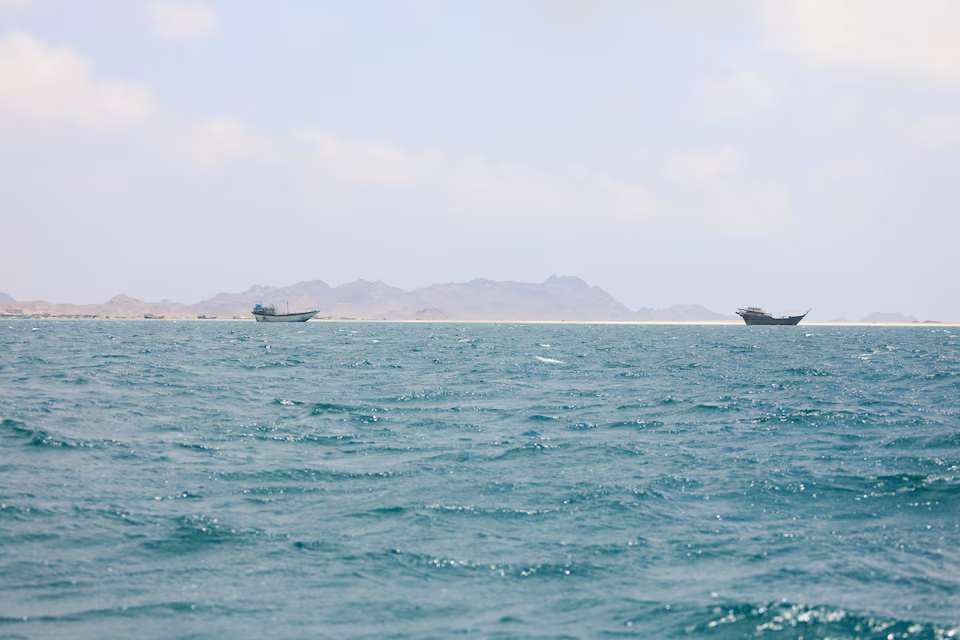
Kuwait’s government reported that a desalination plant in the country was struck for the second consecutive day on Sunday, sparking a fire. Officials called it a direct strike on civilian water infrastructure. Desalination plants supply most of the drinking water across several Gulf states, serving tens of millions of people in a region with few natural freshwater sources. Iran, for its part, accused the U.S. on Saturday of striking one of Tehran’s own desalination facilities, though it offered no evidence to support the claim.
The Houthi blockade announcement adds a new variable to a conflict already testing the limits of Gulf energy infrastructure, water supplies and shipping routes that link Middle East oil to markets worldwide. Whether the ceasefire proposal circulating between Tehran and international mediators gains traction may determine whether that blockade takes effect at all, or whether it becomes one more front in a war that started as a two-country conflict and has since drawn in Yemen, Lebanon, Jordan, Kuwait, Bahrain and Oman.