
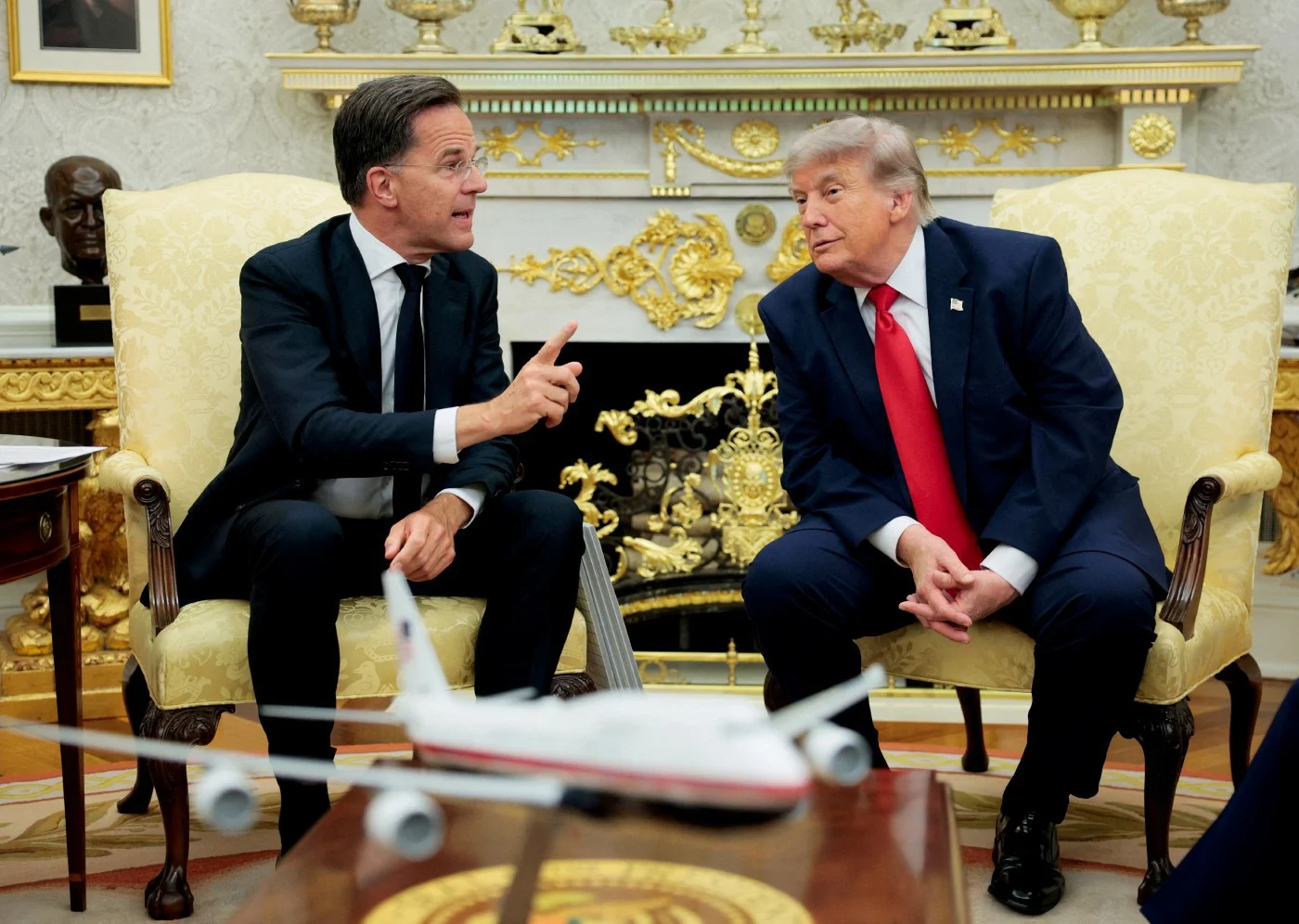
President Donald Trump said he’s disappointed in several NATO allies for not backing Washington’s military campaign against Iran, and the comment has opened up fresh cracks in the alliance just weeks before leaders meet for a summit in Turkey.
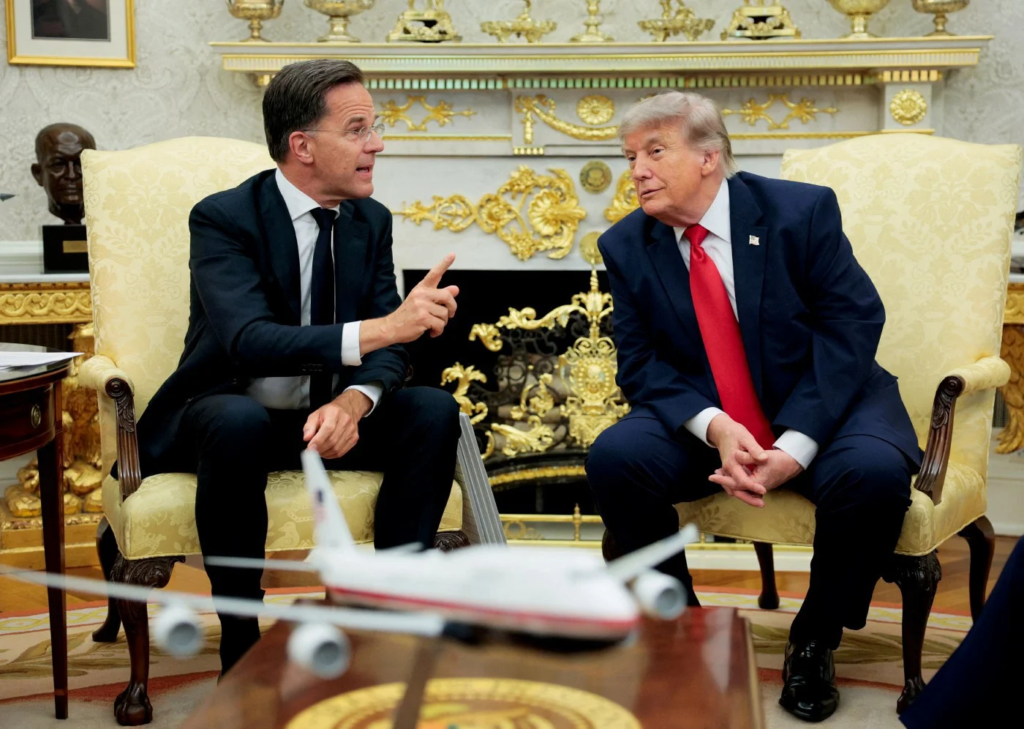
Speaking next to NATO Secretary-General Mark Rutte in the Oval Office on Wednesday, Trump said he expected stronger support from European partners during the conflict with Tehran, even though the U.S. and Israel ended up carrying out the operation without direct military help from NATO members.
“We were let down,” Trump said. “We didn’t need help at all. We dealt with Iran quickly and decisively, but it would have been nice if our allies had at least said, ‘We’d like to help.'”
The remarks point to growing tension between Washington and European capitals over security priorities, who pays for what, and where NATO is headed.
Rutte pushes back
Standing beside Trump, Rutte tried to calm concerns about a rift, arguing that European allies had given real logistical support during the conflict. He pointed out that thousands of American military aircraft flew out of bases in Europe during the war.
“There were between four and five thousand U.S. aircraft taking off from bases in Europe,” Rutte said. “That demonstrates the level of cooperation and support provided by our allies.”
After the meeting, Rutte said Trump remains committed to NATO’s collective defense principles. “The president is completely committed to the NATO alliance,” he told reporters. “The United States would absolutely stand with Europe if an ally were attacked.” The comment seemed aimed at easing fears in Europe that Washington’s commitment to the alliance is fading.
Where the rift over Iran came from
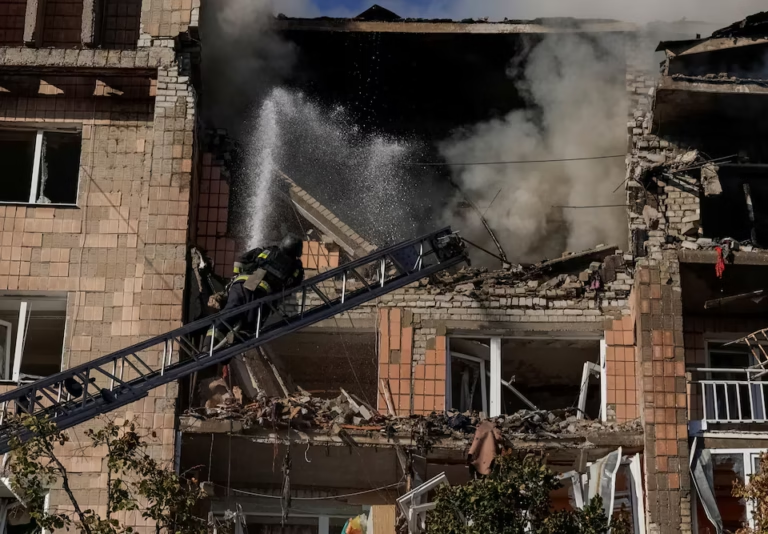
The disagreement traces back to the military operation the U.S. and Israel launched against Iran on February 28. The campaign escalated tensions across the Middle East fast, and according to several European officials, it happened without consulting NATO allies first.
A number of European governments questioned whether the operation was even necessary, and some argued diplomatic options hadn’t run out yet. Several NATO members also worried that another Middle East conflict would pull attention and resources away from Europe’s own security problems, especially the threat from Russia. The split reaction to the war exposed differences within the alliance that have been there for a while over military intervention and strategic priorities.
A summit already loaded with tension
Trump’s criticism lands at an awkward moment. Leaders from NATO’s 32 member states are set to meet in Ankara on July 7 and 8 to talk about defense spending, support for Ukraine, the alliance’s military posture, and Europe’s worries about America’s future role in regional security.
Diplomats say Trump’s comments could make those discussions harder, especially with some European governments already nervous about shifts in Washington’s foreign policy. The Ankara meeting is expected to focus heavily on burden-sharing and pushing European countries to take on more responsibility for their own defense.
A long-running complaint
Since returning to the White House, Trump has repeatedly criticized NATO members over what he sees as weak defense spending and too much reliance on American military power. His administration has argued that European allies need to invest more in their own security instead of leaning on Washington. Trump has accused some NATO countries of missing agreed spending targets while benefiting from American protection, and that complaint has shaped much of his second-term foreign policy.
Washington’s pivot toward China
A big part of Trump’s thinking comes from the administration’s push to shift America’s strategic focus toward China. Senior U.S. officials have said repeatedly that they want European allies to take the lead on conventional defense at home while the U.S. puts more resources into the Indo-Pacific. The Pentagon has already told allies it plans to scale back the military assets available for certain NATO operations worldwide, a move that’s sparked debate among European governments that still depend heavily on American capabilities.
Europe worries about a gap
A smaller U.S. military presence worries many European leaders, particularly with Russia acting more aggressively in Eastern Europe. Several NATO members still depend on American intelligence, logistics, air defense, and strategic capabilities that aren’t easy to replace. Defense analysts warn that cutting U.S. support by a wide margin could expose real weaknesses in Europe’s security setup. Countries on NATO’s eastern flank, including Poland and the Baltic states, have pushed hardest to keep a strong American military commitment in Europe, since they see Washington’s support as essential to deterring aggression.
Not the first dustup
The Iran disagreement is just the latest in a string of disputes between Trump and NATO partners. Earlier this year, Trump set off diplomatic tension by suggesting the U.S. could seek control of Greenland, an autonomous Danish territory with strategic value in the Arctic. He later backed off those comments, but the episode left Europe uneasy about how unpredictable Washington’s foreign policy has become under his administration. Differences have also come up over climate policy, trade, and how to handle Russia and China, though NATO leaders keep saying the alliance stays united on collective defense.
Where NATO goes from here
Security experts say the alliance is heading into one of its toughest stretches since the Cold War ended. Great-power competition is back, conflicts continue in Europe and the Middle East, and shifting American priorities have pushed NATO to rethink its long-term strategy. European governments increasingly accept that they need to spend more on their own military capabilities, and several countries have already announced plans to boost defense budgets, ramp up military production, and deepen regional cooperation. Analysts caution that building real independence from the U.S. could take years.
Both Washington and Brussels say NATO remains the foundation of Western security, and Rutte’s comments after the White House meeting were meant to reassure nervous allies that collective defense commitments still hold. But Trump’s remarks are a reminder that real differences remain over how NATO should handle emerging global challenges. As leaders head to Ankara, the alliance is facing hard questions about burden-sharing, military priorities, and the balance between European independence and American leadership. NATO says it’s united in principle. Whether that holds up in practice is the question hanging over the summit.