
Britain has slipped back into political uncertainty after Prime Minister Keir Starmer announced his resignation, the sixth UK leader to leave office in just a decade.
Standing outside 10 Downing Street on Monday morning, Starmer looked emotional as he admitted he was no longer the right person to lead the country. Two years ago he’d secured one of the largest election victories in modern British history and promised to end years of political turmoil. Now that promise has collapsed into a resignation speech.
His departure raises a harder question: why do British prime ministers keep losing their grip on power, and can the country’s political system win back public trust at all?
A Rapid Fall From a Historic Victory
When Starmer led Labour to a landslide in 2024, many voters hoped he would end the instability that followed Brexit, the COVID pandemic and a revolving door of Conservative governments.
Instead, his administration ran into many of the same problems that wore down the governments before it.
Economic growth stayed sluggish. Living standards didn’t improve for millions of households. Immigration stayed divisive. Public services kept struggling under financial pressure.
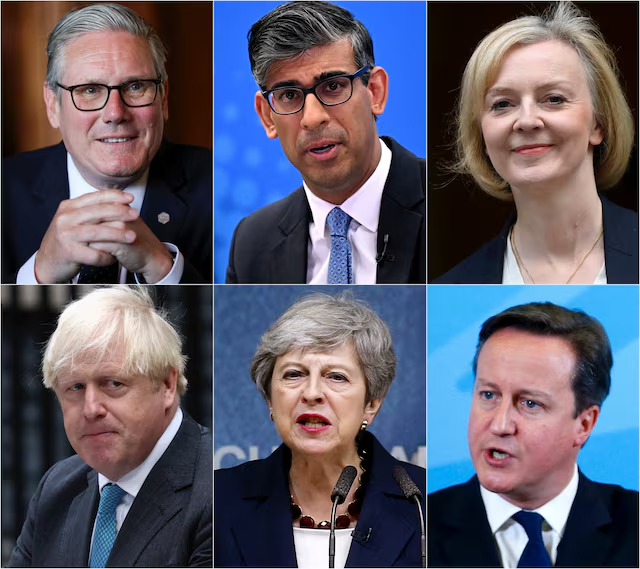
Starmer’s resignation means Britain has had six prime ministers in ten years, one of the fastest turnover rates in its modern history.
Political historian Anthony Seldon says the constant churn at the top has eroded confidence in government.
“Britain is in a very deep hole,” he said, warning that if Starmer’s likely successor, Andy Burnham, also fails to restore confidence, the country’s political outlook could darken further.
A Country Struggling to Improve Living Standards
At the heart of Britain’s political instability sits an economic problem that’s persisted for more than a decade.
Many families feel worse off than the generation before them. Wages have struggled to keep up with rising prices, and younger people increasingly expect fewer opportunities than their parents had.
Analysts trace the roots of the problem back to the 2008 global financial crisis.
Britain’s economy leaned heavily on its financial sector, which took a hard hit in the crash. The spending cuts that followed left public services strained and limited the government’s ability to respond to later crises.
Jill Rutter, a senior fellow at the Institute for Government, said frustration has built steadily among voters.
“There has been a growing feeling that life is not getting better and that the next generation may be worse off,” she said.
That dissatisfaction has dogged every government since the financial crisis, regardless of party.
Brexit Changed British Politics
Many experts point to Brexit as a turning point in Britain’s political history.
The 2016 vote to leave the European Union reshaped the country’s politics and exposed deep divisions over national identity, immigration and economic policy.
Brexit also reignited calls for Scottish independence, since most Scottish voters wanted to remain in the EU.
The political battles that followed helped bring down several prime ministers, including Theresa May and Boris Johnson.
Brexit isn’t the only reason for Britain’s political instability, but many analysts believe it sped up problems that already existed and made governing harder.
Debt and Rising Costs Have Limited Government Options
Britain’s financial position has worsened in recent years.
Government borrowing rose sharply during the COVID pandemic as ministers rolled out emergency support for businesses and workers. Russia’s invasion of Ukraine then pushed up energy prices and inflation across Europe.
Britain’s national debt has climbed to almost 100% of gross domestic product.
Japan and the United States carry even higher debt loads, but Britain faces more pressure because investors worry about its growth prospects and its reliance on foreign borrowing.
Those financial constraints have left governments with little room to spend more or cut taxes.
For many households, the result has been a long squeeze on living standards.
Research by supermarket chain Asda and the Centre for Economics and Business Research found that the poorest 40% of British households had less spending power in 2025 than in 2021.
Those numbers have fed anger at mainstream political parties.
Why Governments Keep Struggling
Several experts think Britain’s political system itself is part of the problem.
Sam Freedman, author of Failed State: Why Nothing Works and How We Fix It, argues the country has become too centralized and that key government departments are too small and overstretched to handle modern challenges.
Others say politics has become too reactive.
Round-the-clock news channels and social media put politicians under constant pressure to respond to events immediately.
Roger Gale, one of Britain’s longest-serving lawmakers, believes governments move too fast and produce weak policy.
“There is too much legislation,” he said. “A lot of it is bad and a lot of it is badly drafted.”
He says Britain needs a slower, more deliberate approach to governing.
Starmer’s Government Struggled to Find Direction
Critics say Starmer entered office without a clear long-term plan for tackling Britain’s major problems.
His government wrestled with energy costs, investment, defense spending, healthcare and economic growth all at once.
Despite several policy resets, his administration never convinced voters it had a clear direction.
Public frustration grew as many of Labour’s promises failed to show up in daily life.
By the time Starmer announced his resignation, his popularity had dropped sharply, and pressure from within his own party had become impossible to ignore.
Andy Burnham Faces a Difficult Challenge
Attention now turns to Andy Burnham, the mayor of Greater Manchester and the man widely expected to become Britain’s next prime minister.
Many Labour members see him as a stronger communicator, someone who can reconnect with voters and push back against the rising popularity of Nigel Farage’s Reform UK party.
He’ll inherit the same problems that brought down his predecessor, though.
He’ll need to appoint a new cabinet, rebuild public confidence and explain how his government plans to improve living standards.
Former Prime Minister Rishi Sunak warned that without a clear strategy, Burnham could meet the same fate as the leaders before him.
“Without that, he will become yet another prime minister lying awake wondering why it isn’t working,” Sunak wrote in the Sunday Times.
A Defining Moment for Britain
Britain stands at another political crossroads.
A country that once prided itself on stable government and long-serving leaders has instead become known for rapid changes at the top.
Frequent leadership contests, economic pressure and public frustration have worn down trust in politics.
The next prime minister will face enormous expectations. Voters want stronger economic growth, better public services and clear answers on immigration and living standards.
Whether Britain’s next leader can deliver any of that will decide if the country can break its cycle of instability, or simply add a seventh name to the list.