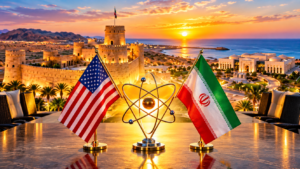


In a dramatic turn of events, U.S. President Donald Trump announced Thursday that he had canceled planned military strikes against Iran just hours after warning that American forces would hit the country “very hard.”
The unexpected reversal came after what Trump described as a major diplomatic breakthrough involving senior Iranian leaders and a broad group of regional partners. The decision has injected new uncertainty into a conflict that appeared to be moving dangerously close to another round of direct military confrontation.
After months of rising tensions, missile exchanges, economic pressure, and threats from both sides, Trump’s announcement offered the strongest indication yet that diplomacy may be gaining momentum behind the scenes.
From Threats of Bombing to Talk of a Deal
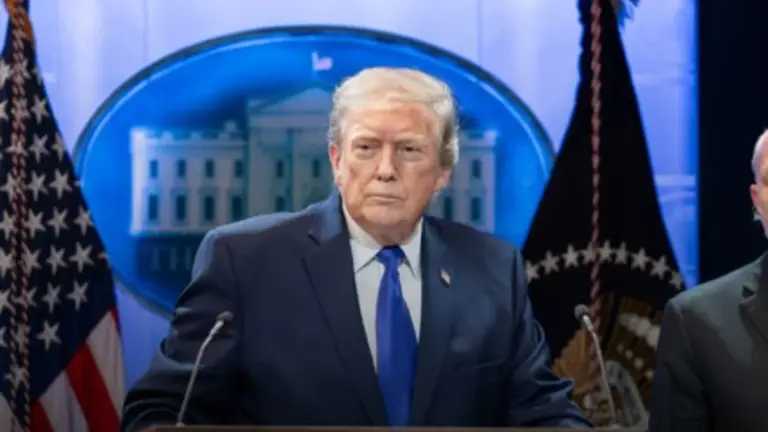
Earlier in the day, Trump had issued one of his toughest warnings since the conflict began.
In a post on Truth Social, he declared that the United States would strike Iran later that evening and suggested that Washington could eventually take control of key Iranian energy assets, including Kharg Island, the country’s most important oil export terminal.
The remarks immediately heightened fears of a wider conflict in the Gulf and triggered fresh concerns across global energy markets.
Yet only a few hours later, the president returned to social media with a very different message.
Trump said he had ordered the cancellation of the planned military operation after discussions with Iran reached the highest levels of leadership and received approval.
“Based on the fact that discussions with the Islamic Republic of Iran have been brought to the highest level of Iranian leadership and approved, I have cancelled the scheduled strikes and bombings against Iran this evening,” Trump wrote.
The abrupt shift stunned observers who had spent much of the day preparing for what appeared to be an imminent escalation.
Behind-the-Scenes Diplomacy Takes Center Stage
While details remain limited, Trump suggested that extensive negotiations had taken place involving multiple countries across the Middle East and beyond.
According to the president, governments including Israel, Saudi Arabia, the United Arab Emirates, Qatar, Turkey, Pakistan, Bahrain, Kuwait, Jordan, and Egypt were involved in discussions surrounding the framework of a potential agreement.
The scope of participation highlights how deeply the conflict has affected the region.
For months, Gulf nations have faced the economic and security consequences of rising tensions between Washington and Tehran. Shipping routes, energy exports, and regional stability have all been threatened by the possibility of a broader war.
Diplomats have quietly worked to prevent that outcome, and Trump’s announcement suggests those efforts may finally be producing results.
Naval Pressure Remains Despite Diplomatic Progress
Although the planned strikes have been halted, Trump made it clear that military pressure on Iran has not disappeared.
The president said the U.S. naval blockade around the Strait of Hormuz will remain in place until a final agreement is officially completed.
“The Naval Blockade will remain in full force and effect until this transaction is finalized,” he said.
That statement underscores the administration’s strategy of combining diplomatic engagement with continued economic and military leverage.
The Strait of Hormuz remains at the center of the crisis. Roughly one-fifth of the world’s oil supply normally passes through the narrow waterway, making it one of the most strategically important maritime routes on the planet.
Any disruption there can quickly affect energy prices and economic conditions far beyond the Middle East.
Why Kharg Island Matters
One of the most controversial aspects of Trump’s earlier remarks involved Kharg Island.
Located in the Persian Gulf, the island serves as Iran’s primary oil export hub and is responsible for handling most of the country’s crude shipments.
By publicly mentioning Kharg Island, Trump signaled that Washington was considering pressure points capable of inflicting significant economic damage on Tehran.
Energy analysts noted that any military action targeting the facility could have severe consequences for global oil markets.
The later cancellation of planned strikes eased some of those concerns and helped calm fears of immediate disruptions to regional energy supplies.
Financial Markets Welcome Signs of De-Escalation
Investors reacted positively to the news.
Oil prices retreated after Trump’s announcement as traders reassessed the likelihood of supply disruptions from the Gulf.
Stock markets also responded favorably, reflecting optimism that a wider conflict may be avoided.
For weeks, energy markets have been closely tracking every development in the U.S.-Iran standoff.
Even minor escalations have had the potential to influence fuel prices, inflation, and broader economic conditions around the world.
The prospect of renewed diplomacy offered a rare moment of relief for markets that have been bracing for worst-case scenarios.
Questions Remain About the Final Agreement
Despite the optimism generated by Trump’s announcement, important questions remain unanswered.
Neither the White House nor Iranian officials have publicly released details about the proposed agreement.
Reports suggest discussions have focused on maritime security, sanctions, regional military activity, and economic issues, but negotiators may still be working through key differences.
Some analysts caution that while progress appears real, reaching a final agreement could take time.
Diplomatic breakthroughs in conflicts of this magnitude rarely happen overnight, and both sides still face significant political and strategic hurdles.
A Pivotal Moment in the Crisis
Thursday’s events highlighted just how quickly the situation can change.
Within the span of a few hours, the world moved from anticipating major military strikes to discussing the possibility of a diplomatic settlement.
Whether the latest talks lead to a lasting agreement remains uncertain.
What is clear is that both Washington and Tehran now appear to be balancing pressure with negotiation, creating a narrow but potentially meaningful opportunity to reduce tensions.
For a region that has spent months on edge, Trump’s decision to call off the strikes may represent more than a temporary pause—it could mark the beginning of a new chapter in efforts to prevent a wider and more destructive conflict.