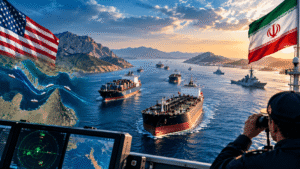
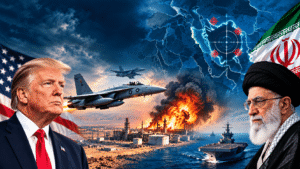
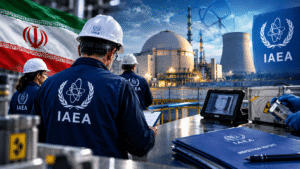
Introduction “US strikes on Iran” refers to the campaign of American airstrikes and missile operations against Iranian military and nuclear-linked targets that has unfolded through 2026. What began as a coordinated US-Israeli attack in late February has since evolved into a prolonged, on-and-off conflict marked by ceasefires that collapsed and periods of renewed fighting. The stakes are significant for all sides: Iran faces direct damage to its military and economic capacity, the US is weighing the costs of sustained engagement in the region, and neighboring Gulf states, Israel, and global shipping and energy markets remain exposed to spillover. Because official military claims, casualty tolls, and target lists are frequently disputed or unverified in real time, readers should treat early reports with caution. What Are US Strikes on Iran? US Strikes on Iran are military operations — primarily airstrikes and missile strikes, though also naval actions — carried out by American forces against targets inside Iran or against Iranian assets elsewhere in the region. These have included strikes on air-defense systems, IRGC-linked facilities, and reported nuclear-related sites, as well as retaliatory strikes on Iranian vessels and rocket-launching positions. It’s important to separate confirmed facts from claims: government and military statements from both Washington and Tehran are frequently contested, and independent verification often lags behind initial announcements. There’s also a meaningful difference between individual, discrete strikes — a single retaliatory hit on a vessel or launch site — and broader coordinated military operations that unfold over days or weeks and involve multiple fronts. Latest Developments in US Strikes on Iran As of mid-September 2026, the conflict has settled into what analysts describe as a war of attrition, with intermittent strikes continuing alongside stalled diplomacy. The US and Iran were again trading limited strikes as of September 2026, amid a renewed US sanctions campaign and regional efforts to restart diplomatic engagement. The most recent major escalation began on September 1, 2026, when US forces launched a series of airstrikes against IRGC targets in southern Iran, an escalation of the broader 2026 Iran war. CENTCOM said the strikes followed alleged IRGC attempts to attack commercial shipping in the Strait of Hormuz and American service members in the region. These strikes reportedly followed an earlier exchange in which the US struck Iranian rocket launchers on Larak Island, prompting Iranian missile retaliation against US-linked bases in Jordan. Iranian state media reported explosions in southern Iran in connection with the September 1 strikes. Days later, on September 5, US forces struck three Iranian crude oil tankers after the IRGC launched ballistic missiles toward two US Navy warships, an exchange that threatened to intensify a broader shipping conflict in and around the Persian Gulf. Diplomatically, September has brought further friction rather than progress. On September 17–18, Russia and China vetoed a UN Security Council resolution that would have kept UN experts monitoring sanctions reimposed on Iran over its nuclear program, with 11 Council members voting to extend the monitoring mandate while Pakistan and Somalia abstained. Iran’s UN mission publicly thanked Moscow and Beijing for the vetoes. Casualty figures remain difficult to verify independently; where official tallies exist, they should be attributed to the issuing government or military rather than presented as settled fact. This section will be updated as new developments are confirmed. US Strikes on Iran: Background and Timeline of Military Tensions Tensions between the US and Iran trace back to the 1979 Iranian Revolution, which severed formal diplomatic relations and set the pattern for decades of hostility, proxy conflict, and periodic direct confrontation. The 2015 Iran nuclear agreement (JCPOA) briefly eased tensions by constraining Iran’s nuclear program in exchange for sanctions relief, but the US withdrew from the deal in 2018, reimposing sanctions. Tensions escalated sharply in January 2020 with the US killing of IRGC commander Qassem Soleimani and Iran’s subsequent missile retaliation against US forces in Iraq. Through 2025, nuclear negotiations and regional friction continued without resolution. The current major conflict began on February 28, 2026, when Israel and the United States launched air strikes against Iran, stating they aimed to curb Iran’s nuclear and ballistic missile programs; Iran’s Supreme Leader Ali Khamenei was killed in the strikes, according to official statements from the time. Iran responded with attacks on US bases, Israel, and neighboring states, and closed the Strait of Hormuz. The US then imposed a naval blockade on Iranian shipping starting April 13, 2026. A ceasefire and diplomatic process followed, including Pakistan-mediated Islamabad talks and a June 17 memorandum of understanding, but the truce repeatedly broke down — most notably in early July, when Iran attacked commercial vessels in the Strait of Hormuz to assert sovereignty over it, collapsing the ceasefire deal. By late August, a 60-day ceasefire window had expired without a lasting resolution, and the Trump administration had shifted toward expanded secondary sanctions. September saw a return to direct strikes, as detailed above. US Strikes on Iran: Reported Targets and Objectives Reported targets in US Strikes on Iran fall into three broad categories: military infrastructure, nuclear-related sites, and strategic or maritime assets. Military Infrastructure Reported and confirmed targets have included air-defense systems, radar installations, communications facilities, IRGC-linked sites, and missile-related infrastructure across Iran, including locations in Tehran and southern Iran. Nuclear-Related Infrastructure US officials have said strikes aimed at degrading Iran’s nuclear program, though the extent of damage to specific nuclear sites has been disputed, with independent assessments — including from the IAEA — often diverging from official claims. Distinguishing US government statements from independently verified findings is essential here. Strategic and Maritime Targets Strikes and counter-strikes have repeatedly touched naval and oil-related assets, including Iranian tankers and infrastructure such as the Kharg Island export terminal, reflecting the centrality of shipping routes and the Strait of Hormuz to the conflict. Iran’s Response to US Strikes on Iran Iran has responded to US and Israeli strikes with a sustained campaign of missile and drone attacks against US military positions and allied states across the region, including a multiday series of missile and drone strikes on the United Arab Emirates beginning February 28, 2026 and missile and drone operations against American positions in Jordan, Bahrain, and Iraq in early September. Iranian officials have repeatedly warned of further retaliation and have used control over the Strait of Hormuz as leverage, including brief closures and attacks on shipping transiting the waterway. On the diplomatic front, Iran has said it is unwilling to negotiate while US attacks continue, condemning recent strikes as violations of the June memorandum of understanding and lodging formal complaints with the UN Security Council and Secretary-General. Iranian leaders have set conditions for ending the conflict, including guarantees against future aggression, recognition of Iran’s rights, and reparations, and have insisted issues such as its ballistic missile program are not open for negotiation. US Government’s Stated Position on US Strikes on Iran The US administration says its objectives include curbing Iran’s nuclear and ballistic missile capabilities, degrading IRGC military infrastructure, protecting American personnel and regional allies, and safeguarding maritime shipping through the Strait of Hormuz. Washington has paired military action with economic pressure, including an expanded sanctions campaign in the second half of 2026, while stating an openness to a negotiated settlement. President Trump has said that a resumption of US military action would remain conditioned on issues including the complete, immediate and safe reopening of the Strait of Hormuz, and administration officials have described unresolved nuclear issues as the central sticking point in talks. Washington has framed US Strikes on Iran as a response to specific provocations rather than an open-ended campaign. US Strikes on Iran: Impact on Iran-US Relations The prolonged conflict has deepened an already severe trust deficit between Washington and Tehran, with repeated ceasefire collapses undermining confidence in any future agreement. Nuclear negotiations remain stalled, and UN sanctions on Iran — reimposed in September 2025 through the JCPOA’s “snapback” mechanism — remain in effect, freezing Iranian assets abroad and restricting arms deals and ballistic missile development. The US maintains an elevated military presence in the region, and the security of Strait of Hormuz shipping continues to be a central, unresolved condition attached to any renewed negotiations. For more on how this fits into the longer arc of bilateral relations, US Strikes on Iran: Impact on Regional Security The conflict has drawn in a wide array of regional actors. Gulf states including the UAE, Saudi Arabia, Kuwait, and Bahrain have faced direct Iranian missile and drone strikes and have hosted US military assets targeted in retaliation. Israel participated in the initial February strikes and has continued separate operations against Iran-backed groups, including Hezbollah in Lebanon. Iraq and Syria have seen strikes tied to Iranian proxy networks, while Yemen and the Red Sea/Bab el-Mandeb corridor remain flashpoints tied to Iran-aligned armed groups. Commercial shipping throughout the Gulf and adjacent waterways has faced repeated disruption and security risk as a direct consequence of the fighting. US Strikes on Iran: Impact on Oil and the Strait of Hormuz The Strait of Hormuz is one of the world’s most critical oil chokepoints, carrying a large share of globally traded crude and LNG. Repeated closures, blockades, and attacks on tankers through 2026 have disrupted transit, driven up shipping insurance costs, and introduced sustained uncertainty into oil markets. Iran has periodically asserted a right to control or restrict passage through the strait, while the US has responded with naval deployments and operations explicitly framed around freedom of navigation, including the since-paused “Project Freedom” initiative. The scale of disruption has varied significantly depending on the state of the ceasefire at any given time, and readers should consult current shipping and oil-market data for up-to-date figures rather than relying on conflict-era averages. US Strikes on Iran: International Reactions The war has produced sharply divided international responses to US Strikes on Iran. The UN Security Council adopted Resolution 2817 on March 11, 2026, condemning Iranian attacks against Gulf Arab states and Jordan, with 13 votes in favor and two abstentions. Russia and China, by contrast, have consistently criticized US and Israeli military action; Russia’s Foreign Ministry condemned the initial February strikes and warned of potential humanitarian, economic, and even radiological consequences, while China’s foreign ministry called the strikes and the killing of Iran’s Supreme Leader a violation of international law. Moscow and Beijing have since repeatedly used Security Council vetoes to block measures targeting Iran, most recently in September 2026 over sanctions-monitoring mechanisms. Gulf states have jointly condemned Iranian strikes on their territory, while European governments have generally supported diplomatic efforts to restore a ceasefire. US Strikes on Iran: Timeline of Major Developments Feb. 28, 2026: US and Israeli strikes begin; Iran’s Supreme Leader killed — start of the current major conflict. Mar. 11, 2026: UN Security Council adopts Resolution 2817 — formal condemnation of Iranian regional attacks. Apr. 13, 2026: US naval blockade of Iranian shipping begins — economic and maritime escalation. Jun. 17, 2026: US-Iran memorandum of understanding signed in Islamabad talks — 60-day ceasefire and negotiation framework. Jul. 8, 2026: Ceasefire collapses after Iranian attacks on Strait of Hormuz shipping — end of diplomatic lull. Aug. 2026: 60-day ceasefire window expires; US expands secondary sanctions — shift toward economic pressure campaign. Sept. 1, 2026: US strikes IRGC targets in southern Iran — return to direct military escalation. Sept. 5, 2026: US strikes three Iranian oil tankers after IRGC missile fire on Navy ships — expansion of shipping-related conflict. Sept. 17–18, 2026: Russia and China veto UN sanctions-monitoring resolution — diplomatic deadlock at the Security Council. All dates and events should be fact-checked before publication. Frequently Asked Questions About US Strikes on Iran Why did the US strike Iran? The US government has cited Iran’s nuclear and ballistic missile programs, threats to American personnel and regional allies, and attacks on commercial shipping as its stated reasons, distinct from independent assessments of Iran’s actual capabilities or intentions. When did the current US-Iran conflict begin? The present phase began on February 28, 2026, with coordinated US-Israeli strikes that killed Iran’s Supreme Leader and triggered a wide regional conflict. What targets have been reported in Iran? Reported targets include air-defense and radar systems, IRGC facilities, nuclear-related infrastructure, and maritime and oil assets — though the extent of damage to some sites, particularly nuclear facilities, remains disputed. How has Iran responded to US Strikes on Iran? Iran has launched missile and drone strikes against US and allied positions across the Gulf region, targeted Strait of Hormuz shipping, and set conditions — including guarantees against future attacks and reparations — for ending hostilities. Is the Strait of Hormuz affected by the conflict? Yes. The strait has faced repeated closures, blockades, and tanker attacks throughout 2026, with control over its shipping lanes remaining a central point of contention. Are the US and Iran negotiating? Talks have started and collapsed multiple times in 2026, most notably around the June memorandum of understanding. As of September 2026, Iran has said it won’t negotiate while US strikes continue, and no new formal talks have been confirmed. What is the impact on oil prices? Disruptions to Strait of Hormuz shipping and repeated strikes on tankers and export infrastructure have introduced sustained volatility into oil markets; specific price movements should be checked against current market data rather than assumed from the conflict’s trajectory alone. This is a fast-moving, high-sensitivity news topic. All claims above are attributed to the government, military or news source that made them and should be verified against current wire reporting (Reuters, AP, official statements, UN sources) before publication.