Clicxpost

Africa

Ghana’s central bank aims to increase reserves by purchasing 30% of gold from miners

Ghana's central bank aims to increase reserves

Ghana is seeking to expand its gold reserve programme by asking large-scale mining companies to sell 30% of their annual production to the central bank, up from the previous 20% target, as the country accelerates efforts to strengthen foreign reserves and support economic recovery.

The proposal marks a significant shift in the government’s reserve-building strategy and reflects the growing importance of gold as a financial safeguard for central banks worldwide.

However, despite the policy push, negotiations between the government and mining companies remain ongoing, with industry players raising concerns over pricing mechanisms, discounts and implementation timelines.

Ghana Expands Gold Reserve Ambitions

The move comes as global central banks increasingly turn to gold to diversify reserves amid economic uncertainty, inflation concerns and volatile financial markets.

For Ghana, Africa’s largest gold producer, the strategy is also part of a broader effort to rebuild external buffers after the country experienced its most severe economic crisis in decades.

The Bank of Ghana (BoG) launched its domestic gold purchase programme in 2022 to accumulate bullion reserves locally rather than relying solely on foreign exchange holdings.

Since then, the initiative has contributed to a steady rise in national gold reserves.

According to Bank of Ghana figures, reserves reached 19.2 metric tonnes in February, helping stabilize the Ghanaian cedi while improving the country’s financial resilience.

Officials believe expanding purchases from industrial miners will accelerate reserve growth and reduce vulnerability to external shocks.

New Target Aims for 157 Tonnes by 2028

The government revamped the reserve programme earlier this year with an ambitious long-term target.

Authorities now aim to accumulate up to 157 tonnes of gold by 2028, an amount equivalent to roughly 15 months of import cover.

Speaking on the revised strategy, officials involved in the programme indicated that negotiations are underway to increase industrial miners’ contribution from 20% to 30% of annual production.

Unlike earlier arrangements, authorities want the entire allocation delivered in dore form — partially refined gold bars produced at mines before final refining.

Officials argue the change would improve transparency and strengthen monitoring of production flows.

Under the revised framework, the government intends to track gold movement more closely while ensuring greater accountability in reserve accumulation.

Industrial Miners Fell Short of Previous Commitments

Government data suggests existing supply targets have not been fully achieved.

Officials estimate industrial mining firms delivered roughly 10 tonnes of gold last year, despite national industrial production approaching 100 tonnes.

That represented only about 10% of output, significantly below the earlier 20% commitment.

The gap has prompted authorities to rethink the system.

A key part of the revised strategy involves increasing oversight through GoldBod, the state-backed gold trading entity.

GoldBod is expected to play a central role as the official channel for exports and reserve allocation.

Authorities want all gold exports to pass through the agency to improve traceability and ensure reserve targets are met.

Where miners continue exporting directly, the central bank reportedly wants a portion of shipments retained in dore form to verify volumes and allocations.

Reserve Expansion Comes at a Cost
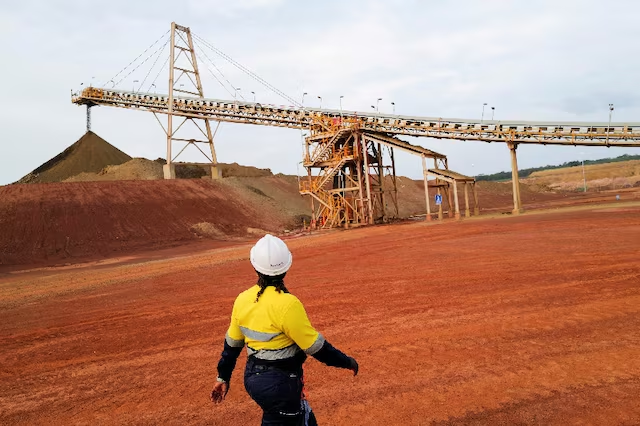
While the programme has strengthened reserves, it has also placed financial pressure on the central bank.

The Bank of Ghana recorded an operating loss of approximately GHS15.6 billion in 2025, according to its financial statements.

Officials attributed much of the loss to tighter monetary policy measures and the cost of expanding reserves, including expenses linked to domestic gold purchases.

Central bank officials argue such costs should be viewed as strategic investments rather than short-term losses.

Authorities say reserve accumulation inevitably involves expenses such as:

  • Refining costs
  • Transportation and freight charges
  • Purity verification expenses
  • Storage and logistics costs

Officials have defended proposals for small discounts on purchased gold, suggesting they reflect operational realities rather than penalties for miners.

Mining Companies Raise Concerns Over Commercial Terms

Despite government enthusiasm, mining companies say important issues remain unresolved.

Industry representatives insist no final agreement has been reached regarding the proposed increase.

Executives argue negotiations around pricing formulas and discount structures remain complex.

Mining firms reportedly oppose volume-based discount systems, warning they could reduce profitability and create additional financial burdens.

Another contentious issue involves treatment of by-products such as silver.

Industry sources say some proposals place little or no value on accompanying minerals extracted during production, a position miners strongly contest.

Executives also argue that moving immediately from 20% to 30% could disrupt existing production plans and commercial agreements.

Many companies structured operations around the earlier quota and believe a phased transition would be more practical.

Some industry representatives have proposed a gradual increase instead of immediate implementation.

Balancing National Interest and Investment Confidence

The debate highlights the challenge Ghana faces in balancing national economic priorities with maintaining a competitive mining environment.

Gold remains the backbone of Ghana’s export economy.

The sector generates billions in foreign exchange earnings annually and plays a major role in employment, government revenue and investment.

At the same time, policymakers increasingly view domestic gold reserves as essential to economic stability.

Global central banks purchased record volumes of gold in recent years as geopolitical tensions and currency volatility increased.

Ghana appears determined to follow that trend.

Analysts say the success of the revised programme may depend on whether authorities can reach commercially viable agreements with miners while preserving investor confidence.

Gold Strategy Reflects Broader Economic Recovery Efforts

Ghana’s expanded reserve drive forms part of broader efforts to stabilize the economy following debt restructuring challenges, currency depreciation and inflation pressures.

Strengthening reserves is seen as critical to supporting the cedi, improving import capacity and reducing dependence on external financing.

Officials believe larger bullion holdings could enhance long-term resilience.

However, with commercial terms still under discussion, the next phase of the programme may hinge on negotiations between government agencies, the central bank and mining companies.

For now, Ghana’s gold strategy represents one of the most ambitious reserve accumulation efforts on the continent—one that could reshape how resource-rich African nations manage mineral wealth in the years ahead.

RECOMMENDED
Africa

Explosions Heard in Addis Ababa as Opposition Claims Drone Strikes

By George Mensah 5 min read

Explosions were heard overnight in Ethiopia’s capital, Addis Ababa, three diplomatic sources said on Thursday. A source linked to the opposition alliance fighting government forces in the north said the alliance carried out several drone strikes in the city, including some aimed at the military’s headquarters. Reuters could not verify the claim, and witnesses reported no damage near the military base. The blasts have added to fears that renewed fighting in Ethiopia’s north is spreading toward the capital.

What Is Known About the Blasts

The three diplomatic sources spoke on condition of anonymity and gave few details. Two diplomats told Bloomberg that one blast was reported near the 4 Kilo area in the centre of the city and a second near the headquarters of the Ethiopian National Defense Force.

Spokespeople for Prime Minister Abiy Ahmed’s office, the federal government and the Ethiopian National Defence Force did not immediately respond to requests for comment.

If confirmed, it would be the first known drone attack by anti-government forces on the capital. Addis Ababa lies hundreds of kilometres from the front lines in Tigray, Amhara and Afar.

The Opposition Claim

The opposition source said the alliance hit several targets in the capital with drones. Reuters could not independently check that, and witnesses saw no visible damage near the military base. The source gave no further detail on what was struck.

The alliance has been fighting federal forces since last week. It is called the Ethiopian Peoples’ Forces Alliance for Survival, and it brings together seven armed groups from different regions. The Tigray People’s Liberation Front, or TPLF, is one of its main members.

A Drone Ban and a Capture Claim

On Wednesday, the national intelligence service banned drone flights over Addis Ababa and its surroundings for security reasons. It did not say when the ban would end.

Opposition forces had not been known to use armed drones, but evidence is growing that they may have some capability. On Tuesday, a pro-government militia said it had captured drone frames and batteries from forces linked to the TPLF. Reuters could not verify that either.

Drones have already been part of the war. A drone hit the headquarters of Tigrai TV in Mekelle on Sunday, and the UN chief, Antonio Guterres, said he was troubled by reports of drone use and harm to civilians. The government holds a heavy advantage in the air. It has a large drone arsenal, about 500,000 troops and support from abroad, notably the United Arab Emirates.

An Analyst’s Warning

Edward Bach, senior Africa analyst at the risk intelligence company Verisk Maplecroft, said an opposition strike on Addis Ababa would change the politics of the war. He called it “a political game-changer.” It would undercut any government line that the capital is untouched by the conflict, he said. It would also narrow a major tactical advantage for federal forces, which is their control of the skies.

Fighting in the North

Last week’s clashes were the biggest escalation in Ethiopia since the 2020-2022 civil war ended. They broke a four-year-old peace deal between the TPLF and the federal government. The earlier war killed hundreds of thousands of people.

This time the TPLF has teamed up with six other armed groups that aim to overthrow Abiy’s government. Federal forces have moved forward in southern Tigray and are edging closer to the regional capital, Mekelle. The alliance has taken towns in neighbouring Afar.

The pro-government Tigray Peace Forces militia said on Wednesday that it and the Ethiopian military had captured the town of Korem. Korem is about 100 km (62 miles) south of Mekelle. An Afar government official told Reuters on Thursday that federal and regional forces had retaken the towns of Erebti and Abaala, near the Tigray border. Reuters could not confirm any of the battlefield reports.

In Afar, where the TPLF took several towns early in the fighting, tens of thousands of people have fled their homes. Valerie Browning, a founder of the Afar Pastoralist Development Association, told Reuters about the displacement.

Fears for the Wider Region

The conflict could add to instability across the Horn of Africa, which is already strained by Sudan’s civil war, friction between Ethiopia and Eritrea over Red Sea access, and spillover from Middle East conflicts.

Ethiopia’s government accuses Eritrea, Sudan and Egypt of backing the opposition alliance. All three deny it. Haji Awol Arba, Afar’s chief administrator, went further earlier this week. He told Al Jazeera that Eritrean soldiers had crossed into Afar to join the alliance’s offensive. Eritrea’s information minister did not immediately respond to a request for comment.

Eritrea fought alongside Ethiopia’s federal government against the TPLF in the last war. Relations between the two old rivals have since soured. Asmara sees Abiy’s repeated claims that landlocked Ethiopia has a right to sea access as an implicit threat. Abiy has said Ethiopia intends to secure sea access by peaceful means.

What Happens Next

Several questions are open. The government has not said whether the blasts were drone strikes, who launched them or what they hit. Independent confirmation could come from more diplomatic or witness accounts, or from official statements. The drone ban over the capital stays in force, with no end date.

On the ground, federal forces are pushing toward Mekelle and fighting continues in Afar. How far the war spreads, and whether Eritrea takes a role, will shape what comes next. Until the explosions in Addis Ababa are confirmed or explained, the opposition’s claim remains unverified.

Africa

Man Charged Over Fake Nigerian Agency That Won $1 Million Budget

By George Mensah 4 min read

A Nigerian man accused of running a government agency the presidency says does not exist was charged in an Abuja court on Wednesday with forgery and impersonation. Prosecutors allege Adeniyi Adeyemi has posed since 2024 as director-general of the Presidential Foreign Investment Promotion Council, or PFIPC, which the presidency says it neither established nor authorised him to lead. Adeyemi pleaded not guilty to all eight charges and was sent to prison until his next court date on October 12. The case has exposed gaps in the checks that govern Nigeria’s public institutions.

What Prosecutors Allege

Nigeria arraigns boss of bogus government agency.

According to court filings, the purported agency won office space inside the federal secretariat. It secured a roughly $1 million budget allocation this year and tried to open accounts at the Central Bank of Nigeria. Several government institutions also processed its requests in the belief that it was legitimate.

The case has gripped Nigerians because of the scale of what is alleged. A state agency that the government says never existed appears to have passed through several layers of state bureaucracy.

The Forged Letters

Prosecutors accuse Adeyemi of forging an appointment letter purportedly issued by President Bola Tinubu and signed by the president’s chief of staff, Femi Gbajabiamila. Gbajabiamila could not be reached for comment on Wednesday.

They also say Adeyemi used documents bearing presidential letterheads to request office space, staff deployments and cooperation from government agencies. Other counts allege forged requests for office accommodation, an approval of staff account status, and a conveyance approval, all purportedly issued by the State House.

Prosecutors have not accused any government officials of conspiring with Adeyemi. He is jointly charged with two people identified only as Femi and Anu, who are said to be at large.

What Happened in Court

Adeyemi arrived in a white kaftan and baseball cap. He smiled and chatted with his lawyers before prosecutors read the eight charges at the federal high court in Abuja. Justice Muhammed Umar remanded him at the Kuje Correctional Centre after the plea.

Rotimi Oyedepo, the director of public prosecutions, told the court the attorney-general of the federation had directed him to take over the case from the police, and he asked for Adeyemi to be held in custody. Adeyemi’s lawyer, Genesis Francis, said a bail application dated January 12, 2026, had been filed and served on the prosecution. Adeyemi, 38, will stay in custody until that application is heard on October 12.

Adeyemi was arrested in the southwestern state of Osun. A judge had issued a warrant for him after he failed to appear in court five times.

What Adeyemi Says

Adeyemi has denied wrongdoing in interviews with local media. He says the PFIPC is genuine and that he personally approached budget officials to get it included in government spending plans.

He also told a meeting in Lagos on September 26 that the police, the Department of State Services and the Independent Corrupt Practices and Other Related Offences Commission had cleared him of wrongdoing.

That claim runs against the prosecution’s account. Prosecutors say an investigation ordered by the presidency and carried out by the same anti-corruption commission found the council had no legal backing. The two accounts cannot both be right, and the court will have to sort out which is accurate.

What the Case Says About Oversight

Nigeria has long struggled with corruption and weak oversight in public services, and the case is seen as reinforcing a view that official procedures can be bypassed with the right documents and claims of powerful connections.

The charges describe a chain of ordinary administrative steps that were each approved or processed: a request for office space, a staff posting, a budget line, a bank account application. Prosecutors have not said which officials handled those requests or what checks they ran. Those questions are separate from the criminal case against Adeyemi, but they are the ones the court filings raise.

The presidency’s position is clear. It says it did not create the agency or authorise Adeyemi to lead it. Yet according to court filings, the agency held office space in a federal building and a budget allocation in a federal spending plan. That gap is the story.

What Happens Next

Adeyemi returns to court on October 12, when his bail application is due to be heard. He remains in custody until then.

Several points are still open. Prosecutors have not said how Adeyemi allegedly obtained the budget allocation, who in government approved it, or where the money went. Two co-defendants are at large. Adeyemi has not given a detailed public account of how he says the council was created.

His lawyers have not said whether they will challenge the forgery counts. The case will show whether the documents are as the prosecution describes them, and whether a body that never legally existed was able to operate inside the federal system for more than a year.

ADVERTISEMENT
Scroll to Top