
The United States and Iran are moving closer to a temporary agreement designed to prevent a renewed military confrontation, according to the latest developments in Iran Us Relations Latest News. and reduce tensions surrounding the strategically vital Strait of Hormuz, according to officials and sources familiar with ongoing negotiations.
While discussions remain fragile and many of the most difficult issues are unresolved, diplomats involved in the mediation effort say both Washington and Tehran now appear focused on securing a limited short-term arrangement rather than attempting to finalize a comprehensive peace accord.
The proposed framework would aim to formally halt hostilities, stabilize maritime traffic in the Persian Gulf and create space for broader negotiations in the coming weeks. However, the draft agreement stops short of resolving core disputes surrounding Iran’s nuclear program, ballistic missile capabilities and regional influence.
The talks come after months of escalating conflict that has shaken global energy markets, disrupted international shipping and increased fears of a wider Middle East war.
Interim Framework Instead of Full Peace Deal

Officials involved in the negotiations say expectations for a sweeping diplomatic breakthrough have been scaled back significantly in recent weeks. Deep disagreements between the two sides remain, particularly over Tehran’s nuclear activities and Washington’s long-standing demands for stricter limitations on Iran’s military programs.
Rather than pursuing an all-encompassing settlement immediately, negotiators are now concentrating on what sources describe as a “practical interim arrangement” intended to stop the violence and prevent further economic disruption.
According to diplomatic sources, the emerging framework is expected to unfold in three phases.
The first stage would involve a formal declaration ending active military operations between the United States and Iran. The second stage would focus on reducing tensions in the Strait of Hormuz, where shipping routes have been severely disrupted during the conflict. The final stage would open a roughly 30-day negotiation period aimed at achieving a broader political and security agreement.
Pakistani officials, who are playing a central mediating role between Washington and Tehran, say discussions have intensified in recent days.
A senior Pakistani official involved in the talks said the immediate goal is to ensure a permanent halt to the fighting before broader disputes are addressed.
“Our priority is to stop the war completely first,” the official said. “The remaining issues can be discussed once direct negotiations resume.”
Pakistan’s Foreign Ministry also expressed optimism that an understanding could be reached sooner rather than later.
Trump Signals Optimism Despite Lingering Disputes
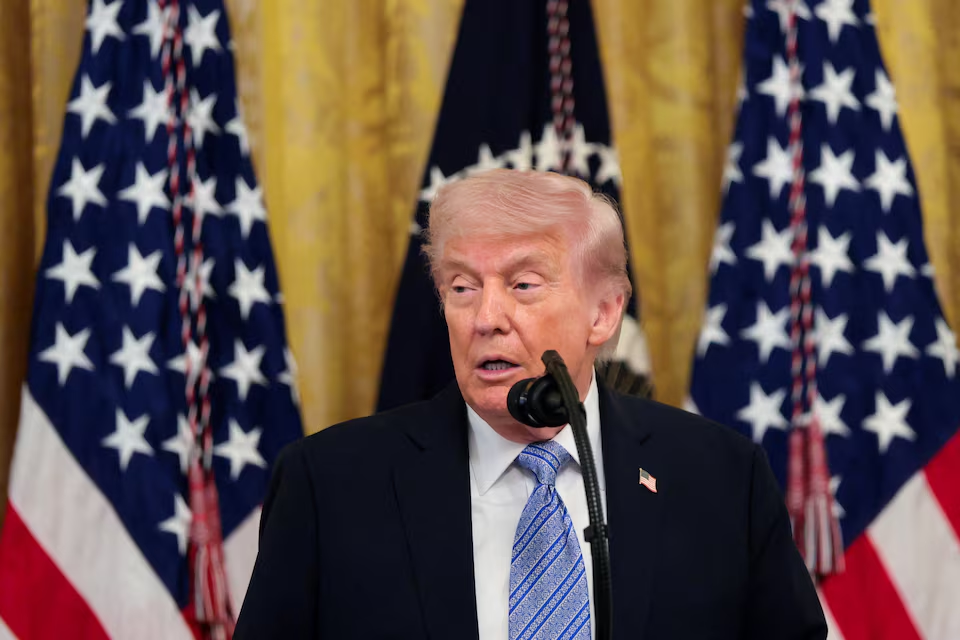
U.S. President Donald Trump has repeatedly suggested that progress is being made behind the scenes, even as tensions remain high across the region.
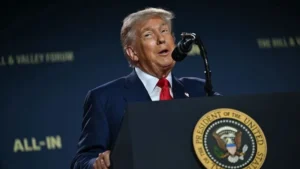
Speaking at the White House, Trump said he believes Iran is interested in reaching a deal and indicated that negotiations could produce results quickly.
“They want to make a deal,” Trump told reporters. “It’s very possible.”
The Trump administration has presented diplomacy as a path toward ending a costly regional confrontation that has strained global energy markets and increased military risks throughout the Middle East.
However, Iranian officials remain publicly cautious and, in some cases, openly skeptical of the American proposal.
Iranian lawmakers and government figures have accused Washington of attempting to shape international perceptions by overstating the progress of negotiations while continuing military pressure in the region.
Iranian parliament speaker Mohammad Baqer Qalibaf appeared to mock reports of an imminent breakthrough, suggesting that American officials were trying to project confidence after failing to fully reopen the Strait of Hormuz.
Other Iranian officials described the draft framework as incomplete and heavily tilted toward American demands.
Strait of Hormuz Remains at Center of Crisis
The Strait of Hormuz continues to be one of the most critical flashpoints in the negotiations.
The narrow waterway serves as a major global energy corridor through which a significant share of the world’s oil and natural gas exports pass. Since the conflict escalated earlier this year, shipping traffic through the strait has been heavily restricted, creating severe disruptions in global energy markets.
Iran has maintained tight control over maritime movement in the area, while the United States has simultaneously increased its naval presence and enforced restrictions targeting Iranian shipping operations.
Although the proposed agreement aims to ease tensions surrounding the strait, sources familiar with the negotiations say no final agreement has yet been reached on how shipping security would be guaranteed.
The uncertainty surrounding the waterway has contributed to volatile oil prices and growing concern among international shipping companies.
Nevertheless, hopes for a diplomatic breakthrough have already influenced financial markets.
Global stock indexes moved higher on reports that negotiations were progressing, while oil prices declined sharply amid expectations that supply disruptions could eventually ease.
Brent crude prices fell significantly as investors reacted to signs that a broader regional escalation might be avoided.
Market analysts say investors are responding less to the specifics of the proposed agreement and more to the possibility that military confrontation may temporarily pause.
Key Nuclear Issues Remain Unresolved
Despite progress toward a temporary arrangement, some of the most contentious issues between Washington and Tehran remain unresolved.
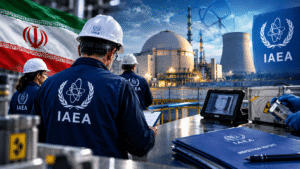
One of the central sticking points involves Iran’s stockpile of highly enriched uranium. Western governments continue to express concern over Tehran’s growing nuclear capabilities, particularly the accumulation of uranium enriched to levels close to weapons-grade material.
According to diplomatic sources, the draft memorandum currently under discussion does not clearly address what would happen to Iran’s existing stockpile or whether Tehran would agree to suspend future enrichment activities.
The proposed framework also reportedly avoids direct references to Iran’s ballistic missile program and Tehran’s support for regional armed groups, including Hezbollah.
Those omissions highlight the limitations of the current negotiations and reinforce the idea that the agreement is intended only as a temporary de-escalation mechanism rather than a lasting peace settlement.
Iran continues to insist that its nuclear program is peaceful and says it is willing to discuss limitations only if economic sanctions are eased.
The United States, meanwhile, has maintained that Iran must accept stronger restrictions before sanctions relief can be considered.
Regional Tensions Continue Despite Diplomacy
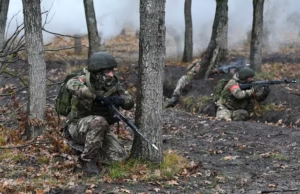
Even as negotiations advance, violence and military activity across the region have not fully stopped.
Israel confirmed this week that it carried out an airstrike targeting a Hezbollah commander in Beirut, marking another escalation tied to the broader regional conflict involving Iran-backed groups.
Iran has also demanded that Israeli military operations in Lebanon be addressed as part of any wider agreement with Washington.
Meanwhile, U.S. military forces continue enforcing restrictions on Iranian maritime activity. American officials said naval forces recently intercepted and disabled an Iranian-linked tanker attempting to move through the Gulf region.
The overlapping military pressures underscore how fragile the current diplomatic efforts remain.
Analysts warn that even a small incident at sea or along regional frontlines could derail negotiations and push the conflict back toward open warfare.
For now, however, both sides appear motivated to avoid a larger escalation that could further damage regional stability and the global economy.
Whether the temporary framework can evolve into a broader long-term agreement remains uncertain, but diplomats involved in the process say the coming weeks may prove decisive for the future of U.S.-Iran relations and the security of the Middle East.