Clicxpost

US News

US Asks UN Aviation Agency to Challenge Flight Ban on Taiwan President’s Africa Trip

ICAO Taiwan

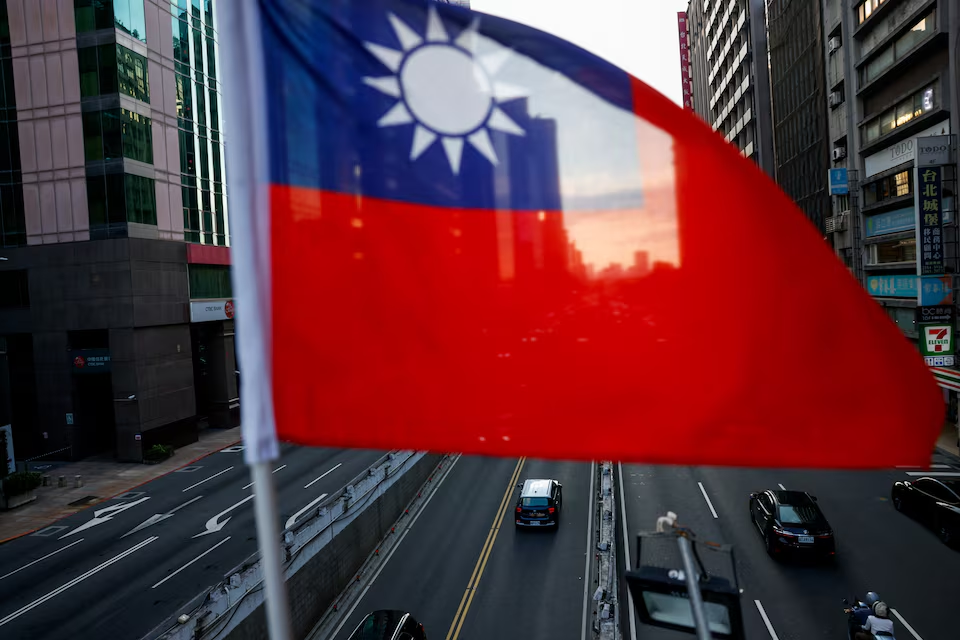
The United States has asked the UN aviation agency to rule on whether two Indian Ocean states can use their air traffic role to block a Taiwanese presidential flight. In a paper submitted for the November session of the International Civil Aviation Organization (ICAO) Council, Washington challenged the decision by Mauritius and Seychelles to revoke permission for an aircraft carrying Taiwan President Lai Ching-te to cross parts of international airspace they manage. The flight was planned for April, and it reopens the long-running dispute between the United States and China over Beijing’s efforts to limit Taiwan’s international engagement.

China hit back at the proposal. Its foreign ministry accused Washington of using Taiwan for political purposes and of wasting international resources. Taiwan thanked the United States for its concern. The governments of Mauritius and Seychelles did not respond to requests for comment.

What Washington wants the council to do

Members of ICAO agency arrive at their headquarters in Montreal

The US paper, seen by Reuters, asks the ICAO Council to reaffirm a narrow principle. Countries responsible for managing air traffic over the high seas do not have sovereignty over that airspace, the paper says, and they cannot use the role for political purposes. Such actions could “set a dangerous precedent,” the paper warns, by encouraging similar disruptions or political pressure on other countries.

Washington lists three specific requests. It wants the council to express concern over the withdrawn permits. It wants the agency’s secretary general to seek written explanations from Mauritius and Seychelles. And it wants ICAO to determine whether any remedies are needed to ensure the two countries comply with international aviation rules.

The paper names only Mauritius and Seychelles. Taiwan’s government said Madagascar also revoked permission for the flight, but the US document does not mention it. The paper as reported does not explain why.

The State Department raised the issue earlier, in April. It said responsibility for managing international airspace beyond a country’s sovereign territory was “solely to ensure aviation safety, not to serve as a political tool for Beijing.” The ICAO paper takes that statement out of the press briefing room and puts it before a body that can ask member states for explanations.

The flight that never left in April

Lai was due to begin his first trip to Africa on April 22, 2026. His destination was Eswatini, where he planned to attend events marking the 40th anniversary of King Mswati III’s accession to the throne. Eswatini is one of only 12 countries with formal diplomatic ties to Taiwan, which China claims as its territory, and it is the last of Taipei’s official allies in Africa.

According to the US paper, Taiwan’s China Airlines had received permits for a charter flight to cross portions of the flight information regions, known as FIRs, that Mauritius and Seychelles manage over the high seas. Both countries revoked the permits days before departure. They did not cite safety or operational concerns, the paper says.

At an April 21 press conference, the president’s secretary-general said the permits were cancelled without prior notice or justification. He blamed pressure from Beijing, including economic coercion. Taipei announced the same day that the whole trip was off because the plane could not reach Eswatini. The aircraft had no mechanical problems.

Lai said China had used economic coercion to secure the cooperation of the three countries. Beijing denied that. Seychelles and Madagascar do not recognize Taiwan. Global Taiwan, a research publication, reported that Madagascar said it recognizes only one China and Seychelles said its decision followed established procedures. A Taipei official also claimed Beijing threatened to withdraw debt relief from the countries if they did not block the flight, but that claim has not been independently confirmed.

On April 22, Chinese Foreign Ministry spokesperson Guo Jiakun welcomed the decisions of the three countries and restated Beijing’s one-China position.

Airspace and flight information regions are not the same thing

The legal argument depends on a distinction that most travelers never encounter. Countries have sovereignty over the airspace above their land and their territorial waters. Flight information regions are a separate matter. A country assigned to manage a region provides air traffic services there, and those regions can extend far beyond a country’s borders over international waters.

Under the US paper’s reading, providing those services is a safety and operational job. It does not hand the country control over the airspace itself. A Taipei Times editorial published in May made the same point about the Chicago Convention and its annexes. It said a state overseeing a region is responsible for air traffic safety and security there, including over the high seas, but does not gain control of that airspace.

If that reading holds, a permit to cross a region over the high seas is a coordination step, and a refusal needs an aviation reason. The US paper says Mauritius and Seychelles gave none. The countries have not publicly answered that point to Reuters, so the council would be asked to rule on the US account of events with no stated position from the two governments.

China’s reply

China’s foreign ministry gave Reuters a statement rejecting the US paper. It said the document “selectively and one-sidedly cites” principles including freedom of overflight over the high seas. It said Washington, “under the pretext of safeguarding freedom of navigation,” smears other countries and presumes sovereign states were at fault.

The statement then turned to sovereignty. “There is only one China in the world, and Taiwan is an inalienable part of China’s territory,” the ministry said. “China urges the countries concerned to stop using the Taiwan issue for political manipulation.”

Beijing’s response does not address the paper’s central claim, which is that managing air traffic over international waters confers no sovereignty. It answers the paper’s motive instead. That pattern is common in this dispute. Washington frames each case as a rules question, and Beijing frames the same case as a question about Taiwan’s status.

Taiwan’s response

Taiwan’s foreign ministry said it thanked the United States and other like-minded countries for their earlier concern about the issue. In a statement, it said it will keep working with allied countries to explain to ICAO and the international community that “China’s actions undermine the international civil aviation order and flight safety.”

Taiwan is not a member of the United Nations or its agencies because of opposition from Beijing, which considers the democratically governed island part of its territory. Taiwan rejects Beijing’s sovereignty claims and says China has no right to represent it internationally. That position leaves Taipei dependent on friendly governments to carry its case into rooms where it has no seat.

The Taipei Times editorial put numbers on the aviation stakes. Taiwan manages the Taipei FIR, which about 1.64 million flights used in 2024, and 64 million passengers passed through Taiwan’s airports that year. Taiwan has still been denied observer status at the ICAO assembly. The editorial argued that China has used its position in the organization to advance its aims toward Taiwan, and that it has set up new civil air routes over the Taiwan Strait on several occasions in the past eight years without prior consultation with Taipei.

What the paper asks for, and what it leaves out

The requests are procedural. The paper does not ask ICAO to penalize Mauritius or Seychelles, and it does not ask the agency to take a position on Taiwan’s status. It asks for concern to be expressed, for explanations to be sought in writing, and for a check on whether remedies are needed to bring both countries into line with aviation rules. That framing keeps the case inside ICAO’s own subject matter, which is how air traffic is managed.

The precedent argument in the paper reaches beyond Taiwan. A country that manages a flight information region over the high seas sits on the route of every airline crossing it. If that role can be used to pull permits for political reasons once, the paper warns, other countries and other flights could face the same pressure. Taiwan’s own region shows the scale of what is at stake for any such system, since about 1.64 million flights used the Taipei FIR in 2024, according to the Taipei Times editorial.

Taiwan’s narrow diplomatic footing

The Eswatini trip was planned around one of Taipei’s few formal relationships. Only 12 countries maintain diplomatic ties with Taiwan, and Eswatini is the sole African country among them. A visit by the president to an ally is a rare chance for Taipei to show its relationships in person, which explains why the cancellation drew a press conference and why the follow-up trip was announced only after Lai arrived.

A pattern Washington has now put in front of ICAO

The dispute over Lai’s flight is one front in a wider contest. The United States and China have clashed over China’s efforts to restrict the island’s room to operate internationally. Those efforts cover participation in global bodies, diplomatic ties and overseas travel by senior officials. The April flight touched the last of those three areas directly.

The US move is also notable for its venue. Washington could have raised the issue only through diplomatic channels with Mauritius and Seychelles. ICAO instead gives it a multilateral platform and a procedural path, and the US paper asks for written explanations that would sit on the record.

That path carries a risk. A council that declines to act would leave Washington with a public record showing the limits of the process. A council that issues a mild statement of concern would give Taipei a documented position to cite the next time a presidential flight needs permits. Either result will be read as a measure of how much support exists for the US reading of FIR rules.

Lai reached Eswatini anyway, in secret

The trip did not end with the cancellation. Lai eventually traveled to Eswatini the following month aboard the Eswatini king’s private aircraft, and he announced the visit only after arriving. Global Taiwan reported the date as May 2, and said the plane was accompanied by Eswatini’s deputy foreign minister and took a route that avoided the airspace of the three countries.

That reporting also names the countries that did grant overflight for the second flight: Indonesia, Malaysia, Brunei, the Philippines and Australia. Germany and the Czech Republic reportedly refused a refueling stopover request after the original route failed. Foreign Minister Lin Chia-lung also made the trip to Eswatini in Lai’s place.

The outcome shows what the April restrictions cost and what they did not. They forced Taipei to cancel the announced trip and delayed the visit by about ten days. They did not stop it. For Washington, that is both a reason to press the legal point, because the restrictions were avoidable by other means, and a risk, because China can argue that the dispute ended when the visit took place.

What to watch

The council session is the next test. Three outcomes are worth tracking. The first is whether the council asks its secretary general to write to Mauritius and Seychelles, since that is the most concrete request in the US paper. The second is whether either government answers publicly, because neither has done so to Reuters. The third is whether other council members back the US reading that managing high-seas airspace carries no sovereignty.

Taipei will watch the same points. Its foreign ministry has said it will keep working with allied countries to make its case to ICAO. The next time a Taiwanese leader plans a long flight over international waters, the answer on permits may depend on what the council does at its November session.
RECOMMENDED
US News

Trump Asks Supreme Court to Limit Judges’ Power to Strike Down Federal Rules Nationwide

By George Mensah 7 min read

President Donald Trump’s Justice Department has asked the US Supreme Court to restrict a tool federal judges use to cancel agency regulations for everyone, not just the people who sued. The appeal, now pending before the justices, targets the courts’ long-standing power to halt the actions of federal agencies that carry out the Republican president’s policy priorities. The Supreme Court is expected to consider whether to take up the case early next year.

The request follows a win the administration secured in June 2025, when the court limited nationwide injunctions. That ruling left a separate tool untouched, and the new appeal goes after it.

What the administration is asking for

The administration argues that courts should not be able to shut down an agency’s regulation entirely. Judges, it says, should limit any relief to the specific plaintiffs in a given case.

The Justice Department put its position directly in its filing. The Supreme Court “should return the lower courts to their proper role under the Administrative Procedure Act,” it said.

The administration made the same argument against universal injunctions. It contends that the law does not give courts such sweeping authority, and that the most a court can do is block a regulation’s enforcement against the plaintiffs who challenged it.

The tool at the center of the appeal

The lawsuits the administration is targeting are brought under the Administrative Procedure Act, known as the APA. Congress passed it in 1946, and it governs how federal agencies operate, including how they put regulations into effect.

Judges and appeals courts have long claimed the power under the APA to “hold unlawful and set aside” agency regulations they find illegal. A ruling of that kind invalidates the regulation on a universal basis. It does not stop at the courtroom door of the people who filed suit.

That is different from the nationwide injunctions the Supreme Court restricted in June 2025. Those orders can block the government from enforcing a policy against anyone, not only the challengers. Judges had used them more and more in a wide range of cases against Trump, including cases alleging violations of the US Constitution. The administration now wants the same limits applied to the similar orders judges can issue to invalidate policies under the APA.

A case about surprise medical bills

The vehicle for the appeal is a challenge by Texas medical providers to federal rules that implement a statute Trump signed into law during his first term. The statute aims to limit unexpected medical bills.

The regulation at issue sought to constrain “surprise” bills from hospitals and health providers outside a patient’s health insurance network. A Texas association of medical doctors, air-ambulance providers and other plaintiffs argued that the rule violated the APA and artificially lowered their insurance reimbursement rates.

The New Orleans-based 5th US Circuit Court of Appeals voided parts of the rule nationwide in August, finding an APA violation. The administration’s appeal does not contest that finding about the rule’s legality. It asks a narrower question: whether courts can use the APA to stop a policy nationwide at all.

Two readings of the same words

The dispute comes down to what the APA’s language allows. Judges point to the phrase “hold unlawful and set aside” when they invalidate a rule for everyone. The administration reads the statute as permitting relief only for the plaintiffs in front of the court. Judges and appeals courts have read it the other way for a long time.

The Supreme Court did not resolve that disagreement in 2023, when Biden’s administration invited it to. The justices backed Biden in that case on other grounds, so the question comes back to them now in a new case, under a different president.

What a win would change

Aditya Bamzai, a University of Virginia expert in administrative law, said a victory for Trump could let the government keep enforcing rules against everyone except the plaintiffs in a given case. That could continue for years while litigation plays out, even after judges have deemed the rules unlawful.

Siding with Trump “would give more flexibility to the executive branch,” Bamzai said.

“Whether you like or dislike that flexibility can perhaps depend on whether you like or dislike a particular administration’s policies,” Bamzai added.

Ronald Levin, a law professor at Washington University in St. Louis, described the practical effect from the other side. If the Supreme Court agrees with the administration, he said, “it would take longer for challengers to get unlawful regulations removed from the books.”

The case for keeping the tool

Numerous state governments that regularly sue the federal government say this judicial power is an essential check against executive overreach. Others say the APA matters because it keeps regulations uniform and applies them equally to everyone.

Levin gave examples. “When an agency adopts a rule that has been held to be unlawful, sometimes the only sensible solution is to wipe it off the books,” he said.

“You can’t have a food-safety rule that applies only to some. You can’t have an auto-safety manufacturing rule that applies only to some manufacturers,” Levin said. He added that judges should not use the tool in every case, but, in his words, “there are some cases where the need for it is compelling.”

Texas, Florida and some other states, mostly led by Republicans, had urged the 5th Circuit not to “neuter” the APA’s effectiveness. They called the law important for maintaining the balance of power between states and the federal government. “The APA is a critical tool … to curb federal overreach and incursions into state sovereignty by executive-branch agencies,” these states said.

Trump’s administration may face pushback from a broad array of opponents on this effort, and the Republican-led states in that group show that the objection does not come from one side only.

Cases that depend on the tool

Since Trump returned to office in January 2025, his administration has faced hundreds of lawsuits over its actions on immigration, mass deportation, diversity initiatives and transgender rights, among others. Many of those actions pushed the boundaries of presidential authority.

Plaintiffs invoked the APA in numerous cases. They used it to fight the termination of humanitarian legal status for hundreds of thousands of migrants living in the United States. They used it against major cuts to research grants related to racial minorities or LGBT people. They used it against the use of a mass voter verification system to conduct sweeping citizenship checks.

Trump and his allies have attacked judges who stood in the way of those policies, calling some of them radical or corrupt. At the same time, the president has tested the limits of his powers.

What the 2025 ruling did and did not decide

The June 2025 ruling came in litigation over Trump’s bid to limit birthright citizenship, a right long recognized in the United States. The ruling addressed judicial power, not whether the birthright citizenship directive was legal.

The legality question came separately. In June, the justices issued a 6-3 ruling rejecting Trump’s birthright citizenship policy as unconstitutional.

The administration is not the first to ask for limits on judges’ power. President Joe Biden’s administration also asked the Supreme Court to rein in universal injunctions when lower courts hindered many of his main initiatives. The 2025 ruling still proved to be a major victory for Trump.

Biden’s administration also tried in 2023 to persuade the Supreme Court to limit the APA power that the new appeal targets. That case involved a challenge by Republican attorneys general from Texas and Louisiana to an immigration policy. The justices did not take up the invitation and backed Biden on other grounds.

What happens next

The justices will decide, probably early next year, whether to hear the case. If they do, the question before them will be narrow in form and broad in effect. They will not rule on the surprise-billing rule itself, since the administration has left the 5th Circuit’s finding about it alone. They will rule on whether a federal judge can cancel an agency rule for everyone.

For the administration, a yes would add to the 2025 ruling and leave judges with fewer ways to stop a policy before a case ends. For challengers, it would mean a rule found unlawful could stay in force against everyone except the plaintiffs, as Bamzai and Levin described. Both men tied the outcome to time: how long an unlawful rule can remain on the books while the case continues.

Bamzai’s remark about liking or disliking an administration’s policies also points to a feature of the case that does not depend on party. Whatever the justices decide would apply to whichever administration holds office next. Biden’s team asked for similar limits on judges, which is why the question has now come up under two presidents of opposite parties.

US News

Thousands Stranded as Air Traffic Control Failure Grounds Every Flight in America

By George Mensah 7 min read

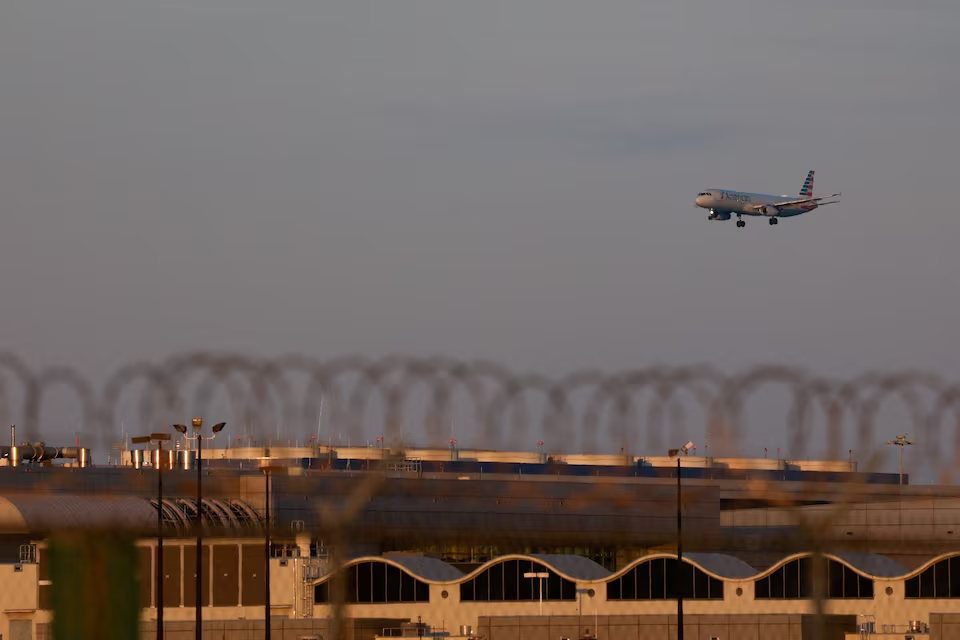
The Federal Aviation Administration lifted a nationwide ground stop on Friday night after a communications failure at air traffic control centers halted flights across the United States. It was the longest shutdown of US airspace since the September 11, 2001, attacks. Transportation Secretary Sean Duffy said airspace reopened at 8:15 p.m. Eastern Time (0115 GMT). By 11:30 p.m., nearly 10,000 flights had been canceled and tens of thousands of passengers were stranded at airports around the country.

The reopening did not end the problem. Departures would resume gradually, Duffy said, and airlines would need time to restore normal operations.

Airspace reopens, but recovery will be slow

Duffy made the announcement at the White House and did not promise a quick fix for travelers. “It’s going to be slow,” he told reporters.

Flightradar24 data shows how far the damage reached. Delta Air Lines canceled more than 2,200 flights and American Airlines canceled more than 2,200 as well. United Airlines canceled 1,800. Those three carriers account for at least 6,200 of the nearly 10,000 cancellations, roughly 60 percent of the total. The plane-tracking website also reported that some aircraft at major airports waited more than five hours for a gate.

Aviation analysts said the four-hour nationwide grounding could disrupt airline schedules for days. The reasoning is simple. A canceled flight leaves its aircraft and its crew somewhere other than where the next day’s schedule expects them, and airlines have to move both back before routes run normally again.

Duffy said he and Homeland Security Secretary Markwayne Mullin met President Donald Trump in the Oval Office to discuss the outage.

How Friday unfolded

FAA issues national ground stop due to 'extraordinary circumstance and reasons for safety'

The timeline, as officials and Flightradar24 described it, runs like this. At 3:36 p.m. Eastern, air traffic control centers began to see instability in radar and communications systems. The FAA stopped flights nationwide. At 8:15 p.m., Duffy said airspace reopened. At 11:30 p.m., Flightradar24 counted nearly 10,000 cancellations. Passengers with evening departures, like Edward Kargbo’s 9 p.m. flight to Lomé, were pushed into Saturday morning.

The numbers describe a bigger disruption than the ground stop alone. The grounding lasted about four hours, yet the cancellations came to nearly 10,000 flights, because every flight that missed its slot pushed the next one back.

What failed, according to Duffy

Duffy said the trouble began at 3:36 p.m., when air traffic control centers experienced instability in radar and communications systems. Four hours and 39 minutes passed between that moment and the reopening of airspace at 8:15 p.m.

He gave a specific explanation. “Our switches, our routers actually got overloaded with data and they started to give us inconsistencies in the data from those routers and because of that we shut the system down,” Duffy said. Controllers never lost radar or communications completely, he added, and they landed thousands of planes safely.

In plain terms, routers and switches began producing data that did not agree with itself, and the FAA stopped departures instead of working from unreliable information. That choice cost airlines and passengers a great deal on Friday night. Duffy said the immediate problem had been fixed and that flying was safe.

Two airline officials gave a different angle. They said the outage appeared to affect a telecommunications network overseen by L3Harris Technologies. That network handles critical radio frequencies controllers use to talk to pilots. L3Harris did not respond to a request for comment. The reports so far do not say how the radio network and the overloaded routers connect, or whether they do.

A $50 billion request

FAA issues national ground stop due to "extraordinary circumstance and reasons for safety\

Duffy used the outage to press Congress. He blamed lawmakers for not funding a new system that he said could prevent failures like this one, and he called for $50 billion to modernize it.

“What we have is an incredibly old air traffic control system,” Duffy said. “Give us the money to fix it.”

The request arrived on the same day as an earlier one. Before the outage, the White House and the Department of Transportation had urged Congress to approve $30.1 billion to upgrade the nation’s aging airports and air traffic control infrastructure. The two numbers cover different ground. The $30.1 billion covers airports as well as air traffic control, while the $50 billion is Duffy’s figure for modernizing the control system itself.

Lawmakers’ response was not available in reports filed Friday night, so the funding question stays open going into the weekend.

The outage landed on a system already under pressure. It is the latest and most dramatic sign of strain on a US air traffic control network beset by aging technology, equipment and communications problems, along with a shortage of several thousand controllers. Duffy warned that fixing Friday’s fault would not be enough, and that a broader overhaul was needed to prevent similar failures.

Cyberattack not ruled out

Mullin addressed the question many travelers were asking: whether someone caused this on purpose. He said there was “zero evidence” so far that the outage resulted from a cyberattack or a rogue AI system. Investigators had not ruled out either possibility, though.

“It appears this was mechanically driven. However, we’re still looking,” Mullin said.

His wording leaves room for the investigation to change course. Mullin did not say a cyberattack was impossible. He said there was no evidence of one so far, and that the outage appeared mechanical. The rogue AI possibility got the same treatment: no evidence yet, not ruled out. The Department of Homeland Security and the NSA now have to settle both questions with findings, and Friday night’s statements do not do that for them.

The National Security Agency was working with the Department of Homeland Security on the investigation, he added. Until that work finishes, the official cause stays open, and Duffy’s account of overloaded routers remains the only explanation officials have offered on the record.

Passengers face a night at the airport

FAA issues national ground stop due to 'extraordinary circumstance and reasons for safety'

Lifting the ground stop did not clear the terminals. Passengers crowded departure halls and airline desks in Boston, Seattle, New York and Los Angeles as delays and cancellations mounted and aircraft stayed parked at gates.

Thousands of passengers faced being stranded overnight. Edward Kargbo, 50, from West Chester, Pennsylvania, had a 9 p.m. Ethiopian Airlines flight to Lomé, Togo. Instead, he planned to spend the night at the airport and take a rescheduled flight at 6 a.m. on Saturday.

“I have to squat the night here,” he said. “I’m stranded.”

Louise Maher, 47, was caught at Newark after her British Airways flight to London was disrupted. “I might cry at some point but not yet,” she said.

Compensation is unlikely. US airlines are not required to compensate stranded passengers because the carriers were not responsible for the FAA system failures. If you hold a ticket this weekend, check your flight status with your airline before you leave for the airport, and ask about rebooking options directly.

Airlines and investors count the cost

FAA issues national ground stop due to 'extraordinary circumstance and reasons for safety'

The only other nationwide ground stop since the September 11 attacks came in January 2023, when the FAA halted domestic departures for about 90 minutes. Friday’s grounding lasted roughly four hours, close to three times as long.

Investors were already pricing in a financial hit to airlines. Shares of American (AAL.O), United (UAL.O) and Delta (DAL.N) fell between 1% and 2% in after-hours trading. JetBlue Airways dropped about 3%.

American Airlines said it was prioritizing flights to international destinations and to smaller cities outside its major hubs. The airline wants to position aircraft and crews for a faster recovery. That plan puts international flights and smaller cities first, so passengers on other routes should expect longer waits for a rebooked seat.

Delta and United face the same problem. Delta and United together canceled more than 4,000 flights, and each cancellation is a passenger who needs a new seat. The plane-tracking figures show the scale, and the schedules for Saturday and Sunday will show how quickly the carriers can absorb it.

What happens next

Friday’s failure left three questions open. The first is the cause: Duffy points to overloaded switches and routers, two airline officials point to a network run by L3Harris, and investigators from the Department of Homeland Security and the National Security Agency have not closed out the cyber question. The second is the schedule. Flights will resume gradually, and analysts expect airline timetables to stay disrupted for days. The third is the money, since Duffy is asking Congress for $50 billion while the administration has a separate $30.1 billion request for airports and control infrastructure already on the table.

For passengers, the practical question comes first. Thousands of travelers faced a night in the terminals, with rescheduled flights set for Saturday morning. Whether Saturday’s flights run on time will show how much of Friday’s damage the airlines have already repaired.

ADVERTISEMENT
Scroll to Top