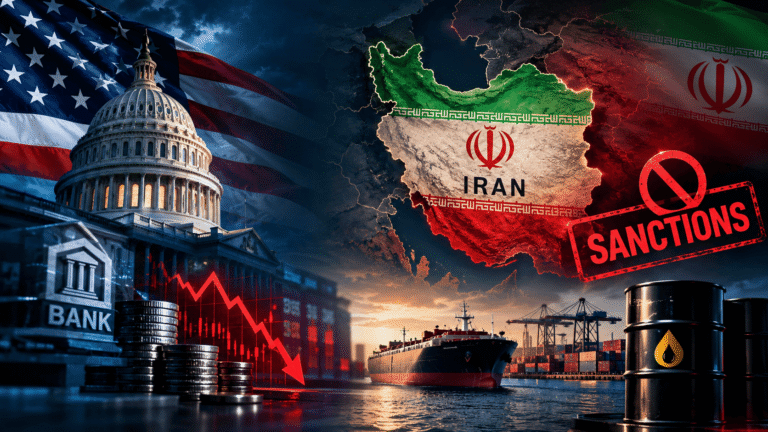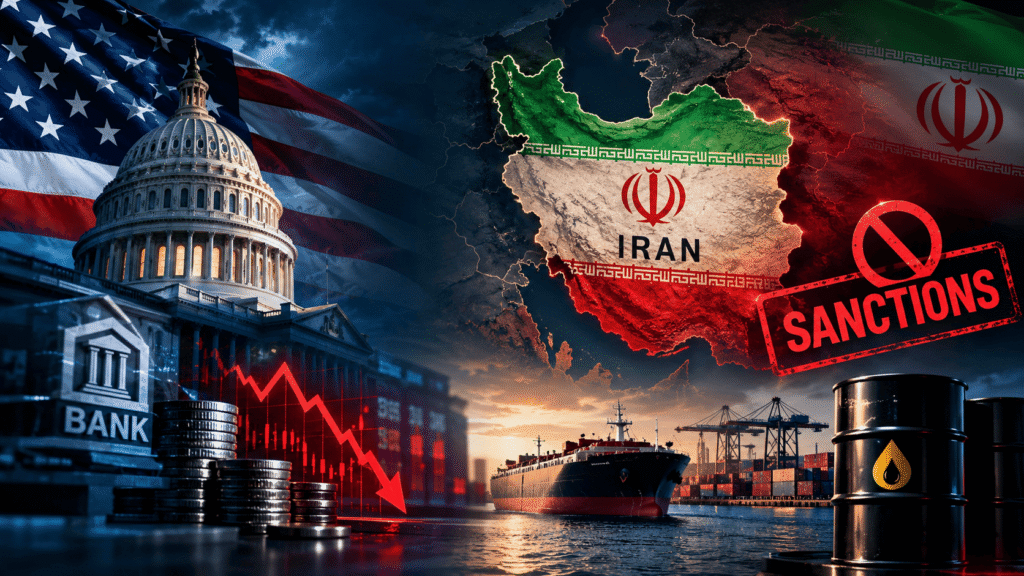

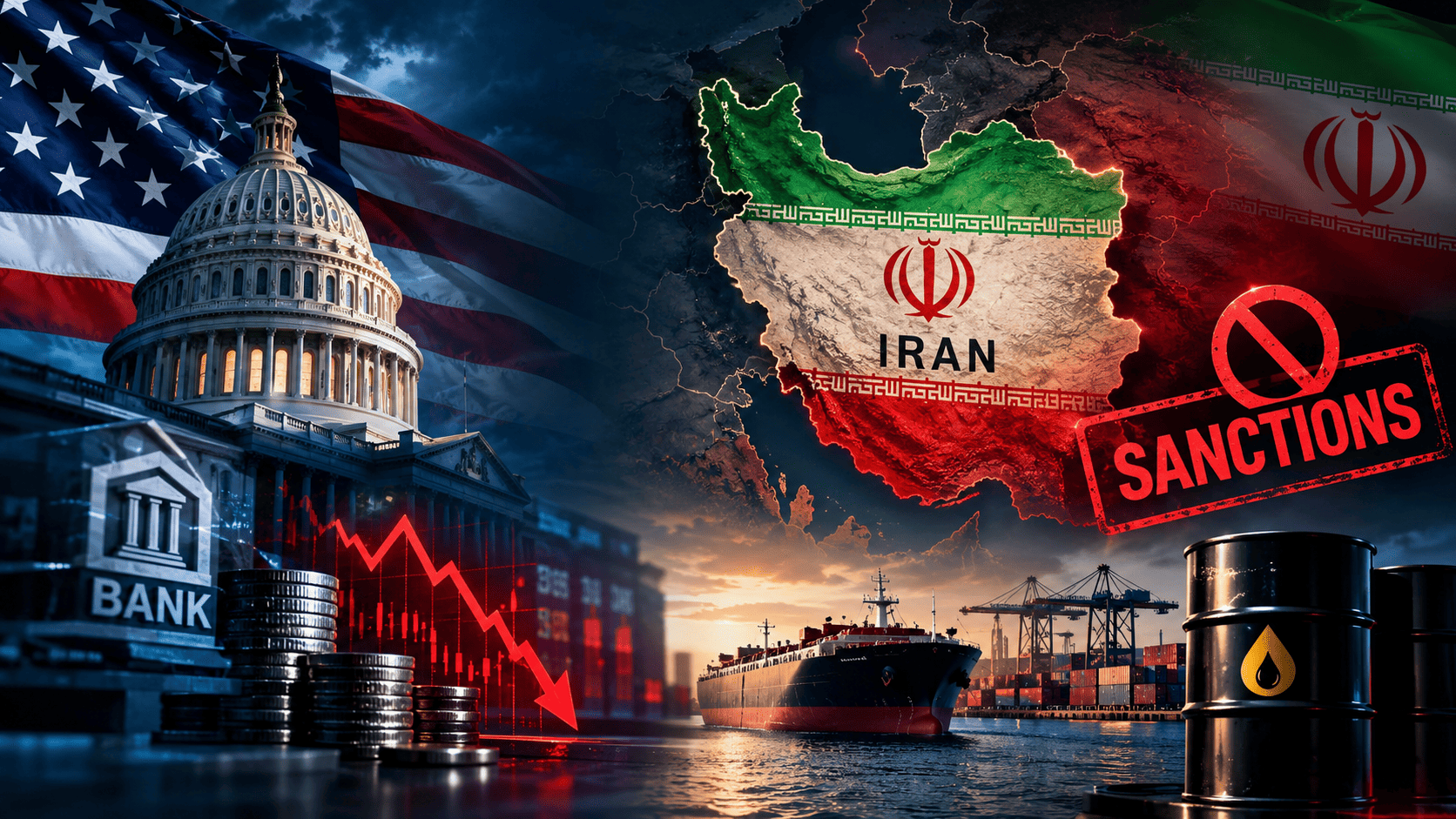
Iran sanctions are legal and financial restrictions that governments and international bodies place on trade, banking, energy and individuals connected to Iran. US sanctions on Iran are the most extensive, and they have shaped almost every phase of Iran-US relations since 1979. This guide explains who imposes them, why, how they evolved, and what has changed most recently. It is current as of September 30, 2026.
What Are Iran Sanctions?
Sanctions are coercive tools short of military force. They restrict economic activity in order to change a government’s behaviour or limit its capabilities. Typical measures include asset freezes, trade bans, restrictions on banks and blacklisting of specific people and companies.
Several actors impose sanctions on Iran:
- The United States is the largest source. Its measures come through executive orders and laws, and are enforced mainly by the Treasury’s Office of Foreign Assets Control (OFAC) and the State Department.
- The European Union and United Kingdom maintain their own restrictions.
- The United Nations has imposed nuclear-related sanctions through Security Council resolutions.
The distinction matters. UN sanctions are binding on all member states. US sanctions are national law, but they carry global reach through “secondary sanctions,” which threaten non-US companies and banks that deal with sanctioned Iranian parties. So the answer to “are all Iran sanctions imposed by the United States?” is no, although the US layer is the broadest.
Why Does the US Impose Sanctions on Iran?
The reasons below are the US government’s stated positions, not independent findings. Washington has cited several themes over time:
- Nuclear activities: concern that Iran’s programme could produce weapons. Iran says its programme is peaceful.
- Regional security: Iran’s military role in the Middle East.
- Missile and drone programmes: ballistic missile development and weapons procurement.
- Support for armed groups: the US designates several groups Iran backs as terrorist organisations.
- Human rights: repression of protesters and other rights abuses.
Analysts disagree about whether sanctions achieve these goals. Supporters see leverage that limits Iran’s resources. Critics point to humanitarian costs and to Iran’s record of withstanding decades of pressure. Both views are analysis, not settled fact.
History of US Sanctions on Iran
- 1979–1980s: After the Islamic Revolution and the embassy hostage crisis, the US froze Iranian assets. Iran was later designated a state sponsor of terrorism (1984), and further trade limits followed.
- 1990s: The US broadened restrictions into a near-total trade and investment embargo (1995) and penalised foreign investment in Iran’s energy sector (1996).
- 2006–2012: Iran’s nuclear programme led to UN Security Council sanctions. The US and EU added tougher oil, banking and shipping measures, including cutting Iranian banks off from the SWIFT messaging network.
- 2015: The JCPOA nuclear agreement traded limits on Iran’s nuclear programme for sanctions relief.
- 2018: The US withdrew from the JCPOA and reimposed its sanctions, followed by a “maximum pressure” campaign.
- 2025: France, Germany and the UK triggered the JCPOA’s “snapback” clause. Snapback reimposed previously lifted UN sanctions on September 27, 2025.
- 2026: Sanctions escalated during the US-Israel war with Iran, covered below.
For the wider diplomatic background, see our Iran-US relations history explainer.
Major Types of Iran Sanctions
- Economic and trade restrictions: bans on most US trade with Iran and limits on exports of sensitive goods.
- Financial and banking restrictions: Iran financial sanctions block designated banks from the US financial system and warn foreign banks against dealing with them.
- Oil and energy sanctions: measures against buyers, sellers and intermediaries of Iranian crude and petrochemicals.
- Shipping restrictions: designations of vessels and shipping networks used to move sanctioned cargo.
- Individual and entity designations: asset freezes and transaction bans on named people and companies on the SDN List.
Iran Oil Sanctions
Oil is central to Iran’s economy and government income, which is why Iran oil sanctions have been a US priority. Restrictions on buyers, refiners, tankers and payment channels aim to reduce export earnings. The effects reach beyond Iran, since they can influence energy markets and the routes and intermediaries used in international trade.
China is widely reported to be Iran’s largest oil buyer. CNBC describes China as Iran’s top trading partner and oil buyer. Current production and export volumes are difficult to verify and contested, so this article does not cite figures. For live shipping developments, see our Strait of Hormuz updates.
Impact of Iran Sanctions on the Iranian Economy
Documented effects include restricted access to international banking, higher costs for imports, reduced foreign investment and pressure on energy revenue. Iranian residents have described the effects in interviews. A Tehran realtor told AFP that sanctions affect people’s lives and that price controls are needed.
Currency weakness is one visible indicator. According to the AP, Iran’s rial fell to a record low of about 2.02 million per US dollar on August 24, 2026. Attributing that solely to sanctions would be a mistake. Inflation, domestic policy, and the ongoing war also affect the currency. Sanctions are one factor among several, and economists differ on how much weight each deserves.
Iran Sanctions and Iran-US Relations
Sanctions are both a source of tension and a bargaining chip. Sanctions relief was the core exchange in the JCPOA, and relief remains central to any new negotiation. Reports about potential relief are sensitive: President Trump has said he has offered “nothing” and rejected an Axios report that he would grant some sanctions relief and access to frozen funds. For the negotiating track, see Iran-US nuclear talks and Iran nuclear inspections.
Latest Iran Sanctions Developments (as of September 30, 2026)
The current phase is the US Treasury’s “Operation Economic Outcast.” Key verified developments:
- August 24, 2026: Treasury Secretary Scott Bessent announced Operation Economic Outcast, which Treasury says targets remaining sources of revenue for Iran. OFAC also issued determinations covering five more Iranian economic sectors, designated nearly 60 individuals, entities and vessels, and suspended five general licenses. The new categories of potential secondary-sanctions exposure cover digital assets, technology, gold, aviation and shipping, according to Wikipedia’s summary of the announcement.
- September 4: OFAC designated Türkiye-based Golden Global Bank and two subsidiaries.
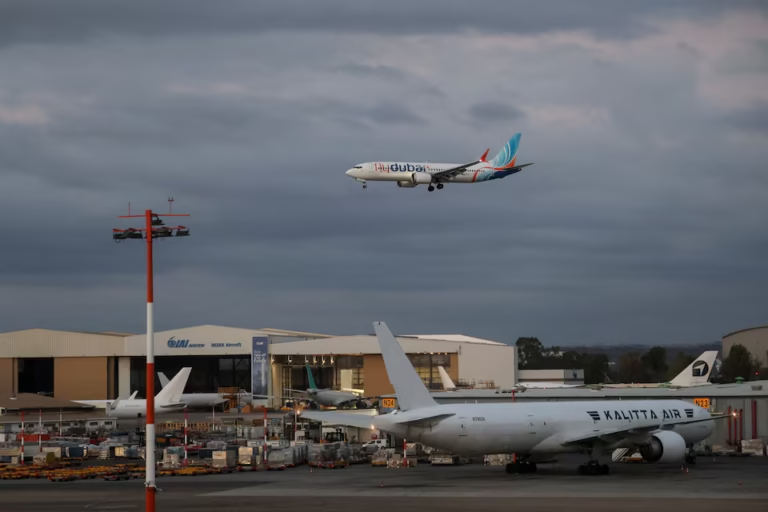
- September 8: OFAC designated 36 targets in Iran’s aviation sector. On the same date, OFAC suspended several Iran-related general licenses indefinitely.
- September 10: OFAC said specific-licence applications involving Iran would be treated with a presumption of denial, with limited exceptions.
- September 14: The US sanctioned Russia’s VTB Bank over alleged help to Iran in evading sanctions, according to a State Department statement.
- September 29: OFAC sanctioned 10 individuals and entities accused of procuring weapons and components for Iran’s Ministry of Defense and Armed Forces Logistics.
The wider context is a war that began on February 28, 2026. President Trump declared a ceasefire over in early July, and peace talks have been on hold since, according to CBS News. Iran has proposed a seven-day ceasefire and a phased reopening of the Strait of Hormuz. Follow Iran-US ceasefire updates for changes. Note that Iranian and US accounts of these events often conflict.
Iran’s Response to US Sanctions
Iranian officials have generally dismissed the measures. Iranian parliament speaker Mohammad Bagher Qalibaf downplayed the expected measures ahead of the August announcement, and security chief Mohsen Rezaei threatened a “seismic” response, according to NPR. Rezaei also described the airline sanctions as an “air blockade” and a sign of desperation. Tehran also disputes the legality of nuclear-related sanctions. At the UN, an Iranian representative called the snapback effort baseless and said the nuclear programme remains peaceful.
International Response
Positions are divided:
- E3 and EU: France, Germany and the UK triggered snapback, citing Iran’s “significant non-performance” of JCPOA commitments. The EU Council then reimposed the measures that had been lifted after the JCPOA.
- China and Russia: They pushed a failed Security Council effort to extend sanctions relief by six months.
- China’s exposure: Al Jazeera reports that larger Chinese banks have not been targeted so far, though VTB has a licensed branch in mainland China.
Iran Sanctions Timeline
- 1979: US freezes Iranian assets
- 1995–1996: Broad embargo and energy-investment penalties
- 2006–2010: UN nuclear sanctions begin
- 2015: JCPOA agreed
- 2018: US withdraws; sanctions return
- September 27–28, 2025: UN snapback takes effect
- February 28, 2026: War begins
- August 24, 2026: Operation Economic Outcast launched
- September 14, 2026: VTB Bank designated
- September 29, 2026: Latest verified designations
Frequently Asked Questions
What are Iran sanctions?
Legal and financial restrictions on trade, banking, energy and individuals linked to Iran, imposed by the US, UN, EU and others.
Why does the US sanction Iran?
Washington cites nuclear activity, missiles, support for armed groups, regional security and human rights. Iran disputes these characterisations.
When did US sanctions on Iran begin?
Major measures began after the 1979 revolution and hostage crisis, and have expanded since.
What do Iran oil sanctions affect?
Oil exports, government revenue, shipping and payments, and the trading networks connecting Iran with buyers.
How do sanctions affect Iran’s economy?
They restrict banking, trade and investment. Inflation, currency weakness and the war also play a role, so effects are hard to isolate.
Are all Iran sanctions imposed by the United States?
No. The UN, EU and UK also maintain measures.
How do sanctions affect Iran-US relations?
They function as pressure and as a bargaining issue in negotiations.