

Zimbabwe is exploring an ambitious financing model that would use revenue from its mineral wealth to fund major transport infrastructure projects with Chinese partners, as the government looks for ways to close decades of underinvestment in roads and rail.
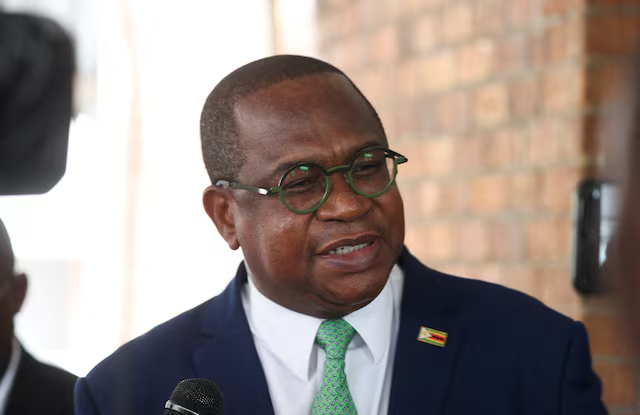
Finance Minister Mthuli Ncube said the government has opened talks with Chinese state-owned firms, including China Railway, on resource-backed financing arrangements that could help modernize the country’s aging infrastructure without leaning entirely on traditional borrowing.
The discussions, held on the sidelines of the World Economic Forum in Dalian, China, come as Zimbabwe works to rebuild an economy worn down by years of political instability, economic crises, and crumbling public infrastructure.
Turning Mineral Wealth Into Infrastructure
Zimbabwe holds some of Africa’s richest mineral deposits, including lithium, gold, platinum, chrome, and diamonds. The country has become Africa’s largest producer of lithium in recent years, a mineral central to electric vehicle batteries and renewable energy storage.
Despite that wealth, Zimbabwe continues to struggle with poor transportation networks that have held back economic growth and investment.
Ncube said the in which future revenue from natural resources would repay loans tied directly to infrastructure projects. “We are looking at resource-linked debt instruments to support our infrastructure development, particularly roads and railways,” the finance minister told reporters.
Under such arrangements, Zimbabwe would identify specific infrastructure projects, estimate expected revenue from those projects, such as toll collections, and then determine how much additional financing future mineral income could support. The approach would let the country take on large-scale projects without putting immediate pressure on public finances.
A $34 Billion Infrastructure Gap
Zimbabwe’s transport infrastructure has deteriorated badly over the past two decades. Many of the country’s major highways are in poor condition, and its railway system, once among the most efficient in southern Africa, has suffered years of neglect.
The African Development Bank estimates Zimbabwe needs roughly $34 billion to modernize its transportation and logistics infrastructure, a figure that far exceeds the government’s current fiscal capacity and has pushed officials toward alternative financing.
Experts say better roads and railways matter if Zimbabwe wants to get full value from its mineral resources and become a regional trade hub. Efficient transport networks could cut production costs, improve exports, and draw in more foreign investment.
China’s Growing Economic Footprint in Zimbabwe
China has become one of Zimbabwe’s most important economic partners, particularly in mining. Chinese companies have put billions of dollars into Zimbabwe’s extractive industries, especially lithium production, where demand is climbing fast amid the global shift to electric vehicles and renewable energy.
Several Chinese firms now hold major stakes in Zimbabwe’s lithium mines, making Beijing a critical player in the country’s economic future. The proposed resource-backed financing talks point to a deepening relationship between the two countries. For China, better transport infrastructure in Zimbabwe could also help Chinese mining companies move minerals from mines to processing facilities and export markets more cheaply.
Lessons From the Democratic Republic of Congo
Zimbabwe’s proposal resembles a model already in use elsewhere in Africa. The Democratic Republic of Congo entered a multi-billion-dollar infrastructure agreement with Chinese companies under the Sicomines joint venture, linking copper and cobalt resources to infrastructure financing. That arrangement let Congo secure investment in roads and other public works by drawing on its mineral wealth.
Resource-backed financing deals have also drawn criticism from economists and civil society groups, who argue they can create long-term dependency, reduce transparency, and expose countries to financial risk if commodity prices drop or project revenues fall short. Supporters counter that resource-rich countries with limited access to international capital markets need alternative financing tools to address pressing infrastructure gaps. Zimbabwe appears to be studying these experiences closely as it shapes its own approach.
Reviving the Railway System
Restoring the country’s railway network ranks among the government’s top priorities. Zimbabwe’s rail system carries minerals, agricultural products, and industrial goods across the country and to neighboring states, but decades of underinvestment have left much of the network outdated and inefficient.
Officials believe a modern railway system could meaningfully boost economic productivity and lower transportation costs for exporters. Rehabilitating rail infrastructure also matters strategically for the mining industry, particularly for Chinese companies that need efficient logistics to move minerals.
Zimbabwe Stands Firm on Lithium Export Ban
Alongside the infrastructure financing talks, Ncube reaffirmed the government’s commitment to expanding domestic mineral processing. He said Zimbabwe will move ahead with its planned ban on lithium concentrate exports in January 2027, despite calls from some mining companies for a delay.
The government has long argued that exporting raw minerals costs the country jobs, industrial growth, and higher export earnings. Authorities instead want mining companies to process lithium locally and move up the value chain. “We are determined to ensure that more value is added within Zimbabwe,” Ncube said.
Chinese investors have already put more than $2 billion into Zimbabwe’s lithium sector since 2021, helping turn the country into a key player in the global battery supply chain. The government says new processing facilities under construction will provide enough capacity to refine lithium domestically. A lithium sulphate processing plant built by China’s Zhejiang Huayou Cobalt is already operating, and another facility is being developed at Sinomine’s Bikita mine. These projects are expected to cut dependence on raw mineral exports and position Zimbabwe as a supplier of processed battery materials.
Balancing Opportunity and Risk
Zimbabwe’s plan to use natural resources for infrastructure development reflects both the opportunities and the challenges facing resource-rich developing economies. The country has the mineral wealth to finance large-scale development, but success will depend on how well it structures these agreements and manages the risks that come with them.
Done carefully, resource-backed financing could help transform Zimbabwe’s transportation network, support economic growth, and unlock more of the mining industry’s potential. Analysts caution, though, that transparency, strong governance, and careful debt management will matter if future generations are to benefit from the country’s natural resources rather than inherit unsustainable obligations.
As talks with Chinese partners continue, Zimbabwe’s strategy could become a closely watched example of how African nations try to turn mineral wealth into long-term economic development.