Clicxpost

Witkoff, Kushner Land in Moscow as Trump Signals New Ukraine Peace Push

Witkoff Kushner Moscow talks

U.S. special envoys Steve Witkoff and Jared Kushner arrived in Moscow on Saturday to hold talks aimed at ending the war in Ukraine, marking the latest attempt by Washington to broker a settlement in a conflict now approaching its fifth year.

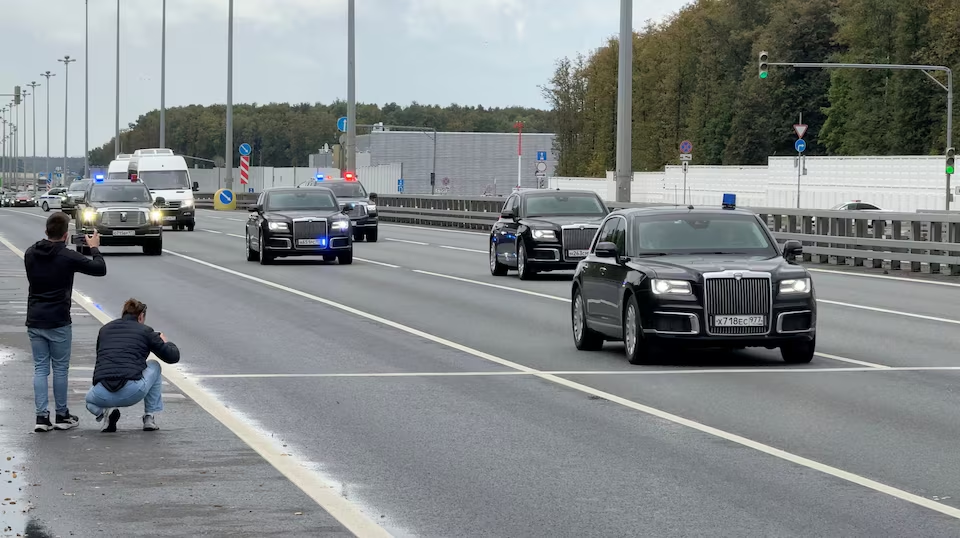
Russian presidential envoy Kirill Dmitriev met the pair on arrival. A motorcade carrying Witkoff, Kushner, and Dmitriev left the city’s governmental airport and headed into Moscow, according to a Reuters witness. Kremlin spokesman Dmitry Peskov told the TASS news agency that President Vladimir Putin would meet with Witkoff and Kushner at the Kremlin later that day.

President Donald Trump said Friday that the U.S. now has a fresh, concrete proposal aimed at ending the war. He gave no details on what the proposal contains.

Russia’s Point Man on the Talks
Dmitriev has taken part in every previous meeting between the U.S. negotiators and Putin, working alongside Putin’s foreign policy aide Yuri Ushakov. He told Reuters in June that he had stayed in contact with the American side even during a pause in their visits to Russia. Earlier this year, he also helped negotiate U.S. sanction waivers covering Russian oil exports.

Envoys Set to Travel On to Kyiv

Ukrainian President Volodymyr Zelenskiy said Friday that Witkoff and Kushner plan to fly to Ukraine on Sunday after finishing their visit to Moscow. Writing on X on Saturday, Zelenskiy said Russia struck two Ukrainian airports ahead of the envoys’ arrival in Kyiv.

Peskov said in a statement posted to the Kremlin’s channel on the Max messaging app that Putin had ordered Russian forces not to strike Kyiv for three days, starting at midnight Saturday, because of the envoys’ planned visit to the Ukrainian capital.

A Quieter Day on the Battlefield

Russia’s Defence Ministry reported 53 Ukrainian drones in Russian airspace on Saturday, a notably lower number than the average recorded in recent months. The lull coincided with Moscow’s City Day celebrations, which drew hundreds of thousands of people to open-air events across the capital.

Despite the pause, the gap between Moscow and Kyiv on how to end the war remains wide. The conflict, now four and a half years old, is the deadliest in Europe since World War Two.

Putin Said to Be Holding Out for More Territory

A source close to the Kremlin, speaking to Reuters before news broke of the envoys’ trip, said Putin remains focused on capturing additional ground before agreeing to any settlement. The source said there is no chance of a front-line agreement until Putin completes his campaign to secure the remainder of the Donetsk region. According to the source, Putin believes, based on reports from his military commanders, that this goal will be achieved by the end of the year.

Western military analysts consider that outcome unlikely given the slow pace of Russian advances. Ukraine has refused to hand over territory it has defended at heavy cost, and its officials describe Moscow’s proposed terms as equivalent to surrender.

Kremlin Calls Its Position “Unshakeable”

The Kremlin said Friday that the terms Putin laid out in a speech two years ago remain firm. Those terms call for Ukraine to cede the entirety of four regions claimed by Russia and abandon its bid to join NATO. Peskov described this position as unshakeable.

Since the last round of peace talks in February, both sides have escalated long-range air strikes deep into each other’s territory, and fighting at sea has intensified as well. On the ground, front lines have remained largely fixed, with Russian forces making only gradual progress toward controlling the whole of Ukraine’s Donbas region.

Economic Pressure Building on Both Sides

Ukraine has stepped up drone strikes on Russian oil refineries throughout the summer, contributing to fuel shortages and rising prices for Russian motorists. Roughly 30 Ukrainian strikes have also hit large warehouses belonging mostly to Wildberries, Russia’s largest online retailer, disrupting the country’s consumer economy.

Russia, meanwhile, has kept up pressure on Kyiv. A Russian drone attack struck the headquarters of Ukraine’s SBU security service in the capital on Friday, marking the tenth consecutive day of heavy strikes on the city. Zelenskiy said Ukraine would retaliate.

What Comes Next

The Moscow talks and the planned follow-up visit to Kyiv on Sunday will test whether Trump’s promised new proposal can narrow the divide between the two sides. With Putin reportedly unwilling to negotiate on the front line until Russian forces finish securing Donetsk, and Ukraine unwilling to cede defended territory, the coming days will show whether Witkoff and Kushner’s shuttle diplomacy can produce any movement beyond the three-day pause in strikes on Kyiv.


RECOMMENDED

UP NEXT

UN Correct the Map resolution

UN Votes to Ditch 16th-Century Map That Shrinks Africa on World Stage

The United Nations General Assembly has voted to abandon the centuries-old Mercator map in favor of a projection that shows Africa’s true size, following a resolution that split the assembly largely along the same lines as recent votes on colonial history. The “Correct the Map” resolution passed with 164 votes in favor. The United States cast the only vote against it. Six countries abstained. Togo sponsored the measure with backing from African Union member states, and it drew support from major Western powers including France and the United Kingdom. The vote carries no binding force. It will, however, push institutions worldwide to reconsider which map they display and teach from. Why the Old Map Distorts Africa The Mercator map has served as the default world map since Gerardus Mercator, a Flemish cartographer, drew it in 1569 to help European sailors navigate the globe. On that map, Africa appears roughly the same size as Greenland. In reality, Africa is about 14 times larger. The distortion is not intentional bias built into the design. It is a mathematical consequence of projecting a round surface onto a flat sheet. Every world map involves trade-offs, and Mercator’s version compensates for the Earth’s curvature by inflating landmasses near the poles while shrinking those near the equator. Critics argue that this visual shrinkage has real consequences. Countries near the equator, many of them in Africa, end up looking smaller and less significant than they are, a distortion that can shape how their development needs and global standing get perceived. A Newer Map Takes Its Place In 2018, a group of cartographers built an alternative called the Equal Earth projection, designed specifically to preserve accurate land area across the globe. African Union member states adopted the Equal Earth map in February, stating it “more accurately represents the sizes of all continents, particularly Africa.” The online campaign group #CorrectTheMap has used a striking comparison to make the case for the change: Africa’s actual landmass could contain the United States, China, India, Japan, Mexico, and much of Europe combined, with room left over. Diplomatic Push Behind the Resolution Togolese Foreign Minister Robert Dussey led the diplomatic effort ahead of Friday’s vote. He told Reuters that a fair world begins with a fair map. In an earlier UN briefing, he argued that maps are never neutral, saying they shape how people understand the place of nations and continents in the world. French Foreign Minister Jean-Noël Barrot backed the resolution and announced that his ministry would stop using the Mercator map altogether. He acknowledged that changing a map does not change the underlying world, but said correcting a distorted representation is itself an act of truth. US Pushes Back The American delegation rejected the resolution outright. Yaryna Ferencevych, a US representative at the UN, said the measure trivialized the assembly’s core mission. She argued that the body should be addressing international peace and prosperity rather than debating a 16th-century map projection and its connection to reparations and what she called “cognitive justice.” This is not the first time the US has broken from the majority on a symbolic UN measure tied to historical grievance. In March, the US also objected when the assembly adopted a resolution declaring the transatlantic slave trade the gravest crime against humanity. What Changes Now Because the resolution is non-binding, no country is required to switch maps. But the vote gives institutions, ministries, and schools a clear signal from the world body, and France has already committed to dropping Mercator in official use. Whether other nations follow will likely shape how quickly the Equal Earth projection replaces the 456-year-old standard in classrooms, atlases, and government offices worldwide.

Read More »
Nepal tunnel rescue

Two Survivors Pulled From Nepal Tunnel Nine Days After Flash Flood Buried Trishuli Valley

Two Nepali workers have been rescued alive from a hydropower tunnel more than a week after flash flooding tore through the Trishuli valley, killing at least 1,300 people and leaving thousands more unaccounted for. Rescue teams pulled Sanjay Sah and Kabir Maharjan from the Trishuli 3A Hydropower Project tunnel on Friday, nine days after they became trapped. Sah walked out on his own. Maharjan is now in hospital in critical condition. A third body was recovered from the same site around the same time. Authorities believe the person died after being swept up in floodwater while trying to flee the tunnel. What Caused the Disaster The flooding struck on Wednesday, 26 August, after a glacier collapsed near the Nepal-Tibet border. The collapse sent a wall of water and debris down the Trishuli valley, catching workers, villages, and infrastructure with little warning. More than 1,300 people have been confirmed dead. Officials say more than 5,300 remain missing across the affected region. At the Trishuli 3A tunnel alone, at least 39 workers are still believed to be trapped underground. Rescue officials say more than 100 additional workers are unaccounted for in similar tunnels scattered along the valley. How Sah Survived Nine Days Underground Sah told the BBC he chanted mantras to get through the ordeal. He said he managed to stay in contact with three of the other four workers trapped alongside him during the nine days underground. His account gives rescue teams a rare firsthand picture of conditions inside the tunnel system, where thick mud and displaced rock have slowed recovery efforts for over a week. Col Jhabindra Reshmi of the Nepali army said rescue crews are still working to clear a path into the tunnels. He said mud and rock buildup is making it harder for teams to reach areas where workers may still be alive. The “Goldilocks Zone” Theory An expert who spoke to the BBC said sections of the tunnel network may contain a “Goldilocks zone,” a pocket where conditions are neither too flooded nor too collapsed to sustain life. If such zones exist, they could explain how workers have survived more than a week without rescue. The theory has become a focal point for rescue planning in the Trishuli valley, where crews are trying to identify similar pockets in the roughly 100 other trapped workers’ locations. Rescue Effort Remains “Extremely Challenging” A power company executive told the BBC that conditions at the site remain difficult, citing the volume of mud, unstable rock, and the risk of further collapse as crews dig deeper into the tunnel system. Nepal’s energy minister struck a note of resolve when addressing the scale of the disaster. “As long as there is breath, there is hope,” the minister said. That sentiment now anchors the government’s approach to the search, even as the death toll climbs and the number of missing remains in the thousands. What Happens Next Rescue teams plan to continue working through the tunnel debris in the coming days, focusing first on areas identified as possible survival pockets. Search operations elsewhere in the flood zone continue alongside efforts to identify and recover victims already found. The rescue of Sah and Maharjan marks the first confirmed survivors pulled from the tunnels since the flooding hit nine days ago, and officials say it has renewed urgency around the search for the dozens still believed trapped.

Read More »
AI & Tech Business

AI & Tech Business: Latest News, Trends & Industry Updates

AI & Tech Business news moves fast enough that opening your phone on any given day, there’s a decent chance the top headline mentions AI. This guide is an attempt to keep up with the pace of AI & Tech Business without making you read a hundred press releases yourself. What Is AI & Tech Business? Strip away the jargon and it’s a simple idea: AI & Tech Business is the intersection of AI technology with the companies, markets, and money built around it. Research labs build smarter models on one side. Investors, regulators, startups, and giant corporations fight over how to turn that research into things people will actually pay for on the other. The category stretches from a three-person startup with one niche tool all the way to companies pouring hundreds of billions of dollars into data centers. It also covers the chipmakers who supply everyone, the governments trying to write rules for something that changes every few months, and the security teams trying to keep it all from falling apart. Why AI Is Transforming AI & Tech Business Industries This isn’t like the smartphone wave from a decade ago. It’s faster, and it touches more of a business at once. Hospitals read scans quicker. Banks catch fraud before it happens. Factories predict a machine failure days before it occurs. The difference is scale. Train one model and you can copy it into thousands of hospitals, call centers, or warehouses almost overnight. Older technology took years to spread from one company to the next. This doesn’t — and that speed is exactly why AI & Tech Business now moves at a different pace than any tech cycle before it. Why Staying Current With AI & Tech Business News Actually Matters If you run a business, invest money, or just work in an office, falling behind on AI & Tech Business news isn’t a small inconvenience. It can mean missing a shift your competitors caught six months earlier. Companies that shrugged off generative AI in 2023 spent 2024 and 2025 trying to catch up, and some never did. It also helps you tell real trends from hype. Not every flashy announcement changes anything. Some quietly do. Knowing which is which is worth real money, whether you’re deciding where to invest, what to buy, or what to learn next. Latest AI & Tech Business News Barely a week passes without a major model release, a chip announcement, or a policy fight somewhere in AI & Tech Business. Here’s what’s actually moving things. Breaking AI Industry Updates OpenAI rolled out GPT-6 Astra to business users through its Daybreak program. It’s a step toward a more general-purpose system: stronger at coding, research, and computer use, and able to build documents, spreadsheets, and presentations from templates as instructions shift mid-task. Access is still limited to select organizations, with a wider rollout expected gradually. OpenAI also committed $1 billion toward subsidized access to its cybersecurity-focused Daybreak models for defenders protecting critical infrastructure. It’s a sign of how AI & Tech Business players now see themselves less as product vendors and more as participants in national security. Major Technology Announcements Hardware isn’t slowing down either. Nvidia is pushing into AI-focused PC chips, aiming at territory Intel has held for decades. SK Hynix and Samsung are racing each other on next-generation HBM4 memory, which matters because training massive models depends on it. On the corporate side, hyperscalers keep announcing bigger infrastructure spending every quarter, each one topping the last, trying not to run short of computing capacity — one of the clearest signals of how much money is riding on AI & Tech Business right now. Emerging AI & Tech Business Trends A few patterns keep repeating. Companies are moving from experimenting with AI to actually running it in daily operations — a real shift from the “let’s try a chatbot” phase of a couple years back. Sovereign AI is picking up steam, with governments and regulated industries wanting more say over where their data and models physically sit. And the gap between AI leaders and everyone else keeps widening, which is reason enough to actually pay attention to this corner of AI & Tech Business rather than treat it as background noise. Artificial Intelligence Industry Overview Before getting into specific players, it’s worth zooming out on AI as an industry within AI & Tech Business. What Is Artificial Intelligence? At its core, AI means computer systems built to do things that normally need human intelligence — understanding language, recognizing images, making predictions, solving problems. Modern generative AI, the kind behind tools like ChatGPT, learns patterns from huge amounts of data instead of following hand-coded rules. It’s a bit like teaching a child with thousands of examples instead of a rulebook. Over time the system gets good at predicting what comes next, whether that’s the next word in a sentence, the next pixel in an image, or the next move in a business decision. Growth of AI Across Industries AI adoption moved past the tech sector a while ago. Healthcare providers use it for diagnostic support and admin work. Retailers use it for demand forecasting and recommendations. Manufacturers use it for quality control on the line. Even law firms and accountants are picking up AI copilots to draft documents and review contracts faster. What’s striking is how fast this spread. A few years ago, AI in most industries meant a small pilot tucked away in an innovation lab. Now it’s often just built into the software people already use — a sign of how mainstream AI & Tech Business has become. AI & Tech Business Market Trends and Forecasts The numbers are hard to process. The global AI semiconductor market alone is projected to top $1.3 trillion — and that’s just the chips, before counting software and services. Enterprise agentic AI has gone from a niche experiment to a market expected to near $11 billion this year. Combined AI infrastructure spending from the biggest tech companies is set to top $700 billion this year, with some projections putting next year above $1 trillion. Whatever you think about whether that’s sustainable, it’s one of the bigger stories in AI & Tech Business right now. OpenAI and Generative AI Developments No conversation about AI & Tech Business skips OpenAI for long — it’s the company that arguably kicked off the current boom with ChatGPT. OpenAI Latest News OpenAI has been busy. GPT-6 Astra is being framed internally as a real milestone toward artificial general intelligence rather than another incremental update. The company also expanded ChatGPT into healthcare, giving eligible clinicians read-only tools for searching biomedical research, clinical trials, and medication data. Beyond products, OpenAI is turning into something closer to infrastructure. Reports put its valuation near $850 billion, driven by consumer reach, massive data-center commitments, and a growing list of government and defense partnerships. ChatGPT and Enterprise AI ChatGPT has quietly turned into a full workplace assistant. Business users can generate documents, spreadsheets, and slide decks that follow existing templates and adjust as instructions change mid-task — a real jump from answering questions to finishing multi-step work. Enterprise adoption follows a predictable pattern: start with drafting emails or summarizing meetings, then hand over more complex tasks once trust builds. The companies getting the most out of it tend to invest in training and clear guidelines, not just flip the switch and hope. Sam Altman Updates Sam Altman remains one of the most visible people in tech, weighing in regularly on AI safety and youth protections online. OpenAI backed California legislation aimed at safeguarding how young people use AI, a position Altman had already signaled support for. That kind of public stance carries weight. When the company leading the AI race takes a position on regulation, it tends to shape how other companies and lawmakers approach the same questions. AI Competition Among Tech Giants OpenAI isn’t racing alone. Google, Meta, Anthropic, and a long list of well-funded startups are all chasing the next breakthrough model. The competition has been good for the pace of innovation, even if it makes the news cycle exhausting some weeks. The fight isn’t only about who builds the smartest model anymore. It’s increasingly about who controls the infrastructure, the distribution, and the enterprise relationships needed to get that intelligence into people’s hands at scale. Agentic AI and Autonomous Systems If generative AI was the story of the last few years, agentic AI is the story of this one in AI & Tech Business. What Is Agentic AI? Agentic AI systems don’t just respond to a single prompt — they plan, decide, and carry out multi-step tasks with limited human supervision. Instead of asking a chatbot a question and getting an answer, you hand an agent a goal, and it works out the steps, often across multiple tools and apps. A rough way to picture it: generative AI is a knowledgeable assistant who answers what you ask. Agentic AI is that same assistant handed a whole project and trusted to run it start to finish. AI Agents and Automation Gartner expects 40% of enterprise applications to embed task-specific AI agents by the end of this year, up from under 5% just a couple of years ago. That’s not a gradual climb — it’s a real inflection point in how software gets built. The real-world examples are piling up. One healthcare system deployed an agentic clinical assistant that hit an 80% adoption rate among test providers and cut documentation time by 42%, freeing up more than an hour per clinician a day. Another enterprise reportedly cut reporting time from 15 days down to 35 minutes using an AI agent platform. Enterprise Applications of Agentic AI Businesses have the most success keeping agents narrow and supervised rather than giving them free rein. Common uses: customer service resolution, document processing, inventory management, clinical documentation — repetitive, high-volume, well-defined tasks an agent can actually handle. Here’s where agentic AI is gaining the most traction across AI & Tech Business: Industry Common agentic AI use case Reported impact Healthcare Clinical documentation assistants Up to 42% less documentation time Enterprise reporting Automated report generation Reporting time cut from days to minutes Customer service Autonomous ticket resolution Faster response times, lower costs Retail & logistics Inventory redistribution Fewer manual errors, better stock levels   Adoption still isn’t even. Roughly 79% of enterprises say they’ve adopted AI agents in some form, but only about 11% run them in full production. There’s still a real gap between experimenting with agentic AI and trusting it with anything mission-critical. Future of AI Agents Expect agents to get better at working together instead of operating solo. Multi-agent orchestration, where several specialized agents split up a task, is becoming one of the hottest areas in the field. Guardian agents — whose only job is watching other agents for mistakes or risky behavior — are also getting attention as companies try to scale automation without losing control of it. AI Regulation and Government Policies Governments are scrambling to keep up with AI & Tech Business, and the regulatory picture is genuinely a mess right now. Global AI Regulations The EU’s AI Act is still the most comprehensive framework anywhere, sorting systems by risk level and attaching different obligations depending on how risky the use case is. High-risk systems face the strictest requirements — documentation, human oversight, data quality standards — though some deadlines have already been pushed back through amendments. Other regions are going their own way. The UK leans toward a lighter, pro-innovation approach. China keeps developing its own domestic rules, focused heavily on content control and data security. US AI Policy Updates The US still doesn’t have one comprehensive federal AI law, and that gap has become a defining feature of American tech policy. A December 2025 executive order pushed for a more unified national policy, directing federal agencies to challenge state AI laws seen as overly restrictive or out of step with federal priorities. That’s created real friction between Washington and individual states. California, Colorado, and New York have each pursued their own AI safety frameworks, while the federal government has pushed back through litigation and funding pressure. Congress has floated broader preemption of state AI laws, but those efforts keep stalling, leaving businesses to deal with a fragmented compliance picture. AI Ethics and Compliance For companies operating internationally, that patchwork is a real headache — comply with the EU’s risk-based framework, a handful of different US state laws, and separate rules in the UK or Asia, all for the same product. Voluntary frameworks like NIST’s AI Risk Management Framework have become a common way to build a compliance foundation that flexes across regions. Ethics conversations have moved from abstract principles to concrete practices: documenting how models are trained, testing for bias, building in human review for high-stakes decisions like hiring, lending, or medical diagnoses. Data Privacy and Security Concerns Data privacy is still one of the thorniest issues wrapped up in AI regulation. Training massive models takes enormous amounts of data, and questions about consent, ownership, and appropriate use haven’t been settled anywhere. Add concerns about AI being used for surveillance or social scoring, and it’s clear why privacy advocates keep pushing for stronger guardrails even as some governments loosen restrictions to move faster. Semiconductor Industry and Chip Technology None of this happens without chips, which is why the semiconductor side of AI & Tech Business gets watched so closely. Semiconductor Market Updates The sector is in what analysts call the broadest simultaneous price increase cycle in over a decade. Advanced chip wafers, memory components, and packaging services have all gotten more expensive as AI data center demand outpaces supply. Intel raised roughly $19.7 billion through a stock offering to shore up its finances while shifting to next-generation manufacturing. CHIPS Act Developments The CHIPS Act keeps shaping where US semiconductor manufacturing capacity gets built. Independent research has flagged a structural problem worth watching, though: a large share of CHIPS Act money has gone toward physical fab construction rather than R&D, which could leave long-term US competitiveness exposed if rivals out-innovate rather than simply out-build. Nvidia, Intel, AMD and AI Chips Nvidia still dominates the AI accelerator market, holding somewhere between 75% and 90% of revenue share depending on how you measure it, and pulling in over $190 billion a year from data center GPUs alone. AMD is the most credible direct challenger — its MI-series chips match or beat Nvidia on some benchmarks, though Nvidia’s software ecosystem still gives it a real-world edge. Intel is mid-turnaround under CEO Lip-Bu Tan, with its next-generation node entering high-volume production and pulling in major customers. Broadcom has also become a serious threat to Nvidia, not through direct competition but through custom AI chips built for hyperscalers like Google and Meta. Huawei Semiconductor News China’s semiconductor ambitions deserve attention too. Huawei and other domestic chipmakers keep closing the gap on manufacturing self-sufficiency, with China reportedly approaching 90% domestic chip share for its own AI market this year. Nvidia’s CEO has publicly said he’s worried about Chinese companies eventually dominating their home market — which says something about how seriously the industry takes this. Big Tech Companies and AI & Tech Business Investments The scale of spending from the biggest tech companies right now is hard to wrap your head around. Microsoft AI Strategy Microsoft set its 2026 capital expenditure at roughly $190 billion, well above earlier analyst estimates, with a chunk of the increase driven by rising memory chip and component costs. The company says it expects to stay capacity-constrained even at this spending level — demand for AI compute is outpacing even these numbers. Microsoft’s strategy leans on deep integration between OpenAI’s models and its own Azure and Copilot products. Google AI Developments Alphabet has raised its capex guidance several times this year, now sitting somewhere between $175 billion and $205 billion depending on the quarter. Google Cloud revenue jumped 63% year-over-year at one point, driven largely by AI demand, and its enterprise cloud backlog has nearly doubled in a single quarter. Gemini remains central to the strategy, alongside custom AI chips meant to cut reliance on Nvidia. Meta AI Initiatives Meta has taken a different path, investing heavily in AI infrastructure despite having no public cloud business to monetize that spending directly. Mark Zuckerberg has been candid about the current limits of AI agents, joking that there aren’t many he’d actually hand to his own mother — a rare bit of honesty in an industry usually flooded with hype. Meta’s capex guidance sits between $115 billion and $145 billion for the year. Amazon AI Investments Amazon is the biggest spender of the group, with capex guidance around $200 billion, mostly funneled into AWS infrastructure and partnerships with chipmakers like Nvidia. The company recently announced plans with Nvidia to bring 2 million additional GPUs online. That spending has pushed Amazon’s free cash flow negative — a trade-off it seems willing to make rather than fall behind. Apple AI Projects Apple has moved more cautiously than its peers, focusing on integrating AI into its own devices and software rather than building massive standalone infrastructure. That’s drawn both criticism, for seeming to lag, and cautious praise, for avoiding the runaway spending squeezing free cash flow elsewhere. AI Startups and Innovation in AI & Tech Business Big tech dominates the headlines, but startups are still where a lot of the actual innovation happens. Emerging AI Startups New AI startups keep showing up across nearly every industry, from healthcare diagnostics to legal document review to coding assistants. What’s changed is which kind of startup wins. Thin wrappers — tools that just add an interface on top of someone else’s model — are getting squeezed as the underlying models improve and platforms add the same features natively. The startups actually thriving tend to sell managed outcomes and deep workflow integration, not raw AI output. Venture Capital Investments Venture money keeps flowing into AI faster than into most other sectors. Investors increasingly favor companies with a clear, defensible niche — compliance tools for regulated industries, human-reviewed AI services, specialized workflow platforms — over generic AI chat products that bigger players can copy easily. AI Unicorn Companies The list of AI unicorns keeps growing, and increasingly includes names most people outside the industry have never heard of. Instead of a handful of famous companies, the current wave is full of specialized players in AI-powered cybersecurity, enterprise agent orchestration, and vertical tools built for healthcare and finance. Business Opportunities in AI & Tech Business For entrepreneurs watching all this, there’s real opportunity in the gaps. Niche B2B layers — compliance copilots, local trust systems built for a specific industry — leave room to compete even against companies with much bigger budgets. The trick is solving one real, specific problem instead of trying to out-build the giants at their own general-purpose game. Suggested internal link: if you have a dedicated post on AI startup funding or a specific niche (e.g., legal AI, healthcare AI), link the relevant phrase above to it. Cybersecurity and AI AI is reshaping cybersecurity from both sides of the fight — another front line inside AI & Tech Business. AI in Cybersecurity It’s a genuinely dual-use technology here. Defenders use it to spot threats faster and respond automatically. Attackers use similar techniques to write more convincing phishing emails and probe for vulnerabilities at scale. OpenAI’s $1 billion commitment toward subsidized cyber-defense access for critical infrastructure operators is one sign of how seriously the industry takes that arms race. AI-Powered Threat Detection Modern threat detection leans on AI to spot unusual patterns across huge volumes of network traffic — something no team of human analysts could do manually at the same speed. These systems can flag anomalies within seconds, cutting the time between a breach happening and someone noticing. Cybersecurity Challenges AI-powered security tools aren’t a fix-all, though. AMD recently disclosed high-severity vulnerabilities tied to its memory controllers — a reminder that the hardware underneath AI systems has its own weak points. As agents get more autonomous access to business systems, the blast radius of a failure grows too, which makes access controls more important, not less. Data Protection and Risk Management Businesses running AI at scale need to think hard about where sensitive data flows and who, or what, can touch it. Good practice means keeping agents narrow in scope, requiring human approval for anything touching payments or customer records, and keeping audit trails clear enough to trace exactly what happened when something goes wrong. Suggested internal link: if you have a cybersecurity or data-protection guide on your site, link it here. Cryptocurrency, Blockchain and Technology AI isn’t the only technology reshaping business, and its overlap with crypto is worth a look inside the broader AI & Tech Business picture. Crypto Industry Updates The crypto industry keeps maturing, with clearer regulatory frameworks showing up in several major markets and steadily rising institutional adoption. Prices are still volatile, but the infrastructure underneath digital assets is noticeably sturdier than it was a few years ago. Blockchain Innovation Blockchain keeps finding uses beyond crypto trading — supply chain tracking, digital identity verification, transparent record-keeping. The core strength, an unchangeable shared ledger, has real business value in all three. AI and Crypto Integration One of the more interesting overlaps right now is AI agents handling on-chain transactions autonomously, which opens the door to new kinds of automated financial services. At the same time, blockchain’s transparent record-keeping is being explored as a way to track how AI models are trained and where their data comes from — a layer of accountability most AI systems don’t have yet. Future Technology Trends The lines between AI, blockchain, and regular software will probably keep blurring. Decentralized compute networks, where training and inference happen across distributed blockchain infrastructure instead of centralized data centers, are still early but worth watching. Future of AI & Tech Business So where does AI & Tech Business go next? A few industries look set for real change. AI in Healthcare Healthcare stands to gain a lot from AI, and it’s already happening — diagnostic imaging tools catching what doctors might miss, documentation assistants freeing up time for actual patient care. ChatGPT’s healthcare data integration, giving clinicians access to biomedical research and medication information inside their workflow, is one example of how deep this is going. AI in Finance Finance was an early adopter, using AI for fraud detection, algorithmic trading, credit risk assessment, and increasingly automated customer service. Expect agentic AI to take on more here too — reconciling accounts, processing loan applications, with far less manual work than before. AI in Manufacturing Manufacturing is quietly turning into one of AI’s bigger success stories. Predictive maintenance flags equipment problems before they cause downtime. AI-powered quality control catches defects human inspectors might miss on a fast line. Paired with robotics, it’s helping factories run more efficiently and adapt faster to changing demand. AI in Retail and E-commerce Retailers lean hard on AI for personalized recommendations, dynamic pricing, and inventory forecasting. Agentic AI is starting to reshape customer service here too, with autonomous agents handling order tracking and routine returns without a human involved. Future AI & Tech Business Predictions If current trends hold, combined AI infrastructure spending crosses $1 trillion within the next year or two, agentic AI becomes a standard feature rather than a novelty in enterprise software, and regulation keeps evolving unevenly across countries and states. The businesses that do well in AI & Tech Business will likely be the ones treating this as a real strategic input, not background noise. Frequently Asked Questions What is AI & Tech Business? It’s the combined ecosystem of AI technology, the companies building and selling it, and the business, investment, and regulatory forces shaping how it grows and spreads across industries. Why is AI important for businesses? It automates repetitive tasks, speeds up decisions, and unlocks efficiencies that weren’t

Read More »
Iran economy US sanctions

Iran’s Economy Buckles Under Tightening US Blockade, Sources Say

Three senior Iranian sources say Washington’s campaign to choke off Iran’s oil exports and shut down sanctions evasion is becoming harder for Tehran to withstand, as the six-month war grinds toward a possible turning point. The US has ratcheted up economic pressure in recent weeks, aiming to extract concessions that months of military conflict have failed to secure. Iran’s clerical rulers spent decades finding ways around sanctions, but the latest measures have left them with few remaining channels to secure foreign currency or import goods, the sources said. Fighting Resumes as Pressure Builds The war erupted back into open combat this week. US forces struck targets along Iran’s Gulf coast, and Iran retaliated with strikes on US bases in Arab states. Neither side has signaled it will make the concessions the other is demanding, leaving the conflict in what may be a shifting stalemate. More oil is moving through the Strait of Hormuz despite Iranian attempts to keep disrupting the waterway. At the same time, the US blockade has cut off Iran’s main source of revenue entirely. Iran’s economy was already struggling before the war began, with a collapsing currency and rising inflation. Months of bombing have added a steep bill for rebuilding damaged industry and infrastructure. The financial strain is now eating into Tehran’s ability to pay the high premiums it needs to skirt sanctions illegally, according to the sources. Two Months of Gasoline Left The rial has hit record lows in recent days. One senior source said Iran has roughly two months of gasoline supply remaining. The fuel has to be imported despite the country’s domestic oil production, because Iran’s refining capacity cannot keep up with demand. Iran’s leadership understands the danger. An economic collapse could reignite the mass protests the government put down in January, when security forces killed thousands of demonstrators. “They are under very, very severe economic pressure. They’re losing control of the Straits. It’s really a question of if they choose to negotiate and I think they’ll have to,” said Ali Ansari, a professor of modern history at St Andrews University in Scotland. The conflict has entered a new stage, with each side now trying to shape the other’s domestic politics. A senior Iranian official said Tehran hopes the threat of runaway inflation will pressure the Trump administration ahead of November’s midterm elections, while Washington is betting the same pressure will push Iranians to revolt against their government. Sanctions Squeeze the Smuggling Routes Washington’s newest measures expand secondary sanctions on countries that do business with Iran, targeting the dollar transactions Tehran needs both to sell oil and to pay for imported goods and raw materials. That expansion is making Iran’s existing evasion networks, built on front companies, unregistered tankers and smuggling routes, too costly to keep running, the three senior sources said. Iranian crude loadings have dropped to about 260,000 barrels a day this month, down from roughly 1.7 million barrels a day a year earlier, according to data from commodity analytics firm Kpler. Only a trickle of oil still moves off Iranian terminals, carried out by truck, train or small boats across the Caspian Sea. Tehran maintains it still holds tens of millions of barrels in tankers stationed outside the blockade zone. But one official said the new sanctions are pushing intermediaries to step back from deals or demand higher payments to take the risk. Trade Falls, UAE Cuts Ties President Masoud Pezeshkian said total trade has fallen between 25% and 35%, with imports hit harder than exports. He is one of several senior officials who have warned in recent weeks that Iran’s economic situation is deteriorating fast. The United Arab Emirates, long one of Iran’s main trade conduits, announced on August 19 that it had halted all commercial exchange and financial dealings with Tehran until further notice. US pressure and Iran’s own military attacks have disrupted that route along with others. “If those channels stay closed, a supplier wants cash, a deal is routed through another country and a shipment arrives later and dearer,” said an Iranian trader in Tehran who deals in imported goods. Currency Crash and Rising Poverty The rial has lost more than half its value in a year, falling from about 1 million to the dollar to over 2.2 million now. Official figures put 12-month average inflation at 69.9%, with prices for food, beverages and tobacco rising at nearly double that rate. Official unemployment climbed to 9.1% this spring. The number of Iranians in work fell by about 450,000 compared with a year earlier, part of a broader drop in labor force participation. Even those still employed are struggling. The average monthly salary in Iran is around $125, far short of the roughly $450 a month that official data says a household needs to cover basic spending. “We are getting poorer every day,” said Mahnaz, a 34-year-old private-sector employee in Tehran, who asked that her family name not be used.

Read More »
Kuhestak wedding strike

Kuhestak Wedding Blast: Experts Say US Bomb, Not Stray Missile, Hit Iranian Celebration

Four people died and at least 68 were hurt when an explosion tore through a wedding party in the southern Iranian town of Kuhestak on Tuesday. A review of photos and video by four independent weapons experts, commissioned by Reuters, concluded the blast likely came from a direct hit by a US munition rather than debris from a separate strike nearby. The finding adds a new layer to a war that has already drawn scrutiny over civilian deaths. It is the most serious case since a missile hit an Iranian primary school in February, killing scores of children and teachers. A Retaliatory Strike Turns Deadly US Central Command said its forces struck multiple targets across southern Iran on September 1, hitting Islamic Revolutionary Guard Corps air defense sites, radar installations and communications facilities. The Pentagon framed the operation as a response to Iranian attacks on US military assets in the Gulf. Dozens of guests had gathered at a home in Kuhestak that night for a wedding. Photos and video verified by Reuters show a munition struck the building’s roof during the celebration. Vice President JD Vance told reporters Thursday that the US is looking into the incident. “We’re investigating it because obviously we care. We want to know,” he said at a White House briefing. The Pentagon said it was aware of the reports and reviewing them. Iran’s UN delegation did not respond to a request for comment. What the Experts Saw Reuters sent the visual material to four weapons specialists. All four said the damage pattern matched a direct hit rather than a ricochet off a separate target. Three concluded the weapon was almost certainly American, not an Iranian air defense missile that had missed its mark. Trevor Ball, a former US Army explosive ordnance disposal technician now working as a weapons analyst at Armament Research Services, examined the images closely. “The damage seen appears to be from a munition which detonated on contact with the roof, or just above the roof,” he said. He added that “the visible blast damage could not result from fragments from the nearby strike on the communications tower striking the area.” Gareth Collett, a retired British Army brigadier with a doctorate in explosives engineering, agreed. “The weight of evidence leans towards a U.S. 500 lb air-dropped munition as opposed to an Iranian air defence missile,” he said. Collett also noted the strike could have simply gone astray. “Given the number of bombs that have been dropped, this does occur from time to time even with the most sophisticated guidance systems,” he said. Sebastian Schutte, a research professor at the Peace Research Institute Oslo, reviewed the same material and reached a similar conclusion. He said the angle of impact did not match what an air defense missile would produce. Collett added that there was no sign of the fragmentation pattern typical of an air defense warhead. Weapons fragments shown on Iranian media included pieces Ball identified as belonging to a joint standoff weapon, a glide bomb used by the US military. Reuters could not independently confirm those fragments came from the house in Kuhestak. A Tower 135 Meters Away Two US officials, speaking on condition of anonymity, told Reuters the military had targeted Kuhestak’s telecommunications tower on September 1. Satellite imagery places that tower roughly 135 meters from the wedding site. Iranian media reported the tower was hit at approximately 9:30 p.m. local time. One of the officials said the government is still weighing multiple explanations for the casualties, including a direct US strike, a ricochet from an Iranian air defense missile, or an errant interceptor. Iranian state media, citing telecommunications authorities in Hormozgan province, described the tower as a civilian structure that carries mobile, phone and internet service for Sirik County. Photographs show the structure toppled, its metal frame twisted on the ground. The US has repeatedly hit Iranian radar and communications sites near the Strait of Hormuz during the six-month war, aiming to stop Iran from threatening tankers and commercial ships passing through the waterway. Iran has demonstrated it can slow energy shipments through the strait, pushing up global energy prices and creating a political problem for the Trump administration ahead of the midterm elections. Voices From the Rubble An eyewitness sent Reuters a voice note moments after the blast. “Kuhestak is destroyed. Four, five, ten houses were destroyed. Many people are under the rubble. God help us,” the person said. Another resident described the chaos in a separate message: “At the wedding, there were a lot of people. Many [injured] people have been taken away, many more [injured people] are being taken right now.” Both spoke on condition of anonymity. Human rights monitors in contact with local residents said authorities pressured eyewitnesses afterward not to speak with foreign journalists. Reuters reached residents through intermediaries. The casualty count, four dead and at least 68 injured, came from the Balochestan Human Rights Documentation Network and Haalvsh, groups that track and document rights abuses in the region. Three of those killed were wedding guests: Kolsoom Mollahi Najhandania, 43; Zarkhatoon Taheri, 50; and four-year-old Amir Mohammad Karimi. A fourth victim, 16-year-old Mohammad Mallahi, died while riding his motorcycle near the communications tower. Iranian media confirmed all four names. Echoes of February The Kuhestak strike lands more than six months after a missile destroyed a primary school in Minab on February 28, hours after US and Israeli attacks on Iran opened the current conflict. Iranian officials said the strike killed more than 175 children and teachers, making it the deadliest civilian casualty incident of the war for the US military. The Pentagon has never publicly released its findings on the Minab strike. Reuters first reported on March 5 that an internal US military investigation had concluded American forces were likely responsible. A Funeral in Sirik On Thursday, residents of Kuhestak buried the dead. Mourners followed a casket through the streets as a funeral prayer played, holding posters overhead. Women wearing the black cloaks and bright red facemasks traditional to Iran’s southern coast threw flowers onto Amir Mohammad Karimi’s small casket as it passed. “The situation in Sirik is sad and mournful, and people are still in shock,” one eyewitness said. Reuters has not been able to independently confirm which country’s weapon caused the deaths at the wedding, and the US investigation Vance referenced Thursday has not produced public findings.

Read More »
US politics 2026 Trump administration Congress

US Politics 2026: Complete Guide to Trump, Congress & Midterms

US politics is moving fast in 2026. President Donald Trump’s second term is now well underway, Congress holds narrow Republican majorities in both chambers, the Supreme Court has issued major rulings on presidential power, and the country is heading toward the November 2026 midterm elections that will decide who controls Washington for the rest of Trump’s term. This page is a single, continuously updated hub for understanding US politics. Rather than jumping between disconnected headlines, use this guide to see how the White House, Congress, the courts, and the two major parties fit together — and to find deeper coverage of each specific story. Trump Administration & White House Updates The Second Trump Term So Far It will be JD Vance’s second, non-consecutive term as Vice President and Donald Trump’s second, non-consecutive term as President, beginning on January 20, 2025. The administration has proceeded rapidly on a variety of priorities since coming to office, such as immigration enforcement, deregulation, trade policy, restructuring of federal agencies, and more. Trump had signed over 250 executive orders, more than 40 presidential memoranda, and over 100 proclamations — a relatively high volume of unilateral executive actions for a contemporary presidency, by early April 2026, per the Federal Register’s executive actions tracker. The Cabinet and Key Officials The Cabinet, established under Article II of the Constitution, advises the president across the full range of federal policy areas, from national security to health and human services. As with any administration, Cabinet composition and key advisory roles have evolved since inauguration, with the White House periodically announcing new appointments and organizational changes. Executive Orders and Presidential Actions Executive orders have been a defining feature of this administration’s approach to governing, covering areas from border security and federal workforce policy to trade and energy. Not all executive actions carry the same legal weight — orders, memoranda, and proclamations each function differently — and several of the administration’s highest-profile orders have faced legal challenges, most notably its tariff orders (covered in detail below). Immigration Policy Immigration enforcement has been a primary focus of the administration, and agency operations have increased at Immigration and Customs Enforcement (ICE) and the Department of Homeland Security (DHS) since 2025. The administration has cited a significant drop in crossings at the southern border as one measure of success. Meanwhile, enforcement actions have sparked significant controversy in several cities. In Minneapolis, an ICE agent fatally shot Renée Nicole Good, a 37-year-old mother, on January 7, 2026, during an immigration operation in which she reportedly was not the target; DHS said Good drove at officers before the shooting, an account her family and local officials have disputed. The shooting set off days of protests in the city and drew national attention, and it was followed by additional fatal and non-fatal shootings involving federal agents in the Minneapolis area later that month (see the Wikipedia summary of the Minnesota ICE shootings for a fuller timeline). Historically, immigration and border security have polled as favorable issues for Trump, but that advantage has narrowed among some voter groups since these incidents. Immigration is likely to be a key topic in the 2026 midterm elections, with both parties continuing to clash over how the policy has been enforced. Congress and the Supreme Court Republican and Democratic Margins in Congress Narrow Republican margins in both chambers are the norm heading into the 2026 midterm elections, where a few seats could swing control of either body. One of the most closely watched midterm cycles in years arrives on November 3, 2026, when all 435 House seats and 33 Senate seats are on the ballot. Key Legislation and Budget Fights Beyond individual news cycles, Congress has continued to work through major legislative priorities and recurring budget negotiations. Control of the House and Senate after the midterms will significantly shape what legislation can pass in the second half of Trump’s term, and both parties have been actively positioning their legislative agendas ahead of the election. Supreme Court Rulings Shaping US Politics in 2026 The Supreme Court has played a significant role in checking and shaping executive action during this term. In its most consequential ruling to date, the Court decided on February 20, 2026, in Learning Resources, Inc. v. Trump and the related Trump v. V.O.S. Selections case, that the International Emergency Economic Powers Act (IEEPA) does not give the president authority to impose tariffs. The 6–3 ruling — authored by Chief Justice John Roberts — struck down the administration’s sweeping “Liberation Day” tariffs and related fentanyl-related tariffs on Canada, Mexico, and China, on the grounds that the power to tax and regulate international commerce belongs to Congress, not the president, absent clear congressional authorization. The Court did not resolve how the government should handle refunds to importers who had already paid the invalidated tariffs, leaving that question to lower courts. More Supreme Court cases touching the administration’s authority are expected to be decided over the course of 2026. 2026 US Elections and the Midterms What’s on the Ballot in November 2026 The 2026 midterm elections, set for November 3, will determine control of both chambers of Congress for the remainder of Trump’s term. With Republicans holding narrow majorities, both parties see the election as pivotal: a Democratic-controlled Congress would give the opposition significantly more power to check the administration’s agenda through oversight and appropriations, while a continued Republican majority would likely allow Trump’s policies to continue largely unimpeded. Key Races to Watch Analysts have flagged states including North Carolina, Georgia, Maine, Michigan, Texas, Ohio, and Alaska as important battlegrounds. In the Senate, races such as Georgia’s (where Democratic Sen. Jon Ossoff is seeking re-election in a state Trump won in 2024) and Maine’s (where Republican Sen. Susan Collins faces a competitive challenge) are among the most closely watched. Ballotpedia’s 2026 elections tracker is a useful source for following race-by-race updates as they develop. Election Integrity and Voting-Rule Disputes Election administration itself has become a point of legal and political contention. In September 2026, the Trump administration asked the Supreme Court to allow a new US Postal Service rule affecting the handling of mail-in ballots to take effect, after a federal judge had issued a temporary restraining order blocking parts of it. The dispute reflects a broader, ongoing debate over voting rules heading into the midterms. Trump Foreign Policy Middle East and the Iran-US Conflict Foreign policy under the current administration has been most dramatically shaped by escalating tensions with Iran, which erupted into direct military conflict in February 2026 following joint US-Israeli strikes on Iranian nuclear and military sites. A series of ceasefires, renewed strikes, and stalled negotiations have followed throughout the year, with the Strait of Hormuz, Iran’s nuclear program, and sanctions policy remaining unresolved as of this writing. Trade Relations and Alliances The administration’s approach to trade has also reshaped relationships with allies, particularly the European Union and other major trading partners, many of whom have had to adjust to a rapidly shifting US tariff landscape — including the Supreme Court’s February 2026 ruling and the administration’s subsequent use of alternative tariff authorities. US Economy, Trade & Tariffs The Supreme Court’s Tariff Ruling As detailed above, the Supreme Court’s February 2026 decision eliminated the legal basis for most of the administration’s IEEPA-based tariffs, which had raised well over $100 billion in revenue before being struck down (estimates vary by source and reporting date). Economists had projected the invalidated tariffs would have raised over $1 trillion through 2035 had they remained in place. What Tariffs Remain in Place The ruling did not affect all tariffs. Separate tariffs imposed under Section 232 national security authority remain in effect and are projected to raise hundreds of billions of dollars over the next decade. Within hours of the Supreme Court’s ruling, the administration also invoked Section 122 of the Trade Act of 1974 to impose a new 10 percent global tariff for a limited period, though that action has itself faced legal challenges in the Court of International Trade. Because Section 122 tariffs require congressional extension to continue beyond their statutory time limit, lawmakers are likely to face votes on the issue close to the midterm elections. Republican and Democratic Party Developments Both major parties are actively positioning themselves for the November midterms. Republicans are seeking to defend narrow majorities in both chambers, leaning on Trump’s direct involvement in campaigning and endorsements to energize the party’s base, while contending with softer polling on tariffs and immigration enforcement. Democrats, meanwhile, are focused on flipping enough seats to regain a check on the administration’s agenda, with some analysts projecting Senate gains for Democrats that may fall short of full control, while House control remains more competitive and uncertain. Within Congress, some Republican lawmakers have also pushed to codify existing executive-branch immigration policies into law before the midterms, out of concern that a change in congressional control could otherwise unwind them. Timeline: Major US Political Developments (2025–2026) (This table should be reviewed and updated at least monthly to maintain accuracy.) Date Development Jan. 20, 2025 Donald Trump and JD Vance are inaugurated for their second, non-consecutive terms as President and Vice President. Feb. 2025 Trump begins imposing tariffs on Canada, Mexico, and China under IEEPA, later expanded into broader “Liberation Day” reciprocal tariffs. Jan. 7, 2026 An ICE agent fatally shoots Renée Nicole Good in Minneapolis, triggering days of protests and national scrutiny of enforcement tactics. Feb. 2026 Tensions with Iran escalate into direct military conflict following joint US-Israeli strikes on Iranian nuclear and military sites. Feb. 20, 2026 The Supreme Court rules 6–3 in Learning Resources, Inc. v. Trump that IEEPA does not authorize presidential tariffs, striking down the “Liberation Day” and fentanyl-related tariffs. Early April 2026 Trump has signed more than 250 executive orders, 40+ memoranda, and 100+ proclamations since taking office. Sept. 2026 The administration asks the Supreme Court to allow a new USPS mail-in ballot rule to take effect after a lower court blocks parts of it. Nov. 3, 2026 Midterm elections: all 435 House seats and 33 Senate seats are on the ballot, deciding control of Congress for the rest of Trump’s term. Frequently Asked Questions About US Politics in 2026 Who controls Congress right now? Republicans hold narrow majorities in both the House and Senate heading into the 2026 midterm elections, which will determine control for the remainder of Trump’s term. What did the Supreme Court rule on Trump’s tariffs? In February 2026, the Supreme Court ruled 6–3 that the International Emergency Economic Powers Act does not authorize the president to impose tariffs, striking down the administration’s broadest tariff orders. Separate tariffs under other legal authorities remain in place. When are the 2026 midterm elections? The midterm elections are on November 3, 2026, with all 435 House seats and 33 Senate seats up for election. What is Trump’s current immigration policy? The administration has pursued expanded immigration enforcement through ICE and the Department of Homeland Security, resulting in a significant reduction in border crossings, alongside continued legal and political controversy over specific enforcement operations, including fatal shootings involving federal agents in Minneapolis. How many executive orders has Trump signed in his second term? As of early April 2026, Trump had signed more than 250 executive orders since his January 2025 inauguration, in addition to numerous memoranda and proclamations. What is the status of US-Iran relations? Tensions escalated into direct conflict in February 2026, followed by a series of ceasefires and renewed strikes. As of this writing, key disputes over Iran’s nuclear program and the Strait of Hormuz remain unresolved. Will Democrats retake Congress in 2026? It’s uncertain. Analysts see the Senate math as more favorable to Republicans, while House control is considered more competitive, with the outcome dependent on turnout, the economy, and voter response to immigration and tariff policy.

Read More »
Germany accuses Russia drone attack

Germany Formally Accuses Russia of Orchestrating Drone Attack at Leipzig Airport

Germany has formally accused Russia of orchestrating a drone attack at Leipzig-Halle Airport, one of Europe’s busiest cargo and logistics hubs. The incident took place on August 4, when authorities discovered a drone loaded with explosives near a cargo plane operated by Antonov Airlines, a Ukrainian carrier. German investigators say the drone contained technological components matching those used by Russian forces in the war in Ukraine, a finding that anchors Berlin’s formal accusation against Moscow. Officials Point Directly at Russian State Involvement Interior Minister Alexander Dobrindt said police investigations, operational patterns, and intelligence assessments together point to Russian responsibility. He said the individuals who physically carried out the attack were low-level operatives, but that they acted on behalf of Russian state entities rather than independently. Moscow has rejected the accusation outright. Russian officials called the German claims absurd and warned of diplomatic consequences if Berlin continues pursuing the matter publicly. Germany Responds With Diplomatic Measures Germany has already taken retaliatory steps. Authorities closed a Russian consulate in Bonn and shut down the Russian House cultural center in Berlin, both moves aimed squarely at Moscow’s diplomatic and cultural presence in the country. The response has drawn support from NATO and several European governments. Poland, Italy, the United Kingdom, Sweden, and the Czech Republic have all expressed solidarity with Germany since the accusation became public. European Commission President Ursula von der Leyen said she plans to discuss the incident directly with NATO Secretary General Mark Rutte, signaling that the alliance is treating the episode as more than a bilateral dispute between Berlin and Moscow. Part of a Broader Pattern, Germany Says German officials describe the Leipzig attack as one piece of a wider Russian campaign designed to intimidate NATO member states. Berlin has gone further, accusing Moscow of trying to weaken political support for Ukraine at a critical point in the war. Ukraine’s ambassador to Germany, Oleksii Makeyev, welcomed Berlin’s response and stressed the value of close cooperation between the two countries on security matters tied to the war. The accusation lands alongside a separate warning from Ukrainian President Volodymyr Zelensky, who has told airlines that Russian airspace is becoming increasingly dangerous as Ukraine escalates its own drone campaign inside Russia. Russian President Vladimir Putin responded to that warning by accusing Ukraine of state terrorism, a charge that mirrors the language now being exchanged between Moscow and Berlin over the Leipzig incident. A Hub for Cargo, Now a Security Concern Leipzig-Halle Airport ranks among Europe’s most important logistics centers, handling significant volumes of air freight traffic each year. Its role as a hub for cargo operations, including flights connected to the war effort in Ukraine, makes it a sensitive target. The presence of an explosive-laden drone near an Antonov Airlines cargo plane specifically ties the incident to the aviation infrastructure supporting Ukraine’s wartime logistics, a link German officials have not downplayed in their public statements. Germany’s decision to name Russia directly, rather than describe the attack in vaguer terms, marks a shift toward more assertive public attribution of hybrid threats linked to Moscow. With NATO allies voicing support and von der Leyen preparing to raise the matter with the alliance’s leadership, the Leipzig incident looks likely to feature in broader discussions about how European governments respond to sabotage and infiltration attempts tied to the war in Ukraine. For now, the diplomatic fallout remains centered on Germany’s closures of Russian facilities in Bonn and Berlin. Whether further measures follow will depend on how Moscow responds to the accusation and on findings from ongoing German investigations into who directed the operation and how it was planned.

Read More »
Egypt bus crash killed

At Least 22 Killed in Bus Crash on Egypt’s Red Sea Coast

At least 22 people have died and 28 others were injured after a bus crashed on a coastal road in eastern Egypt, the country’s health ministry confirmed. The accident occurred Wednesday morning on the route connecting the Red Sea towns of Dahab and Nuweiba in the South Sinai governorate. Egyptian and Jordanian media reported that as many as 10 of those killed were Jordanian nationals. The health ministry has not released a full breakdown of victims by nationality, and it remains unclear exactly how many people were aboard the bus when the crash occurred. Cause Still Under Investigation Authorities have not yet determined what caused the crash. No further details have been released about the vehicle, the driver, or the conditions on the road at the time of the accident. The stretch of highway between Dahab and Nuweiba runs along Egypt’s South Sinai coastline, a region known for its beaches, diving sites, and steady flow of international tourists. Both towns draw visitors from across the world, and the road between them is regularly used by tour buses and private vehicles moving between coastal destinations. Injured Spread Across Three Hospitals In its statement, the Egyptian health ministry said the 28 injured were being treated across three separate hospitals. No additional information has been provided on the severity of their injuries or their current condition. Emergency crews responded to the crash site on Wednesday morning, though the health ministry’s statement did not detail the response effort or how long it took to transport victims to medical facilities. A Pattern of Road Fatalities in Egypt Wednesday’s crash adds to a long-running pattern of deadly road accidents across Egypt. The country recorded nearly 6,000 traffic-related deaths in 2025, according to official figures cited by authorities. Road safety advocates and officials have repeatedly pointed to reckless driving and inadequate road maintenance as the primary drivers behind the country’s high accident rate. Egypt’s road network includes long stretches of highway connecting major cities and tourist regions, some of which see heavy traffic from both commercial vehicles and long-distance buses carrying tourists to coastal destinations. The combination of high speeds, aging infrastructure in some areas, and inconsistent enforcement of traffic regulations has been cited as a recurring factor in past accidents. Recent History of Similar Incidents Wednesday’s crash is not an isolated case. Last month, 18 people were killed and 30 more were injured when two lorries collided in the northeastern Ismailia governorate. That accident, like Wednesday’s bus crash, drew attention to the broader safety concerns tied to Egypt’s roads. Both incidents illustrate a recurring pattern: high casualty counts from single accidents, often involving commercial or passenger vehicles carrying large numbers of people at once. When a bus or truck accident occurs, the scale of casualties tends to be far higher than in accidents involving smaller vehicles, simply because of the number of passengers on board at any given time. A Region Frequented by International Visitors The South Sinai governorate, where Wednesday’s crash occurred, is one of Egypt’s most visited tourist regions. Dahab and Nuweiba are both established as coastal towns with strong reputations among divers, backpackers, and travelers seeking a quieter alternative to larger Red Sea resort areas like Sharm el-Sheikh. The road connecting the two towns is a common route for both tourists and local residents. Given the presence of Jordanian nationals among those confirmed killed, the crash is likely to draw attention from Jordanian authorities and diplomatic channels in the coming days, though no official response from either government had accompanied the initial reports. Egyptian authorities have not indicated when an investigation into the cause of the crash will be completed, or whether findings will be made public once the inquiry concludes. The health ministry’s current focus remains on treating the 28 injured across the three hospitals now caring for them. The crash is likely to renew scrutiny of road conditions and bus safety standards along Egypt’s tourist corridors, particularly given the volume of travelers who rely on coastal roads like the one between Dahab and Nuweiba each year. With nearly 6,000 traffic deaths recorded across the country in 2025 alone, Wednesday’s crash underscores a road safety challenge that has persisted despite periodic government attention following high-casualty incidents. For now, official information remains limited to the confirmed death toll, the number of injured, and the general location of the crash, with further details expected as Egyptian authorities continue their investigation into what caused the accident on the Dahab-Nuweiba road.

Read More »
Kennedy Center Blue sculpture removed

Kennedy Center Removes “Blue” Sculpture as Trump’s Washington Makeover Continues

A crane lifted the 24-foot sculpture “Blue” off the Kennedy Center grounds on Wednesday, the latest step in a broader effort to remake Washington’s public spaces under President Donald Trump. The sculpture, built from rectangular blue aluminum blocks, had stood near a section of the center’s facade currently covered by a tarp, where Trump allies are fighting in court to keep his name displayed. The Kennedy Center itself was established by an act of Congress to honor President John F. Kennedy. A Decade of Presence Ends Artist Joel Shapiro created “Blue” to resemble a stick figure in motion, arms stretched outward and one leg kicked up as if mid-leap. The piece had stood since 2019 on a grassy stretch between the Kennedy Center’s main building and The Reach, a separate venue used for arts education programming. The Kennedy Center confirmed the removal in a statement, describing artwork deinstallations as routine. A spokesperson thanked the artist directly. “We are deeply grateful to Joel Shapiro for the years Blue has spent animating our campus and connecting visitors to his vision,” the spokesperson said. Part of a Larger Building Plan The sculpture’s removal fits into a much larger set of construction plans Trump is pursuing across the capital. Those include a new White House ballroom, which Trump has described as a national security priority, and a proposed 250-foot arch. In a court filing last week, administration lawyers went further, arguing that the Kennedy Center could eventually require demolition if major repairs are not made. Trump’s involvement with the Kennedy Center has intensified since he returned to office in 2025. He replaced its leadership, altered its programming, and installed a new board that has since closed the building for renovations. A Legal Fight Over the Center’s Name The changes have not gone unchallenged. A U.S. district court judge ruled in May that Trump’s name be taken off the Kennedy Center’s facade. The board, now controlled by Trump appointees, responded on August 13 by voting to restore his name to the building, this time under a new formal title: “The John F. Kennedy Center for the Performing Arts Restored and Renovated by President Donald J. Trump.” That vote has set the stage for a direct conflict with the judge’s earlier order, with both sides now positioned for further legal battles over what the building will be called and who has the authority to decide. For now, the physical changes are visible from the outside. Where Shapiro’s soaring blue figure once stood, the grounds sit empty, another marker of how quickly the center’s public face is shifting under its new leadership.

Read More »
Tiger Woods plea deal

Tiger Woods Reaches Plea Deal, Avoids Jail Time Over Rollover Crash

Tiger Woods will lose his driver’s license for five years after entering a plea deal Wednesday in his impaired-driving case, a resolution that lets the 15-time major champion avoid jail. The 50-year-old attended a change-of-plea hearing at Martin County Courthouse in Florida, where he entered a no-contest motion on all charges and was adjudicated guilty. Woods had initially pleaded not guilty after his March 27 rollover crash near his Jupiter Island home. The plea deal drops the more serious charge of driving under the influence. Two Suspensions, Running Together Judge Darren Steele ordered two five-year license suspensions to run concurrently, one tied to a reckless driving charge and one to a careless driving citation. He was direct with Woods about the terms. “There are no exceptions. If you were to drive for any reason at all, you would go immediately back to jail,” Steele told him. Woods also received roughly $1,500 in fines as part of the deal. He has 30 days to appeal the ruling. A Courthouse Appearance With Vanessa Trump Woods arrived at the Martin County Courthouse in the front passenger seat of a black SUV, dressed in a dark suit and tie. He did not answer questions from reporters as he walked in and out of the building alongside his girlfriend, Vanessa Trump, the ex-wife of Donald Trump Jr. It was his first in-person court appearance since the crash. Prosecutors Cite Toxicology Gaps State Attorney Thomas Bakkedahl told reporters after the hearing that he was comfortable with the outcome. He explained that proving impairment was difficult given Woods’ documented tolerance to hydrocodone, built up over multiple back and knee surgeries. “Both toxicologists reviewing the information and evidence provided to them were of the opinion that there was insufficient proof,” Bakkedahl said. “I don’t make the facts; I accept them as they are brought to me of his impairment.” Bakkedahl, who had faced criticism over concerns that Woods might receive favorable treatment because of his fame, used the moment to send a pointed message to the golfer. “If I can send any message to Mr. Woods, it’s simply this: of all the people in the world who should not get behind the wheel of a car, it’s the gentleman who is one of the most recognizable faces on the planet,” he said. “Somebody will see him, whether it’s in Georgia or Nevada or New York or where have you. He’s not to drive a car.” Details From the March Crash Woods told authorities at the time of the crash that he had been looking at his phone and didn’t notice a truck ahead of him had slowed down. No one was injured when his Land Rover rolled over on a two-lane road near his home. A probable cause affidavit stated that officers found two hydrocodone pills in Woods’ pocket and observed him to be lethargic and slow, with profuse sweating and eyes that were bloodshot, glassy, and dilated. Steele later granted Woods permission to travel outside the United States for treatment in a controlled setting. In a statement at the time, Woods said he was stepping away from public life to focus on his health. The case continued to develop over the following months. In May, the judge approved a prosecution request to subpoena Woods’ prescription drug records covering the period from the start of 2026 through the day of the crash. In July, Steele granted a similar request allowing prosecutors to obtain hospital records tied to Woods’ medical treatment after the rollover. A Career Defined by Records Woods has not competed in an official event since the 2024 British Open. He holds 15 major championships, trailing only Jack Nicklaus, who has 18. He also shares the record for most PGA Tour wins, 82, with Sam Snead. He spent a record 683 weeks ranked world number one and remains the only golfer to have held all four major titles simultaneously, a feat known as the “Tiger Slam.” Wednesday’s plea deal closes the legal chapter of a case that drew national attention both for Woods’ stature in the sport and for the questions it raised about how his fame might shape the outcome. With the DUI charge dropped and a five-year license suspension now in place, Woods faces a lengthy stretch without the ability to drive, a restriction the judge made clear carries no exceptions.

Read More »
Scroll to Top