
Venezuela is mourning after two powerful earthquakes hit the country within minutes of each other, killing at least 32 people, injuring more than 700, and tearing through Caracas and the areas around it.
Emergency crews spent the night digging through collapsed buildings looking for survivors. Officials warned the death toll could climb once rescuers reach the areas hit hardest. The disaster has set off a major humanitarian response, and international rescue teams are preparing to help as Venezuelan authorities try to figure out how bad the damage really is.
Two quakes, minutes apart
The U.S. Geological Survey reported that the first earthquake, magnitude 7.2, struck near San Felipe, about 284 kilometers west of Caracas, late Wednesday night. A second quake, even stronger at magnitude 7.5, hit minutes later near Yumare, roughly 293 kilometers from the capital.
The back-to-back tremors shook much of northern Venezuela. Buildings swayed, landslides broke loose, and power and phone service went down in several regions. Seismologists called it one of the strongest seismic events to hit Venezuela in decades.
Casualties climbing, full damage still unknown
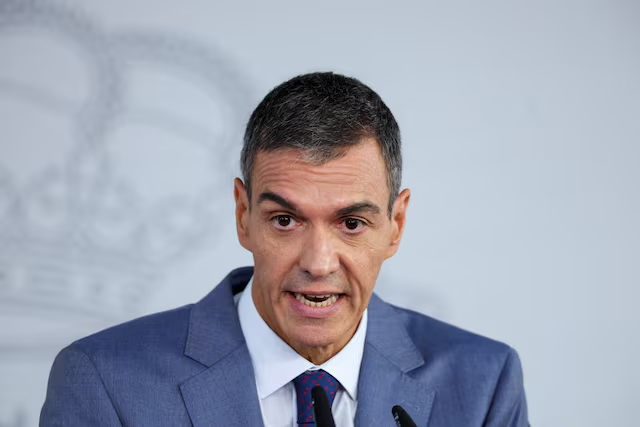
Interim President Delcy Rodríguez addressed the country early Thursday and confirmed 32 deaths and more than 700 injuries so far. She said authorities still lacked complete reports from some of the worst-hit areas, especially La Guaira, the coastal state that’s home to Venezuela’s main international airport.
“At this time, we have reports of 32 deaths and more than 700 injuries,” Rodríguez said in a televised address. “Dozens of buildings have collapsed, and our rescue teams are working tirelessly to save as many lives as possible. This is a true tragedy for our nation.”
Officials expect the numbers to rise as crews keep searching damaged buildings and isolated communities. The USGS has issued estimates suggesting the eventual toll could run into the thousands, and the agency put a real probability on fatalities surpassing 10,000 if the worst-affected regions turn out to have suffered the kind of structural damage authorities fear.
Rescue crews working against the clock
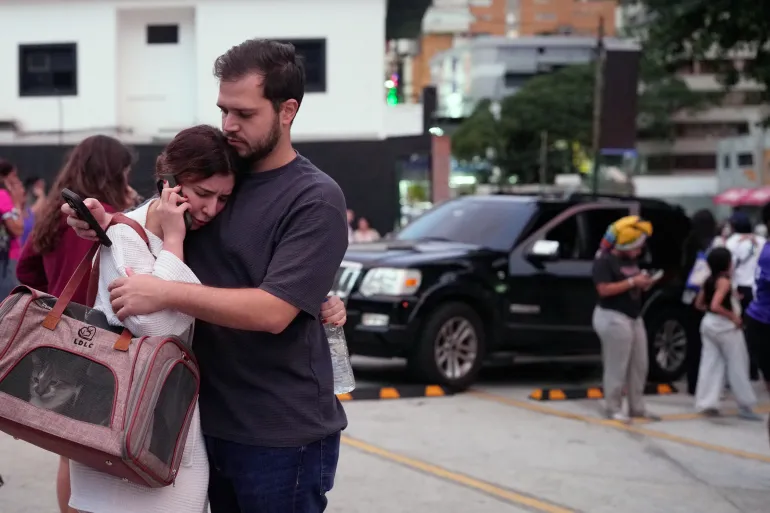
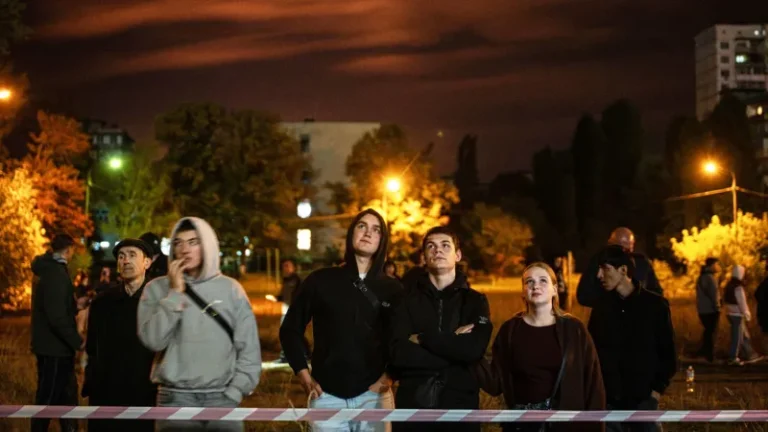
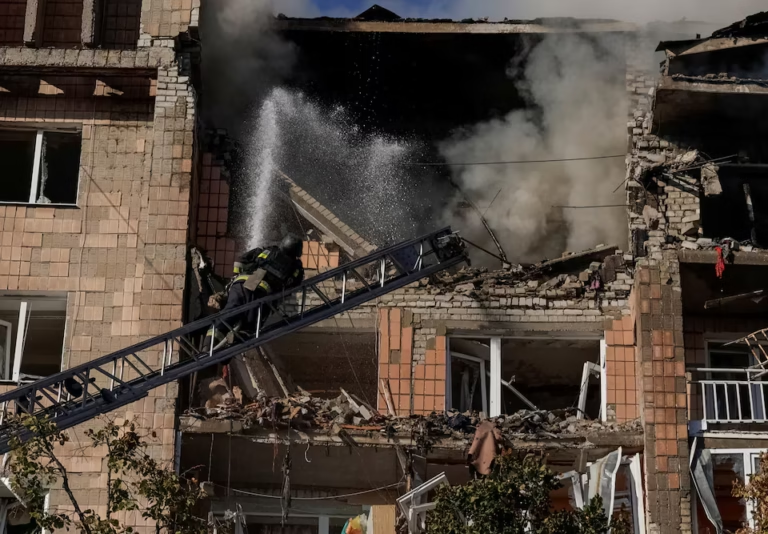
Search-and-rescue teams are now operating across multiple regions, using heavy equipment, dogs, and thermal imaging to find people trapped under debris. Social media videos showed rescue workers climbing over the wreckage of apartment blocks and office buildings in Caracas while relatives waited nearby for any word on missing family members.
International aid is already moving. Rodríguez said rescue crews from several countries are expected to arrive to help local emergency teams, and she thanked the foreign governments that offered support, including the United States.
Washington pledges help
President Donald Trump offered condolences to Venezuelans and promised U.S. support for the rescue effort. “The two major earthquakes that struck Venezuela are devastating in scale and have caused significant loss of life,” Trump said in a statement. “The United States is ready, willing and able to assist in every possible way.”
Secretary of State Marco Rubio said Washington would send search-and-rescue teams, medical supplies, and humanitarian aid right away. The offer comes despite years of tense relations between the two governments.
Why the quakes hit so hard
Venezuela’s geography left it exposed to this kind of disaster. The country sits along a major fault system where the Caribbean Plate meets the South American Plate. Vashan Wright, a geophysicist at the University of California, San Diego, said the quakes struck in a large strike-slip fault zone capable of producing severe seismic activity.
Caracas itself sits inside a deep sedimentary basin, which can amplify seismic waves and make earthquakes feel stronger than they would elsewhere, raising the odds of structural damage. “Sedimentary basins tend to magnify ground shaking, which significantly increases the destructive potential of earthquakes,” Wright said.
Informal housing left exposed
The disaster has exposed Venezuela’s long-standing housing problems again. Large numbers of people live in informal settlements or older buildings that were never built to handle a major earthquake. Many of the neighborhoods hit hardest around Caracas are dense and packed with buildings that have little structural reinforcement, raising the risk of collapse during a quake this strong. Authorities are warning residents to stay alert, since aftershocks could weaken already-damaged buildings and bring down more of them.
Airport shut down, roads damaged
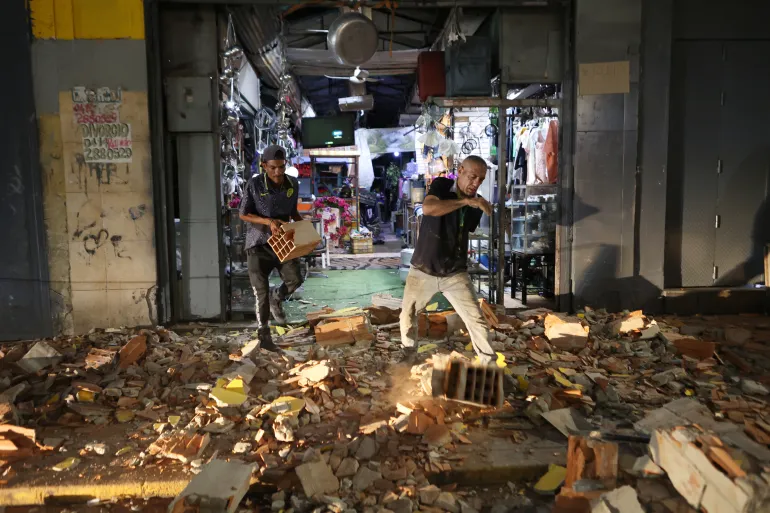
Simón Bolívar International Airport, the main gateway into the capital, shut down after sustaining heavy damage. Footage online showed debris falling from the airport structure as passengers and staff ran for safety. Roads in several regions have been damaged too, slowing rescue operations and the delivery of emergency supplies. Power and communication outages have hit parts of the country as well. A tsunami warning went out briefly after the quakes but was lifted once experts determined coastal areas weren’t at risk.
“It was unbelievable”
Survivors described scenes of panic as the ground shook. Heidi Romero, a shopkeeper who was inside a Caracas shopping center when the quakes hit, said, “It was unbelievable. We were on the top floor. Everything started shaking, and we had to use the emergency stairs to get out.”
Carmen Guedez, who was with her bedridden sister when the tremors hit, said, “I saw the windows moving and then everything began shaking. The movement just kept getting stronger.”
Odalis Escalona, a bank employee, called it one of the most frightening moments of her life. “The stairs separated from the building, and the walls cracked,” she said. “Things were falling from the ceiling. It was horrible.”
A holiday made it worse
The quakes hit on a national holiday marking a major battle from Venezuela’s war of independence, which meant many people were home or out at celebrations rather than at work. Authorities worry that could push the casualty count higher than what’s been reported so far. Emergency shelters are now open for residents whose homes were damaged or destroyed, and hospitals are under pressure treating hundreds of injured people.
Not the country’s first major quake
Venezuela has been through devastating earthquakes before. One of the deadliest hit in 1812, killing an estimated 30,000 people in Caracas and Mérida. Building codes and emergency response have improved a lot since then, but experts say fast urban growth and weak infrastructure still leave many communities at risk.
Rescue efforts continue as Venezuelan authorities work to figure out how bad the damage really is and what recovery will take. The priority right now is saving lives, getting infrastructure back up, and sheltering the thousands of people who’ve lost their homes. Aftershocks remain possible, and entire communities are still waiting for word on missing relatives.