
Rescue crews across Venezuela kept digging through collapsed buildings on Friday, two days after a pair of earthquakes hit the country’s central and coastal regions within seconds of each other. The quakes, measured at magnitude 7.2 and 7.5, devastated communities around Caracas in what’s already being called one of the worst natural disasters in Latin America in recent memory.
Officials have confirmed at least 235 bodies taken to medical facilities, though no final national death toll has been released. Communication networks across the country remain disrupted, and the number of missing people is expected to climb. Independent monitoring platforms tracking reports from families and local officials listed nearly 49,500 people as unaccounted for in the hours after the disaster.
The U.S. Geological Survey, running predictive models based on seismic intensity and population density, warned that fatalities could climb past 10,000 in a worst-case outcome.
Damage Centered Near Caracas
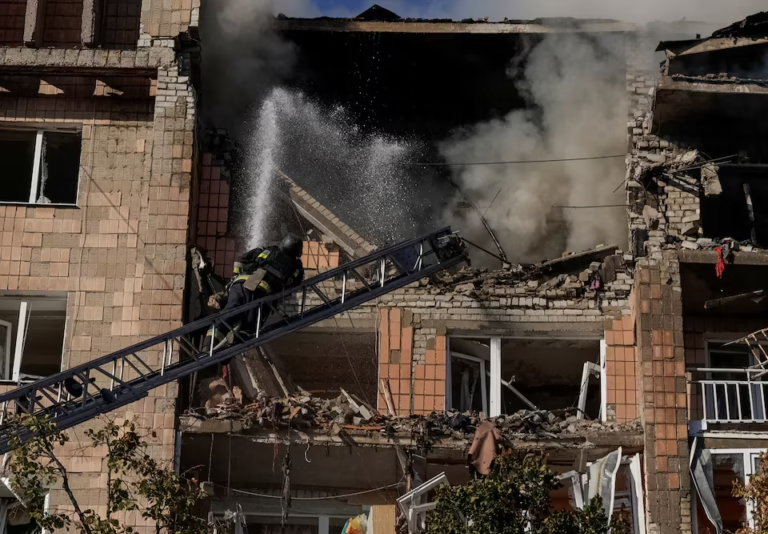
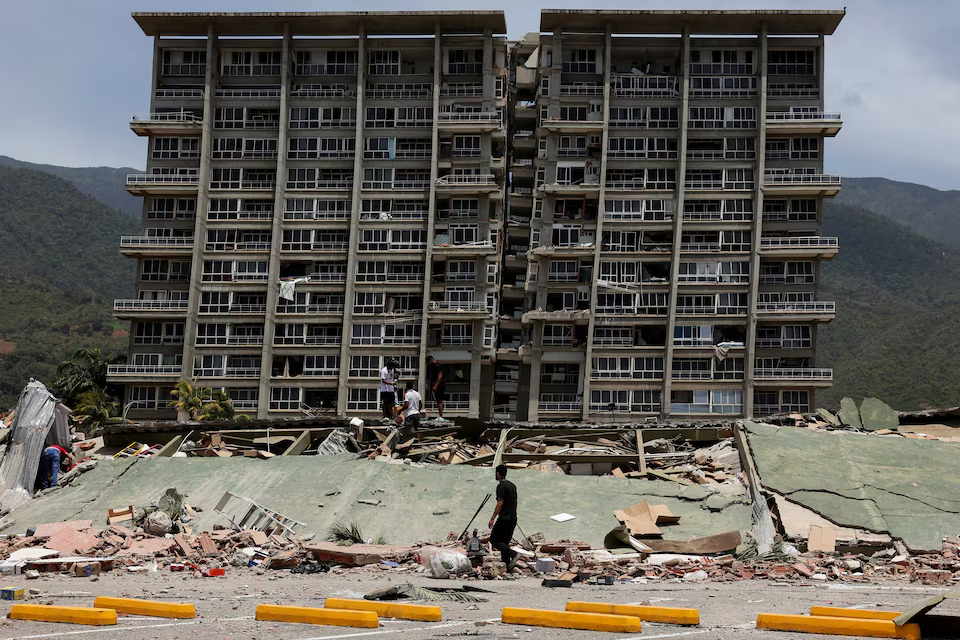
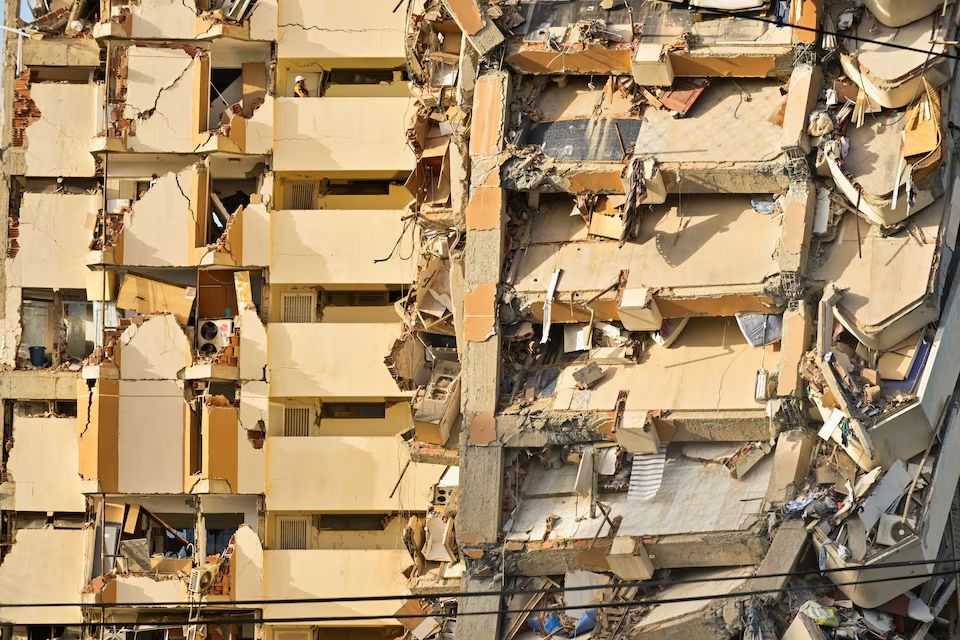
The earthquakes hit about 160 kilometers west of Caracas, shaking several states and hitting both urban centers and coastal areas, including La Guaira, where Venezuela’s main airport is located. Apartment blocks collapsed, roads split open, and hospitals and government buildings suffered serious structural damage. Officials’ initial assessment counted at least 250 buildings damaged or destroyed.
La Guaira state took some of the worst damage, with emergency teams searching unstable buildings as aftershocks continued. Officials say the full extent of the destruction there is still unknown because access and communication remain limited.
Rescues Carried Out With Bare Hands
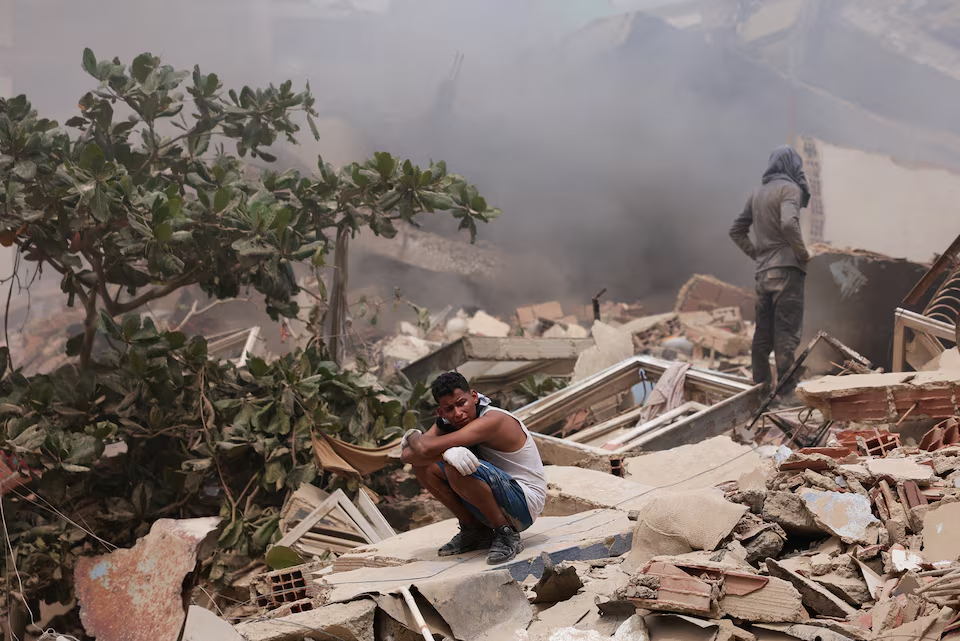
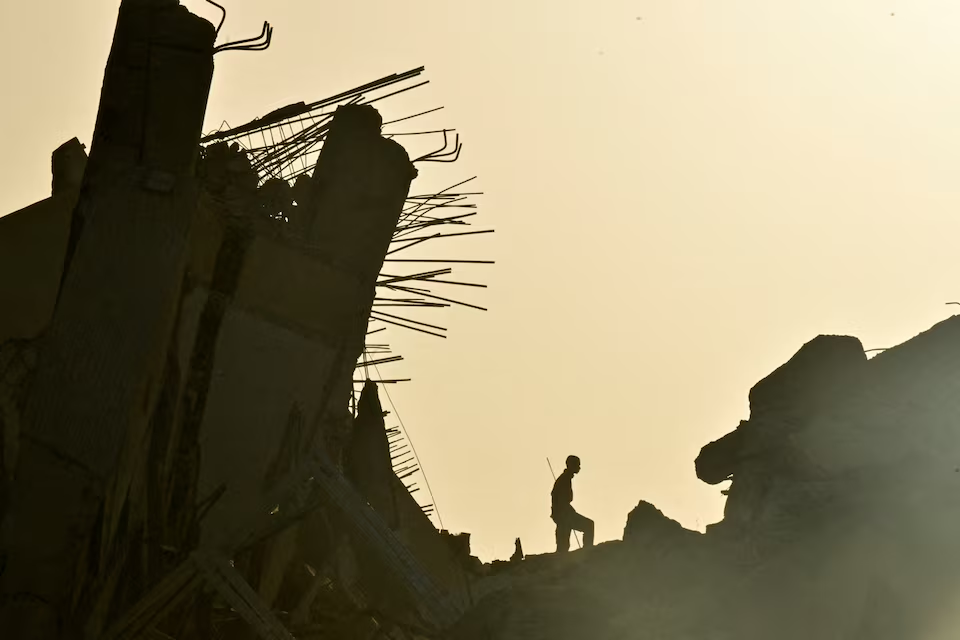
Firefighters, soldiers and volunteers worked through the night with limited equipment, often digging through concrete with flashlights and improvised tools because heavy machinery wasn’t available.
In La Guaira, Yamileth Jiménez described searching for her 19-year-old son, trapped under rubble from their apartment building.
“He’s under the slabs and there’s no machinery to get him out,” she said.
Other residents pulled neighbors from debris themselves and carried the injured to makeshift medical points as hospitals filled past capacity. Rescue teams from several countries have started arriving to help, bringing search dogs, medical supplies and structural engineers.
A Crisis Layered on Top of Another
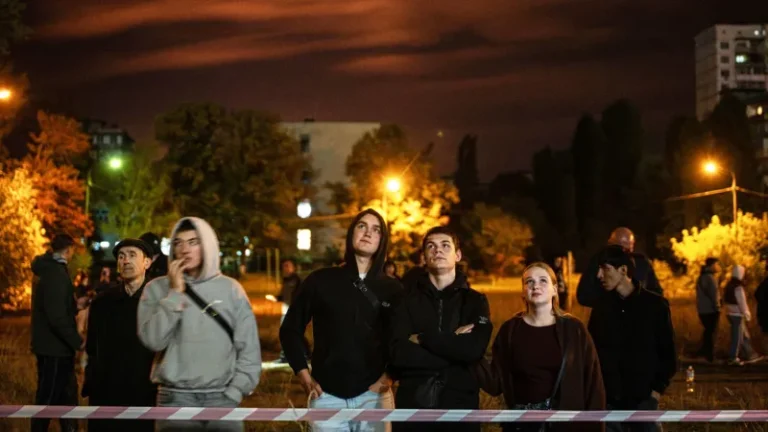
The earthquakes hit a country already strained by years of economic decline, political instability and mass migration. Thousands of families are now without homes, sleeping outside with little access to clean water, electricity or medical care. Hillside neighborhoods known locally as barrios, many built on unstable ground, were especially hard hit.
“We lost everything,” said Pedro Pérez, a small business owner now sleeping on the street after losing both his home and his workshop. “We hope help arrives quickly.”
At least eight hospitals across the affected states reported serious damage. The Venezuelan Red Cross headquarters was also hit hard, complicating the emergency response further.
Tens of Thousands Still Unaccounted For
The scale of missing-persons reports has alarmed officials and aid groups alike. A public tracking platform shared widely by opposition figures listed close to 49,500 people as unaccounted for shortly after the quake. Those numbers haven’t been officially verified, but they point to how badly communication has broken down in isolated and damaged regions.
Spain’s foreign ministry confirmed two Spanish nationals died, with roughly 80 others still unaccounted for, a reminder that the disaster’s reach extends beyond Venezuela’s borders.
Aid Pours In From Unlikely Places
Interim President Delcy Rodríguez said the government is coordinating emergency operations with international partners and thanked several countries, including the United States and Russia, for offering help.
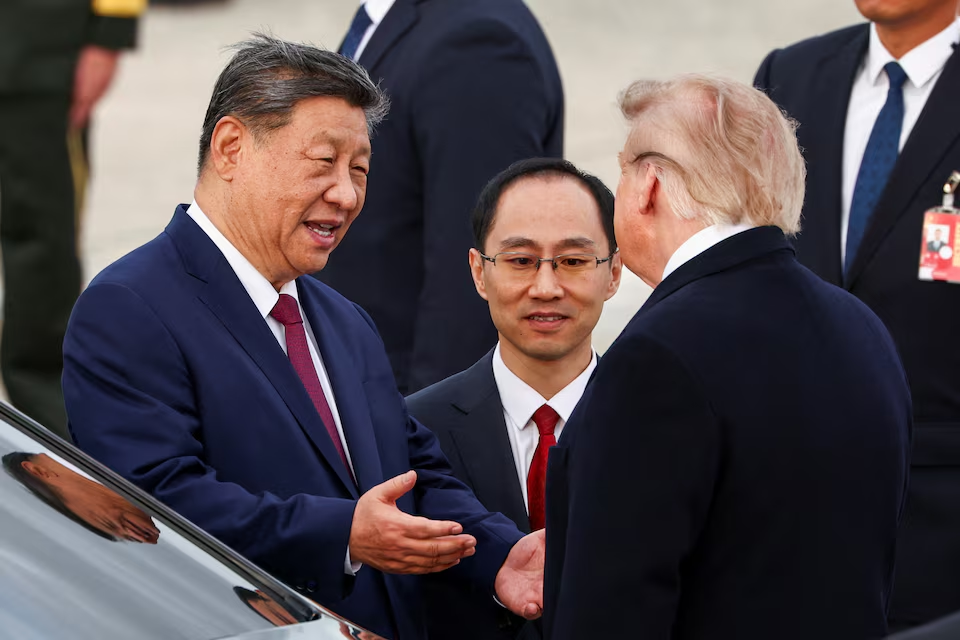
The response has produced an unusual moment of diplomatic alignment. Washington said it would send rescue teams and logistical aid, and U.S. officials said restrictions on emergency assistance had been eased to speed up the response. Former President Donald Trump called the disaster devastating and said the U.S. was “ready, willing and able” to help. The State Department confirmed it’s coordinating with Venezuelan authorities, including support for the damaged airport.
The United Nations activated its emergency coordination systems, noting that millions of Venezuelans already needed humanitarian aid before the earthquake hit.
Communication Failures Slow the Response
Aid organizations have raised concerns about restricted communication access in the hardest-hit areas, pushing authorities to keep mobile networks and social platforms running. The U.N. human rights mission in Venezuela said reliable connectivity is essential right now, since communication failures are actively slowing rescue and evacuation work.
SpaceX’s Starlink said it would offer free satellite service temporarily in affected areas, and emergency crews have started deploying portable terminals to the hardest-hit zones.
Oil Infrastructure Largely Untouched
Despite the destruction in residential and public buildings, Venezuela’s oil infrastructure came through mostly intact. Companies operating in the region reported no major disruption to production or exports, easing fears about global supply effects.
Roads and bridges leading into Caracas and the coast weren’t as fortunate, and the damage there could slow both relief efforts and the broader recovery. The Caracas Stock Exchange suspended trading and converted its building into an aid distribution center.
A Country Built on Shaky Ground
Venezuela sits where the Caribbean and South American tectonic plates meet, making it prone to strong earthquakes. The country’s deadliest recorded quake came in 1967, killing around 240 people. This week’s disaster is already expected to surpass that toll, depending on how the search continues.
Geologists warn aftershocks could keep coming for days or weeks, adding more risk to structures that are already compromised.
What Comes Next
With thousands potentially still trapped, hospitals overwhelmed and infrastructure damaged across multiple states, Venezuela faces a recovery that will likely take years rather than weeks. International aid is starting to arrive, but damaged roads and limited equipment remain real obstacles to getting it where it’s needed.
For now, most Venezuelans in the affected areas are focused on the basics: finding family members, finding shelter, and getting through each day.