
The Vatican declared Thursday that the Society of St. Pius X (SSPX) has broken from the Roman Catholic Church, ruling that members who continue to back the traditionalist group’s leadership now stand in schism. The declaration follows an unauthorized bishop ordination ceremony held in Switzerland this week.
The Dicastery for the Doctrine of the Faith, the Holy See’s top doctrinal office, issued a decree confirming that bishops and priests who took part in the consecration had automatically triggered their own excommunication by acting without approval from Pope Leo XIV.
The ruling ranks among the toughest actions the Vatican has taken against the traditionalist movement in decades. It also shows Pope Leo intends to hold the line on the reforms adopted by the Second Vatican Council, known as Vatican II.
The Vatican didn’t stop at punishing those who performed the ordinations. It went further, stating that SSPX priests generally, along with Catholics who formally align with the group, have placed themselves outside full communion with the Church. That expands a dispute between Rome and one of Catholicism’s largest traditionalist organizations that stretches back nearly 40 years.
automatic excommunication follows the ceremony
The dispute centers on a ceremony held Wednesday in Switzerland, where SSPX consecrated four new bishops without papal sign-off.
Canon law reserves the appointment and consecration of bishops for the pope alone. Catholic teaching holds that bishops carry on the line of the apostles, so who becomes one matters directly to the Church’s unity and continuity. Because of that, canon law treats unauthorized episcopal ordinations as serious enough to trigger excommunication automatically, a penalty called latae sententiae.
The Vatican confirmed that the two bishops who carried out the ordinations, plus the four men they consecrated, are all excommunicated as a result.
Vatican watchers had expected the penalties to stop there. They didn’t. The decree extended the ruling to every priest in the Society, plus any Catholic who formally adheres to it, declaring them all to be in schism. In Catholic theology, that word marks a formal break from papal authority and from the universal Church, not just a disciplinary slap on the wrist for those directly involved.
sacraments now deemed illicit
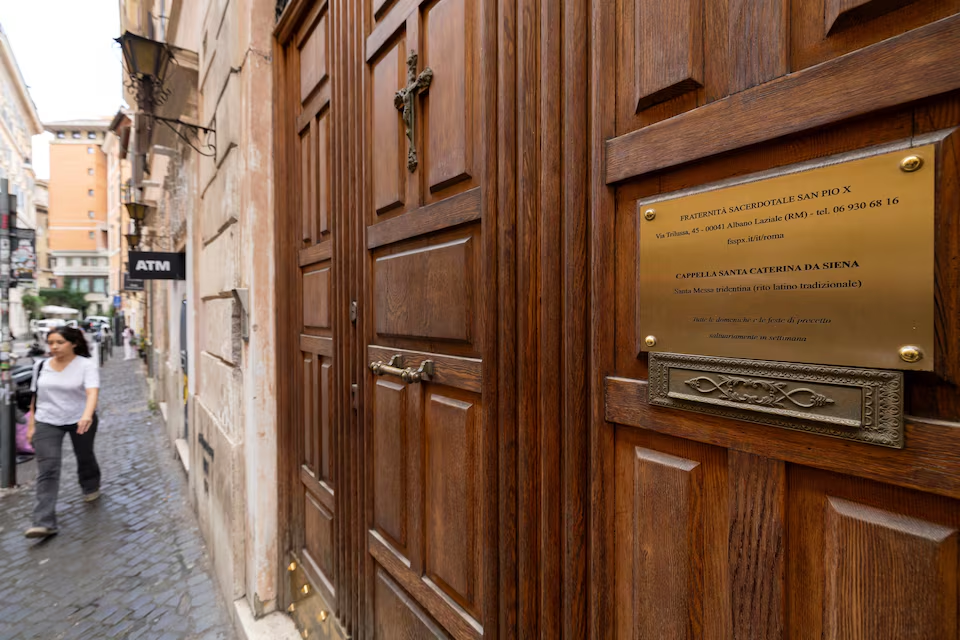
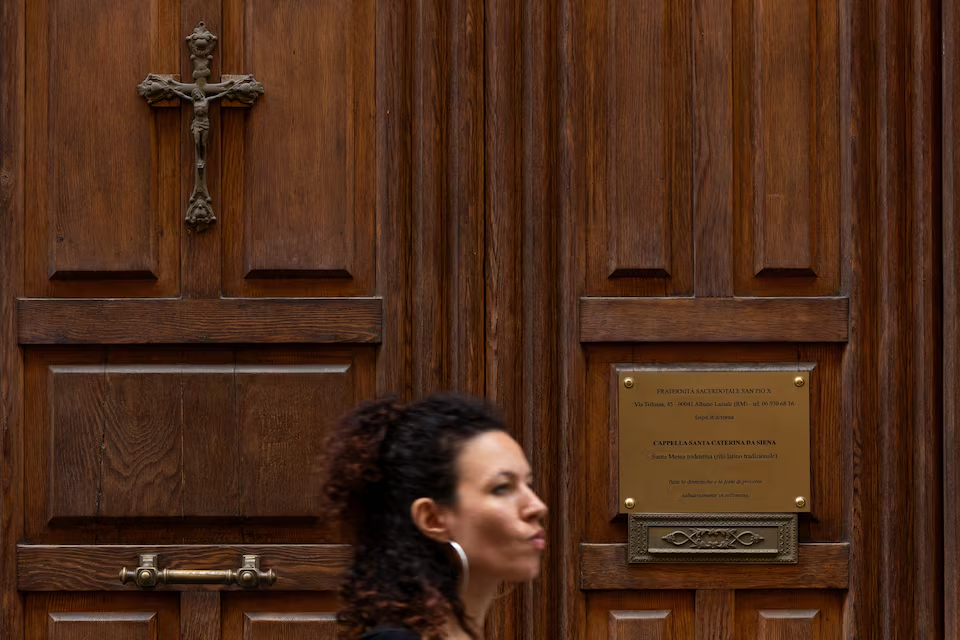
The decree also addressed what happens at SSPX chapels. The Vatican said that while the group continues to hold Mass and administer sacraments, those acts are now illicit under Church law. Priests tied to the Society cannot validly witness marriages or hear confessions in a way the Catholic Church recognizes, according to the ruling.
That has direct consequences for Catholics who attend SSPX chapels regularly. Church officials said those Catholics should understand that participating in the group’s ministry now carries real canonical weight. The statement appears aimed at closing off any remaining uncertainty about the Society’s status, especially after years of dialogue with Rome had left some Catholics believing reconciliation was still possible.
SSPX defends its decision
SSPX had not issued a formal response to the decree as of Thursday. But before the sanctions came down, the group defended its choice to proceed with the consecrations without papal approval. In a statement released Wednesday, the Society said “exceptional circumstances” made the ordinations necessary.
Its leadership has argued for years that it needs more bishops to keep its global operation running and to ensure clergy and leadership continuity. The group says it currently has more than 700 priests serving on multiple continents. SSPX leaders maintain that preserving traditional Catholic worship requires its own independent structure for ordaining priests and governing its institutions. Rome has consistently rejected that reasoning, insisting nothing justifies bypassing papal authority over bishops.
a broader ruling than expected
Most Vatican observers had assumed the excommunications would apply only to the people physically present at the ceremony. Thursday’s decree went well past that, declaring the entire priesthood of the Society, and any Catholic formally tied to it, in schism. That closes a gap in ambiguity that had persisted since Pope Benedict XVI tried to reconcile with the movement more than a decade ago.
The decision appears intended to give Catholics worldwide a clear answer on SSPX’s canonical status and to discourage further support for the group. It also draws a sharper line between Catholics who simply prefer traditional worship within the Church and groups that reject papal authority outright.
roots in opposition to Vatican II
The conflict traces back to disagreements over the reforms adopted at the Second Vatican Council, held between 1962 and 1965. Vatican II reshaped how the Church engages with the modern world, allowed Mass to be celebrated in local languages instead of only Latin, expanded lay participation, and pushed dialogue with other Christian denominations and faiths, including a substantially improved relationship with the Jewish community.
SSPX has rejected much of that. Its members argue the traditional Latin Mass preserves the Church’s worship more faithfully, and the group disputes Vatican II’s positions on religious liberty and ecumenism. That disagreement has sat at the core of the tension between Rome and the movement for decades.
Villanova University historian Massimo Faggioli said the new decree reflects the pope’s unwavering support for the council. Faggioli said Pope Leo sees Vatican II’s reforms as central to Catholic identity today, with no room to compromise on them. Earlier this year, the pope had called the divisions over SSPX painful for the Church, while insisting the council’s teachings remain foundational.
echoes of a 1988 split
The current standoff resembles what happened nearly 40 years ago. SSPX was founded by French Archbishop Marcel Lefebvre, a fierce opponent of Vatican II. In 1988, Lefebvre ordained four bishops without Pope John Paul II’s authorization, a move that got him excommunicated and set off one of the largest schisms in the modern Church.
Pope Benedict XVI later lifted the excommunications on the surviving bishops and opened talks aimed at reconciliation. Dialogue continued off and on for years, but disagreements over Church authority and Vatican II kept a lasting agreement out of reach. This week’s ordinations appear to have closed that door.
By declaring SSPX in schism and expanding the excommunications well beyond those at the ceremony, Pope Leo XIV has marked out where he draws the line on dissent within the Church. The ruling signals that Rome ties Church unity not just to shared worship, but to accepting papal authority and the doctrinal changes affirmed at Vatican II, even if that means a deeper rift with one of Catholicism’s most prominent traditionalist groups.