
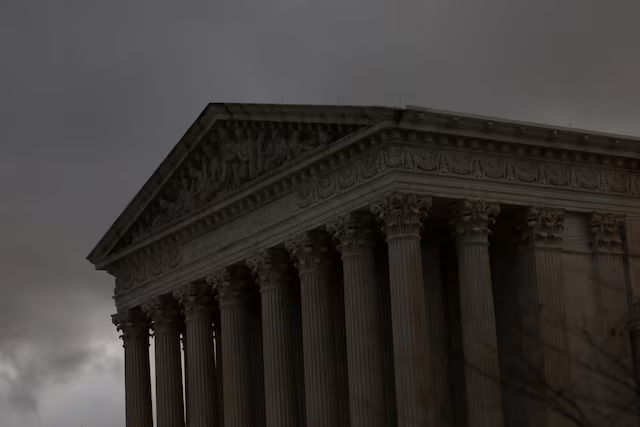
The U.S. Supreme Court has delivered a major victory to President Donald Trump’s immigration agenda, clearing the way for the administration to revoke Temporary Protected Status (TPS) for hundreds of thousands of immigrants from Haiti and Syria.
In a closely watched 6-3 decision on Thursday, the court’s conservative majority overturned lower court rulings that had blocked the administration from ending the humanitarian protections. The decision could expose more than 356,000 people to potential deportation and may reshape the future of one of America’s most important immigration relief programs.
The ruling is being viewed as one of the most significant immigration decisions of Trump’s second term, reinforcing presidential authority over immigration policy while sparking fierce criticism from immigrant advocates and civil rights groups.
What Is Temporary Protected Status?
Temporary Protected Status is a humanitarian program created by Congress in 1990. It allows people from countries suffering from war, natural disasters, or other extraordinary conditions to temporarily live and work legally in the United States.
The protection does not provide a direct path to citizenship, but it shields recipients from deportation while their home countries remain unsafe.
The United States first granted TPS to Haiti after the devastating 2010 earthquake that killed hundreds of thousands of people and left much of the country in ruins.
Syrians received the designation in 2012 after the outbreak of the country’s brutal civil war, which displaced millions and created one of the world’s worst humanitarian crises.
Over the years, TPS has become a lifeline for many immigrants who have built families, careers and communities in the United States.
Supreme Court Says Courts Cannot Review TPS Decisions
Writing for the majority, Justice Samuel Alito argued that federal law gives the executive branch broad authority over TPS decisions and limits the ability of courts to interfere.
According to the ruling, the law “plainly bars” judicial review of the administration’s decisions regarding whether to designate or terminate TPS for a particular country.
The decision could have far-reaching implications because it may effectively shut down future legal challenges against efforts to revoke TPS protections.
Immigration experts say the ruling gives the executive branch unprecedented control over the program.
“The court has essentially determined that these decisions belong primarily to the political branches of government,” said one immigration analyst following the ruling.
Liberal Justices Issue Strong Dissent
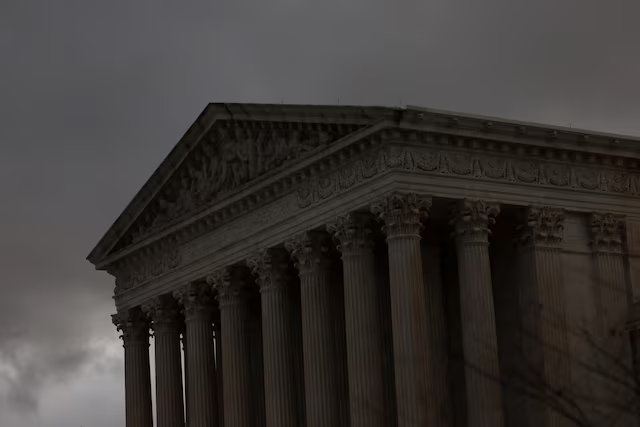
The court’s three liberal justices strongly disagreed with the majority.
Justice Elena Kagan, writing for the dissent and joined by Justices Sonia Sotomayor and Ketanji Brown Jackson, argued that courts should be allowed to review whether the government followed proper legal procedures before ending TPS protections.
She also criticized the majority for dismissing concerns that racial bias may have influenced the administration’s decisions.
Kagan pointed to public statements made by President Trump regarding Haitian immigrants and argued that evidence suggesting discriminatory motives should not have been ignored.
The dissent highlighted concerns that the administration’s actions may have been driven by broader hostility toward immigrants rather than objective assessments of conditions in Haiti and Syria.
Haiti and Syria Remain Dangerous
The ruling comes despite ongoing warnings from the U.S. State Department against travel to both Haiti and Syria.
Haiti continues to struggle with gang violence, political instability, kidnappings and a worsening humanitarian crisis. Armed groups control large sections of the capital, Port-au-Prince, and international organizations have repeatedly warned that the country’s security situation remains dire.
Syria, meanwhile, is still recovering from more than a decade of conflict that has devastated infrastructure and displaced millions of people.
Human rights organizations argue that forcing immigrants to return to either country could place lives at serious risk.
“Haiti is not safe, and everyone knows it,” said Viles Dorsainvil, a Haitian TPS holder and co-founder of the Haitian Support Center in Springfield, Ohio.
“The court’s ruling does not change the reality on the ground or the contributions we make here in the United States.”
Humanitarian Groups Condemn the Decision
Immigration advocates swiftly condemned the Supreme Court’s ruling, warning that thousands of families are now living under the threat of deportation.
Ahilan Arulanantham, an attorney representing Syrian TPS holders, described the decision as a blow to longstanding humanitarian protections.
“For decades, this program has protected vulnerable people fleeing unimaginable crises,” he said. “Today’s ruling allows political considerations to override that humanitarian mission.”
Lawyers representing Haitian immigrants also criticized the court’s decision and urged Congress to intervene.
“Immigrants are one of America’s greatest strengths,” attorneys Geoff Pipoly and Andy Tauber said in a joint statement. “The responsibility to protect these families now rests with lawmakers.”
A Broader Crackdown on Immigration
The decision fits into a wider effort by President Trump to dramatically reduce both legal and illegal immigration.
Since returning to office in January 2025, Trump has pursued an aggressive immigration agenda that includes tightening asylum rules, increasing deportations and ending various humanitarian programs.
The administration has repeatedly argued that TPS was always intended to be temporary and has accused previous administrations of allowing the program to expand beyond its original purpose.
The Supreme Court previously allowed the administration to end TPS protections for Venezuelan immigrants and has generally sided with Trump in several major immigration disputes.
Thursday’s ruling marks another important legal victory for the administration.
Economic Impact Could Be Significant
Immigration experts warn that removing TPS protections could have major economic consequences.
Many TPS recipients have lived in the United States for more than a decade, working in healthcare, construction, hospitality and other essential industries.
According to studies, TPS holders contribute billions of dollars annually to the U.S. economy through taxes and consumer spending.
David Bier, director of immigration studies at the libertarian Cato Institute, warned that targeting legal immigration could undermine America’s economic competitiveness.
“It will become harder for the United States to compete globally if policymakers continue to dismantle legal pathways for immigration,” he said.
Businesses in industries facing labor shortages have also expressed concerns that losing thousands of experienced workers could create additional economic pressures.
Future of the TPS Program Now in Question
The Supreme Court’s ruling could affect far more than just Haitian and Syrian immigrants.
Approximately 1.3 million immigrants from 17 countries currently benefit from Temporary Protected Status.
Legal experts say the decision may make it significantly easier for future administrations to revoke protections for other groups, potentially reshaping the program entirely.
The case also raises broader questions about the balance of power between the executive branch and the judiciary in immigration matters.
For now, immigrant communities across the country are anxiously awaiting the next steps from the administration and Congress.
As legal avenues narrow, advocates say political solutions may be the only remaining path for hundreds of thousands of families who now face an uncertain future in the United States.