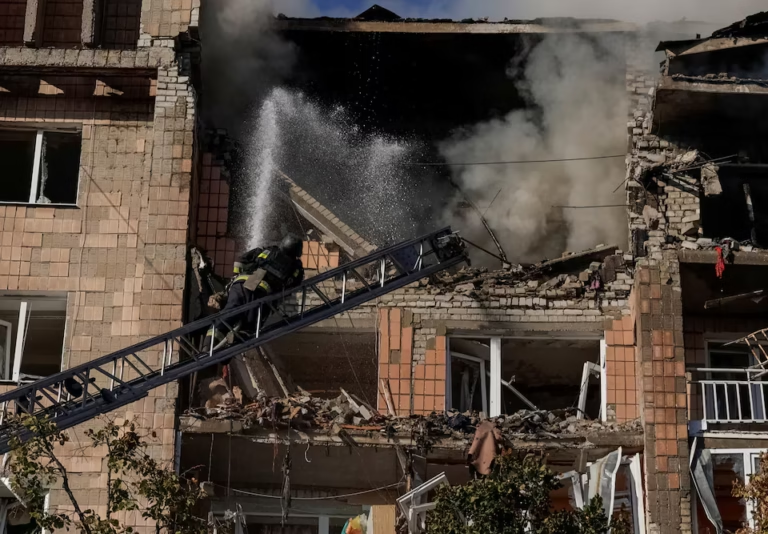

Ukraine has struck four logistics hubs belonging to Ozon, Russia’s second-largest online retailer, extending a drone campaign against Russian e-commerce companies aimed at deepening the economic cost of the war.
Ozon’s shares fell sharply on Monday after the company disclosed the strikes in southern Russia, bringing to six the number of its facilities hit over three days.
Until last week, Kyiv had concentrated its attacks on Ozon’s rival Wildberries, part of an e-commerce sector that has kept growing even as the broader Russian economy stalls after four and a half years of war.
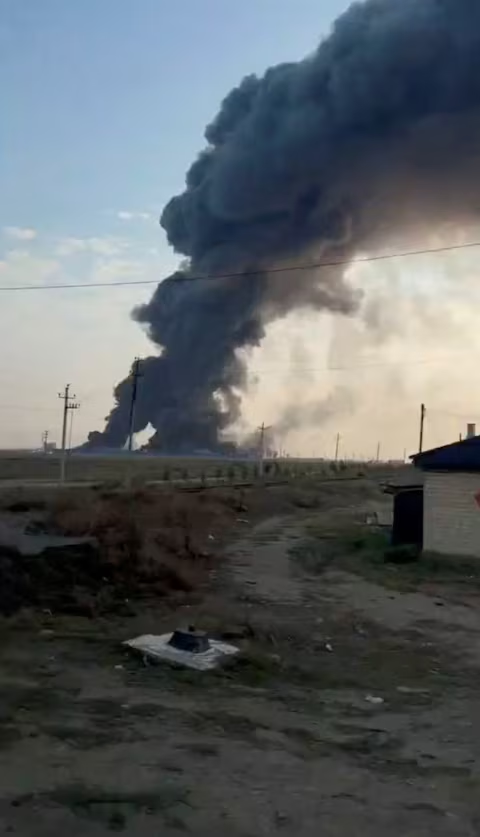
Ozon said in a statement that a logistics hub in Makhachkala, in Dagestan, caught fire and stopped operating after a drone attack. “According to preliminary information, several people were injured,” the company said.
A separate fire broke out at an Ozon hub in Enem, near Krasnodar. Workers were evacuated from warehouses in Adygeysk, in the Adygeya region, and in Nevinnomyssk, in the Stavropol region, though the company said neither facility sustained damage.
Attacks Spread Across Russian Regions

Operations at an Ozon logistics center in the Samara region were suspended Saturday after a drone strike. The company also halted work at its facility in the Orenburg region, evacuating more than 300 people from the site.
Ozon shares dropped almost 30% on the Moscow Exchange on Monday. Shares in its largest shareholder, private equity firm AFK Sistema, fell more than 13%.
The losses mark a reversal for a company that had thrived through the war. Ozon’s stock had climbed nearly 300% since the market turmoil that followed Russia’s 2022 invasion, making it one of the strongest performers on the Moscow Exchange until the drone campaign began targeting its warehouses.
Kyiv has justified the Wildberries strikes by arguing the company’s warehouses function as infrastructure supporting Russia’s war effort. Ukrainian officials describe the broader push against e-commerce logistics as part of a strategy to disrupt Russia’s economic infrastructure, cut into war financing, and bring the war’s costs home to Russian civilians.
That strategy has already produced visible effects elsewhere. Strikes on Russian oil refineries have caused fuel shortages, forcing drivers in Moscow to wait in line for hours to fill their tanks.
Wildberries Owner Says Business Continues
Financial analysts note a key difference between the two retailers under attack. Wildberries has backing from its partner, state-owned bank VTB, while Ozon’s main shareholder, AFK Sistema, carries heavy debt and is unlikely to offer much financial support.
Before the latest Ozon strikes, Russian President Vladimir Putin pledged state assistance to rebuild damaged warehouses “at a new technological level” and directed the government to design a support program for the logistics sector.
Russia’s Finance Ministry said Monday it had prepared measures to help Wildberries and the small businesses that sell through its platform, including tax breaks lasting up to one year for those whose goods were damaged in attacks. Neither the ministry nor Wildberries disclosed the value of the support package.
Russia’s central bank has also urged creditors to support businesses hit by the attacks on logistics centers and warehouses.
“We keep on working,” said Wildberries owner Tatyana Kim, Russia’s richest businesswoman, welcoming the tax relief.
A Company Built From an Online Bookstore
Ozon grew out of an online bookstore and was once popular with foreign investors. Its depositary receipts traded on Nasdaq until 2023, when the company shifted its listing to the Moscow Exchange. Ozon raised $1 billion in a 2020 initial public offering.
Before the war, its investor base included U.S. asset manager BlackRock, which said in 2023 that it no longer held any Ozon shares. Ozon does not publish a full list of its investors, but Norway’s sovereign wealth fund, the world’s largest, reported last June that it owned 0.23% of Ozon and more than 1% of AFK Sistema.
The European Union sanctioned the financial units of both Ozon and Wildberries on July 24. Ozon said its financial unit does not operate outside Russia and holds no assets that Western sanctions could reach.
Economic Pressure Builds on Two Fronts
The twin campaigns against Ozon and Wildberries reflect a shift in how Ukraine is waging the economic side of the war. Rather than striking only military and energy targets, Kyiv is now going after the retail infrastructure that keeps goods moving to ordinary Russian consumers, betting that disruption to daily commerce will add pressure that battlefield losses alone have not produced.
For Ozon, the timing compounds an already difficult position. The company entered the week of strikes carrying a valuation built on wartime growth, and investors responded to Monday’s disclosures by wiping out a large share of those gains in a single trading session. Whether the damage proves temporary will likely depend on how much support the Kremlin is willing, or able, to direct toward a retailer whose main backer is already carrying substantial debt.