
The United States is seeking to secure a role for American firms in Ethiopian Airlines’ $12.5 billion Bishoftu airport project, a senior U.S. Commerce Department official said on Wednesday, as Washington competes with China and other powers for influence over infrastructure and investment across Africa.
Construction began in January on the four-runway airport, some 45 kilometers southeast of Addis Ababa. Ethiopian officials have said they hope to make the site the “Dubai of Africa” when it opens in 2030.
“Washington is very actively engaged in trying to get U.S. participation,” said Mark Mitchell, the U.S. deputy assistant secretary of commerce for the Middle East and Africa. He made the comments at a virtual press briefing from the Africa Logistics and Communications Symposium in Addis Ababa where he said he met with officials from Ethiopian Airlines.
Mitchell did not specify what form U.S. involvement might take but said “more Boeing aircraft powered by GE Aerospace engines” could be one result of greater American engagement with the airline.
Boeing’s swelling order book
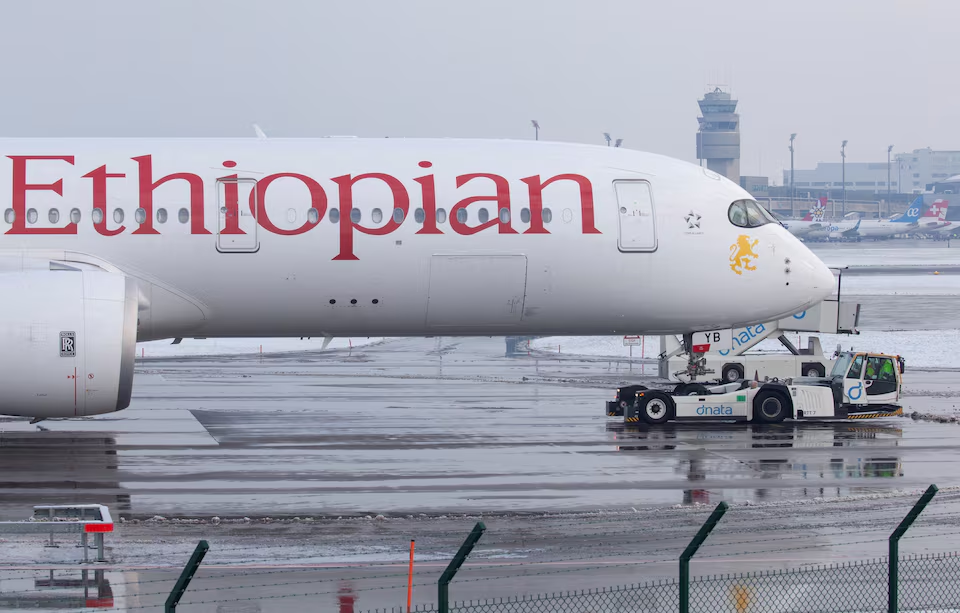
Ethiopian Airlines has already been growing its relationship with Boeing. In April, the carrier agreed to purchase six additional 787-9 Dreamliners atop 20 jets it already ordered. The carrier has built its long-haul fleet strategy heavily around Boeing widebody jets, and more orders tied to the airport expansion could deepen that commitment.
Ethiopian Airlines CEO Mesfin Tasew said in April that U.S. financial institutions had “expressed interest” in participating in the Bishoftu project, but he did not name any specific banks or describe what that participation might entail.
Financing still in the works
The African Development Bank has committed $500 million for the airport and is spearheading the larger push to raise $8.7 billion needed to finish construction. That still leaves a sizable funding gap to be filled, and the airport’s backers have been courting a mix of multilateral lenders, private investors and foreign governments to fill it.
One reason the project has become a point of competition between global powers is the scale of the financing need. Over the past ten years, Chinese banks have lent money to African governments and airlines for infrastructure, and Chinese companies have signed contracts for construction projects. Ethiopian Airlines has worked with Chinese companies on projects in the past. Washington’s drive for a stake in Bishoftu is part of a wider trend of U.S. officials trying to counter Chinese influence on the continent, with American financing, equipment and expertise on offer.
AI cooperation also on agenda
Mitchell said the Commerce Department also was looking to deepen ties with Ethiopia’s Artificial Intelligence Institute, beyond the airport. He said the outreach was part of a wider U.S. effort to promote exports of American AI technology to African markets, where Washington has been trying to stake an early foothold as governments across the continent begin to develop digital infrastructure and regulatory frameworks for AI adoption.
The AI outreach and the airport push are part of a pattern the Commerce Department has followed in several African countries this year: combining traditional infrastructure and aviation deals with efforts to introduce American technology companies into markets where Chinese firms have often gone first and fast.
Significance of Bishoftu
The airport itself is meant to address a capacity problem Ethiopian Airlines has suffered from for years. Addis Ababa’s current Bole International Airport has had trouble coping with the airline’s growth, and Ethiopian Airlines has established itself as the dominant carrier connecting Africa to the rest of the world, especially through its hub-and-spoke model, routing passengers from smaller African cities through Addis Ababa to international destinations.
A four-runway facility able to accommodate the traffic volumes officials are seeking would provide the airline room to keep growing that model for decades. Officials have described it as the “Dubai of Africa”. But the comparison refers to ambitions which go way beyond aviation. There are reportedly plans for retail, logistics and hospitality development around the airport site to generate revenues beyond ticket sales and cargo fees.
The project’s appeal for U.S. companies goes well beyond aircraft sales. A big airport like that will likely need contracts for everything from air traffic control systems to ground equipment to construction materials, and U.S. firms compete in many of those areas with European, Chinese and Gulf-based rivals.
A Test for U.S.-Africa Strategy
The Bishoftu project has become something of a bellwether for how aggressively Washington is willing to compete for African infrastructure business under this administration. But Commerce Department officials have been increasingly emphasizing the strategic importance of African markets, both for their economic potential over the long run and as a way to counter Chinese and Gulf state influence in a region where those powers have often outpaced American investment.
Ethiopian Airlines has largely avoided exclusive alignment with any single foreign power, working with Chinese, European and American partners on different projects depending on financing terms and equipment needs. That strategy has given the airline leverage in negotiations, as it can play potential partners off against each other, rather than committing itself to the technology and financing ecosystem of one bloc.
Whether Mitchell’s meetings in Addis Ababa will translate into concrete contracts, remains to be seen. The African Development Bank is still trying to raise the $8.7 billion it wants and neither side has publicly detailed what role U.S. companies would have, as suppliers of equipment, financiers or construction partners.
For now, the airport is a work in progress with a target completion date of 2030 and both the financing picture and the mix of international partners involved are likely to keep changing as the project progresses. Mitchell’s comments Wednesday suggest that Washington is not backing off from wanting a larger role, but the size of that role will depend on decisions still being negotiated among Ethiopian Airlines, its lenders and governments that want to be part of one of the biggest infrastructure projects in the continent in recent years.