
Clicxpost

Trump claims he will travel to Hungary to meet with Putin. He and Zelenskyy first meet in the White House on Friday

Trump claims he will travel to Hungary to meet with Putin

Former President Donald Trump posted on social media Thursday he will have another high-profile meeting with Russian President Vladimir Putin in a bid to bring peace to Ukraine — a war now in its fourth year. Trump said the meeting would take place in Budapest, Hungary, but an official date was not announced.

I believe fantastic strides were taken on today’s phone call,” Trump said in a post-call statement following a conversation with Putin earlier this day. The two leaders met together last in Alaska in August, a meeting that failed to yield a diplomatic fruit but laid the groundwork for future talks.
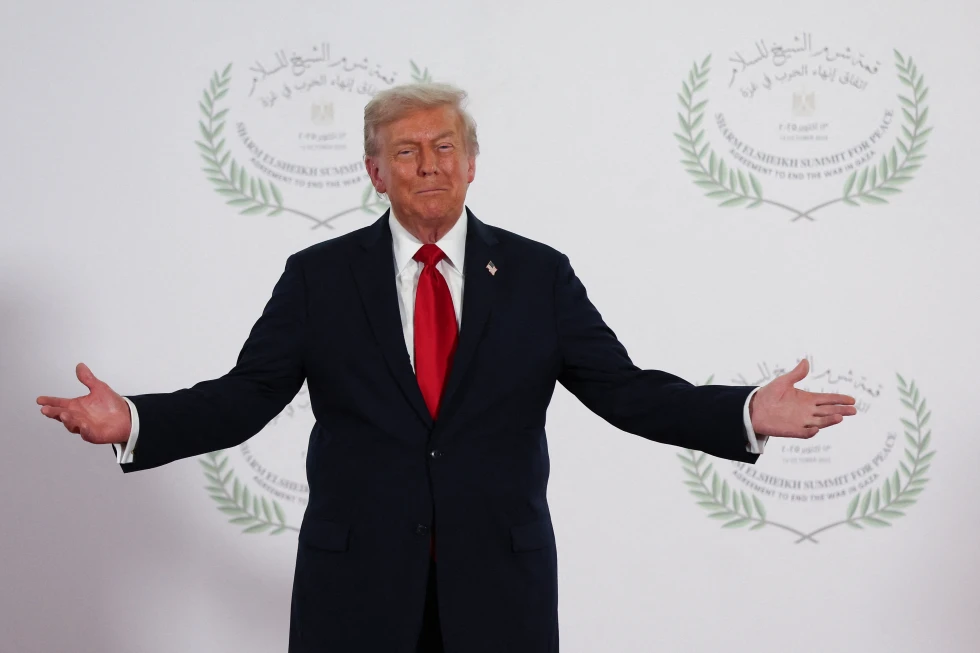
Before the Trump-Putin summit, U.S. Secretary of State Marco Rubio will head a delegation to meet Russian officials next week. The location of those talks is not revealed, a sign of ongoing backchannel diplomacy between Washington and Moscow.

Zelenskyy Demands U.S. Missiles as Trump Seeks to Expand Leverage over Moscow

The latest overture to Moscow comes after Ukrainian President Volodymyr Zelenskyy’s scheduled visit to the White House on Friday, his fourth in-person meeting with Trump this year. Kyiv is calling for Washington to sell it Tomahawk cruise missiles, which would enable Ukraine to reach deeper into Russian-held territory.

Zelenskyy has insisted that such long-range capabilities would strengthen Ukraine’s negotiating position and force the Kremlin to accept more seriously U.S.-backed peace initiatives.

Trump hinted earlier this week that he might use the potential sale of Tomahawks as a bargaining chip against Putin. In remarks to reporters on Sunday’s visit to Israel, Trump said, “Do they want Tomahawks going that way? I don’t think so. I think I may discuss that with Russia.”

The remarks refer to Trump’s strategy of blending economic and military pressure with diplomacy — a shift from President Joe Biden’s, which was considerably sanctions- and global coalition-dependent.

Trump’s Resurgent Commitment to Ending World Conflicts
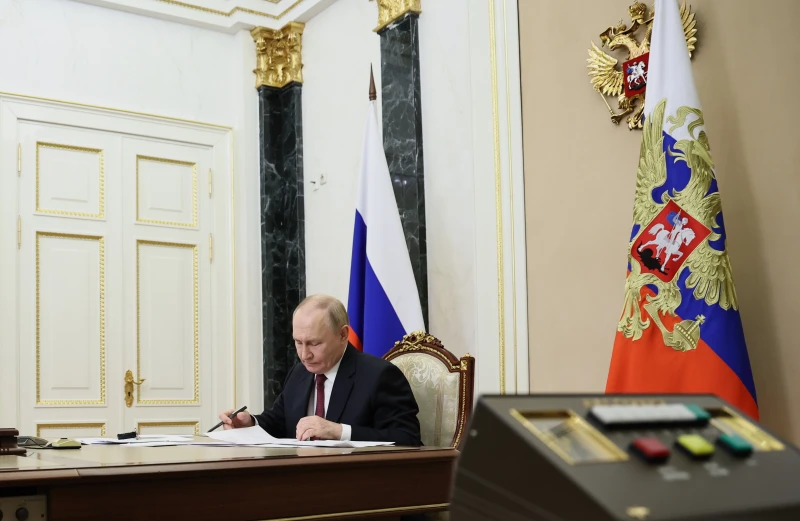
Ending the wars in Gaza and Ukraine has been Trump’s focus of 2024, wherein he has repeatedly attacked President Biden over managing the two conflicts. With a Gaza ceasefire now holding for the first time in months, however, Trump appears set to ride that tide and urge peace in Eastern Europe.

“Interestingly, we had a good day today because of what has occurred in the Middle East,” Trump told a group of supporters at dinner Wednesday night at his White House ballroom development. He claimed that lessons from the Gaza ceasefire could apply to talks with Moscow and Kyiv.

In a speech at the Israeli Knesset in Jerusalem earlier this week, Trump declared that Gaza ceasefire might contribute to broader normalization between Israel and several Arab states. Trump reiterated, however, that his top foreign policy priority remains ending Europe’s largest war since World War II.

“First we’ve got to get Russia done,” Trump directed his special envoy Steve Witkoff, who has been his go-to man with the Kremlin. “If you don’t mind, Steve, let’s get Russia first. Okay?”
Tomahawks or Tactical Missiles? Analysts Weigh the Options

The sale of Tomahawk cruise missiles, with a range of 1,600 kilometers (995 miles), would mark a huge escalation of U.S. aid to Ukraine. Russian officials have warned that it would be a “red line” and would jeopardize any possibility of future talks.

Aside from the risks, Trump has been hardly discouraged. “He’d like to have Tomahawks,” Trump said Tuesday, speaking to Zelenskyy. “We have a lot of Tomahawks.”

Defense experts note that Ukraine might gain more immediate advantage from shorter-range systems such as Extended Range Attack Munition (ERAM) and Army Tactical Missile Systems (ATACMS).
As the Foundation for Defense of Democracies’ Mark Montgomery pointed out, “The Tomahawk decision is as political as it is military. ERAM and ATACMS could pressure Russian troops at the front lines sooner.”

In early this year, the United States greenlit the sale of up to 3,350 ERAMs to Ukraine, which may strike Russian logistics and command centers within a few hundred kilometers of combat areas.

White House Ponders Fresh Russia Sanctions amid Growing Pressure

Zelenskyy will also likely echo his call for more robust economic sanctions against Moscow in Friday’s session. Trump has thus far been reluctant to impose sweeping sanctions, instead applying pressure to NATO partners and Russia’s biggest buyers of oil to cut back on imports — the monetary gasoline tank of the Kremlin’s war machine.

Trump revealed on Wednesday that India, one of Russia’s largest buyers of crude oil following the invasion, had pledged to begin cutting its purchases — something that could damage Moscow’s revenue stream.

Meanwhile, Congress is also considering bipartisan legislation to impose huge tariffs on nations that continue to trade Russian oil, gas, and uranium. The bill, introduced by Sen. Lindsey Graham (R-S.C.) and Sen. Richard Blumenthal (D-Conn.), has been met with cautious interest from the White House.

Officials briefed on internal deliberations include the following: Trump officials have begun to scrutinize thoroughly the bill, signaling the president soon to back it as part of a strategy of strengthening diplomatic relations in tandem with economic squeezing of Putin.

A White House aide, speaking on condition of anonymity, suggested that the administration wants to ensure that any sanctions “support the president’s foreign policy objectives while providing flexibility.”.

Treasury Secretary Scott Bessent repeated those words Wednesday, emphasizing Washington is seeking “greater buy-in from Europe,” which is under the most direct threat of Russian aggression.

A Delicate Diplomatic Balancing Act

Trump’s renewed engagement with both Putin and Zelenskyy are a testament to his attempt to toe the line between diplomacy and deterrence — a hallmark of his foreign policy strategy. As the world waits for his next face-to-face with Putin to take place in Budapest, there are questions regarding whether Trump’s unconventional style can achieve what eluded past administrations: a lasting peace in Ukraine.

RECOMMENDED

UP NEXT

Israel Lebanon buffer zone

Israeli Veterans see echoes of failed Lebanon strategy in new buffer zone

Israeli veterans who once patrolled southern Lebanon’s occupation zone in the 1980s and 1990s say the country’s current military presence there feels like a repeat of a strategy they watched fail the first time, even as Israeli leaders present it as a hard-won gain.

Gil Shely served in what Israel called the southern Lebanon “security strip” in the late 1980s. He remembers his commanders telling him every day that his presence there was protecting northern Israel. “Looking back, it was all fairy tales,” he said.

Israel pulled out of that strip in 2000. Its forces have since returned, this time occupying a stretch of southern Lebanon roughly 10 kilometers deep. Israeli officials describe the goal as shielding border towns from Hezbollah, the Iran-backed militia that has fought Israel for decades.

A zone born out of war

The current buffer zone was announced in late March, during a period of heavy fighting between Israel and Hezbollah that coincided with the broader war involving Iran. It followed similar zones Israel established in Gaza and Syria after the Hamas-led attack on southern Israel on October 7, 2023, a shift in strategy that has reshaped how Israel approaches its borders on multiple fronts.

For Shely, watching the new occupation unfold brought back old fears. “When I hear news that a soldier has been killed there, I am crushed. My heart screams out for the unnecessary sacrifice,” said Shely, 56, whose youngest son is about to enter Israel’s mandatory military service.

Israel has lost dozens of soldiers in the buffer zone since March, when Hezbollah fired missiles into Israel and triggered an Israeli offensive that displaced a million people in Lebanon and killed thousands, including hundreds of civilians. Hezbollah has not released its own casualty figures.

Veterans who served in the original security strip describe years of clearing explosives, running ambushes, and fighting guerrilla-style attacks from militants who used the occupation itself to sharpen their tactics. Erez, 51, who served in Lebanon in the 1990s and asked to be identified only by his first name, lost close friends there. His son is now stationed in the new buffer zone. “We hoped we would never have to go back,” he said.

Netanyahu calls it a turning point

Prime Minister Benjamin Netanyahu, who faces an October election and weak polling numbers, pointed to the buffer zone as a major achievement during a June 30 visit with troops. He called the security zones a fundamental change in approach, saying Israel no longer tolerates an armed group holding ground on its border and that Israeli forces target attack infrastructure both above and below ground.

The zone today is largely empty of the Lebanese civilians who once lived there; most fled villages that have since been reduced to rubble. From the Israeli side of the border, military vehicles can be seen moving through destroyed neighborhoods, and the sound of detonations occasionally carries across the hills as smoke rises from the wreckage. Israeli towns hit by Hezbollah missiles and drones sit in plain view on the other side.

One reservist, who served as a young conscript shortly before the 2000 withdrawal and returned to duty this month, said the scale of weapons and infrastructure Hezbollah has built up since then is striking. Still, he said military force alone will not solve the underlying problem. “What’s the purpose? What are you doing it for? You’re fighting, risking yourself, it’s not clear, they don’t make it clear to the soldiers. It’s vague and frustrating,” said the reservist, who spoke on condition of anonymity.

A movement born from the last withdrawal

Israel’s 2000 exit from Lebanon followed years of public pressure that grew louder as soldiers died. Mothers of fallen and active-duty soldiers led that push through a group called Four Mothers — Leave Lebanon in Peace. Rachel Madpis Ben-Dor, one of the group’s founders and its current chairperson, sees history repeating itself. “Then, our children, and now our grandchildren,” she said. “We are making the same mistake now.”

Ben-Dor, who lives in northern Israel, said she believes soldiers can defend her town from positions closer to the border, without occupying Lebanese territory. She said she wants an end to the destruction on both sides. “We don’t want to see villages wiped out. We want peace with Lebanon and we need the world’s support,” she said.

Not everyone shares that view. Benny Gantz, a former defense minister who as a brigadier general in 2000 personally closed the border gate behind Israel’s retreating troops, argues Israel cannot afford to withdraw without safeguards this time. His son recently served on the front line in Lebanon. “We have no choice but to create a buffer,” Gantz said. “We can’t look at reality as we want to see it. We have to look at reality as it is and try to shape it. It will have to be a combination of military, security and diplomacy.”

Talks underway in Rome

Israel and Lebanon are currently holding U.S.-backed negotiations in Rome, working from an initial framework meant to lead toward Hezbollah’s disarmament and eventually a formal peace agreement. Hezbollah has rejected the disarmament demand outright, leaving the talks without clear momentum on the issue most likely to determine whether Israeli troops eventually leave the buffer zone or stay indefinitely.

The gap between the two negotiating positions echoes the years before Israel’s 2000 withdrawal, when political and military leaders debated whether occupying southern Lebanon made Israel safer or simply exposed soldiers to a prolonged guerrilla campaign with no clear endpoint. Hezbollah emerged from that earlier occupation stronger and more sophisticated than when Israel first entered Lebanon in 1982, a pattern veterans like Shely and Erez say worries them now more than ever.

Whether the current buffer zone produces a different outcome will likely depend on what happens in Rome, and on whether Hezbollah’s fighting capacity has been degraded enough by the recent war to change the group’s calculus. For now, Israeli soldiers continue rotating through a landscape of rubble and abandoned villages, patrolling territory that Israeli commanders describe as a strategic necessity and veterans of the last occupation describe as a warning from the past.

Pickaxe Mountain Iran nuclear site

What is Pickaxe Mountain, iran’s underground pickaxe mountain nuclear site threatens by Trump

U.S. President Donald Trump has renewed threats against a fortified Iranian nuclear site called Pickaxe Mountain, telling Iranian officials to prepare for a possible strike on the facility buried beneath a mountain south of Tehran.

“We’re going to take out Pickaxe Mountain. Tell the Iranians to be ready,” Trump said during a July 13 interview on the Hugh Hewitt Show. The comment marks the latest escalation in a standoff over Iran’s nuclear program that has already drawn U.S. and Israeli strikes on the country’s enrichment infrastructure twice in roughly a year.

Location and scale

Pickaxe Mountain sits 220 kilometers south of Tehran, just 2 kilometers from the Natanz nuclear complex, one of Iran’s two main uranium enrichment sites. The peak reaches about 1,600 meters above sea level, and the facility carved into it remains under construction, according to the Institute for Science and International Security (ISIS), a Washington-based think tank that tracks nuclear proliferation.

Natanz itself has been hit twice in the current conflict, first during the war the United States and Israel launched on February 28, then again during last year’s 12-day war. Both strikes damaged the above-ground enrichment hall; the U.N.’s nuclear watchdog has confirmed that structure was destroyed, and the underground plant was likely damaged as well. The tunnel complex at Pickaxe Mountain, by contrast, has not been targeted in either round of strikes.

Origins tied to a 2020 sabotage attack

Construction at Pickaxe Mountain began in 2020, shortly after an explosion Iranian officials attributed to sabotage struck the Natanz facility. Tehran said the damage from that incident could set back its development of advanced centrifuges, the machines used to enrich uranium.

Months later, in September 2020, Iran’s nuclear chief at the time, Ali Akbar Salehi, said the country had begun building what he described as a larger, more modern hall inside the mountain for producing advanced centrifuges. Rafael Grossi, director general of the International Atomic Energy Agency, referenced the project in a March interview with PBS Frontline, saying Iran had already signaled its intent to move sensitive nuclear work underground. He called it part of a deliberate pattern by Tehran to bury its most important facilities.

That pattern is not unique to Pickaxe Mountain. Iran built its Fordow enrichment plant into a mountainside near Qom for similar reasons, placing it far enough underground to complicate any airstrike. Pickaxe Mountain appears to extend that same logic, this time next to Natanz rather than Fordow.

What satellite imagery shows

ISIS analysts have tracked the site through satellite imagery for years. Their most recent assessment, published July 14, describes two pairs of tunnel entrances believed to connect to a single underground facility, estimated to run at least 100 meters beneath the mountain. The defenses at the site rely mainly on a wide security perimeter and reinforced tunnel entrances rather than any above-ground structure that could be hit directly.

The eastern pair of tunnel entrances has been partially filled in since the two wars, a move that blocks vehicle access without sealing the tunnels completely. Sam Lair, a fellow at the Foreign Policy Research Institute who has also reviewed recent satellite images of the site, told Reuters that strengthening the tunnel entrances would make it harder to hit the facility with penetrating munitions such as bunker-buster bombs.

Current status remains unclear

Trump said the U.S. has been monitoring the site closely and has not observed activity there. “They’re not doing well with their nuclear situation. Every time we hear about it, we blow it up. So they don’t like talking about it. But we’ll probably give Pickaxe a shot relatively soon,” he said in the July 13 interview.

ISIS reached a similar conclusion in its report, stating that the facility does not appear operational yet, though construction continues. The group said satellite imagery alone cannot establish a timeline for when the site might become functional.

There’s also uncertainty about the facility’s ultimate purpose. ISIS noted it remains unclear whether Iran still intends to install a large-scale centrifuge assembly line inside the mountain, given the damage its centrifuge manufacturing capacity has already suffered in prior strikes. If Iran does rebuild that capability, the group said, it could instead opt for a smaller assembly facility at Pickaxe Mountain, one still capable of supporting a weapons program.

The military calculus

Analysts generally agree the facility sits too deep for even the most powerful bunker-buster bombs in the current U.S. arsenal to reach, including the GBU-57 Massive Ordnance Penetrator that the U.S. used against Fordow last year. ISIS argued the site is better suited to a ground assault or sabotage operation than an aerial one, though the report also noted that deep-penetrating weapons delivered by air could still exploit certain vulnerabilities.

Lair offered a similar read on Iran’s posture. He said Iran appears to be conducting activity at the site it wants to protect, and its steps to reinforce the tunnel entrances suggest real concern about a future attack.

Why this matters now

Trump’s comments come as the U.S. and Iran remain locked in an uneasy standoff following two rounds of direct military conflict in the span of about a year. Unlike Fordow and Natanz, which were both built with known enrichment infrastructure that inspectors had monitored for years under past nuclear agreements, Pickaxe Mountain was never part of any inspection regime. That leaves outside analysts dependent on satellite imagery and second-hand accounts to judge what Iran is actually building, and how close it might be to using it.

Whether Washington moves from threats to action will likely depend on what surveillance shows in the weeks ahead, particularly any sign that Iran is resuming centrifuge production elsewhere and shifting components toward the mountain.

xAI unpermitted gas turbines

xAI Installed 59 Unpermitted Gas Turbines Near Black Communities in Tennessee and Mississippi

Elon Musk’s artificial intelligence company xAI has installed 59 natural gas turbines for its Colossus 2 data center project in Tennessee without securing federal clean air permits, according to communications between regulators and xAI representatives reviewed by Reuters.

The potential emissions from those turbines far exceed the threshold that would trigger a federal permit requirement, and they would be released near predominantly Black communities that already face disproportionately high rates of lung disease, according to a Reuters analysis based on government data and the regulatory correspondence.

The number of unpermitted turbines identified by Reuters is roughly double what xAI has publicly acknowledged. The company previously said it was running 27 unpermitted turbines for Colossus 2 as of January and has argued that permits aren’t required for them. At least 57 of the 59 turbines sit in Mississippi, just over the state line from the Tennessee data center they serve.

The findings show how surging electricity demand from AI data centers is pushing companies to build off-grid power plants faster than environmental oversight can keep pace, with real risks to public health in the surrounding communities.

A Pattern of Fast-Tracked Approvals

The xAI turbines are among dozens of off-grid power plants proposed or under construction for data centers nationwide. Local authorities often approve these projects in weeks or months, skipping the years of environmental studies and public hearings typically required for power plants that connect to the electric grid.

Mississippi regulators issued a permit in March for permanent turbines at Colossus 2, clearing construction of 41 gas-fired units. That approval came three weeks after the state held its only public hearing on the project.

Ben King, an analyst with the think tank Rhodium Group who reviewed the Reuters findings, said the xAI cluster already ranks among the largest off-grid data center power projects in the country. “This looks to be an unprecedented level of behind-the-meter gas being installed in one place,” he said, referring to off-grid natural gas plants that serve a single customer.

The communications reviewed by Reuters show that xAI, now owned by Musk’s SpaceX, has installed 57 off-grid turbines in Southaven, Mississippi, across the state line from its Colossus 2 data center in Memphis, which supports the Grok chatbot and other AI systems. Records show two additional unpermitted turbines were installed for the project at a separate site whose location Reuters could not determine.

The records came from a Reuters public records request and included emails between Trinity Consultants, which represents xAI and its subsidiary MZX Tech, and the Mississippi Department of Environmental Quality. xAI did not respond to a request for comment.

Civil Rights Groups Sue Over Emissions

The turbines sit at the center of a widening dispute over whether the AI industry is adding disproportionate pollution to communities of color. The NAACP and the Southern Environmental Law Center sued xAI in April to halt the turbines’ operation, arguing the emissions fall under the federal Clean Air Act and that the company shouldn’t be running them without permits. The groups say the turbines are polluting homes, schools and churches in historically Black neighborhoods.

“The scale of it is astonishing,” said Patrick Anderson, an attorney with the Southern Environmental Law Center. “This is an absolutely huge Clean Air Act violation that threatens public health.”

Securing a Clean Air Act permit would have subjected the project to extensive review and public comment, a process that can take years. Mississippi regulators and xAI have argued in court filings that the turbines qualify for an exemption because they’re classified as mobile and intended to run at the site for less than a year. “MDEQ has determined that portable/temporary turbines do not require an air permit,” the state agency said in a statement to Reuters.

The Environmental Protection Agency said in January 2026 that temporary turbines exceeding emissions thresholds still need permits. The agency told Reuters it’s now weighing changes that would give portable units more regulatory flexibility while still protecting public health. xAI, MDEQ and the EPA all declined to answer Reuters’ questions about how the turbines might affect communities of color living near the site.

The U.S. Justice Department entered the lawsuit with a June 15 filing arguing that restricting the turbines could threaten national security, since xAI’s systems support U.S. military operations, including operations tied to Iran.

Mary Rock, a senior attorney at Earthjustice representing the NAACP and the Southern Environmental Law Center, said the case could set a troubling precedent. “This sets up scenarios where the government can create sacrifice zones and tell communities they have to breathe illegal air pollution,” she said.

The dispute mirrors a 2022 study by researchers at UCLA and Columbia University, published in the journal Nature Energy, which found that communities historically subjected to redlining, where banks once denied mortgages to Black applicants, now face disproportionately high exposure to pollution from fossil fuel facilities. “Air pollution from these and other sources contributes to systemic racial disparities in chronic disease and ultimately shorter lives,” said Lara Cushing, a UCLA public health professor who co-authored the study.

The Numbers Behind the Pollution

Emails reviewed by Reuters included manufacturer emissions data for 32 of the 59 turbines, including 30 at the Southaven site. Based on that data, Reuters calculated that those 30 turbines alone could emit close to 2,500 short tons of nitrogen oxide, 4,000 short tons of carbon monoxide and 22 short tons of formaldehyde a year, assuming continuous operation at 80% capacity, the load level the EPA says gas turbines typically run at for efficiency.

Nitrogen oxides contribute to smog and respiratory inflammation, according to the American Lung Association. Carbon monoxide limits the body’s ability to absorb oxygen, and formaldehyde is a known carcinogen. The site’s potential emissions far exceed the Clean Air Act threshold of 100 short tons annually for pollutants like nitrogen oxide, the level that triggers permitting requirements.

“This is a massive amount of turbines and an unfathomable amount of air pollution,” said Southaven resident Shannon Samsa, director of the Safe and Sound Coalition. “It’s not a hypothetical that air pollution is bad for you.”

Nicholas Mailloux, a postdoctoral researcher at the University of Wisconsin-Madison who studies air quality, said the nitrogen oxide emissions calculated for roughly half the plant’s turbines would place the facility among the top 25 gas plants in the country for that pollutant, based on EPA data for actual emissions nationwide.

Who Lives Nearby

In Southaven’s Colonial Hills neighborhood, residents say the turbines run around the clock, firing off bursts of noise they compare to jet engines. Ervin Laws, a Colonial Hills resident in his 20s, said the noise wakes him up at night. “I can’t do anything about it, because he’s got more money than me,” he said, referring to Musk.

A Reuters analysis of CDC data found that in 27 of 28 census tracts within five miles of the site, spanning both Mississippi and Tennessee, estimated asthma rates exceeded their respective countywide averages. Chronic obstructive pulmonary disease rates were also higher in 24 of those tracts. Researchers commonly use a five-mile radius to identify populations likely exposed to pollution from a stationary source.

A separate Reuters analysis of Census Bureau data found that residents near the facility are disproportionately Black. Within five miles of the site in DeSoto County, Mississippi, about 46% of residents are Black, compared with 33% countywide. Across the state line in Tennessee, where residents have no voice in Mississippi’s permitting process, about 94% of residents within five miles of the facility are Black, compared with 52% in the surrounding Shelby County.

Jayajit Chakraborty, a professor at the University of California, Santa Barbara, said the Reuters findings align with existing research showing that communities of color face higher exposure to fossil fuel pollution. Shelby County and parts of DeSoto County have previously failed to meet federal ozone standards and remain under EPA-approved plans meant to keep them from falling out of compliance again. Nitrogen oxide is a key building block of ozone formation, which the EPA says can damage respiratory health.

“Given this community struggles with high asthma rates, additional NOx exposure at such high rates could exacerbate public health issues in a community that is already seeing more than its fair share of exposure to toxic air pollution,” said Victoria Nelson, an independent environmental engineer formerly with the EPA.

Sarah Gladney, 72, has watched xAI expand across the Memphis area from her home in Boxtown, a historically Black neighborhood a few miles from where the company built its first data center, Colossus 1, in 2024. “Once they got their foot in the door in Memphis, I feel like it’s going to be a continuous movement of xAI into these other communities,” she said. “It’s all about the money, and it’s not about the health or wellness of the people that live in or near these communities.”

Supreme Court justices threats

Supreme Court Justices Warn of Rising Threats, Seek Bigger Security Budget

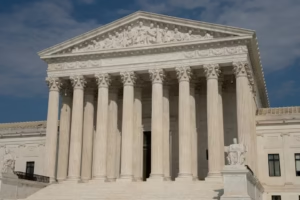
Supreme Court justices told Congress on Tuesday that threats against them have surged and asked lawmakers to approve a roughly 10% increase in the court’s security budget. Justice Amy Coney Barrett described being sent home with a bulletproof vest and being targeted in a “swatting” hoax at her house.

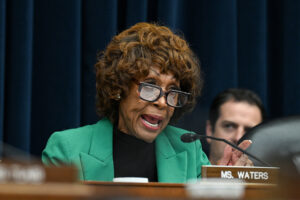
Barrett and Justice Elena Kagan appeared before a House subcommittee, the first time sitting justices have testified before Congress since 2019 outside of Senate confirmation hearings for nominees. Kagan said the Supreme Court’s police force expects a 38% increase in threats this year, following a 25% rise last year.

“For some of us, those threats have come very close,” Kagan told the subcommittee.

A Vest and a False Emergency Call

Barrett gave lawmakers a personal account of the threats she and her family have faced, focusing on how the experience has affected her children. She said that when threats intensified after a draft of the court’s 2022 ruling overturning Roe v. Wade leaked to the public, her security detail sent her home wearing a bulletproof vest. Her then 12-year-old son asked what it was.

“I didn’t expect that performing this service was going to put me in the position of explaining to my children what a bulletproof vest was and why I had to wear one,” Barrett said.

Barrett also described a swatting incident about six weeks earlier, the first time she has discussed it publicly. Officers responded to her home after a false report claimed gunshots and raised voices were coming from inside. One of her teenage sons opened the door to leave the house and found a large police presence outside. Barrett said she was grateful Supreme Court police were stationed at her residence, because they were able to intercept the responding local officers and explain that the report was fraudulent before the situation escalated.

Several federal judges have also received unsolicited pizza deliveries made in the name of Daniel Anderl, the son of U.S. District Judge Esther Salas. Anderl was fatally shot in 2020 at the family’s New Jersey home by a disgruntled lawyer who had appeared before Salas in court.

“Many of us, me included, have received threatening, anonymous deliveries designed to intimidate and harass us,” Barrett said. “I think the message on these deliveries being sent in his name is clear.”

The hearing came two weeks after the Supreme Court closed a nine-month term marked by major legal disputes involving President Donald Trump and his administration. The court backed several key elements of Trump’s expansive use of executive authority during that term. Its 6-3 conservative majority has issued rulings reshaping law on abortion, presidential power and other contested issues, while drawing sustained ethics criticism and a decline in public approval ratings.

Threats Extend Across the Federal Judiciary

Data from the U.S. Marshals Service shows nearly 400 judges faced threats last year, and 276 have been targeted so far this year as of July 1.

Barrett, one of Trump’s three appointees to the court, and Kagan, one of three justices appointed by Democratic presidents, both defended the court’s request for close to $230 million in the next fiscal year, an increase of roughly 10% over this year’s budget.

Chief Justice John Roberts addressed the issue in March, calling personal hostility directed at judges “dangerous” and saying “it’s got to stop.” He made the comment days after Trump posted criticism on social media targeting judges who had ruled against his administration. Roberts had also flagged the trend in his 2024 end-of-year report, writing that identified threats had risen sharply across all levels of the judiciary in recent years.

One of the most serious incidents took place in 2022, when a California resident armed with a handgun was found near Justice Brett Kavanaugh’s home in Maryland. Sophie Roske pleaded guilty to attempted assassination and was sentenced last year to eight years in federal prison.

Divide Over Ethics Enforcement

The Supreme Court adopted its first code of conduct in 2023 after years of scrutiny over justices’ financial disclosures and outside relationships. Critics said the code fell short because it left recusal decisions up to individual justices and included no enforcement mechanism.

Kagan repeated her support Tuesday for creating a judicial panel to enforce compliance with the ethics code, arguing that such a body would help maintain public confidence in the court. She said the justices are taking the code seriously and making what she called successful efforts to follow it.

Barrett offered a different view, saying she was “less certain” an enforcement mechanism was needed. She pointed to unresolved questions, including who would select the members of any enforcement panel.

Questions about individual justices’ conduct have continued in the background. Justice Samuel Alito told The New York Times that an upside-down American flag displayed outside one of his homes after the 2020 election was placed there by his wife during a dispute with a neighbor over a lawn sign critical of Trump. The inverted flag became a rallying symbol for Trump supporters who backed his false claims of widespread fraud in the 2020 election, which he lost to Democrat Joe Biden.

Justice Clarence Thomas has defended his decision not to disclose luxury trips paid for by Republican donor Harlan Crow, saying he believed the trips qualified as exempt personal hospitality under disclosure rules. Thomas has also described the omission of a real estate transaction involving Crow from his financial disclosure forms as unintentional.

A Budget Request Shaped by Two Different Pressures

Tuesday’s testimony tied together two separate strands facing the court: physical security for the justices and their families, and the ongoing debate over how much oversight the court should accept for its own conduct. Barrett and Kagan agreed on the first point, describing threats in similar terms and jointly backing the funding increase. They split on the second, with Kagan pushing for external enforcement of the ethics code and Barrett stopping short of endorsing it.

That divide mirrors the broader gap between the court’s conservative and liberal wings on questions of institutional accountability, even as both sides describe a shared and escalating security problem. The swatting incident at Barrett’s home and the pizza deliveries invoking Judge Salas’s late son point to a pattern that goes beyond the Supreme Court itself, reaching federal judges nationwide who have ruled on politically charged cases.

Congress has not indicated when it might act on the court’s budget request. The subcommittee hearing gave the justices a public platform to make their case directly, an unusual step for a court that typically avoids testifying before lawmakers outside the confirmation process.

Lindsey Graham death Ukraine

Lindsey Graham’s Death Raises Questions Over Future of U.S. Support for Ukraine

The sudden death of U.S. Senator Lindsey Graham has left Ukraine and its supporters asking whether the Trump administration’s recent shift toward backing Kyiv will hold without one of its loudest advocates in Washington.

Graham, a close ally of President Donald Trump, spent years pushing for military assistance to Ukraine and served as one of the main links between Kyiv and the White House. His death raises particular concerns about two issues where momentum had recently favored Ukraine: legislation to sanction Russia and continued military assistance as Kyiv faces intensified Russian attacks nearly four and a half years into the war.

Graham and other senators backing the sanctions bill announced Friday that they had reached an agreement with the White House to move forward on the Sanctioning Russia Act. The bill has 85 of 100 senators as co-sponsors but had stalled due to resistance from Trump. Trump also said last week he would grant Kyiv a license to produce interceptors for the Patriot missile defense system, though Zelenskiy’s government says it needs more defensive munitions immediately.

Graham, 71, died late Saturday, a day after returning from his 10th trip to Ukraine since Russia’s full-scale invasion began in February 2022. During that visit, he announced the agreement with the White House to move the Russia sanctions bill forward.

A Direct Line Between Kyiv and Trump

The South Carolina senator had lobbied for Ukraine aid for years, often working alongside Democrats to build support in Congress. Last year, he helped arrange a critical minerals agreement between the U.S. and Ukraine, persuading Trump to back a plan that gave the U.S. preferential access to new Ukrainian mineral projects in exchange for American investment.

“He was successful in leading President Trump to pivot in his position toward Ukraine,” said Matthew Murray, a former Commerce Department official who now teaches at Georgetown and Columbia universities. Murray said he expects Graham’s work to continue paying off even without him. “The senator’s good work here will be self-sustaining and self-executing,” he said.

Zelenskiy said he was deeply saddened by Graham’s death. “We remained in constant dialogue, and I will miss our conversations. We met twice in just the past week,” he said in a statement.

Analysts described Graham’s overall record on Ukraine as mixed, shaped by Trump’s at-times strained relationship with Zelenskiy, Trump’s “America First” foreign policy, and the ongoing war with Iran, which draws on U.S. resources and adds pressure to ease restrictions on Russian oil shipments as a way to moderate energy prices.

“It’s a big loss for Ukraine. I don’t think anyone should have any illusions about it,” said Scott Anderson of the Brookings Institution. Anderson said Graham had worked as an important behind-the-scenes influence on Trump, representing the more internationalist wing of the Republican Party.

Even Graham, though, was unable to get Trump to allow a vote on the sanctions bill while he was alive. The last major Ukraine aid package passed by both chambers of Congress was $61 billion in April 2024, and many Republicans have grown less supportive of Kyiv since Trump began his second term in January 2025.

Losing “the President’s Ear”

Passing the sanctions bill or securing further security assistance could prove harder without someone like Graham, a former Trump critic turned close ally and frequent golf partner, pushing the president directly. Several other lawmakers seen as sympathetic to Ukraine, including former Senate Republican leader Mitch McConnell, are also leaving Congress in January.

“Ukraine has lost an advocate that had the president’s ear,” said Charles Lichfield, deputy director of the Atlantic Council’s GeoEconomics Center.

Trump has at times pressured Zelenskiy’s government to accept a peace deal that could require painful concessions, and he has criticized the Ukrainian leader directly. Early last year, he confronted Zelenskiy in the Oval Office, telling him he was insufficiently grateful for U.S. military support.

More recently, Trump’s tone toward Ukraine has softened. Zelenskiy said after a NATO summit this month that Ukraine and the U.S. had reached a political agreement on licenses to produce Patriot interceptors, and that the two countries were discussing joint drone production. Trump is also expected to allow a vote on the sanctions bill, which targets countries that purchase Russian oil, gas and uranium.

Calls to Pass the Bill as a Tribute

Other supporters of the sanctions bill in both the Senate and House said they will push for its passage in Graham’s memory, with some suggesting it be renamed after him. “There can be no more fitting tribute to Lindsey,” said Democratic Senator Jeanne Shaheen of New Hampshire, the top Democrat on the Foreign Relations Committee and a co-sponsor of the bill.

The Senate has not set a timeline for a vote. Senate Majority Leader John Thune, a Republican from South Dakota, told CNN that passing the bill would represent an “incredible legacy” for Graham.

Graham’s death removes a specific kind of political leverage that is difficult to replace: a Trump loyalist willing to spend years building trust with the president, then use it to push him toward positions his instincts might otherwise resist. Murray’s assessment that Graham’s work will sustain itself assumes the agreements already in motion, the minerals deal, the Patriot interceptor license, the sanctions bill agreement, carry enough momentum to survive on their own.

That assumption will be tested soon. The Senate has not scheduled a vote on the sanctions bill, and the bill’s fate now depends on whether Thune and other Republican leaders follow through without Graham applying direct pressure. McConnell’s departure in January removes another internationalist voice from Senate Republican leadership at the same time.

For Kyiv, the immediate question is less about any single vote and more about whether Trump’s recent conciliatory tone toward Zelenskiy holds without the senator who did the most to produce it.

Pickaxe Mountain Iran strike

Trump Says U.S. Will Strike Iran’s Pickaxe Mountain Site “Relatively Soon”

President Donald Trump said Monday that the United States plans to strike Pickaxe Mountain in Iran, warning that Washington will keep hitting the country hard as the conflict continues.

“We’re going to take out Pickaxe Mountain. Tell the Iranians to be ready,” Trump said during an interview on the Hugh Hewitt Show.

Trump said U.S. forces are monitoring the site closely and have seen no activity there recently. He linked that quiet to setbacks in Iran’s nuclear program. “We see no activity there. They’re not doing well with their nuclear situation. Every time we hear about it, we blow it up. So they don’t like talking about it. But we’ll probably give Pickaxe a shot relatively soon,” he said.

A Site Built to Survive Bunker Busters

Pickaxe Mountain sits near Natanz, Iran’s uranium enrichment facility that has already suffered heavy damage in the war. The mountain hosts two deeply buried tunnel complexes built into the rock. Experts who track Iran’s nuclear infrastructure say the tunnels sit deep enough to withstand even the most powerful bunker buster bombs in the U.S. arsenal, including the weapons used against other Iranian nuclear sites earlier in the conflict.

That assessment raises questions about what a strike on Pickaxe Mountain could actually accomplish. If the tunnels are built to survive the largest bombs the U.S. has used so far, hitting the site would likely require either a different weapon, repeated strikes aimed at collapsing entry points, or a shift in strategy toward isolating the facility rather than destroying what’s inside it. Trump did not specify which approach the U.S. would take, or what kind of ordnance the mission would involve.

Trump’s comments came on the same day he announced the U.S. was reinstating a naval blockade on Iranian shipping in the Gulf, a separate move aimed at controlling traffic through the Strait of Hormuz. He said the U.S. would keep the strait open, but for a fee, a plan he would abandon within 24 hours in favor of pursuing investment deals with Gulf states instead. The blockade announcement followed another round of missile and drone attacks exchanged between the U.S. and Iran.

“There’s Not a Damn Thing They Can Do About It”

Trump described the pace of upcoming strikes in blunt terms during the same interview. “We’re going to hit them very hard tonight and we’re going to hit them hard tomorrow. And there’s not a damn thing they can do about it,” he said.

The remarks fit a pattern Trump has followed throughout the conflict, using interviews and public statements to preview military action before it happens. He took a similar approach ahead of the Hormuz blockade, telling reporters at the White House that Iran was doing no business in the strait and that the U.S. intended to keep it that way.

Whether the Pickaxe Mountain strike happens on the timeline Trump described, or whether it happens at all, remains to be seen. Iran’s Natanz facility and other nuclear sites have already absorbed repeated strikes since the U.S. and Israel first hit Iran on February 28, and Trump has previously signaled military moves that shifted or were scaled back before execution, as with the Hormuz transit fee.

Nuclear Program Under Pressure

Trump’s framing of Pickaxe Mountain, tying the site to Iran’s broader nuclear situation, suggests the U.S. views it as connected to the enrichment work at Natanz rather than a standalone target. If the tunnel complexes serve as storage, processing, or protection for material and equipment tied to that program, a successful strike could set back Iran’s nuclear capability further than the damage already done to Natanz itself. That would also explain Trump’s comment that Iranian officials avoid discussing the site: acknowledging it publicly could invite the kind of attention Tehran has spent years trying to prevent.

The mountain’s fortification level puts it in a different category from targets the U.S. has already struck in this war. Facilities that can be reached with existing bunker buster bombs have already taken damage. A site explicitly assessed as being beyond that capability represents a harder problem, one that may explain why Trump described the strike as coming “relatively soon” rather than immediately, and why he emphasized ongoing surveillance rather than an active strike plan.

For now, the statement functions as a warning directed at Tehran, delivered through a friendly media outlet, days into a period marked by an on-again, off-again blockade, a naval standoff in the Gulf, and near-daily exchanges of fire across multiple fronts in the region.

Strait of Hormuz blockade

Why US wants to control the strait of Hormuz by Trump

A naval blockade ordered by President Donald Trump against Iran’s ports in the Strait of Hormuz is testing an already fragile cease-fire between Washington and Tehran, reviving fears over a waterway that carries roughly a fifth of the world’s oil production.

Trump launched the blockade Monday morning, vowing to stop any ship “trying to enter or leave” Iranian ports. The order came after a 21-hour negotiation between U.S. and Iranian officials in Islamabad over the weekend ended without a deal, capping weeks of pressure from Trump demanding that Iran lift its restrictions on the waterway.

Soon after the blockade took effect, Trump warned Iran against retaliating with what he called “fast attack” ships. “If any of these ships come anywhere close to our blockade, they will be immediately eliminated, using the same system of kill that we use against the drug dealers on boats at sea,” he said, an apparent reference to U.S. strikes on Venezuelan vessels in the Caribbean Sea and Eastern Pacific Ocean.

Trump told reporters at the White House that Iran is currently doing no business in the strait and that the U.S. intends to keep it that way “very easily.”

Iran responded with its own warning, threatening retaliation against Gulf ports. An Iranian military spokesperson said any U.S. restriction on vessels in international waters would be illegal and amount to piracy. If Iranian ports come under threat, the spokesperson said, no port in the Gulf or Gulf of Oman will remain safe, according to state media.

Oil prices climbed again Monday morning, reaching around $102 a barrel as the two sides traded threats.

A Narrow Passage With Outsized Weight

The Strait of Hormuz sits between Iran to the north and Oman and the United Arab Emirates to the south, narrowing to just 30 miles at its tightest point. Saudi Arabia, Kuwait, Iraq, Qatar and the UAE export most of their oil and liquefied natural gas cargo through the passage by tanker.

“It’s a critical node in the global economy for all sorts of commodities, energy and otherwise,” said Jim Krane, a fellow for energy studies at Rice University’s Baker Institute for Public Policy. He noted the strait also carries about 45% of global sulfur exports, a material used in fertilizer production and in refining metals such as copper, cobalt and nickel.

Under the U.S. Navy’s own handbook on naval operations law, a blockade is an operation meant to stop vessels or aircraft, enemy or neutral, from entering or leaving ports, airfields or coastal areas controlled by an enemy state. Only the president or the secretary of defense, in this case Pete Hegseth, can order U.S. forces to establish one, and the blockade cannot bar access to neutral ports and coasts.

Trump and U.S. Central Command said ahead of Monday’s action that vessels moving in and out of Iranian ports will be targeted, while ships tied to other ports in the region will not.

Enforcement Still Taking Shape

The blockade on ships entering or leaving Iranian ports in the strait took effect at 10 a.m. ET Monday. Central Command said it will be enforced impartially against vessels of all nations moving through Iranian ports and coastal areas, including those on the Arabian Gulf and Gulf of Oman. What that enforcement will look like in practice over the coming days remains uncertain.

“What I’m seeing is most likely an attempt to replicate the pressure campaign on Venezuela against Iran right now,” said Noam Raydan, a senior fellow at The Washington Institute for Near East Policy. “Iran has military capabilities, and most likely it will retaliate. This is the difference between Iran and Venezuela.”

Krane called the operation a gamble, one that raises pressure on Iran while carrying the risk of pushing the situation toward wider conflict or toward a return to talks. “That’s the Trump Administration’s logic, to crank up the pressure in a way that doesn’t get anybody killed and keeps the cease-fire intact,” he said. He added that the U.S. held this option in reserve in case negotiations collapsed, and is now using it, betting that pressure on Iran’s finances will bring Tehran back to the table.

The blockade follows reports that Iran has been charging some vessels tolls for safe passage through the strait. Trump said he has directed the Navy to “seek and interdict every vessel in international waters that has paid a toll to Iran,” adding that no one who pays what he called an illegal toll will have safe passage on the high seas. He also pledged to clear any sea mines Iran may have laid. Central Command has said forces already set conditions for mine clearance, with two Navy guided-missile destroyers conducting operations in the strait. Krane described de-mining as slow, painstaking work, far harder than laying mines in the first place.

Oil and Gas Prices Jump

Brent crude reached $102 a barrel Monday as markets opened, up from $94 when trading closed Friday. The national average gas price hit $4.12 a gallon Monday, up from $3.12 a gallon the week before the initial U.S.-Israeli strikes on Iran.

Iran’s parliament speaker, Mohammed Ghalibaf, responded to the market swings by telling Iranians to expect worse. “Enjoy the current pump figures. With the so-called ‘blockade,’ soon you’ll be nostalgic for $4–$5 gas,” he said.

Unlike earlier stages of the conflict, the current blockade is expected to remove Iranian oil from the market entirely, oil that had continued moving through the strait despite the fighting. Krane estimated the blockade takes nearly 2 million barrels a day of oil and refined products off the world market. “From an oil market perspective, this is just adding to the pressure on oil markets. It’s taking more supply offline at a time when there’s already a shortage,” he said.

Allies Keep Their Distance

Trump’s relations with several European leaders have grown strained during the Iran war, particularly after he threatened to pull the U.S. out of NATO when allies declined an earlier request to send warships to the strait. The blockade has added to that friction.

British Prime Minister Keir Starmer said the U.K. will not take part in the U.S. effort. “It is, in my view, vital that we get the Strait open and fully open, and that’s where we’ve put all of our efforts in the last few weeks and we’ll continue to do so,” he said, adding that Britain is not supporting the blockade.

French President Emmanuel Macron said France and the U.K. will organize a conference in the coming days with countries willing to join a peaceful multinational mission to restore freedom of navigation in the strait. He described the mission as strictly defensive and separate from the warring parties, to be deployed once conditions allow.

Spanish Defense Minister Margarita Robles criticized the blockade directly, saying it makes no sense. “This is another episode in the downward spiral the world has been dragged into,” she said.

A Waterway Used as Leverage Before

Iranian officials have treated the strait as a bargaining chip since the U.S. and Israel first struck Iran on February 28. In March, Iran’s new Supreme Leader Mojtaba Khamenei, in his first statement after succeeding his father, said he would keep holding the waterway as leverage.

At least 17 tankers have been hit in the region since, slowing transit nearly to a stop as vessels avoid the route. On April 7, a vessel 25 nautical miles off Iran’s coast was struck by an unknown projectile that damaged the ship above the waterline, according to the United Kingdom Maritime Trade Operations center.

Gulf producers exported 3.3 million barrels a day of refined products and 1.5 million barrels a day of liquefied petroleum gas in 2025, according to the International Energy Agency. More than 3 million barrels a day of regional refining capacity has already shut down because of attacks and the lack of viable export routes.

When the U.S. and Iran entered a two-week cease-fire on April 7, Trump conditioned it on a complete and immediate opening of the strait. That opening never happened.

“The key point when it comes to the Strait of Hormuz is that there is really no other exit point for the magnitude of energy flow,” said Joel Hancock, an energy analyst at Natixis CIB. “The Strait of Hormuz is a true chokepoint in the sense that you are seeing production being shut in, because there isn’t really an alternative exit route.”

Iran’s geography gives it unusual power to restrict the passage. During cease-fire talks, one of Tehran’s proposals called for full Iranian control over the strait, a demand the U.S. and Gulf states would likely reject.

Michael Eisenstadt, director of the military and security studies program at The Washington Institute for Near East Policy, said Iran has spent decades building up systems designed to deny access to the strait, including anti-ship cruise missiles, mines, submarines, surface-to-air missiles and drones.

The current disruption echoes the Tanker War of the 1980s, when Iran and Iraq launched hundreds of attacks on oil tankers in the Persian Gulf and the strait during their war. Krane said those attacks struck far more ships than the current conflict has, yet did less damage to the global economy. “You had hundreds of ships that were hit,” he said. “But the impact on the global economy was not nearly as dire. Current attacks are having a much larger impact on oil markets in the global economy with much less hostile action by Iran.” Eisenstadt noted that 1980s attacks, while frequent, never fully halted passage through the strait, unlike the near standstill seen in recent weeks.

In 2011, then-Vice President Mohammad Reza Rahimi warned that oil would stop flowing through the strait if Western sanctions over Iran’s nuclear program widened. A similar threat resurfaced during last year’s so-called 12-day war, when the U.S. joined Israel in striking three Iranian nuclear facilities. Iran’s parliament voted at the time to close the strait, a largely symbolic move since it has no formal authority over the passage. Crude futures still jumped to $80 a barrel immediately after the vote, a preview of the volatility that has followed.

Trump Hormuz fee dropped

Trump drops Strait of Hormuz transit fee, seeks Gulf investment deals instead

U.S. President Donald Trump stepped back Tuesday from a plan to charge a 20% transit fee on ships passing through the Strait of Hormuz, saying he would instead pursue investment deals with Gulf states.

The reversal came less than five hours before the fee was set to take effect at 2000 GMT. Trump said the strait would remain open to all shipping traffic except vessels tied to Iran.

“Based on highly productive conversations with Middle East leadership, I have decided to replace the 20% United States Reimbursement Fee with Trade and Investment Deals that the various Gulf States will be making into the United States,” Trump wrote in a post on Truth Social.

The fee proposal had followed a tense 24 hours in the region. U.S. forces carried out attacks against Iran for the third night in a row after Tehran said it had closed the Strait of Hormuz. Trump responded Monday by reinstating a naval blockade on Iranian shipping and floating the transit fee as a way to cover the cost of protecting the waterway.

Strikes Continue Across the Region

Speaking on the “Hugh Hewitt Show” Monday, Trump said Iran would be hit “very hard tonight, and we’re going to hit them hard tomorrow. And there’s not a damn thing they can do about it.”

The governor’s office on Iran’s Qeshm Island, which sits on the Strait of Hormuz, said a U.S. projectile struck the island around 7 p.m. Tuesday, according to Iranian state media. Iran’s semi-official Tasnim news agency reported a separate U.S. projectile exploded near a water and electricity facility on Kish Island. State media also reported hearing an explosion in Andimeshk, in southern Khuzestan province.

Iran struck back by attacking a U.S. Army base in Jordan with ballistic missiles. Jordan said it shot down four of the missiles. Bahrain, which hosts a U.S. naval base, said it fended off a separate Iranian aerial attack, and explosions were reported in the capital, Manama.

Kuwait’s armed forces said they were engaging “hostile” aerial targets Tuesday evening, and the country’s state news agency reported that air raid sirens had sounded nationwide.

The exchange of strikes has deepened doubts about whether a memorandum of understanding signed last month can lead to a lasting halt in the fighting. The war has already disrupted global energy supplies and fueled concerns about inflation worldwide.

Shipping Industry Had Pushed Back on Fee

The proposed transit fee drew criticism before Trump dropped it. The U.N. shipping agency said it opposed fees on straits used for international navigation and argued there was no legal basis for mandatory tolls on strait transits.

Germany’s Hapag-Lloyd, the world’s fifth-largest container shipping company, called the fee proposal “fundamentally wrong.”

Trump said later Tuesday that he had never liked the idea of charging for use of the strait and that several countries had called him directly to say they preferred investing in the U.S. rather than paying a fee.

What exactly Gulf states have agreed to remains unclear. Trump’s Truth Social post did not name specific commitments, saying only that “Investments will be MASSIVE but, at the same time, extraordinarily good for them, and their future.”

Oil prices rose about 2% Tuesday, hitting a one-month high after the U.S. reimposed its naval blockade on Iran. The renewed fighting between Washington and Tehran has raised fresh concerns about energy flows through one of the world’s busiest shipping corridors.

Before the war began, roughly a fifth of global oil and liquefied natural gas traffic passed through the Strait of Hormuz each day. Had the 20% fee taken effect, it could have generated close to $240 million daily.

Analysts See Limits, But Also Risk

Regional analysts said the current hostilities appear contained for now, with both Washington and Tehran positioning themselves for eventual peace talks. Still, they cautioned that the conflict carries real risk of escalating beyond either side’s control.

“I doubt the two sides will resume a full war, especially as Trump will suffer, though there is also a distinct possibility that the Iranians will overplay their hand. That is true of Trump too, of course,” said Yezid Sayigh, a senior fellow at the Carnegie Middle East Center.

The war has grown increasingly unpopular in the United States, where gasoline prices have climbed since fighting began. Congressional elections are set for November, adding political pressure on the administration. A Reuters poll found that half of respondents believe the war has not been worth its costs.

How the Conflict Began

The U.S. and Israel struck Iran on February 28, prompting Iran to retaliate against Israel and against Gulf states hosting U.S. military bases. The fighting reignited a separate conflict between Israel and Hezbollah militants in Lebanon. Combined, the wars have killed thousands of people and displaced millions across the region.

In Rome, Lebanon and Israel resumed talks Tuesday, with Beirut pushing for progress toward an Israeli withdrawal from south Lebanon under a deal brokered by the United States.

A Fee Proposal That Never Had Support

The speed of the reversal stands out. Trump proposed the transit fee Monday and abandoned it less than 24 hours later, before it ever took effect. In that window, the U.N. shipping agency and one of the world’s largest container carriers both objected publicly, and Trump said Gulf leaders reached out directly to offer an alternative.

The shift from a punitive fee to investment pledges changes the nature of the arrangement. A transit fee would have applied uniformly to all shipping through the strait, generating revenue tied directly to traffic volume. Investment deals, by contrast, depend on individual agreements with Gulf governments, and the terms Trump described remain unspecified.

That ambiguity leaves open questions about enforcement and timing. Without a clear framework, it is not yet possible to say how the promised investments compare with the roughly $240 million a day the fee could have generated, or whether Gulf states view the new arrangement as a one-time gesture or an ongoing commitment tied to continued U.S. naval protection of the strait.

For now, the practical result is that Hormuz remains open to non-Iranian shipping, the naval blockade on Iran stays in place, and the underlying military conflict continues on multiple fronts, from Qeshm and Kish islands to Jordan, Bahrain, and Kuwait.

Houthi missiles Saudi Arabia

Houthi Missiles Strike Saudi Arabia After Airport Bombing Claim, Ending Four-Year Truce

Yemen’s Houthi movement fired missiles at Saudi Arabia on Monday, breaking a truce that had held for four years in the conflict between the kingdom and the Iran-aligned group. The attack followed accusations from the Houthis that Saudi Arabia had bombed an airport under their control.

Saudi Arabia intercepted missiles “launched by the terrorist Houthi militia toward the southern region,” a spokesperson for the Saudi-led military coalition in Yemen said on X.

Houthi military spokesperson Yahya Saree said the group targeted the international airport in Abha, capital of a mountainous southern region bordering Yemen where many Saudis go to escape summer heat.

Monday’s strikes mark the first attack the Houthis have claimed against Saudi Arabia since an informal truce took hold in March 2022, following a period of Houthi attacks on Saudi energy infrastructure.

The violence raises the possibility of renewed conflict on Saudi Arabia’s southern border. That border had stayed relatively quiet since Iranian drone and missile attacks on the kingdom’s eastern regions and Riyadh eased after an April truce in the broader Iran conflict.

Saudi Arabia’s size compared with smaller Gulf states helped it weather that earlier war. The kingdom kept exporting oil through a pipeline running from its eastern fields to a Red Sea terminal on the west coast, a route that bypasses the Strait of Hormuz entirely. A full-scale conflict with the Houthis, who have attacked Red Sea shipping in the past, could put that route at risk.

Saudi Arabia’s government communication office did not respond to a request for comment.

Iranian Plane at the Center of the Dispute

Earlier Monday, the Houthi movement, which controls northern Yemen including the capital Sanaa, accused Saudi Arabia of launching airstrikes on Sanaa’s international airport. The group vowed to retaliate and later described the day’s attacks as “blatant aggression,” saying they marked the end of a period of de-escalation.

The Houthis also warned airlines against flying through Saudi airspace until what they called the “siege” on Sanaa airport is lifted.

Yemen’s internationally recognized government, which is backed heavily by Saudi Arabia and hosts many of its officials in Riyadh, claimed responsibility for the strikes on Sanaa airport. The government’s defense ministry said its forces targeted the runway to stop an Iranian plane from landing there in violation of Yemeni sovereignty.

The ministry said government forces would respond to any hostile aircraft entering Yemeni airspace “by all available means,” and it held Iran responsible for the incident.

An armed forces spokesman said later that the aircraft in question had landed instead at Hodeidah airport, which is under Houthi control. It remains unclear whether any attempt was made to stop the plane from landing there. Hodeidah sits about 150 kilometers, or 93 miles, southwest of Sanaa on Yemen’s Red Sea coast.

Red Cross Plane Also Detained

A Yemeni government minister said separately that the Houthis were holding a plane belonging to the International Committee of the Red Cross at Sanaa airport. Hachem Osseiran, the ICRC’s spokesperson for the Middle East, told Reuters that all ICRC staff and the plane’s crew were safe and accounted for. He declined to comment further.

The detention comes days after a prisoner exchange deal mediated by the ICRC between the Houthis and Yemen’s internationally recognized government collapsed, with each side blaming the other. That failed deal was already a sign of rising tension between the two before Monday’s strikes.

A War That Never Fully Ended

Yemen has endured civil war and proxy conflict involving outside powers for more than a decade. The fighting began after the Houthis seized Sanaa and forced the internationally recognized government to relocate to the south of the country.

Saudi Arabia led a military coalition that intervened against the Houthis in 2015. The intervention triggered what became one of the world’s worst humanitarian crises, with millions of Yemenis facing hunger and displacement in the years that followed.

Fighting flared again late last year after a separatist movement backed by the United Arab Emirates swept through territory in southern Yemen, splintering the Saudi-led coalition that had been built to fight the Houthis.

Despite that fracture, the 2022 truce between Saudi Arabia and the Houthis had largely held until Monday. It survived the regional escalation tied to the Israel-Gaza war, during which the Houthis fired on numerous ships in the Red Sea. It also survived the separate Iran war, which brought Iranian strikes closer to Saudi territory without drawing the Houthis back into direct conflict with Riyadh.

Monday’s exchange breaks that pattern. It puts Saudi Arabia in the position of facing renewed threats on two fronts within the same year: first from Iran directly, and now from a Yemeni faction Tehran has armed and trained for years.

The immediate trigger, disputed by both sides, centers on a single aircraft. Yemen’s government says it struck the Sanaa runway to block an Iranian plane from landing in Houthi territory. The Houthis say the strike itself was the provocation, an attack on an airport that serves millions of Yemenis living under their control. The plane ultimately landed at Hodeidah, leaving open the question of what the Sanaa strike accomplished militarily.

That ambiguity extends to the broader trajectory of the conflict. Neither side has signaled whether Monday’s strikes represent a one-time retaliation or the start of a sustained campaign. The Houthis’ warning to international airlines suggests they expect the standoff to continue, at least around Sanaa airport, in the near term.

For Saudi Arabia, the stakes go beyond its southern border. The kingdom’s Red Sea oil export route, which let it avoid dependence on the Strait of Hormuz during the Iran war, runs through waters the Houthis have targeted before. Any Houthi decision to resume attacks on shipping, rather than limiting strikes to Saudi territory, would reopen a front that had been quiet since before the 2022 truce.

Lindsey Graham dies

Lindsey Graham, South Carolina senator and Trump ally, dies at 71

U.S. Senator Lindsey Graham, a South Carolina Republican who spent years as one of Donald Trump’s sharpest critics before becoming one of his closest allies in the Senate, has died at 71, his office announced Sunday.

Graham died after a “brief and sudden illness,” according to a post from his office on X. U.S. media reported that emergency personnel responded to a call for cardiac arrest at his Capitol Hill home in Washington on Saturday night.

The race to fill his seat won’t shift the broader battle for Senate control in November between Republicans and Democrats, since South Carolina has voted reliably Republican for years. But his death takes away a dependable vote for Trump at a moment when the president is trying to push his agenda through a narrowly divided Senate. It also lands while another senior Republican, Kentucky Senator Mitch McConnell, remains hospitalized for undisclosed health issues.

South Carolina law gives the state’s Republican governor, Henry McMaster, the power to name a temporary replacement for Graham’s seat right away. State Republicans will then have to hold an expedited primary to choose a nominee for the November 3 general election, and that nominee doesn’t have to be the same person McMaster appoints as the temporary fill-in.

Graham built a reputation as a defense hawk. He backed Israel and Ukraine consistently and pushed a hard line against Iran. He had just returned from a trip to Ukraine and was scheduled to appear Sunday morning on NBC’s “Meet the Press,” the network said.

Trump reacted to the news by calling Graham “one of the greatest people and senators I have ever known” and a hard-working patriot. Ukrainian President Volodymyr Zelenskiy said he was “deeply saddened” and described Graham as “a true defender of freedom and the values that make our world safer.” Israeli Prime Minister Benjamin Netanyahu said in a statement that Israel had lost one of its greatest friends, that America had lost a great patriot, and that he personally had lost a beloved friend.

A former critic turned ally

Graham didn’t always speak about Trump this way. During the 2016 campaign, when Graham was one of many Republicans competing against Trump for the party’s presidential nomination, he warned on social media that nominating Trump would lead to political disaster, adding that Republicans “will deserve it.”

In a 2015 interview with CNN, Graham called Trump “a race-baiting, xenophobic, religious bigot” and said he didn’t represent the Republican Party or the values that American troops were fighting for.

Their relationship shifted dramatically in the years that followed. Graham became a loyal supporter and a frequent golf partner of Trump’s. Even so, he broke with Trump publicly last year over the president’s decision to pardon roughly 1,500 supporters who attacked the U.S. Capitol on January 6, 2021, warning that the move could encourage more violence.

A steady voice on Ukraine

Graham visited Ukraine 10 times since Russia launched its full-scale invasion in 2022, according to Zelenskiy. On Friday, just days before his death, Graham met with Zelenskiy in Kyiv to discuss Ukraine’s air defense needs and a pending Russian sanctions bill.

Speaking to reporters in Kyiv’s Mykhailivska Square, Graham argued that China held the key to ending the war. He said the path toward peace ran through Beijing more than through Washington, Kyiv or Moscow, and said he hoped China would use its influence on Russia for the benefit of the world. He added that he didn’t believe Russian President Vladimir Putin was ready for peace talks yet, but said it wouldn’t take much to get him there.

Zelenskiy wrote on Facebook that Ukraine would always be grateful for Graham’s recognition of the country and his admiration for the courage of its defenders.

Decades in Washington

Graham most recently chaired the Senate Budget Committee. He also served on the Appropriations Committee, the Judiciary Committee and the Committee on Environment and Public Works.

Before entering the Senate in 2002, Graham served in the House of Representatives, first elected in 1994. He worked as an Air Force lawyer and served in the South Carolina Air National Guard earlier in his career.

Graham was not married and lived in Seneca, South Carolina.

Scroll to Top