
Israeli airstrikes killed at least 27 people across Lebanon in the 24 hours before Wednesday, officials said, with more than a dozen of the dead coming from a southern town where two earlier wars have already left deep scars.
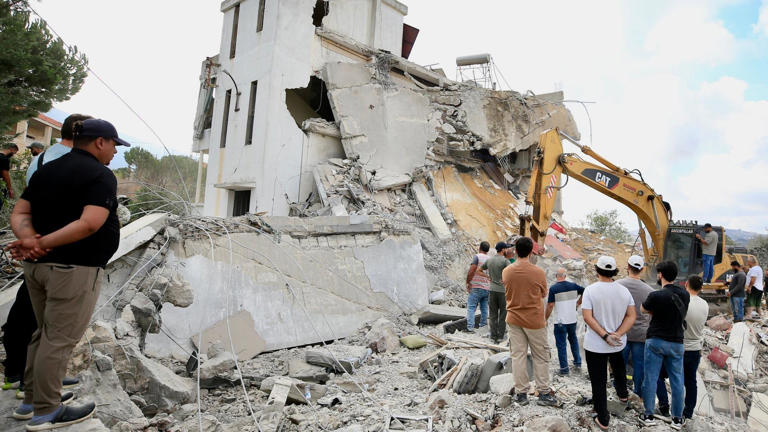
The Israeli military said its forces struck the southern town of Qana late Tuesday to target a Hezbollah commander. Fifteen people died in that strike. Photos and video from the scene showed flattened buildings and others missing their top floors. Rescue crews pulled bodies from the wreckage and brought in a bulldozer to clear rubble while they searched for anyone still trapped.
Israel identified its target as Jalal Mustafa Hariri, a Hezbollah commander who oversaw the Qana area.
Qana has been struck before, with devastating results. In 1996, Israeli artillery shelling hit a United Nations compound sheltering hundreds of displaced people in the town, killing more than 100 civilians and wounding scores more, including four U.N. peacekeepers. During the 2006 war, an Israeli strike on a residential building in Qana killed nearly three dozen people, a third of them children. Israel said at the time it had been aiming at a Hezbollah rocket launcher positioned behind the building.
“Qana always gets its share,” Mayor Mohammed Krasht said, referring to the town’s history.
A Mayor Killed In Nabatiyeh
Lebanon’s caretaker prime minister, Najib Mikati, said Israel had “intentionally” struck a municipal council meeting in Nabatiyeh that had been called to coordinate relief efforts. Six people died in that strike.
“What solution can be hoped for in light of this reality?” Mikati asked in a statement.
More than half a dozen additional strikes hit Nabatiyeh and the surrounding area, Lebanon’s Health Ministry said, bringing the city’s death toll to 16 with 52 people wounded. Among the dead was the city’s mayor, Ahmad Kahil, according to provincial governor Huwaida Turk.
U.N. Special Coordinator for Lebanon Jeanine Hennis-Plasschaert called reports of Kahil’s death “alarming.”
“This attack follows other incidents in which civilians and civilian infrastructure have been targeted across Lebanon,” she said.
Strikes also hit the eastern Bekaa Valley and other parts of southern Lebanon. The Israeli military said it was targeting Hezbollah command centers and weapons facilities it says are embedded in civilian areas. Lebanon’s crisis response unit counted 138 airstrikes and shellings on Wednesday alone.
Hezbollah fired more than 90 projectiles into Israel that same day, the Israeli military said. Four civilians were wounded, according to Israel’s Magen David Adom rescue service.
Israel Says It Destroyed A Hezbollah Tunnel
A video that spread widely online showed Israeli forces detonating large explosives on a hillside in Mhaibeb, a town roughly two miles from the Israeli border. The Israeli military said the target was a Hezbollah tunnel running beneath the village.
Abdelmoe’m Shucair, mayor of the neighboring village of Mays el Jabal, told reporters that families there had already fled.
State Department spokesperson Matthew Miller said in Washington that the U.S. was aware of the footage. “We do not want to see entire villages destroyed,” he said, calling on Israel to pursue Hezbollah targets in ways that protect civilian infrastructure and civilians themselves.
Beirut Strikes Resume After Six-Day Pause
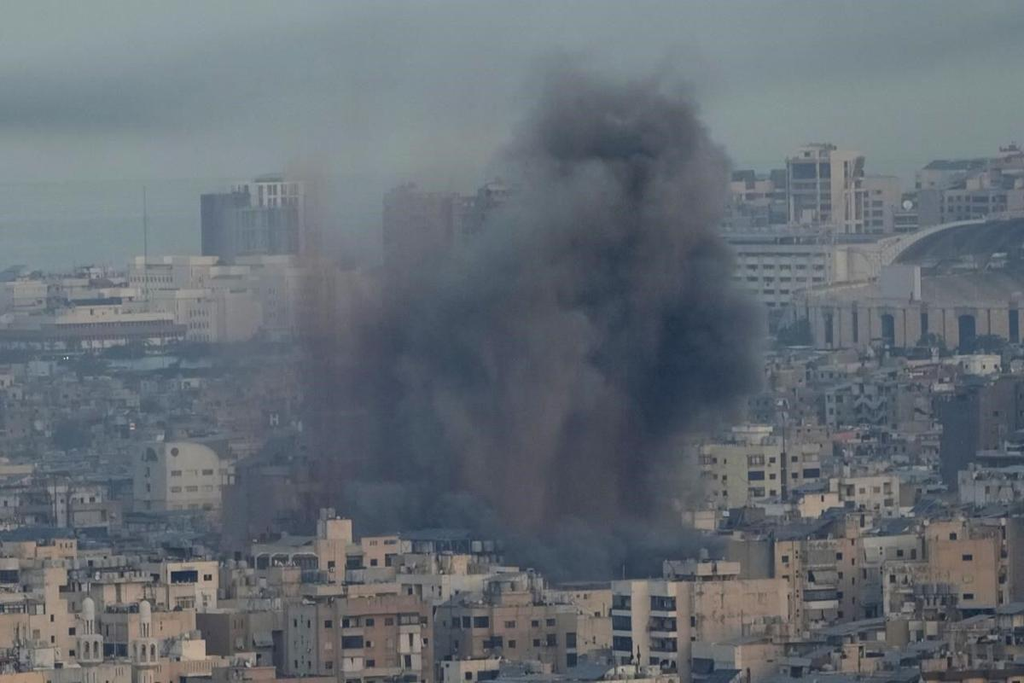
Israel struck Beirut’s southern suburbs again after holding off for six days, hitting what it described as an arms warehouse beneath an apartment building. It offered no evidence to support that claim. The military issued an evacuation warning before the strike, and no casualties were reported.
The strikes came days after Mikati said the United States had assured him Israel would scale back attacks on the capital.
Southern Beirut, known as the Dahiyeh, has a strong Hezbollah presence but is also a dense residential and commercial district home to large numbers of civilians with no ties to the group. The Israeli military posted its evacuation warning on X before the strike; the first of three airstrikes in the area came less than an hour later.
Speaking to troops in southern Lebanon on Wednesday, Israeli Defense Minister Yoav Gallant said intelligence gathered from captured Hezbollah fighters was significantly weakening the group’s ability to launch attacks.
“We will conduct negotiations under fire. I said that on the first day, I said it in Gaza, I said it here. This is our tool,” Gallant told soldiers.
A Year Of Escalating War
Hezbollah began firing rockets into Israel on Oct. 8, 2023, a day after Hamas’s attack on southern Israel triggered the war in Gaza. What had been a year of lower-intensity fighting along the Israel-Lebanon border escalated into full-scale war last month, when Israel launched a ground invasion of Lebanon in early October.
Israeli strikes have killed Hezbollah leader Hassan Nasrallah and most of his senior commanders since then. Israel has said it will keep up its offensive until residents of communities near the border can safely return home.
Lebanon’s Health Ministry said 2,377 people have been killed in the country since last October, with more than three-quarters of those deaths coming in the past month alone. The fighting has displaced roughly 1.2 million people in Lebanon, including about 400,000 children.
Hezbollah’s rocket fire, which has grown longer-range and more intense over the past month, has pushed around 60,000 Israelis out of their homes in the north. Attacks from Lebanon have killed close to 60 people in Israel, about half of them soldiers.
Hezbollah has said its attacks will continue until a cease-fire is reached in Gaza. That prospect has grown more distant after months of U.S., Egyptian and Qatari-brokered negotiations stalled.
Gaza Death Toll Climbs In Jabaliya
Israel remains at war in Gaza more than a year after Hamas’s attack, which killed roughly 1,200 people, mostly civilians, and saw about 250 taken captive. Around 100 hostages are still being held, and roughly a third of them are believed to be dead.
Israeli forces have spent more than a week carrying out a major operation in Jabaliya, a refugee camp in northern Gaza that dates to 1948. Israeli troops have returned to Jabaliya and nearby areas repeatedly, saying each time that Hamas fighters had regrouped there.
Hospitals have received around 350 bodies since the Jabaliya offensive began on Oct. 6, said Dr. Mounir al-Boursh, director-general of Gaza’s Health Ministry. More than half of the dead were women and children, he said, and many bodies remain in the streets and under rubble because rescue teams cannot reach them due to ongoing strikes.
“Entire families have disappeared,” al-Boursh said.
Gaza’s Health Ministry says Israel’s offensive has killed more than 42,000 people. It does not distinguish fighters from civilians in that count but says women and children make up more than half. The offensive has left large parts of Gaza in ruins and displaced roughly 90% of the territory’s 2.3 million residents, pushing hundreds of thousands into overcrowded tent camps and shelters set up in schools.