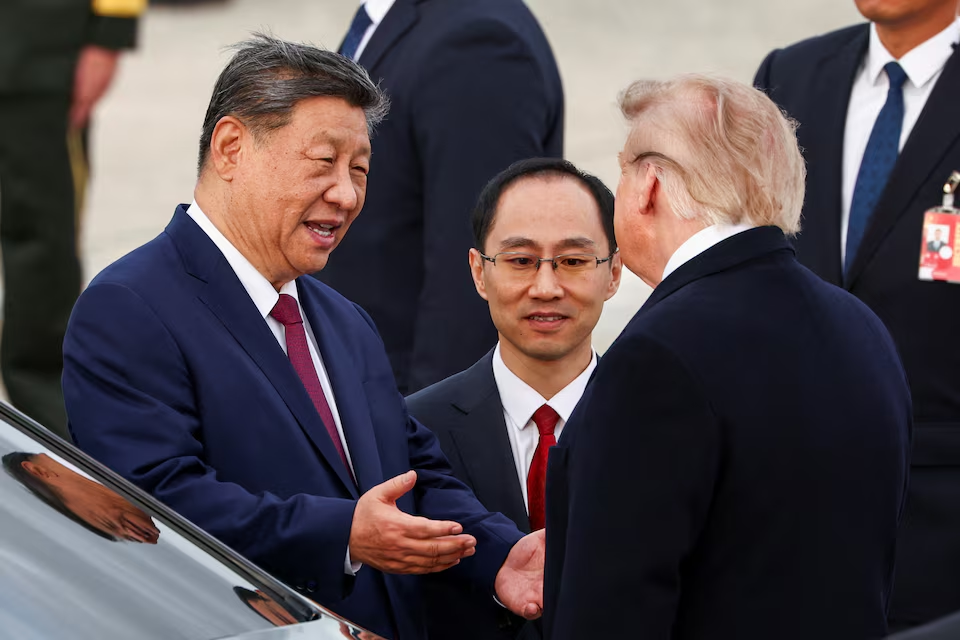

Iran’s clerical leadership has spent the past week filling the streets of Tehran with mourners for Supreme Leader Ayatollah Ali Khamenei, killed in U.S.-Israeli strikes when the war began. The turnout has been enormous. But beneath the show of unity, cracks in Iranian society over the economy and state repression remain unresolved.
Millions have taken part in funeral processions, mourning ceremonies and demonstrations across the country this week. Authorities discounted transport, food and lodging to help swell the crowds, and a senior cleric said last week that the size of the gatherings amounts to a referendum on the Islamic Republic itself. Officials are framing the turnout as proof of national defiance against foreign adversaries and domestic critics alike.
Yet even as Tehran filled with mourners on Monday, analysts and some senior Iranian officials pushed back on the idea that crowd size reflects genuine support for continued theocratic rule.
“If anyone’s thinking this is a litmus test for the popularity of the Islamic Republic, history tells us otherwise. It’s a funeral, and Iranians do funerals very well,” said Ali Ansari, a professor of modern history at St Andrews University in Scotland.
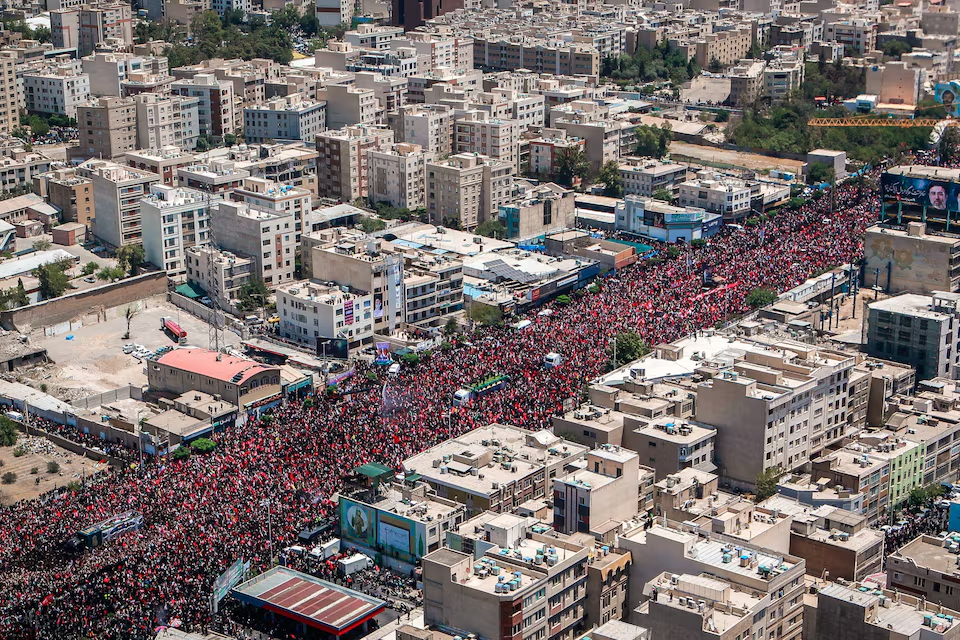
Reuters spoke with several people at the rallies who said their presence reflected religious duty rather than political loyalty. Iran has a deep Shi’ite Muslim tradition around mourning rituals, and many attendees described themselves as spectators rather than supporters of the regime.
“I wanted to witness history”
Hamidreza, a 63-year-old retired teacher in Tehran who asked that his family name be withheld, said he attends the funerals of major national figures regardless of his politics.
“My attendance does not mean that I am pro-regime, this big event happened in my country and I wanted to witness history,” he said.
Reuters could not independently verify crowd numbers from Monday’s events, though drone footage appeared to show hundreds of thousands of people packed into central Tehran.
Analysts estimate the government’s core ideological base at roughly 15 to 20 percent of Iran’s 93 million people, a figure based on support for hardline candidates in past elections. In the 2024 presidential vote, hardline candidate Saeed Jalili won around 13.5 million votes.
This week marks the first funeral for a supreme leader since 1989, when Khamenei’s predecessor, Ayatollah Ruhollah Khomeini, the leader of Iran’s 1979 revolution, was buried two days after his death. That funeral drew millions of mourners and at times descended into near-chaotic scenes.
Khamenei was killed on February 28. Islamic tradition calls for burial within a short window after death, but the war delayed his funeral for months. That delay gave the government time to organize a large-scale state event.
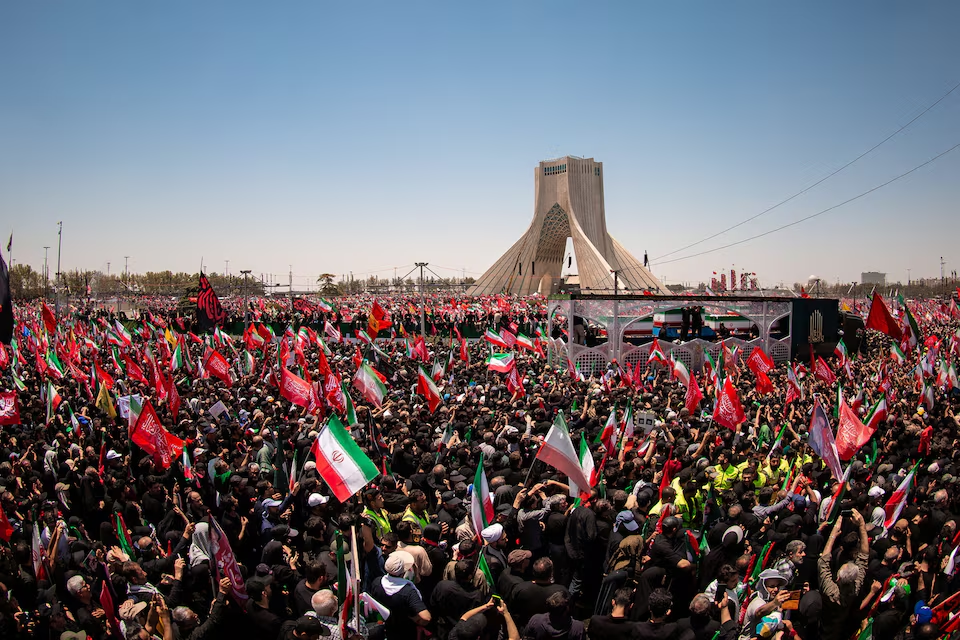
This week’s ceremonies are also the first public gatherings since the war ended, a conflict that supporters of the Islamic Republic viewed as an existential threat. President Donald Trump had warned during the fighting that “a whole civilization will die.”
Houshang Dabiri, 51, traveled from Shiraz to attend the funeral. He explained his reasoning simply: “If we do not respect our leaders, the world will not respect us.”
One senior source familiar with the government’s thinking acknowledged that people showed up for a mix of reasons, including religious obligation and political loyalty. Many of the attendees, the source said, were the same people who regularly turn out for state-organized demonstrations backing official policies.
Economic strain and past unrest
Four months of war with the United States compounded hardship for a population already struggling under sanctions that have driven high inflation and a collapsing currency. Wages have lost much of their value.
Not everyone in Tehran joined the mourning. Maryam, a 33-year-old housewife, stayed home.
“I did not attend the ceremony. Why should I be part of their staged show? Instead of such funerals, think about people’s economic problems. We are suffering,” she said.
Economic grievances fueled Iran’s last wave of nationwide protests, which eventually grew into open calls to end theocratic rule. Security forces crushed that unrest in January, killing thousands of demonstrators. Executions of people convicted for taking part in those protests have continued throughout the year.
When news of Khamenei’s death spread on the war’s first day, residents in different parts of Tehran reported hearing cheers.
A former senior Iranian official who attended this week’s funeral events described a fractured political landscape, one that includes people who are neither loyal to the government nor actively opposed to it, but who are driven mainly by economic pressure. He pointed to tension between hardliners who believe the ceasefire terms were too weak and critics pushing for greater personal freedoms.
He compared the funeral to a family gathering after a parent’s death. “Children attend the funeral, but afterwards their disputes begin,” he said.
A pattern of mourning followed by unrest
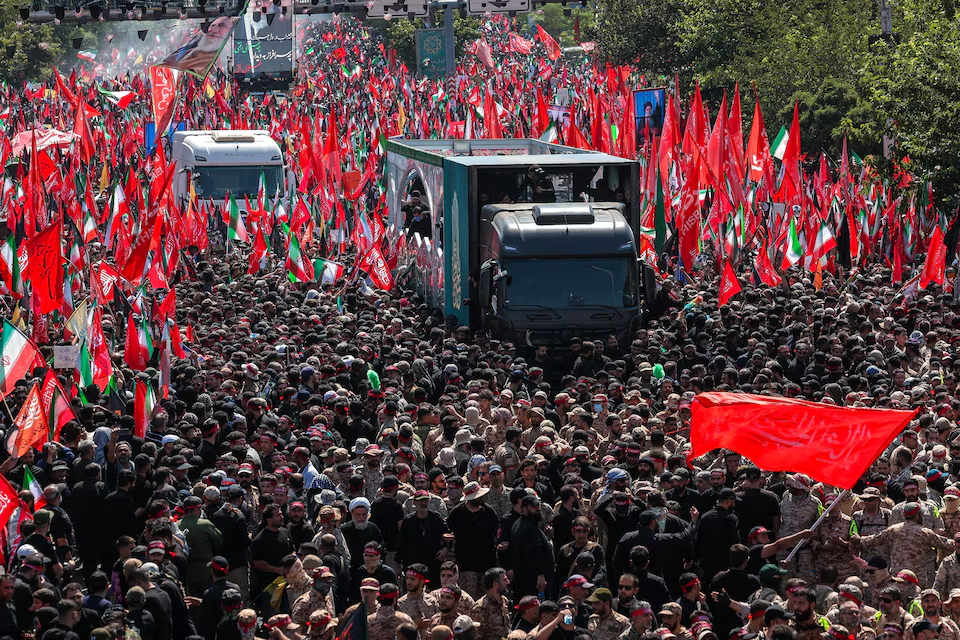
Iran has seen this cycle before. When General Qassem Soleimani was killed in a U.S. airstrike in 2020, central Tehran filled with mourners for his funeral in scenes similar to this week’s events.
Two years later, the death of a young Kurdish woman in police custody, following her arrest over the country’s mandatory dress code, triggered nationwide protests against the ruling system. Security forces killed hundreds of people while putting down that unrest.
The pattern suggests that large funeral crowds in Iran have historically said little about whether the public supports the government once the mourning ends.