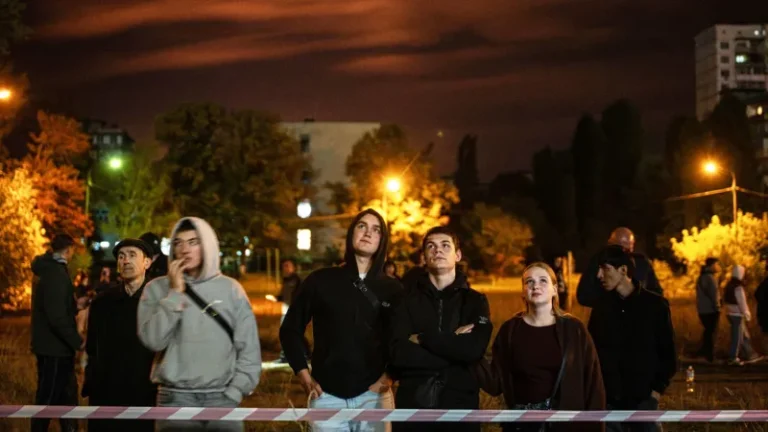

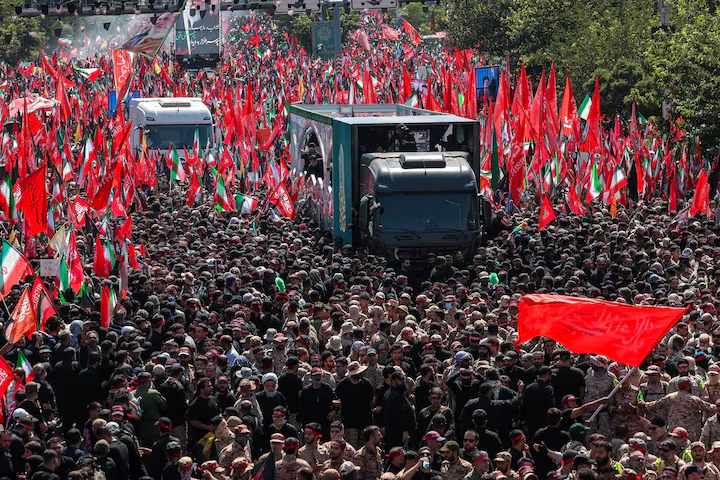
Iran’s Supreme Leader Ayatollah Ali Khamenei was buried this week in Tehran, and the funeral turned into something bigger than a farewell for a single man. Massive crowds filled the streets, and the scale of the gathering carried a pointed message aimed at Washington and Jerusalem: the campaign to break the Islamic Republic didn’t work.
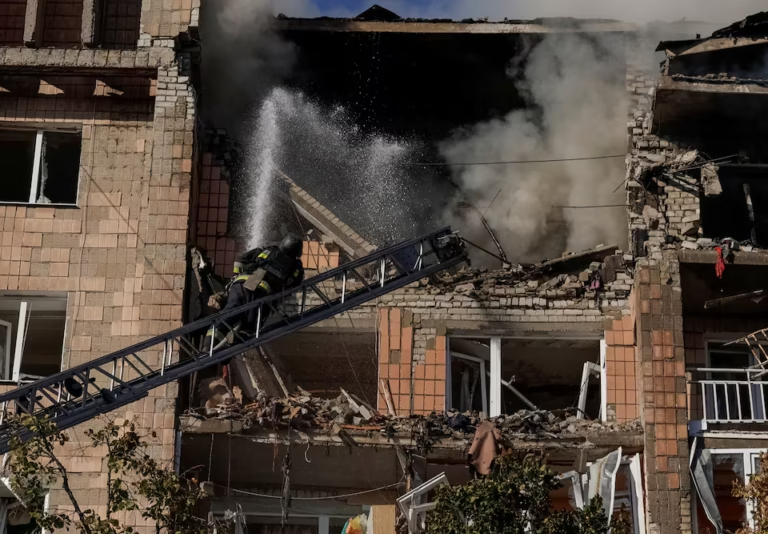
The war started on February 28, when U.S. and Israeli strikes hit Iranian targets. Analysts expected the conflict to leave Iran diminished. Instead, the country used Khamenei’s funeral to project the opposite image. Regional officials, diplomats and analysts who spoke about the funeral described it as a calculated show of unity, one meant to tell the world that Iran had survived intact and now intended to shape whatever comes next in negotiations with the United States.
That sense of having endured the war now shapes Iran’s approach at the bargaining table. Officials close to the talks say Tehran is treating its survival as leverage, not just a relief.
A diamond, not a lollipop
The war exposed something Iran had known for decades: its geography, specifically its position over the Strait of Hormuz, gives it power that no airstrike can erase. Officials in Tehran are now demanding that any future nuclear agreement start from an acknowledgment that Iran’s control over the strait is permanent and non-negotiable.
Washington had set up a 60-day ceasefire meant to restart nuclear diplomacy. Instead, it triggered a separate standoff over the strait itself. Iran’s location, not its uranium stockpile, has become the most valuable card it holds. Tehran wants the world, and especially Washington, to accept its dominant position around Hormuz as a fact rather than a bargaining chip.
The 60-day countdown tied to the ceasefire and its accompanying memorandum of understanding hasn’t even started yet. Iran is using that gap to set the terms of engagement before formal talks resume.
Alex Vatanka, a scholar at the Washington-based Middle East Institute, said Iran cares less about the money it could collect from taxing ships that pass through Hormuz than about the political recognition that would come with controlling it.
“The symbolic part is more important for the Iranians than revenues,” Vatanka said. “They want some kind of symbolic acceptance that the Strait is Iran’s. It’s about accepting Iran as the sovereign power over the Strait.”
Vatanka pointed to a Persian saying to describe Iran’s thinking: “Why give away a diamond for a lollipop?”
In Tehran’s calculation, control over Hormuz is the diamond. Sanctions relief and the release of frozen Iranian assets abroad amount to the lollipop; useful, but far less valuable than the prize Iran already holds.
“Divine blessing”
Iranian leaders have made this position explicit in public statements. Parliament Speaker Mohammad Bagher Qalibaf called the strait Iran’s most important asset.
“The Strait of Hormuz is our greatest power tool; we must properly protect this divine blessing,” Qalibaf said. He added that Iran would “under no circumstances relinquish its rights” over the waterway.
Regional sources and diplomats say Iran is deliberately dragging out negotiations to lock in the gains it believes it secured during the war before it even considers returning to nuclear talks.
Alan Eyre, a former U.S. diplomat who worked on Iran policy, said Tehran has no incentive to rush. Iran denies it’s building a nuclear weapon, and Eyre said the country is willing to let that issue sit while it focuses on cementing its position over Hormuz.
“Iran is perfectly happy to play for time and just drag negotiations out,” Eyre said. “It wants control of Hormuz and is holding talks to institutionalize that control.”
That strategy could take several forms: transit arrangements, coordination mechanisms with shipping companies, or new fees charged for passage through the corridor. Hormuz carries roughly a fifth of the world’s oil and liquefied natural gas supply, giving Iran enormous influence over global energy markets if it succeeds in embedding itself into how the strait operates.
Gulf states, meanwhile, are watching closely to see whether Washington has the ability, or the will, to reverse what Iran has already established on the ground.
Trump’s political clock
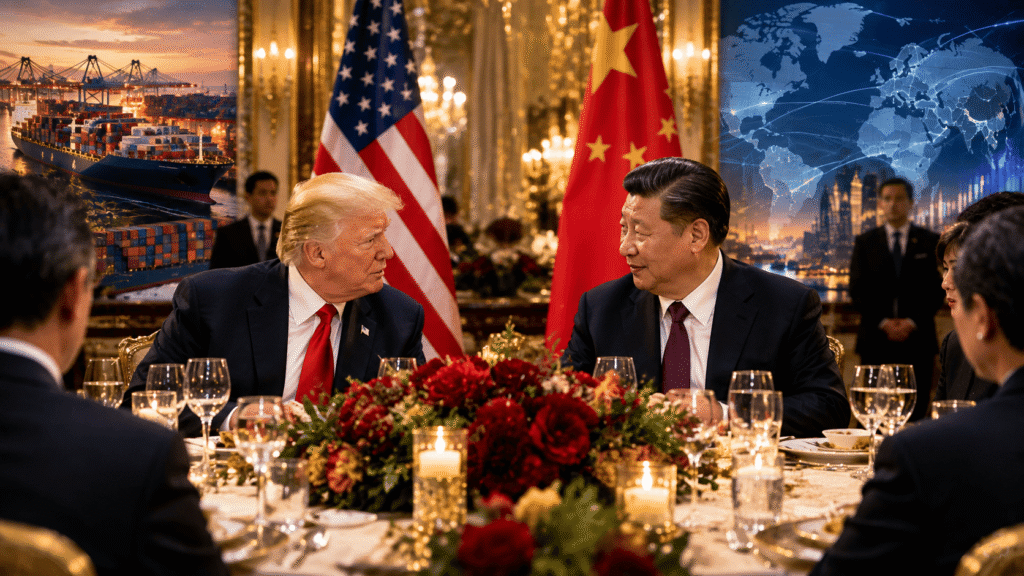
Tehran believes President Donald Trump faces more pressure to reach a deal than Iran does to give ground. Trump is watching midterm elections approach in November and appears wary of opening another confrontation with Iran before then, according to Eyre.
“The Iranians know that President Trump wants to get out; he wants to move on,” Eyre said. “They know they can squeeze him because time is on their side.”
Aaron David Miller, a former U.S. Middle East negotiator, said the military campaign against Iran failed to strip away the country’s leverage. What Washington got instead was a shaky ceasefire whose implementation has turned into its own separate fight.
Miller said Tehran has little reason to engage seriously on the nuclear file until it feels confident that the new balance of power around Hormuz has been accepted, and until it sees real movement on unfreezing the billions of dollars in Iranian assets held overseas.
“The 60-day clock was always a fantasy,” Miller said. “The Iranians are not going to move to the nuclear file until they’re relatively confident they’ve achieved this new status quo. They want to make sure that Trump understands, and that the world understands, that there’s no going back to February 27.”
Iran holds its ground
Miller described the central fact of the postwar situation this way: neither American military strikes nor the threat of a naval blockade managed to shift Iran’s grip on the strait.
“They’re not going to give it up,” he said.
Ebtesam Al-Ketbi, who leads the Emirates Policy Center, said Washington’s decision to end the war without resolving its root causes may have backfired. Instead of settling the dispute, the ceasefire appears to have turned Hormuz from a point of pressure into a durable source of leverage for Iran.
Gulf officials worry that the war demonstrated Iran’s capacity to shape events around the strait in ways that will be difficult to undo, even if Tehran eventually receives sanctions relief or progress on the nuclear front.
“They are twisting the arms of the Americans and everybody,” Al-Ketbi said. “Now that they have found this Hormuz treasure, they will not leave it.”
Analysts expect Washington will eventually have to accept the strait reopening on terms largely set by Tehran rather than dictated by the United States.
Eyre summed up how the standoff is likely to end. “No one’s going to win, but Iran will lose less than the United States will,” he said.