
A long and carefully watched handshake between U.S. President Donald Trump and Chinese President Xi Jinping has become one of the most discussed moments of their summit in Beijing, with body language experts suggesting the interaction revealed far more than diplomatic courtesy.
The two leaders met Thursday during the first official visit by a U.S. president to China in nearly a decade, as both nations attempt to stabilize relations amid growing tensions over trade, Taiwan, technology and global security issues. While the summit focused heavily on economic cooperation and geopolitical concerns, it was the opening handshake that quickly captured international attention.
Experts say such moments are rarely accidental when world leaders meet on the global stage. Every gesture, posture and movement can carry political meaning, especially between two leaders known for projecting strength and authority.
A Handshake Loaded With Symbolism
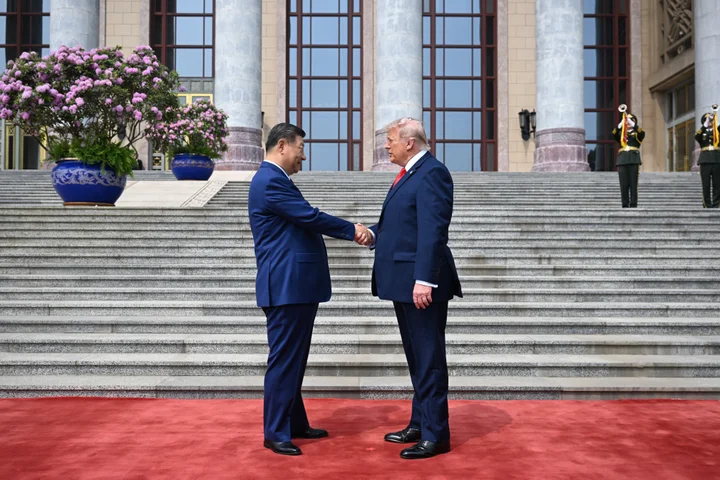
According to behavior analysts and body language specialists, the extended handshake between Trump and Xi appeared to signal a subtle power contest from the very beginning.
Unlike many of Trump’s previous public greetings with foreign leaders, the U.S. president did not appear to use his well-known forceful handshake technique, often described by observers as a “pull” or “yank” designed to establish dominance.
Instead, Xi appeared to take the initiative early by extending his hand before Trump fully approached him. Experts noted that this move allowed the Chinese leader to shape the interaction before Trump could dictate the tone.
Body language analyst Traci Brown said the moment stood out because Trump appeared more restrained than usual.
“Trump is known for trying to control the handshake physically,” Brown explained. “This time, he seemed more measured and cautious, which suggests a different diplomatic calculation.”
The handshake lasted considerably longer than a standard greeting between political leaders. Rather than the brief exchange commonly seen during formal state events, the two men maintained the handshake through multiple shoulder movements while cameras flashed around them.
Analysts described the interaction as less of a greeting and more of a carefully choreographed display of mutual positioning.
Xi’s Approach Seen as Strategic
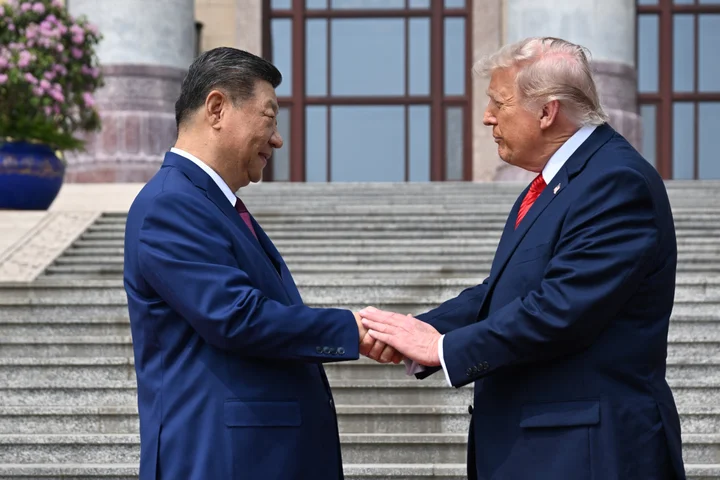
Psychologist and communications expert Denise Dudley noted that Xi’s method of initiating the handshake may have been deliberate.
By presenting his hand early and controlling the angle of the exchange, Xi appeared confident and composed, she said. Observers also noted that Xi maintained steady eye contact throughout much of the interaction, while Trump tilted his head during portions of the exchange.
Experts interpreted Xi’s posture as an attempt to project calm authority and diplomatic control during an important summit.
The Chinese president’s body language aligned with Beijing’s broader effort to present itself as a stable global power amid ongoing international uncertainty.
China’s leadership has consistently emphasized themes of partnership, strategic balance and long-term cooperation in public messaging surrounding the summit.
Trump’s Familiar Gestures Return
Although Trump avoided his trademark forceful handshake tactics, analysts noted that he still used gestures associated with familiarity and authority.
At several points during the greeting, Trump used his free hand to pat Xi’s hand and later touched his shoulder. While such gestures can sometimes signal warmth between close allies, experts suggested the setting made the moves appear more strategic than friendly.
“In personal relationships, those touches can indicate closeness,” Dudley explained. “But in a formal diplomatic setting, they can also be interpreted as attempts to establish hierarchy or control.”
Trump has frequently used physical gestures during meetings with global leaders throughout his political career. Previous encounters with figures including Emmanuel Macron and Volodymyr Zelenskyy drew attention for unusually long or forceful handshakes that became viral discussion points online.
This time, however, the dynamic appeared more balanced, reflecting the delicate nature of U.S.-China relations.
Diplomatic Tensions Behind the Smiles
Despite the friendly optics of the state visit, major disagreements remain between Washington and Beijing.
During closed-door discussions, Xi reportedly warned that disputes over Taiwan could push relations between the two countries into dangerous territory if mishandled. China continues to claim Taiwan as part of its territory, while the United States maintains support for Taiwan’s defensive capabilities.
At the same time, both governments are trying to stabilize trade ties after years of tariffs, technology restrictions and economic competition.
Trump described the summit as potentially historic, while Xi emphasized the importance of cooperation between the world’s two largest economies.
Public remarks from both leaders remained largely diplomatic, with Trump praising the “magnificent welcome” he received in Beijing and Xi stressing that China and the United States should act as partners rather than rivals.
Still, experts say the body language during their first moments together hinted at the deeper complexities behind the diplomatic smiles.
Why Handshakes Matter in Global Politics
Political handshakes have long been analyzed as symbolic moments in international diplomacy. From Cold War negotiations to modern summit meetings, gestures between leaders often reflect broader political realities.
A handshake can communicate confidence, caution, respect or rivalry before any official statement is released.
For Trump in particular, handshakes have become a signature part of his public persona. Throughout both of his presidential terms, his physical interactions with other leaders have frequently generated headlines and sparked debate about power dynamics on the world stage.
Xi, meanwhile, is known for a more controlled and disciplined public style, rarely displaying overt emotion during international appearances.
The contrast between the two men made Thursday’s interaction especially compelling for observers.
A Carefully Managed Display
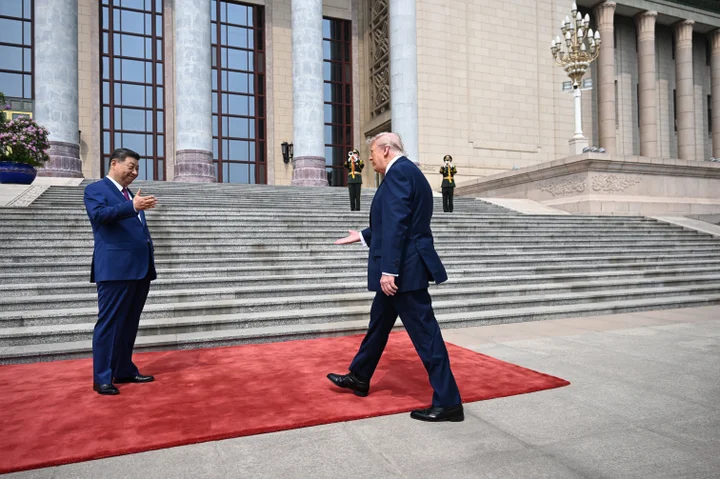
Ultimately, analysts believe the handshake reflected the current state of U.S.-China relations itself: competitive, cautious and layered with symbolism.
Neither leader appeared willing to fully concede dominance, but both also avoided creating an openly confrontational moment in front of global audiences.
As negotiations continue on trade, security and regional tensions, the extended handshake may come to symbolize more than a ceremonial greeting. It offered a visual snapshot of two powerful leaders attempting to manage rivalry while avoiding direct conflict.
For viewers around the world, the moment reinforced an enduring truth of diplomacy: sometimes the most revealing political statements are made without words at all.