China remained Germany’s largest trading partner during the first quarter of 2026, although its lead over the United States narrowed significantly as German exports to the Chinese market recorded a sharp decline.
New calculations based on preliminary trade data show that while China maintained the top position in total goods trade, weakening German exports and stronger import flows from China are reshaping Europe’s largest economy’s trade landscape.
The figures, compiled using January–March data from Germany’s Federal Statistics Office and trade analyses by Germany Trade & Invest (GTAI), point to a changing dynamic in Berlin’s economic ties with both Beijing and Washington.
China Holds Narrow Lead in Total Trade
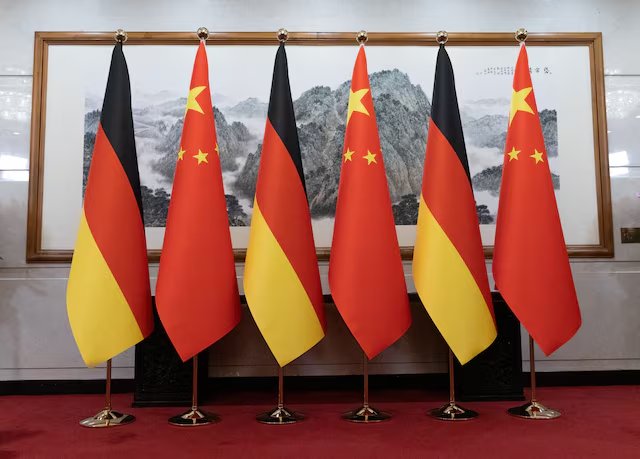
During the first three months of 2026, total trade in goods between Germany and China reached approximately €61.5 billion ($71.3 billion), only slightly ahead of the €60 billion recorded with the United States.
The Netherlands ranked third with total trade valued at €52.8 billion.
China only overtook the United States as Germany’s biggest trading partner in 2025, but the latest numbers suggest the competition for the top position remains tight.
Trade experts say the narrow margin means the ranking could shift again before the end of the year.
Analysts noted that trade volumes between Germany and the U.S. remain substantial despite recent declines, leaving room for Washington to regain the lead if current trends continue.
German Exports to China Fall Sharply
One of the most notable developments in the first-quarter data was the steep decline in German exports to China.
Exports to the Chinese market dropped by 12.5% year-on-year to €18 billion, reflecting softer demand and changing market conditions.
The fall pushed China down to ninth place among buyers of German goods — a significant shift for a country that has long been one of Germany’s most important export destinations.
Trade observers warn that if the trend continues, China could potentially fall out of Germany’s top ten export markets later this year.
Germany’s export-driven economy has traditionally relied heavily on industrial sales to China, particularly in sectors such as automobiles, machinery, chemicals and engineering equipment.
However, growing competition from domestic Chinese manufacturers and changing consumption patterns have increasingly challenged German exporters.
Imports From China Continue Rising
While exports weakened, imports from China moved in the opposite direction.
Germany imported goods worth €43.5 billion from China during the first quarter, representing a 6.4% increase compared with the same period last year.
The rise highlights Germany’s continued dependence on Chinese manufacturing and supply chains across industries ranging from electronics to consumer goods and industrial components.
Analysts say imports could climb further in the coming months, especially if Chinese electric vehicle manufacturers expand their footprint in the German market.
Industry experts have pointed to possible policy incentives and subsidies that may strengthen Chinese EV competitiveness in Europe.
The growth of Chinese-made electric vehicles has become a major issue across European markets as governments balance industrial policy with consumer demand and climate goals.
U.S. Remains Germany’s Largest Export Market
Despite a decline in shipments, the United States retained its position as the single biggest destination for German exports.
German exports to the U.S. fell by around 12% to approximately €36 billion during the quarter.
Even with the decline, the American market remained comfortably ahead of France, which imported €31.4 billion worth of German goods, and the Netherlands at €29.1 billion.
The figures underscore the continued importance of the U.S. economy for German manufacturers and exporters.
German firms maintain strong positions in sectors such as automobiles, pharmaceuticals, industrial machinery and advanced engineering products across the U.S. market.
Shifting Trade Patterns Raise Strategic Questions
The latest data arrives as Germany continues reassessing its economic relationship with China amid geopolitical uncertainty and efforts to diversify supply chains.
Berlin has increasingly emphasized reducing strategic dependencies while maintaining commercial ties with Beijing.
At the same time, Germany is seeking to strengthen trade partnerships with allies and expand market access elsewhere.
The narrowing gap between China and the United States reflects broader changes in global commerce, where supply chain resilience, industrial competition and geopolitical considerations are becoming as important as trade volumes.
For Germany, the challenge will be balancing its export ambitions with evolving global economic realities as competition between major economies intensifies.