

U.S. President Donald Trump warned on Monday that Washington would strike Iran again after the first exchange of fire in a month, pulling a war that had settled into an economic standoff back toward the edge of open combat.
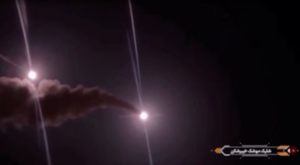
Iran fired missiles overnight at two U.S. air bases in Jordan. Tehran launched the barrage after American forces hit Iranian launchers on Larak Island, a strike Washington said targeted equipment used to fire sea mines into the Strait of Hormuz.
Overnight Strikes Follow U.S. Attack on Larak Island
The exchange began on Sunday, when U.S. forces struck two Iranian launchers on Larak Island. A U.S. official said Islamic Revolutionary Guard Corps troops had been observed preparing to launch rockets carrying sea mines into the strait.
Iran’s Tasnim news agency reported that three people died in the U.S. strike. The state-affiliated outlet Nournews identified two of them as members of the Revolutionary Guards Navy.
Larak sits near Bandar Abbas, a strategically vital Iranian port. The Strait of Hormuz normally carries a fifth of the world’s crude oil and gas shipments, but it has been effectively closed since the war began.
U.S. Central Command described its action as “limited, precise” and said it targeted minelaying forces that posed an “imminent threat” in the strait. It offered no further details.
Iranian state television carried a Revolutionary Guards claim that a supertanker caught fire and stopped after being hit by two naval mines in the strait’s southern waters. The U.S. military denied that account.
Trump Threatens a Harder Response
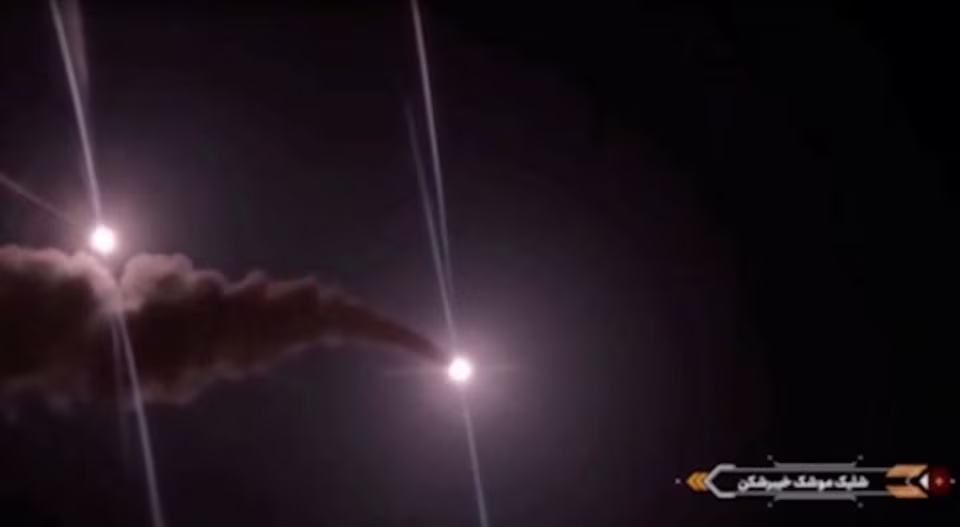
Trump told Fox News he intends to escalate. “We’re going to hit them hard,” he said, according to the network. “There will be a response.”
A senior Iranian source told Reuters the overnight fighting, the first since late July, amounted to a “limited and contained confrontation.” The source warned Tehran would answer forcefully if attacked again.
Trump also said U.S. air defenses intercepted every Iranian missile capable of causing damage, and that fresh American sanctions were already inflicting serious harm on Iran’s economy, according to Fox News.
Fake Videos Add Confusion to the Standoff
Trump posted two videos on social media showing explosions engulfing Iran’s main oil export terminal on Kharg Island, writing, “Kharg island being blown to smithereens!!!” The footage was generated by artificial intelligence. No such attack occurred.
Iran dismissed the post as “laughable.” Vice President JD Vance told reporters that Trump “likes to switch it up on social media a little bit” and was “sending a message” rather than describing real events.
Washington has largely avoided striking Iran’s major oil and gas infrastructure directly. Iran has warned that any such attack would draw devastating retaliation against Gulf neighbors allied with the United States.
Economic Pressure Keeps Building
The war Trump launched alongside Israel six months ago has mostly turned into an economic standoff since late July, with each side wagering that rival shipping blockades in the Gulf will eventually force the other to back down.
U.S. Treasury Secretary Scott Bessent said Monday that Iran’s latest attacks reflect the toll of new secondary sanctions targeting countries that buy Iranian oil. Speaking to reporters at a G20 finance ministers meeting in North Carolina, Bessent said, “They’re in shock at the state of their economy. I would think that they are lashing out kinetically because they are losing economically.”
Bessent told Reuters on Sunday that Washington plans to roll out additional secondary sanctions weekly, starting with measures aimed at banks that handle Iranian transactions.
A Fragile Push for Talks
Iranian President Masoud Pezeshkian struck a softer tone on Monday during a regional security meeting in Kyrgyzstan. He told Indian Prime Minister Narendra Modi that Tehran still wants a negotiated end to the conflict.
“We believe that continuing the war is in no one’s interest, neither ours, nor the region’s, nor humanity’s,” Pezeshkian said, according to Iran’s semi-official Tasnim news agency.
The diplomatic opening comes after months of failed attempts to end the fighting. Trump halted his intensive bombing campaign, which he called “Operation Epic Fury,” in April through a ceasefire. The two sides agreed in June on an interim framework meant to lead toward broader talks, but that arrangement collapsed, triggering fresh clashes and two weeks of renewed U.S. bombing in July.
For the past month, Washington has bet that a blockade of Iranian ports would inflict enough economic pain to force Tehran into compliance. Iran has held firm that the Strait of Hormuz remains closed and will reopen only on its own terms.
The senior Iranian source told Reuters that conditions in the strait will “become worse” for any vessel that violates the passage rules Tehran has set.
What Comes Next
Trump has not achieved the goals he set when the war began: dismantling Iran’s nuclear program, limiting its capacity to strike regional rivals, and creating conditions that could push Iranians to challenge their clerical leadership.
With new sanctions arriving weekly and both sides signaling readiness to strike again, the coming days will test whether Monday’s exchange stays contained or marks a return to sustained combat in the Gulf.