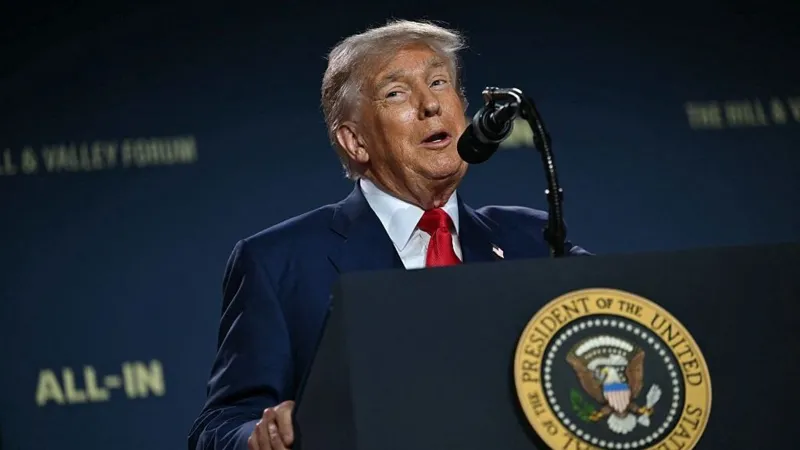

President Donald Trump’s foreign policy has faced sharp criticism at home over the past year. A costly and unresolved war against Iran, combined with his continued failure to restrain Israel’s military campaign, has coincided with a steep drop in his approval ratings. Public frustration with both conflicts has grown steadily among American voters.
Yet one region tells a different story about Trump’s influence abroad. Over the past eighteen months, a series of right-wing candidates has won national elections across Latin America. Trump has claimed personal credit for several of these victories, framing them as evidence of his continued sway over the hemisphere. He has given this pattern a name: the “Donroe Doctrine,” a reference that ties his approach to the historical Monroe Doctrine while stamping it with his own branding.
These newly elected leaders have shown a consistent willingness to align with Washington’s priorities. That alignment carries consequences for the people living under their governments, particularly given the historical pattern of US partnerships with right-wing security forces in the region.
Colombia’s shift to the right
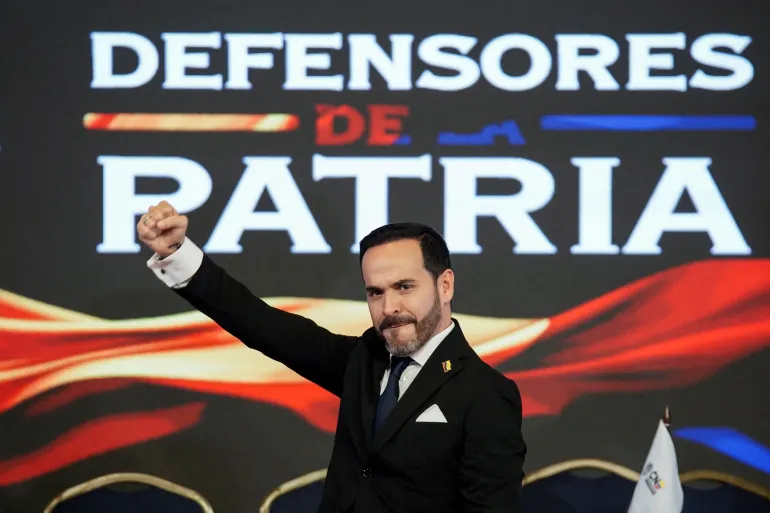
Colombia’s political direction changed sharply with the inauguration of Abelardo de la Espriella, a far-right businessman and former criminal defense lawyer. De la Espriella built a significant portion of his legal career representing paramilitary commanders in court, a detail that has drawn attention given his current political positioning. During his campaign, he pledged to “disembowel” the political left, language that set the tone for his approach to governance.
Since taking office, de la Espriella has prioritized expanding fracking operations and pursuing other projects with significant environmental impact. His rise also marks a broader shift in Colombian politics away from the previous administration.
His predecessor, Gustavo Petro, spent four years pursuing policies aimed at reducing domestic inequality. Petro was also an outspoken critic of Israel’s military campaign in Gaza, a position that put him at odds with Washington. With de la Espriella now in office, Colombia has moved back into closer alignment with US foreign policy goals.
That closer relationship now has a physical headquarters. Medellin has been designated as the base for “Shield of the Americas,” a hemisphere-wide security initiative backed by the Trump administration. De la Espriella has described the partnership in expansive terms, stating that the United States and Colombia share a “shared destiny to defend Western civilisation across the Americas.”
Argentina’s austerity under Milei
In Argentina, President Javier Milei has become one of the most closely watched figures in this political shift. His party performed strongly in October’s midterm elections, a result that followed a direct intervention from Trump. The US president tied a $40 billion bailout package for Argentina to the outcome of those elections, a connection that drew criticism from observers who viewed it as an attempt to influence the vote from outside the country.
Milei’s signature policy has been the elimination of a wide range of welfare programs. The economic effects of these cuts have been significant. Millions of Argentinians have fallen into poverty since the reductions took effect, and Buenos Aires has seen a marked increase in homelessness as a direct result of the policy changes.
Honduras and the threat of lost aid
Honduras saw a similar political transition in January, when businessman Nasry Asfura assumed the presidency. His path to office was shaped in part by an explicit threat from Trump, who said he would cut off US aid to Honduras if Asfura lost the election. Asfura went on to win.
Since taking power, Asfura has pursued a crackdown on crime as a central policy priority. The results have not matched the stated goals. Violence in the country has increased following the crackdown, a pattern that mirrors the outcomes of similar enforcement-first approaches elsewhere in the region.
Chile’s turn toward Kast
Chile’s 2025 presidential election produced another win for Trump’s preferred candidates. Jose Antonio Kast, an admirer of former Chilean dictator Augusto Pinochet, secured the presidency with Trump’s public endorsement. Kast moved quickly after taking office, personally overseeing the start of a project to dig trenches along Chile’s borders as part of a broader border security push.
A regional pattern
Beyond these four countries, several other Latin American leaders have adopted comparable political approaches. Ecuador’s Daniel Noboa, El Salvador’s Nayib Bukele and Peru’s Keiko Fujimori have each pursued strict, enforcement-heavy strategies on crime. Fujimori’s political lineage adds another layer to this pattern: she is the daughter of a former Peruvian dictator, connecting her current political rise to the country’s own history of authoritarian rule.
These leaders share more than a general ideological alignment. Nearly all have embraced the position that government should prioritize the interests of wealthy citizens and businesses, a principle that runs through Trump’s own domestic agenda. Most have also adopted iron-fist crime policies that rely heavily on incarceration and lethal force rather than addressing the underlying causes of crime.
Many of these governments have also leaned on anti-immigrant rhetoric, using migrants as a political target in ways that closely resemble Trump’s own messaging in the United States. This shared approach to migration has become a defining feature of the political movement now taking hold across the region.
Domestic fallout in the United States
The immigration enforcement approach that has spread across Latin America has its roots in policies pursued domestically by the Trump administration. US Immigration and Customs Enforcement has expanded its operations significantly, with agents detaining international scholars and activists as part of broader enforcement efforts. ICE has also been connected to incidents resulting in the deaths of US citizens, according to reporting on the agency’s recent operations.
Financial data released in August adds another dimension to the picture. A report from Democratic members of the US Congress Joint Economic Committee found that Trump’s personal income reached $2.2 billion in 2025, more than tripling his earnings from the previous year. The same report found that American households collectively lost $219 billion over the same period, with families facing higher costs for everyday essentials.
A historical pattern repeats
The current alignment between Washington and right-wing Latin American governments is not without precedent. Both Republican and Democratic administrations in the United States have previously partnered with abusive governments in the region, often in the name of combating leftist politics or drug trafficking. Those partnerships have historically coincided with significant violence against civilians, particularly in countries where US-backed security forces operated alongside paramilitary groups.
Colombia’s own history illustrates this pattern directly. Decades of US funding for Colombia’s military, delivered while the armed forces maintained close ties to right-wing paramilitary organizations, contributed to substantial civilian casualties. De la Espriella’s legal work defending paramilitary leaders places him within that same historical context, even as he now leads the country as head of state.
What the shift means going forward
The current wave of elections has drawn comparisons to previous periods of US-aligned governance in Latin America, with some analysts describing the trend as a broader political realignment sweeping the region. The scale and coordination behind this shift, spanning Colombia, Argentina, Honduras, Chile and beyond, distinguishes it from earlier, more isolated instances of US influence in individual countries.
Trump’s continued engagement with the region shows no sign of slowing. Financial incentives, public endorsements and now a dedicated security initiative headquartered in Medellin all point toward deeper US involvement across the hemisphere. For the people living under these newly elected governments, the practical effects of that involvement, from welfare cuts to expanded crime crackdowns, are already being felt.
The pattern raises questions about what comes next as these governments consolidate power. History suggests that when Washington partners closely with right-wing security forces in Latin America, the resulting policies carry significant human costs, particularly for the populations these crackdowns are ostensibly designed to protect.