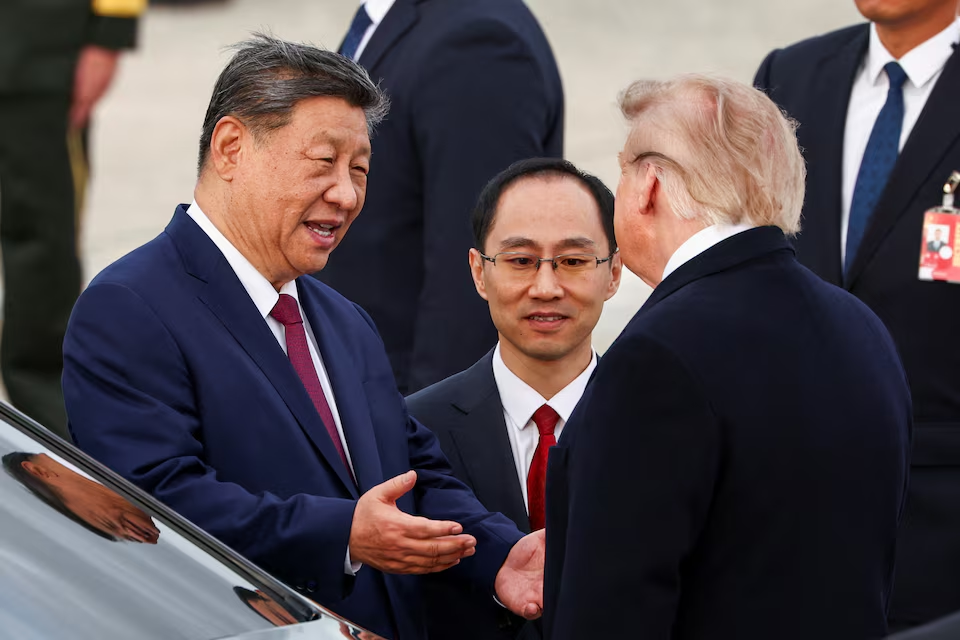
When and Where the State Dinner Took Place
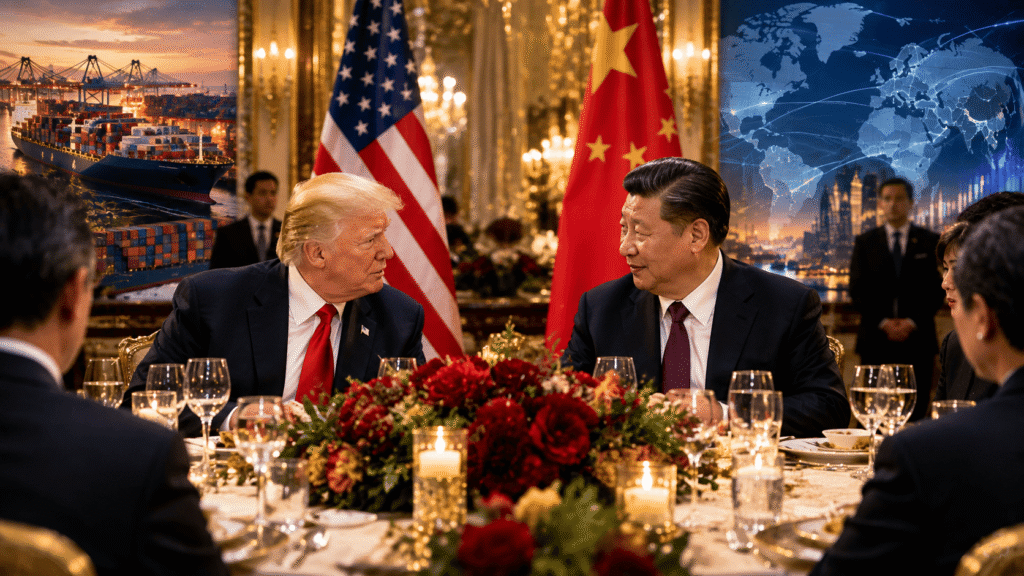
The Trump–Xi state dinner is scheduled to be held in the East Room of the White House in Washington, D.C on September 24, 2026. It followed a day of ceremony which had already been very full — military review in the Rose Garden, flyover, and a closed door meeting of the two leaders of about 90 minutes duration. At nightfall, the atmosphere shifted from tight-fisted diplomatic to candle-lit toasts and fine china.
Who Hosted the Dinner
The evening was hosted by President Donald Trump and his wife Melania Trump. Chinese President Xi Jinping and his wife, Peng Liyuan, attended. The office of Melania Trump said it was her who planned the entire thing, even choosing the wine and the flatware. The red china set used at the table was the one that was often used during Ronald Reagan’s presidency — a slight nod to White House practice.
Why Xi Jinping Was Honored With a State Dinner
It was not simply an ordinary dinner, as it was Xi’s first visit to Washington in 11 years and his second official U.S. state visit ever. It was also convenient, as Trump’s visit to the Chinese capital had come only a few months earlier, in May 2026, after Xi had been the host at the Great Hall of the People. Washington wanted to let him know that the relationship, despite its complexity, was taken seriously by rolling out a state dinner in his honor.
What Was on the Menu for the Trump–Xi State Dinner?
The White House described the menu as one that showcases “American ingredients with subtle Chinese influence.” Notably, there wasn’t a scrap of red meat on the table — the entire meal was pescatarian.
First Course
The menu began with a yellow squash velouté, smoothened and served with a wild mushroom fricassée, fresh herbs, crispy pancetta and a little scallion oil. It seems like a fancy dish on paper, but because it’s a classic and comforting dish, it’s actually just plain old comfort food, this time for company!
Main Course
Next, sesame-crusted sea bass, which has a thin layer of toasted sesame growing on its sides.Then, sea bass with a thin crust of sesame, which is toasted just enough to give the fish a crunch that doesn’t overpower it. It was served over braised baby bok choy and roasted garden eggplant, drizzled with a verdant sauce verde from fresh green herbs.
Dessert
For dessert, the kitchen served a vanilla crémeux with a sour cherry confit center, set on a walnut frangipane and shaped to look like a piece of fruit. Alongside it came a scoop of ice cream made with honey harvested from the White House’s own beehives — a detail Melania Trump introduced back in April when she unveiled the hive on the grounds.
Drinks and Wine Served
The evening opened with a toast of Schramsberg “Blanc de Noir,” a sparkling American wine. That choice wasn’t random — it was the same wine served during the historic 1972 “Toast to Peace” between President Nixon and Chinese Premier Zhou Enlai in Beijing, and it’s become something of a fixture at White House functions involving China ever since.
How the Menu Blended American and Chinese Influences
American Ingredients With Chinese-Inspired Elements
The kitchen leaned on homegrown American produce — squash, mushrooms, eggplant, sea bass — but cooked it with techniques and flavors that nod to China: sesame crusts, bok choy, scallion oil. It’s a small culinary handshake, really, meeting in the middle rather than picking a side.
The Significance of the Menu’s Flavors and Ingredients
Skipping red meat entirely was a quiet statement in itself. Fish-forward menus are common at high-level diplomatic dinners because they’re lighter, easier to pair with wine, and less likely to clash with any dietary customs among guests. It also let the kitchen show restraint instead of going for the classic American steak-and-potatoes approach.
Historical Connections Behind the Meal
The Nixon-era wine reference wasn’t just trivia for the menu card — it tied the entire evening back to the moment that first cracked open U.S.–China relations more than fifty years ago. Whether or not every guest at the table caught the reference, it was clearly meant to frame the dinner as part of a much longer story.
Who Attended the State Dinner?
Trump and Xi Jinping
Both leaders gave toasts during the evening. Trump gifted Xi a gold sculpture of a bald eagle, calling it a symbol of America’s “free and soaring spirit.” Xi, speaking through a translator, described their earlier talks as producing a shared understanding on multiple fronts.
First Lady Melania Trump and Peng Liyuan
Melania Trump and Peng Liyuan had their own separate program earlier in the day while the two presidents met privately, then joined together for the dinner itself.
Notable Political, Business and Diplomatic Guests
The attendees included a who’s-who of American tech. Among the guests were Jeff Bezos, Elon Musk, Mark Zuckerberg, Sundar Pichai, Michael Dell, Jensen Huang, Sam Altman, former Apple CEO Tim Cook, and Citigroup’s Jane Fraser and AMD’s Lisa Su. Tim Cook, Jensen Huang and his wife sat right beside the two presidential couples. Also in attendance were Trump’s extended family, including Melania’s father. Notably, no Anthropic representatives were on the guest list, and reports suggested that the Chinese business leaders who were earlier expected to join the delegation were not a part of the delegation.
Entertainment and Events During the Evening
Musical Performances
Tenor Christopher Macchio, a longtime fixture at Trump events, provided musical entertainment for the evening, backed by a military ensemble.
Special Presentations or Ceremonial Events
Trump used part of the evening to show off ongoing construction on a new White House ballroom, telling guests he wished it had been finished in time to fit even more people into the celebration.
The Evening’s Program and Atmosphere
Between the toasts, the gift exchange, and the music, the night carried the feel of a carefully choreographed performance — equal parts genuine diplomacy and photo opportunity, with both sides clearly aware the cameras were rolling.
State Dinner Protocol and White House Traditions
How a U.S. State Dinner Is Organized
A state dinner is the most formal type of White House social event, reserved for visiting heads of state. Planning usually spans months and covers everything from the guest list to the specific pattern on the china.
Seating Arrangements and Formal Etiquette
Seating at these dinners is never accidental. Placing tech executives like Cook, Huang, and Musk right alongside the two presidents signaled how central the tech and AI relationship is to the broader U.S.–China conversation.
The Role of the First Lady in Planning the Event
Traditionally, the first lady oversees the finer details — menu, flowers, table settings — and this dinner was no exception. Melania Trump’s office was the one that released the official menu details to the press, underscoring just how much of the event fell under her direction.
Trump and Xi’s Broader U.S.–China Meeting
Key Issues Discussed by the Two Leaders
Behind closed doors earlier that day, Trump and Xi covered a lot of ground: artificial intelligence safety, Taiwan, trade, the Iran war, and critical minerals. None of these are small topics, and none of them get fully resolved over a 90-minute meeting — but putting them all on the agenda at once shows how tangled U.S.–China relations have become.
Trade and Economic Relations
Trade remained a central thread, with Trump noting that both countries have been working toward what he called a more balanced trading relationship. Given the tariff battles and tech restrictions of recent years, even modest progress here counts as newsworthy.
Other Areas of U.S.–China Cooperation and Disagreement
Taiwan and AI safety remain the trickiest sticking points, areas where the two governments see the stakes very differently. Critical minerals, meanwhile, have become an increasingly practical concern, since so much of the global tech supply chain depends on materials China controls.
Why This State Dinner Is Significant for U.S.–China Relations
Diplomatic Symbolism of Hosting Xi Jinping
Rolling out a full state dinner for Xi, complete with military pageantry, sent a clear signal: Washington wanted this visit to be seen as a big deal, not a routine meeting.
How State Dinners Are Used in International Diplomacy
Dinners like this exist for a reason beyond good food. They give leaders a lower-pressure setting to build rapport, and they let both governments broadcast a message of stability to their own publics and to the rest of the world.
What the Event Signals About the Relationship
Between the toasts, the gift-giving, and the friendly language from both sides, the dinner suggested a period of cautious warmth — even if the underlying disagreements over trade, Taiwan, and technology haven’t gone anywhere.
Trump–Xi State Dinner: Key Details at a Glance
| Detail |
Information |
| Date and Location |
September 24, 2026, East Room, White House |
| Menu |
Yellow squash velouté, sesame-crusted sea bass, vanilla crémeux with White House honey ice cream |
| Hosts and Honored Guest |
Hosted by Donald and Melania Trump; honoring Xi Jinping and Peng Liyuan |
| Major Attendees and Entertainment |
Bezos, Musk, Zuckerberg, Pichai, Cook, Huang, Altman, Su; performance by Christopher Macchio |