Few organizations have shaped the modern Middle East as profoundly as Hezbollah.
Over the past four decades, the Lebanese group has grown from a relatively small resistance movement into one of the region’s most influential political and military forces. Today, Hezbollah is widely regarded as the most powerful armed group in Lebanon and one of the most formidable non-state military organizations in the world.
Its influence stretches far beyond Lebanon’s borders, affecting conflicts, alliances, and power dynamics across the Middle East.
For supporters, Hezbollah is a movement that emerged to defend Lebanon against foreign occupation and aggression. For critics, it is a heavily armed organization whose military power rivals that of the Lebanese state itself and whose activities have repeatedly contributed to regional instability.
Understanding Hezbollah means understanding one of the most important—and controversial—actors in Middle Eastern politics.
How Hezbollah Was Born
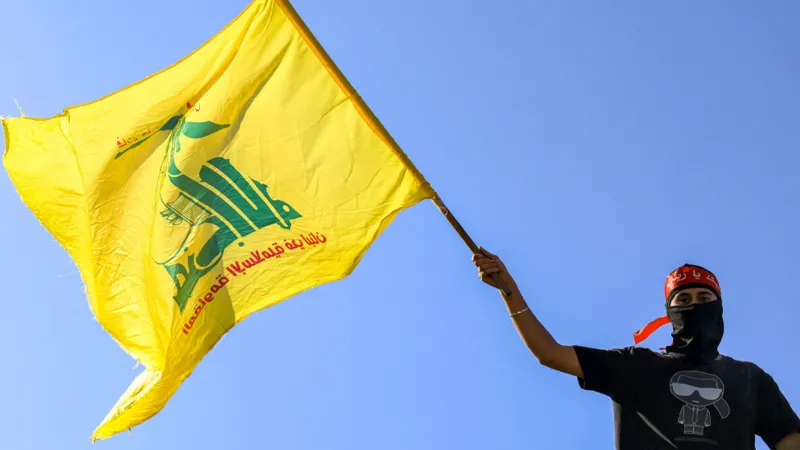
Hezbollah’s origins can be traced back to 1982, a year that dramatically changed Lebanon’s political landscape.
At the time, Israel launched a large-scale invasion of southern Lebanon in response to attacks carried out by Palestinian militant groups operating from Lebanese territory. The invasion brought Israeli troops deep into Lebanon and intensified anger among many members of the country’s Shiite Muslim community.
In response, several Shiite factions began organizing resistance efforts against Israeli forces.
With significant support from Iran’s newly established Islamic Republic, these groups eventually united under a single banner that became known as Hezbollah, or the “Party of God.”
From the beginning, the group’s primary objective was clear: resist Israeli military presence in Lebanon and challenge what it viewed as foreign occupation.
Throughout the 1980s and 1990s, Hezbollah carried out guerrilla attacks against Israeli troops stationed in southern Lebanon, gradually building a reputation as one of the most effective resistance forces in the region.
Iran’s Closest Regional Ally
One of the most important factors behind Hezbollah’s rise has been its close relationship with Iran.
Since the group’s creation, Tehran has provided financial assistance, military training, weapons, and strategic support. Over the years, that backing helped transform Hezbollah from a local militia into a highly organized military and political force.
For Iran, Hezbollah serves as a key regional ally and an important part of its broader strategy in the Middle East.
For Hezbollah, Iranian support has provided the resources needed to expand its influence, strengthen its military capabilities, and maintain a powerful presence within Lebanon.
The relationship remains one of the most significant alliances in the region and continues to shape regional security calculations.
More Than a Militia
Unlike many armed groups, Hezbollah is not solely a military organization.
Over time, it has developed into a political movement with representation in Lebanon’s parliament and government. It also operates a vast network of schools, hospitals, charities, and social welfare programs that serve many communities, particularly within Lebanon’s Shiite population.
This dual identity—as both a political actor and an armed force—has made Hezbollah unique.
Supporters argue that the group fills important social and security roles that the Lebanese state has often struggled to provide.
Critics counter that Hezbollah’s military power allows it to exert influence beyond democratic institutions and weakens the authority of Lebanon’s government.
Why Hezbollah Opposes Israel
A defining feature of Hezbollah’s ideology is its opposition to Israel.
The organization does not recognize Israel’s right to exist and has long portrayed its military activities as part of a broader resistance campaign.
This position has placed Hezbollah in direct conflict with Israel for decades.
Israeli officials consider the group one of the country’s most serious security threats due to its military capabilities, large missile arsenal, and presence along Israel’s northern border.
As a result, the relationship between the two sides has been marked by repeated cycles of violence, retaliation, and military confrontation.
The 2006 War That Changed the Region
Perhaps the most significant conflict between Hezbollah and Israel occurred in 2006.
The war began when Hezbollah fighters crossed into Israeli territory, killing several Israeli soldiers and capturing two others.
Israel responded with a major military campaign aimed at weakening the group.
For 34 days, the two sides exchanged heavy fire. Israeli airstrikes targeted infrastructure and Hezbollah positions across Lebanon, while Hezbollah launched thousands of rockets into northern Israel.
The conflict caused extensive destruction and claimed the lives of hundreds of people.
Although neither side achieved a decisive victory, the war became a defining moment for Hezbollah.
Many of the group’s supporters viewed its survival against one of the region’s strongest militaries as proof of its strength and resilience.
The conflict also significantly enhanced Hezbollah’s reputation across parts of the Arab world.
Renewed Tensions After October 7
For years after the 2006 war, both sides largely avoided another full-scale confrontation.
That uneasy calm changed after Hamas launched its October 7, 2023 attack on southern Israel.
Soon afterward, Hezbollah began firing rockets, drones, and missiles toward Israeli military positions along the border, saying it was acting in support of Palestinians in Gaza.
Israel quickly responded with airstrikes and artillery attacks targeting Hezbollah positions in southern Lebanon.
What initially appeared to be limited border clashes gradually evolved into a sustained exchange of fire.
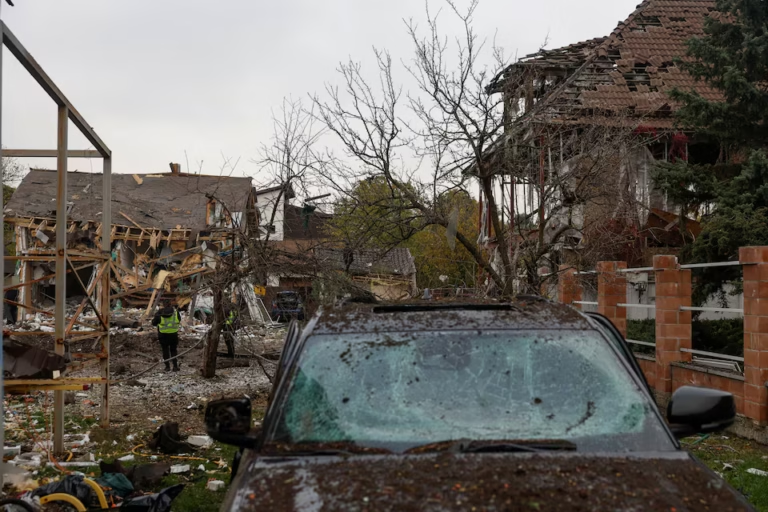
Communities on both sides of the border were evacuated, and fears grew that the region could be heading toward another major war.
Israel’s Intensified Campaign Against Hezbollah
As hostilities escalated, Israel launched increasingly aggressive operations against Hezbollah infrastructure.
Military strikes targeted weapons depots, missile launch sites, command centers, and senior figures within the organization.
Israeli leaders argued that the operations were necessary to reduce the threat posed by Hezbollah’s growing arsenal and prevent attacks on northern Israeli communities.
Hezbollah, meanwhile, continued to launch strikes and insisted it would maintain pressure on Israel as long as fighting continued elsewhere in the region.
The exchanges underscored how interconnected Middle Eastern conflicts have become, with developments in Gaza, Lebanon, Syria, and Iran often influencing one another.
Hezbollah’s Enduring Influence
Today, Hezbollah remains one of the most powerful and influential organizations in the Middle East.
Its military capabilities, political influence, and close ties to Iran ensure that it plays a major role in shaping regional events.
Supporters continue to see the group as a defender of Lebanon and a symbol of resistance.
Critics view it as an armed organization whose military power extends beyond state control and contributes to regional instability.
Regardless of how it is perceived, Hezbollah’s impact on Lebanon, Israel, and the wider Middle East is undeniable.
As tensions continue to simmer across the region, Hezbollah is likely to remain at the center of some of the most important security and political developments for years to come.